

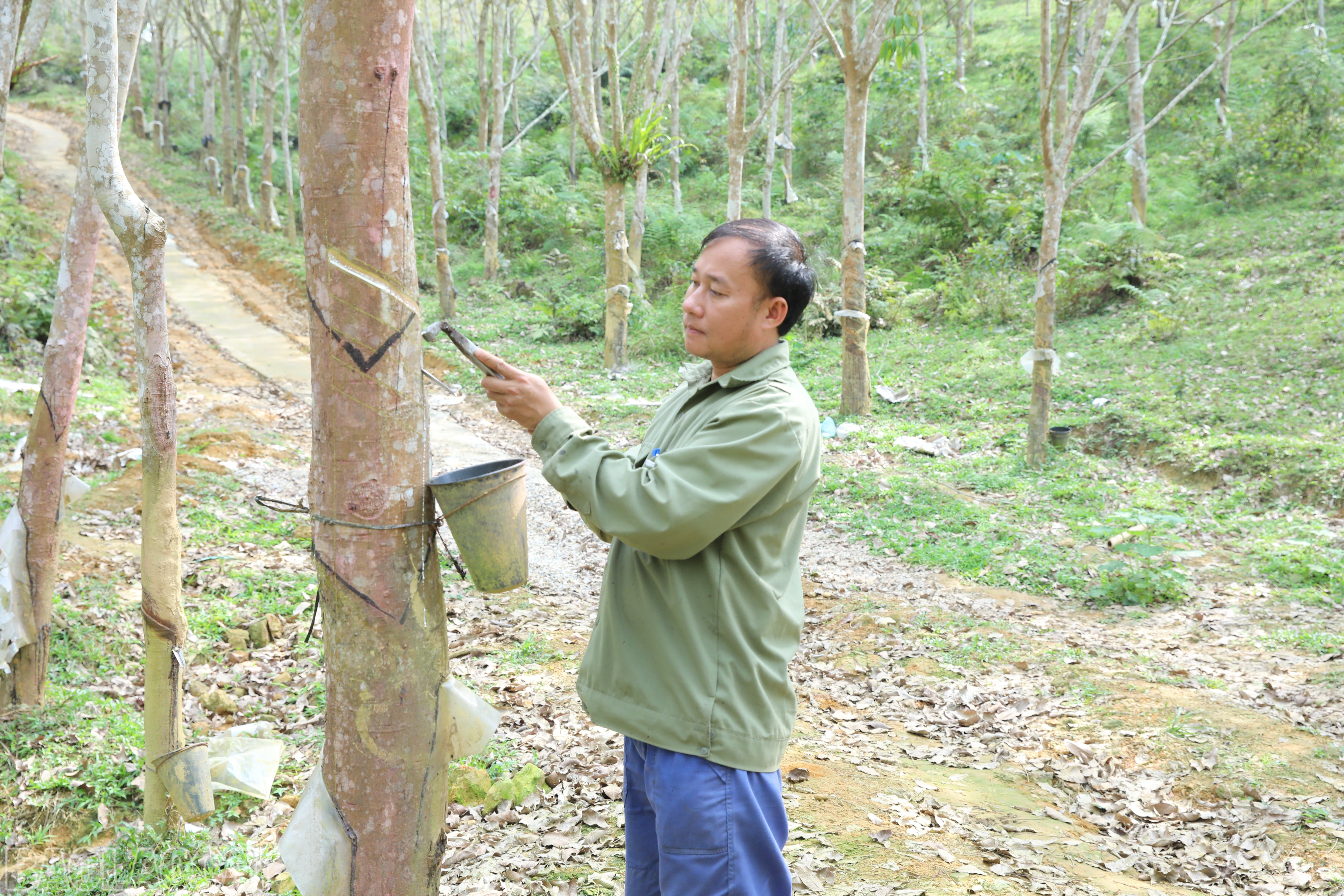
In the previously unproductive agricultural land of the highland communes of Gia Hoi, Son Luong, Lien Son, Van Chan, etc., vast rubber plantations have now been transformed. Through the collaboration of local authorities, businesses, and the people, the rubber plantation area has now reached approximately 2,300 hectares, of which more than 2,200 hectares are currently producing latex.
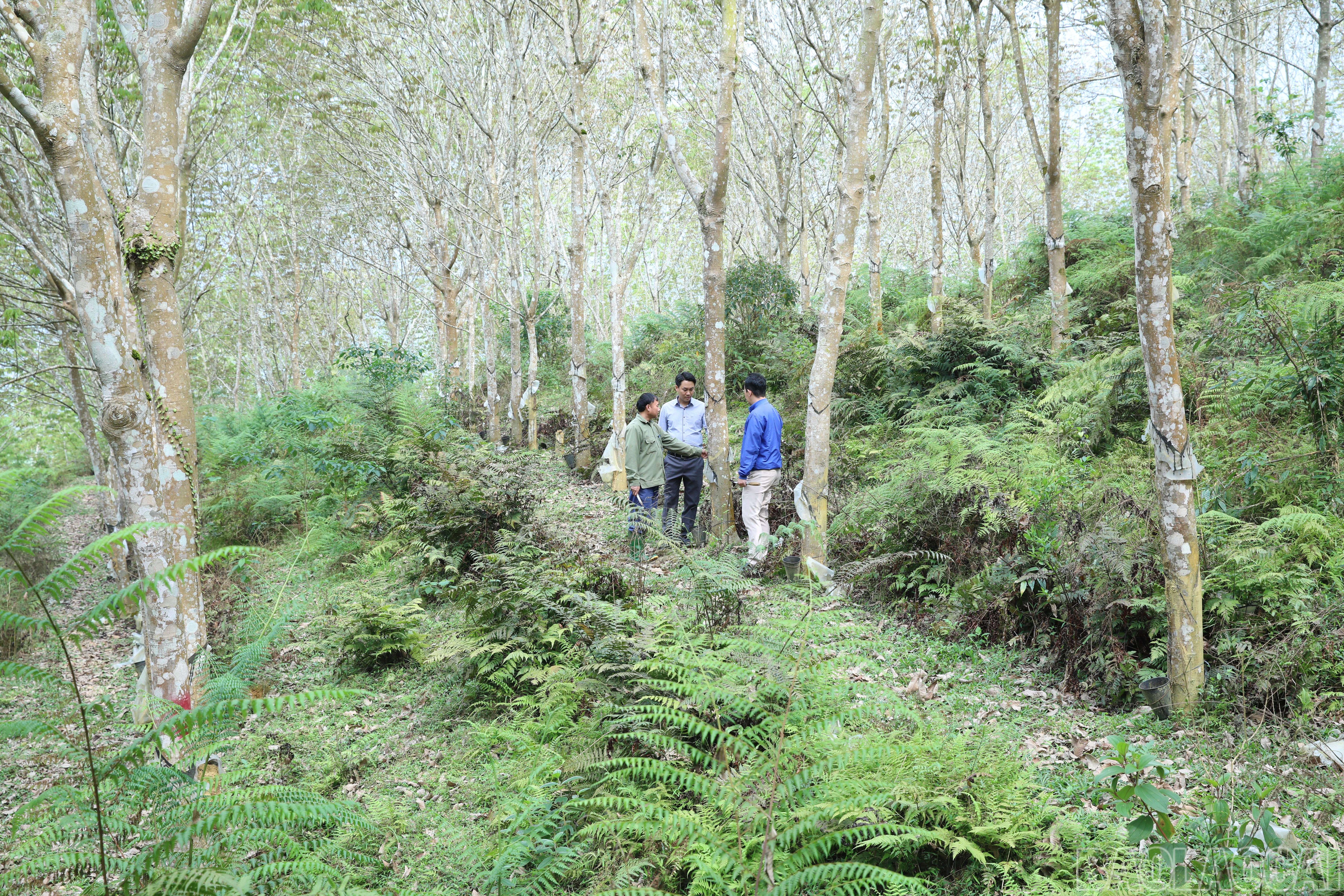
Introduced for cultivation in Van Chan and Van Yen districts, Yen Bai province (formerly) in 2010, it wasn't until 2011 that Yen Bai Rubber Joint Stock Company found a suitable variety for the local soil and climate. Since then, barren, hard, and abandoned land has been transformed by the company's workers, who have been leveling the land, building roads, and transporting seedlings and fertilizers to the hills. By focusing on applying scientific and technical methods from planting to care, especially selecting varieties suitable for the highland conditions, the rubber trees began yielding harvests in 2019.
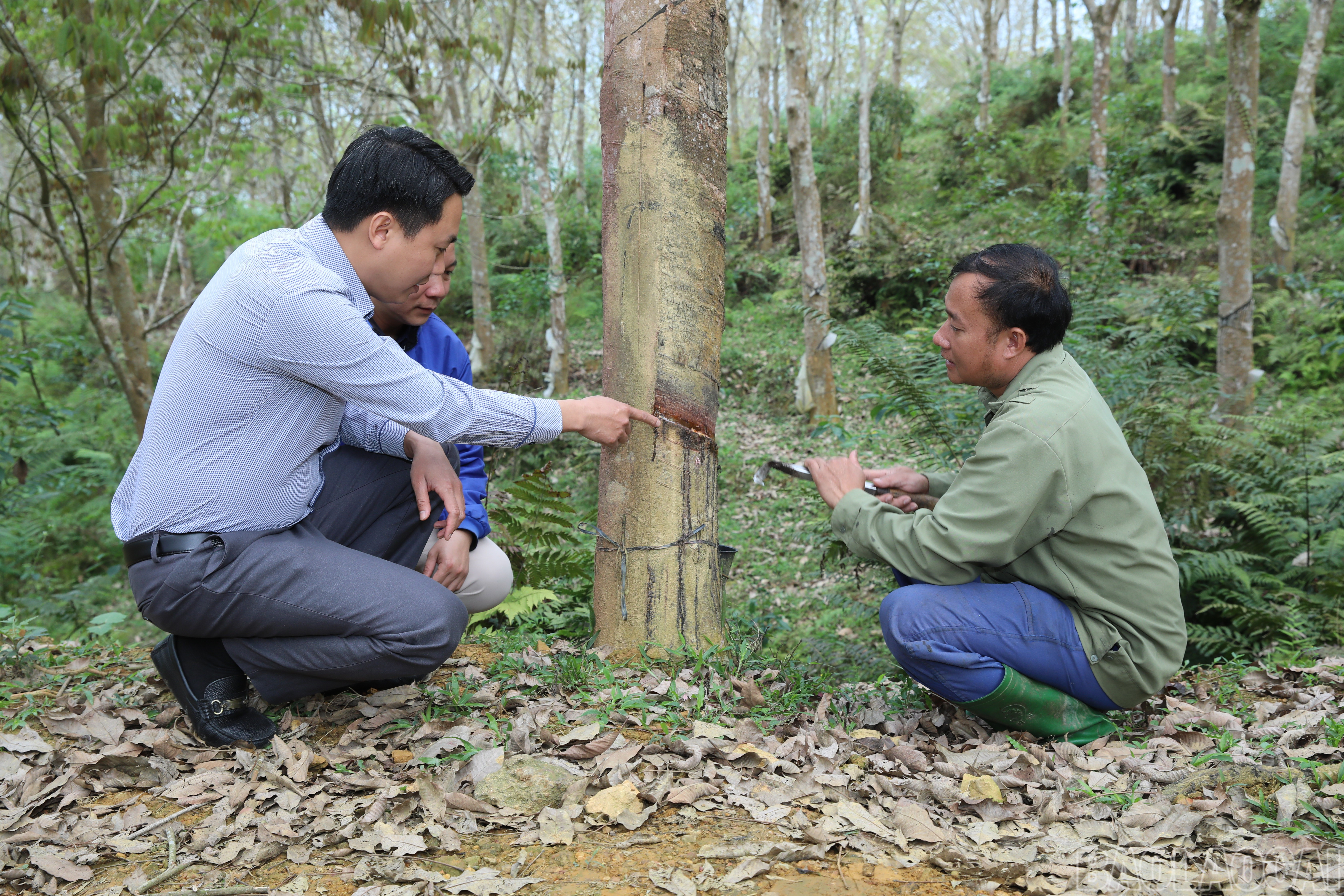
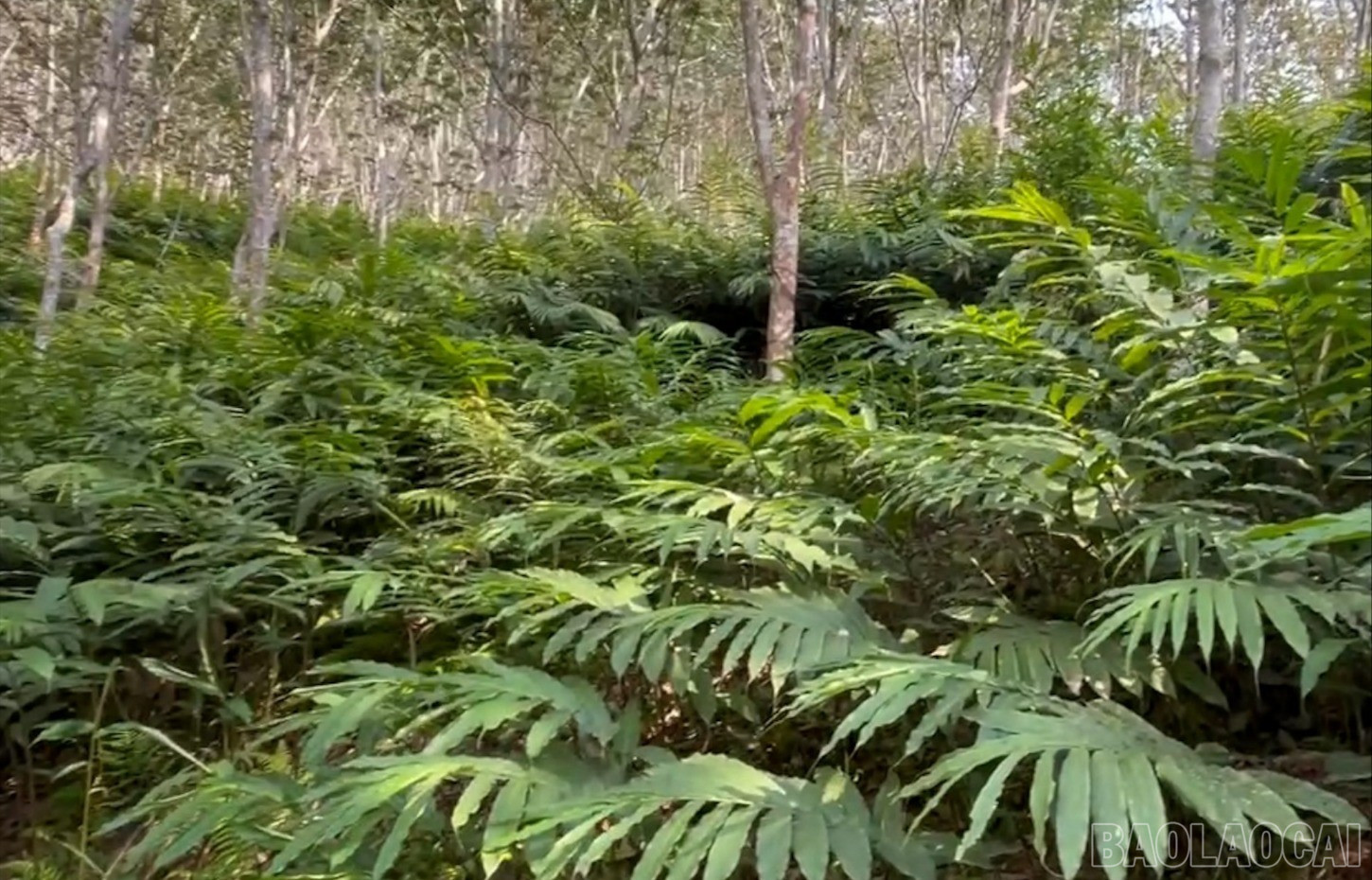
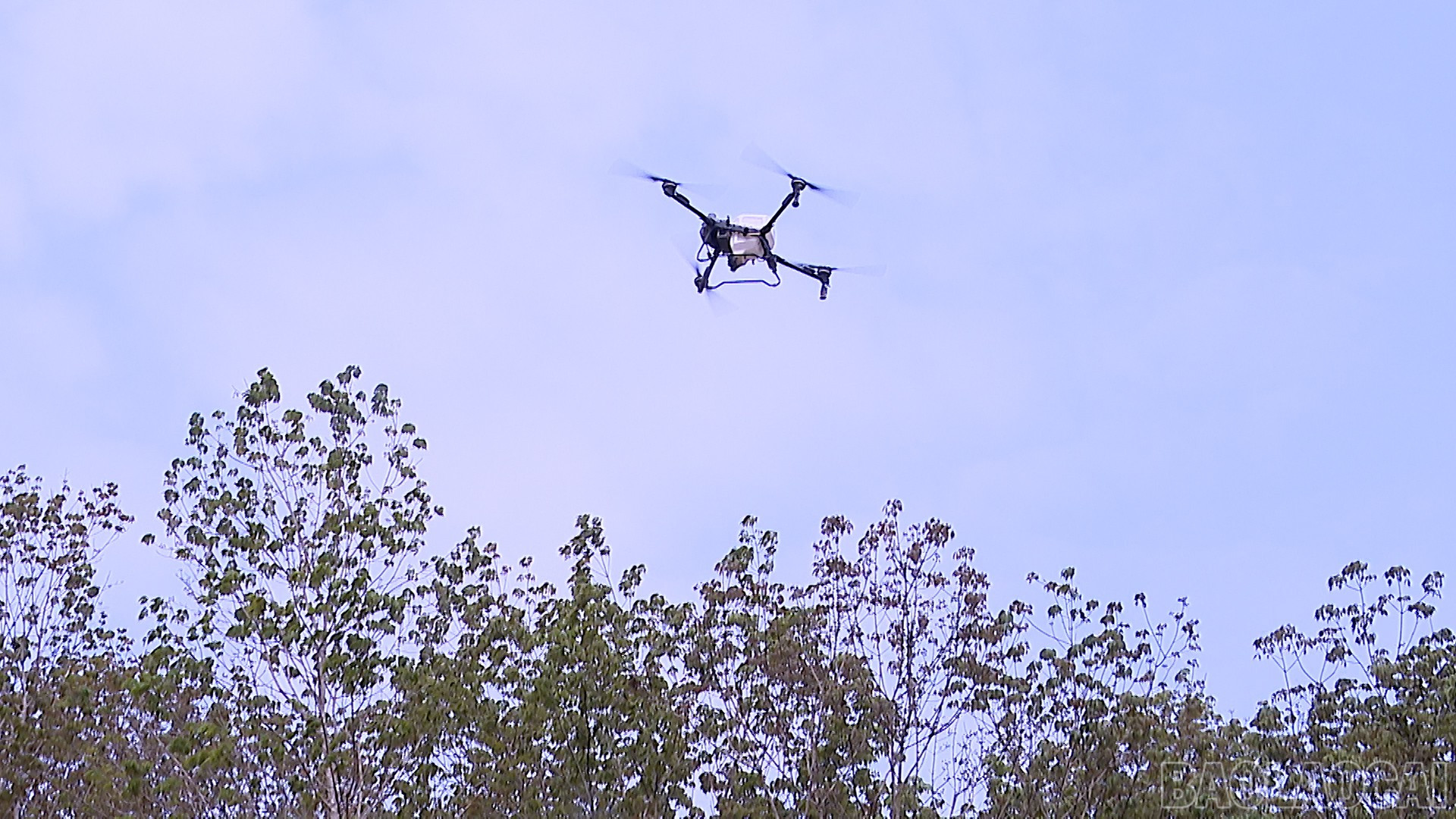
To develop rubber sustainably, Yen Bai Rubber Joint Stock Company combines intercropping with medicinal plants during the basic construction phase; at the same time, it focuses on spraying pesticides to control pests and diseases, especially powdery mildew, without affecting the yield and quality of the plantation; and strictly adheres to the latex tapping process, thereby ensuring the yield and quality of latex extraction. On average, Yen Bai Rubber Joint Stock Company extracts nearly 1,800 tons of fresh latex annually, equivalent to 920 tons of dry latex, generating revenue of over 40 billion VND and contributing 1.5 billion VND to the state budget.
To maximize latex yield, from the beginning of the year, the company assigned each team to focus on weeding and fertilizing the trees to promote rapid growth and development. Training on latex tapping techniques was organized for workers before the harvesting season. Simultaneously, pesticides were sprayed to prevent powdery mildew, protecting the foliage and ensuring no impact on latex production.
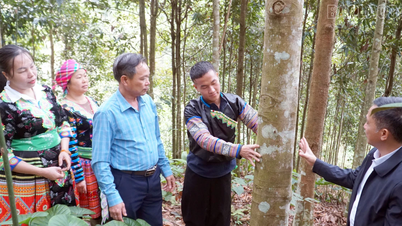
Mr. Diep Trung Tin, Head of the Technical Planning Department of Yen Bai Rubber Joint Stock Company, said: "Every day, the Technical Planning Department and the team leaders regularly inspect the production teams regarding the tapping of bark and tapping cuts to ensure long-term exploitation capacity. In addition, we focus on repairing the road system to facilitate travel, tapping, and latex harvesting."
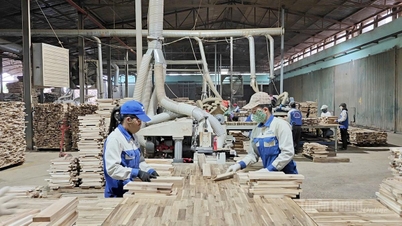
Due to its high quality standards, all of the company's fresh latex products are purchased by the Vietnam Rubber Group. From caring for the trees to tapping the latex, the company provides stable employment for 300 local workers with an average salary of over 5 million VND per person per month.
Mr. Lo Van Doi, a worker at Yen Bai Rubber Joint Stock Company, shared: "Rubber tapping is lighter and simpler than other jobs. The work doesn't require high skills. Besides working according to the company's daily schedule, I still have time to do other things like tending to tea plants and picking tea."
Thanks to hard work, for the past 10 years, he and many other people in Gia Hoi commune have had stable jobs and income. They hope the company will continue to expand its rubber plantation area to create more stable employment opportunities .
In 2026, Yen Bai Rubber Joint Stock Company aims to achieve a production output of 920 tons and a yield of 0.41 tons/hectare. To achieve this goal, from the beginning of the year, the company will review and assess the actual latex yield potential of each plot and classify them according to tapping groups; assign specific production targets to each team, group, and worker. Production will be monitored weekly and monthly; the causes of increases and decreases will be analyzed to make timely adjustments. A tapping schedule suitable for each season will be developed, technical inspections will be strengthened, and errors in tapping operations will be corrected for workers. At the same time, proactive disease prevention and control will be implemented early to prevent damage to the trees and achieve the highest possible latex yield.
With the right approach, rubber tree cultivation on sloping land has opened up a new direction for sustainable agricultural development in highland communes. This also provides a basis for localities to continue effectively exploiting land potential, improving people's lives, and contributing to ensuring social security in the area.
Source: https://baolaocai.vn/cao-su-xanh-tren-dat-vung-cao-post896666.html

![[Image] Hanoi's urban life under the challenge of a "scorching hot" environment](https://vphoto.vietnam.vn/thumb/1200x675/vietnam/resource/IMAGE/2026/05/25/1779706979265_nang-nong-t5-2026-minh-duy-7-4636-jpg.webp)


![[Image] Close-up view of the interchange connecting the two expressways and Long Thanh Airport.](https://vphoto.vietnam.vn/thumb/1200x675/vietnam/resource/IMAGE/2026/05/25/1779703378210_ndo_br_z7863716673926-224453a31600126cce10622af6290afd-4549-jpg.webp)








































































Comment (0)