

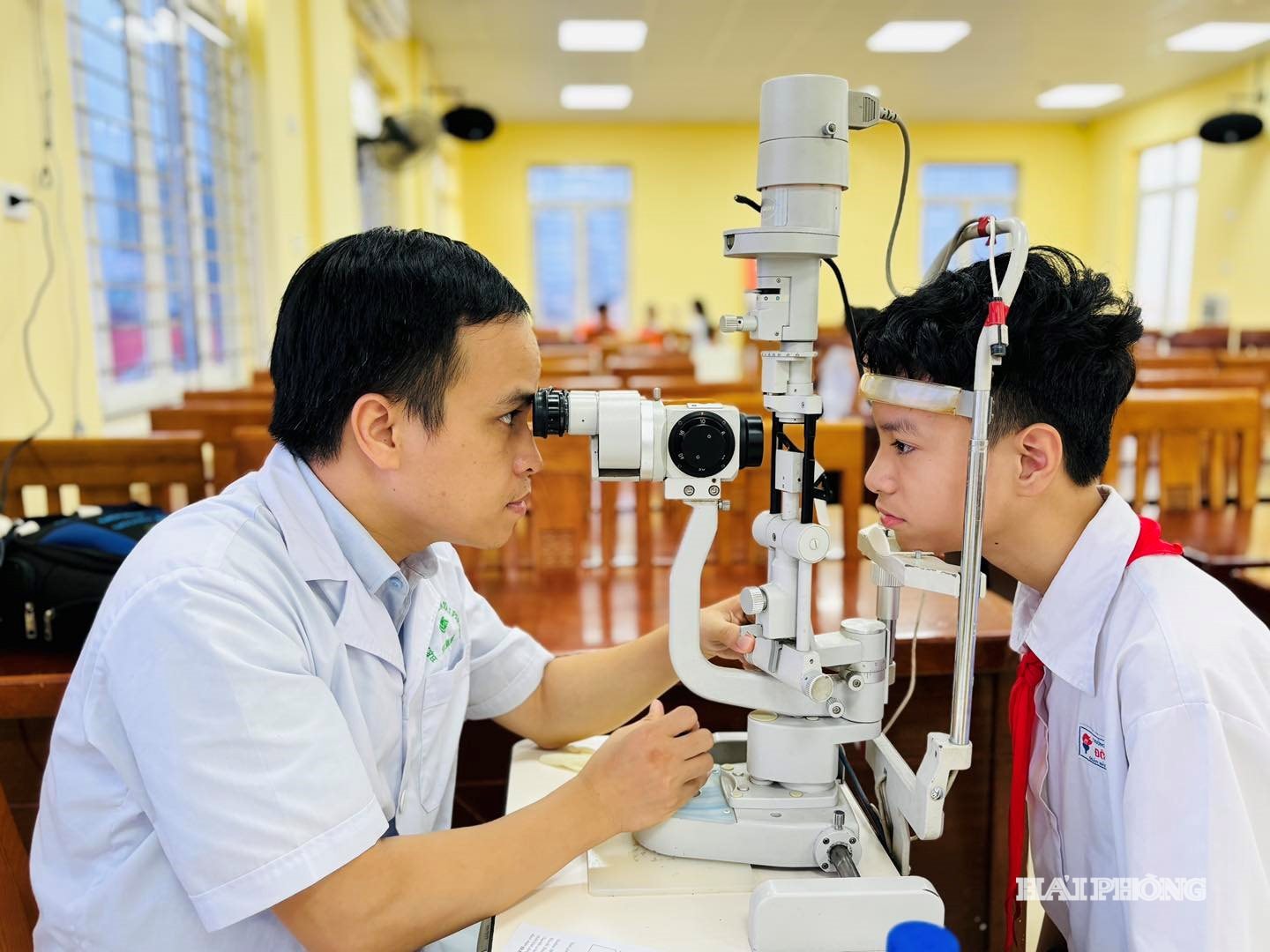
School-related myopia is becoming a worrying problem in Hai Phong, directly affecting students' learning and health. Protecting children's eyesight requires close cooperation between parents, schools, and the health sector, from developing healthy lifestyle habits to providing education and scientific interventions.
Increased anxiety
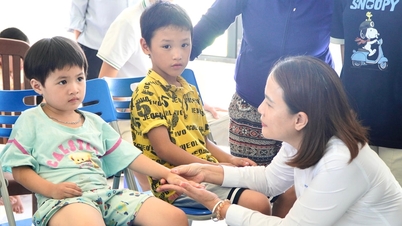
On a weekend morning, at the ophthalmology department of Hai Phong Children's Hospital, Ms. Nguyen Thi Huong from Le Chan ward held her 4-year-old son in her arms, her face full of worry. “For the past few months, he’s been squinting when watching TV and leaning too close to his drawing book while studying. I thought it was just childish mischief, but the doctor said he has mild nearsightedness. I’m really worried, because he’s only in his final year of kindergarten,” Ms. Huong shared.
Ms. Huong's story is no longer uncommon. In recent years, school-related myopia has become a worrying problem. According to data from the Hai Phong Department of Health , the rate of students with refractive errors, especially myopia, has steadily increased over the years. While in 2018, the rate of myopia among primary school students was around 22%, by 2024 this figure had exceeded 35%, and at the secondary and high school levels it reached over 45%.
At Tran Van On Primary School in Hong Bang Ward, during the annual health check-up at the beginning of the 2024-2025 school year, more than one-third of the students were found to have vision problems. Similarly, at Le Hong Phong Primary School in Gia Vien Ward, the number of children requiring glasses for nearsightedness or amblyopia is also high. Ms. Duong Thu Trang, a teacher at the school, shared that many students in grades 2 and 3 already need glasses. Some students saw their myopia increase by as much as half a diopter after just one summer break or online learning period.
In reality, children in suburban areas were previously less affected by refractive errors due to their learning conditions and outdoor activities. However, with the widespread use of smartphones and the internet, the number of children with refractive errors has increased. In response to this situation, the Department of Health, in collaboration with the Department of Education and Training of Hai Phong, has implemented numerous programs to prevent, control, and detect early refractive errors in schoolchildren.
Let's work together to prevent it.
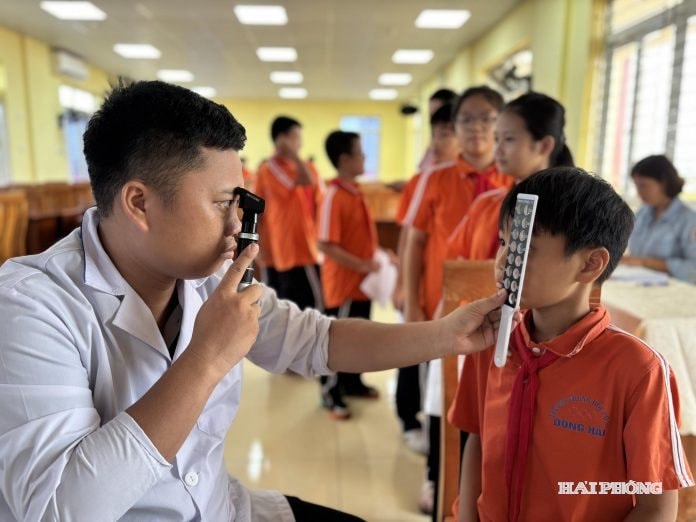
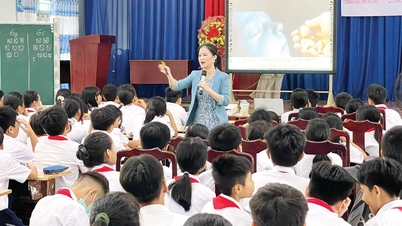
At many schools, such as Tran Quoc Toan Primary School (Hong Bang Ward), Dang Hai and Dong Hai Secondary Schools (Hai An Ward), and numerous kindergens in the area, the "Bright Eyes for Schools" program has become an annual activity. During extracurricular activities, students participate in quizzes about eye care, learn how to maintain the correct distance between their eyes and books, and receive free eye screenings. Ms. Nguyen Thi Thao, homeroom teacher of class 5A at Dang Hai Primary School, shared that after the school implemented regular eye checkups, the number of students who needed glasses and were diagnosed early increased significantly. The students also became more aware of protecting their eyes, avoiding bending too close to their books and reading in the dark.
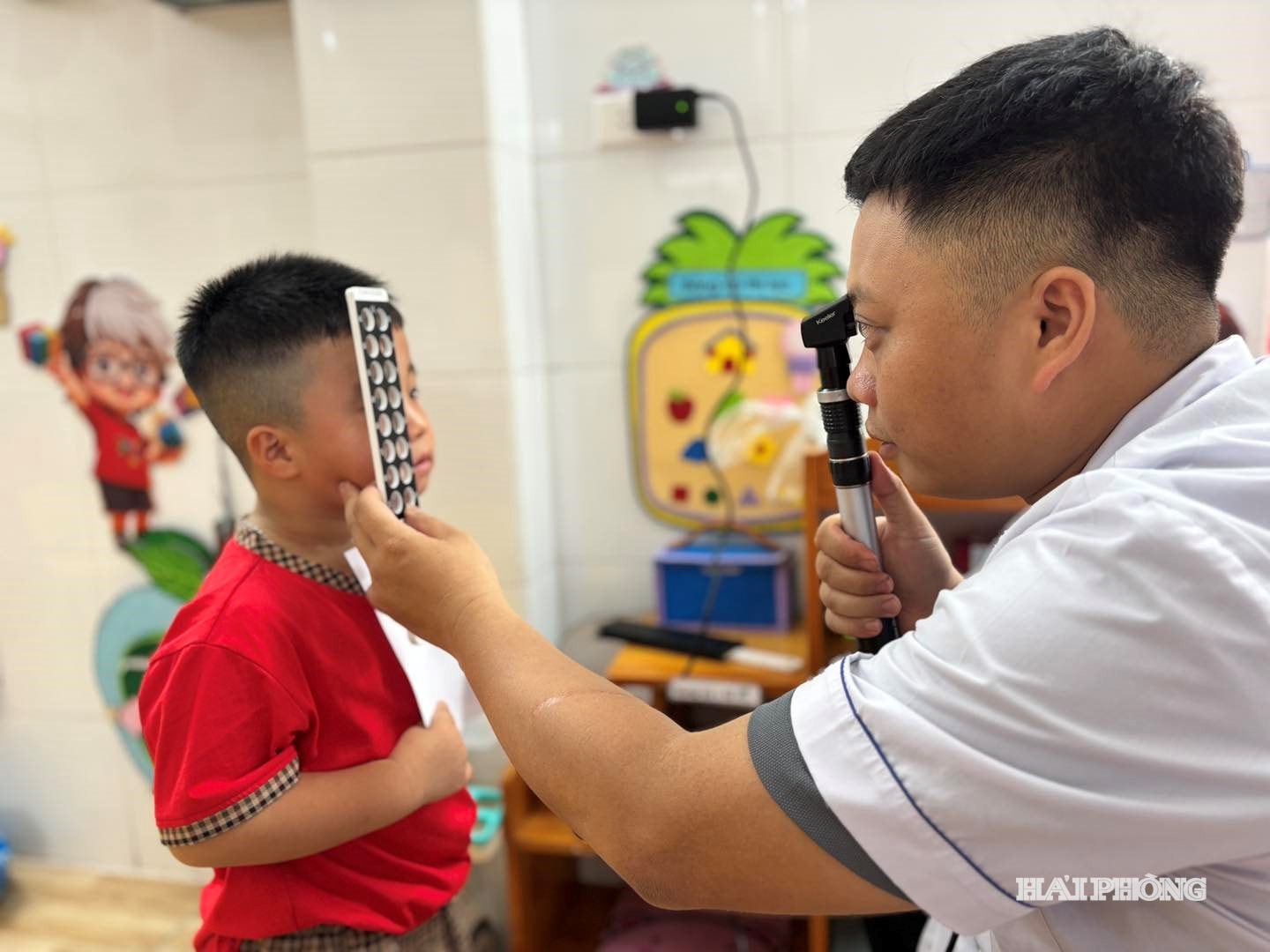
Preventing and combating school-related myopia cannot rely solely on schools. A crucial factor lies in close cooperation between families and society. Many parents, due to busy schedules, allow their children to watch phones and television for extended periods to "keep them well-behaved." This inadvertently overloads children's eyes and easily leads to myopia.
Dr. Nguyen Thi Lan Huong, Deputy Head of the Department of Ophthalmology and Maxillofacial Surgery at Hai Phong Children's Hospital, advises parents to give their children a break after every 20 minutes of close-up viewing and encourage them to participate in outdoor activities for at least two hours each day. In schools, homeroom teachers need to recognize early signs of vision loss in students to promptly inform parents. Classroom lighting must meet standards, and desks and chairs should be appropriate for students' heights.
In addition, the school schedule should include outdoor lessons, and extracurricular activities should be increased to encourage students to be more physically active. The eyes are the windows to the soul. Proper care from a young age will help children have healthy eyes.
THU HANGSource: https://baohaiphong.vn/cham-lo-nhung-doi-mat-sang-526503.html





![[Photo] Reception to welcome General Secretary and President To Lam and his wife on their State visit to the Philippines](https://vphoto.vietnam.vn/thumb/1200x675/vietnam/resource/IMAGE/2026/06/01/1780295488620_vna-potal-chieu-dai-chao-mung-tong-bi-thu-chu-tich-nuoc-to-lam-va-phu-nhan-tham-cap-nha-nuoc-toi-philippines-8798060-7855-jpg.webp)




























































































Comment (0)