

Many experts assert that issuing annual land price lists will help to curb the practice of having two different price levels.
Eliminate the problem of land with two different prices.
According to the provisions of the 2013 Land Law, land price tables are stipulated every five years and must be adjusted and supplemented in case of fluctuations in market land prices.
However, the amended Land Law has removed this provision and instead, the provincial People's Committee will announce it annually at the beginning of the year.
Agreeing with this new content, Dr. Tran Quang Huy from Hanoi Law University assessed that the principle of land valuation must adhere to market principles, meaning that land prices must be flexible, highly up-to-date, close to market prices, and have an impact only over a short period of time.
" If land price tables are maintained for five years, corresponding to the term of the Provincial People's Council as is currently the case, then even with adjustments such as a 20% increase or decrease, the prices remain very artificial, lacking market orientation, outdated, and inflexible. Therefore, the provision in the Draft Law on Land (amended) regarding the periodic annual establishment, public announcement, and application from January 1st of the year demonstrates flexibility and updating according to market mechanisms," Mr. Huy assessed.
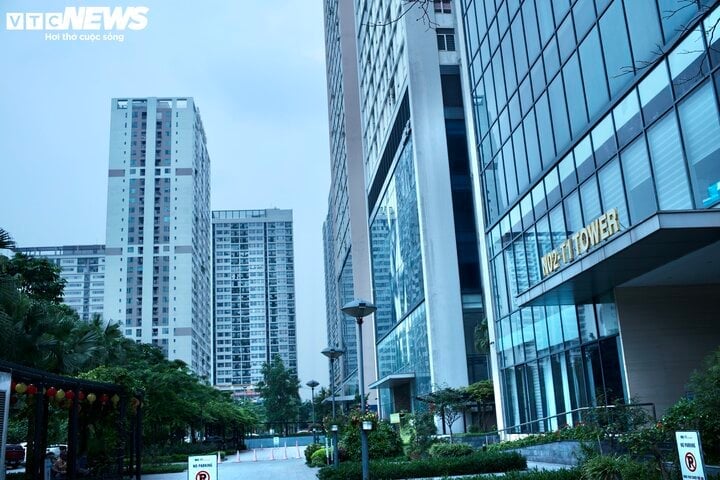
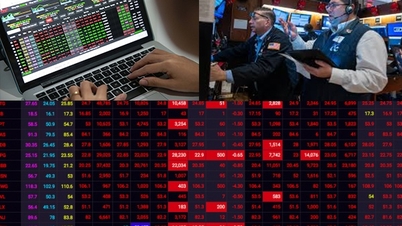
The amended Land Law will eliminate the practice of two land prices. (Illustrative image: Cong Hieu).
Mr. Giang Anh Tuan, Director of Tuan Anh Real Estate, stated his opinion: With land prices adjusted only once every 5 years, they are no longer accurate.
" In reality, there have been areas where land prices fluctuated by several hundred percent in a single year, not just five years. Therefore, the five-year land price list is outdated and does not meet the requirements of state land management ," Mr. Tuan said.
In addition, Mr. Tuan stated that the land price list is currently also used to calculate income tax from the transfer of land use rights. Recently, the regulation for collecting income tax from the transfer of land use rights has been based on the price stated in the transfer contract. If the price is higher than the land price list, the price stated in the contract will be used; otherwise, the price in the land price list will be used.
This leads to a situation where the actual purchase price is very high, but the price recorded in the contract is lower than the official land price list in order to calculate taxes according to the official land price list. This results in revenue loss for the government and, more importantly, the state lacks accurate land price data to proceed with the next step of determining specific land values.
Therefore, the purpose of issuing these prices annually is to ensure they closely reflect market prices and to raise public awareness of protecting their interests.
" When transactions are conducted, the exact amount of money for buying and selling will be recorded. In addition to stabilizing tax revenue, citizens' rights are protected through full notarization, and the State gains a database of market land prices to serve the purpose of building a land price database, establishing land prices, and determining specific land prices ," Mr. Tuan analyzed.
Beneficial for the state budget.
Lawyer Tran Duc Phuong, from the Ho Chi Minh City Bar Association, also believes that the annual land price list, published at the beginning of the year, will be closer to market land prices because the current land price list is much lower than market prices.
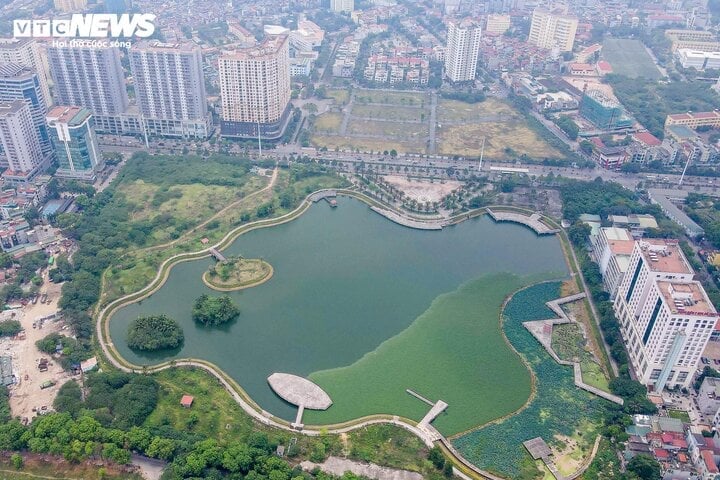
By revising the annual land price regulations, the State will avoid tax revenue losses. (Illustrative image)
And when land price tables are adjusted annually according to market fluctuations, lawyer Phuong believes it will benefit the State budget. This is because land price tables are the basis for calculating land use fees, income tax, etc.
“ Provinces and cities should adjust and issue land price lists that closely reflect market prices as a basis for calculating personal income tax on real estate transfers. This will require citizens to declare the actual market price of their real estate transfers. This will help the State avoid revenue losses, unlike the current situation of declaring ‘two prices’ when buying and selling land and houses ,” lawyer Phuong analyzed.
Sharing the same view, the director of a real estate company in Hanoi also expressed that the current land price list set by local authorities, with a 5-year period, is too long, has a significant time lag, and does not closely follow the fluctuating prices of the market.
To ensure transparency in the real estate market, a dedicated department for entering land prices is needed. Furthermore, information regarding real estate transactions should be processed through banks.
" The most crucial thing is transparency. Only then can we avoid tax revenue losses ," he said.
Furthermore, abolishing the land price framework is necessary, as it fundamentally changes mindsets by allowing people to access actual market prices. On the other hand, it also reduces a series of complications leading to complaints and lawsuits related to land as is currently the case.
According to the amended Land Law, the Provincial People's Committee shall develop and submit to the Provincial People's Council for approval the initial land price list, to be published and applied from January 1, 2026. Annually, the Provincial People's Committee is responsible for submitting to the Provincial People's Council for decision on adjustments, amendments, and supplements to the land price list, to be published and applied from January 1 of the following year. If the land price list needs to be adjusted, amended, or supplemented within the year, the Provincial People's Committee is responsible for submitting the decision to the Provincial People's Council.
According to Vu Hong Thanh, Chairman of the Economic Committee, the regulation of annual land price tables is a matter that has been thoroughly researched by relevant agencies and presented to the National Assembly for discussion many times during the process of explaining, receiving feedback, and revising the draft law.
Chau Anh
Source
![[Image] Close-up view of the interchange connecting the two expressways and Long Thanh Airport.](https://vphoto.vietnam.vn/thumb/1200x675/vietnam/resource/IMAGE/2026/05/25/1779703378210_ndo_br_z7863716673926-224453a31600126cce10622af6290afd-4549-jpg.webp)

![[Image] Hanoi's urban life under the challenge of a "scorching hot" environment](https://vphoto.vietnam.vn/thumb/1200x675/vietnam/resource/IMAGE/2026/05/25/1779706979265_nang-nong-t5-2026-minh-duy-7-4636-jpg.webp)
































































































Comment (0)