

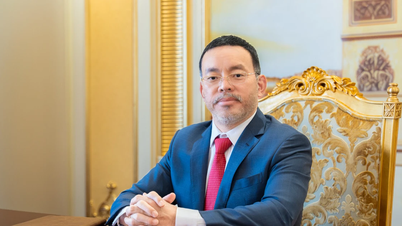
To further clarify the goal of integrating forests into urban areas and creating a green, smart, and modern capital city, a reporter from the Hanoi Newspaper and Radio and Television Agency interviewed Le Xuan Thang, Head of the Hanoi Forest Protection Department (Hanoi Department of Agriculture and Environment).
Identifying "bottlenecks"
- Could you please tell us about the current state of green spaces in Hanoi and the significance of long-term urban planning in protecting and developing green spaces in the capital city?
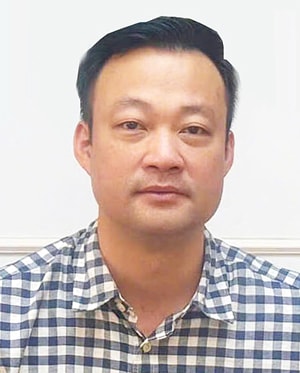
- We are facing environmental and population density "bottlenecks". In fact, the average green space area in Hanoi is currently only 5.52 m²/person, much lower than the 7 m²/person threshold for special-class urban areas; the forest cover rate is also only 5.34%.
Without a long-term, 100-year vision, as outlined in the recently approved Hanoi Capital City Master Plan by the Hanoi People's Council, aimed at preserving land and forests, the pressure from housing projects and industrial zones will soon wipe out the remaining ecological corridors. This vision in planning helps us protect core values, ensuring that today's development does not come at the expense of future generations' right to breathe clean air.
It should also be added that establishing a 100-year vision is not just a number in terms of time, but a fundamental shift in urban governance philosophy. Previously, we often considered green spaces as a "fill-in" element after concrete structures had been built. But now, the green system—including forests, urban greenery, and water bodies—is identified as priority infrastructure, the "framework" for shaping development space.
- Given the current situation, which is still quite far from the ideal target, what roadmap has the city outlined to realize these figures in the short and long term, sir?
- We have advised the City People's Committee on a "fast-tracking" roadmap divided into two pivotal phases. The phase from now until 2030 is a massive green transformation phase. The goal is to increase forest cover to 6.2%, equivalent to developing an additional 2,902 hectares of forest. In the first quarter of 2026 alone, we have already launched a very aggressive campaign by planting 57 hectares of concentrated forest and 250,000 scattered trees. Furthermore, the issue of inner-city green spaces is also receiving special attention from the city.
During the period 2031-2045 and beyond, Hanoi aims to maintain a stable forest cover rate of 6.58%. Furthermore, the city strives to achieve 17-23 m² of green space per person. This is when Hanoi will not only have a large number of trees but also develop a high-quality urban forest ecosystem capable of strong self-regulation and environmental restoration.
Solving the problem of bringing forests into the heart of the city.
- So, where will we find land to plant forests and trees when land in the inner city is so incredibly expensive? Is the "Forest in the city, city in the forest" model only feasible in suburban areas, sir?
- This is a breakthrough for Hanoi, especially in its role of "regulating" the capital's air. "Forests in the city" is not just about planting trees on the hills of Soc Son or Ba Vi, but about establishing forestry spaces within the urban structure. We propose the following specific spatial solutions for the future:
Firstly, for existing forest land areas, we implement enclosure, natural regeneration, and supplementary planting to fill vacant land, prioritizing protective forests in semi-mountainous areas.
Secondly, convert approximately 600-800 hectares of low-yield agricultural land in suburban areas to a multi-tiered agroforestry model. This will increase forest cover while allowing people to continue earning income from crops grown under the canopy.
Thirdly, coordinate with departments, agencies, and localities to build and form a continuous "green belt" system along Ring Road 4, Ring Road 5, and the ecological corridors along the Red River and Duong River. This will not only be a green landscape but also act as a giant "natural filter," responsible for preventing dust, reducing noise, and regulating temperature for the entire inner city area.
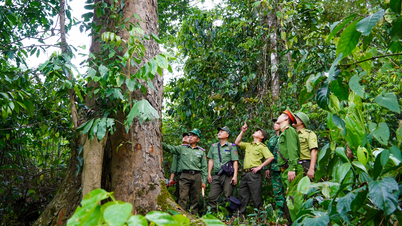
Fourth, we are making the most of the land available at waste treatment areas (446 hectares in Nam Son and Xuan Son) and approximately 3,000 hectares of green buffer zones around airports and industrial parks for planting trees. At the same time, we are conserving special-use forests in border areas by focusing on cultivating and planting additional 22 valuable tree species (such as *Kim Giao*, *Lim Xanh*, *Cho Chi*, etc.) in Ba Vi, Soc Son, and My Duc districts to maintain the "green wall" protecting the entire city.
- In reality, forestry has long been viewed primarily from the perspective of "the cost of forest protection and fire prevention and control." So, in your opinion, what breakthroughs in mechanisms, models, and mindset are needed for forests to truly become a driving force for growth and contribute effectively to the green economy of the capital city?
- This represents a shift from a "closed-door protection" mindset to a "protection linked to sustainable, multi-value exploitation." Hanoi's forest economy in this new phase will operate based on three main drivers.
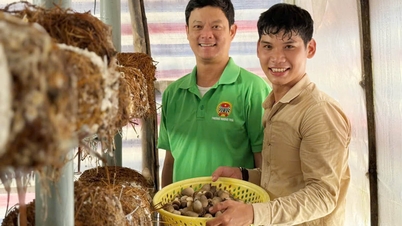
Firstly, there's the sub-forest economy. We encourage people to develop medicinal plants and specialty crops linked to non-timber forest products. When the forest provides a good income, people will voluntarily protect the forest without needing coercion.
Secondly, ecotourism and forest environmental services. We have invaluable resources in Soc Son, Ba Vi, and My Duc. In particular, with the proposal to transfer Ba Vi National Park to Hanoi's management, if approved, it will be the "heart" of the capital's green economy, where we can unify management and develop world-class green tourism linked to biodiversity conservation.
Thirdly, there is the value derived from carbon credits. In the near future, when Hanoi implements its emissions inventory and low-emission zones (LEZs), forest areas will become valuable assets for carbon offsetting. This is a source of green finance for reinvesting in forests without relying entirely on the budget.
- So, to realize that goal, how should the coordination between departments and agencies, and the responsibilities of local governments in this strategy, be institutionalized, sir?
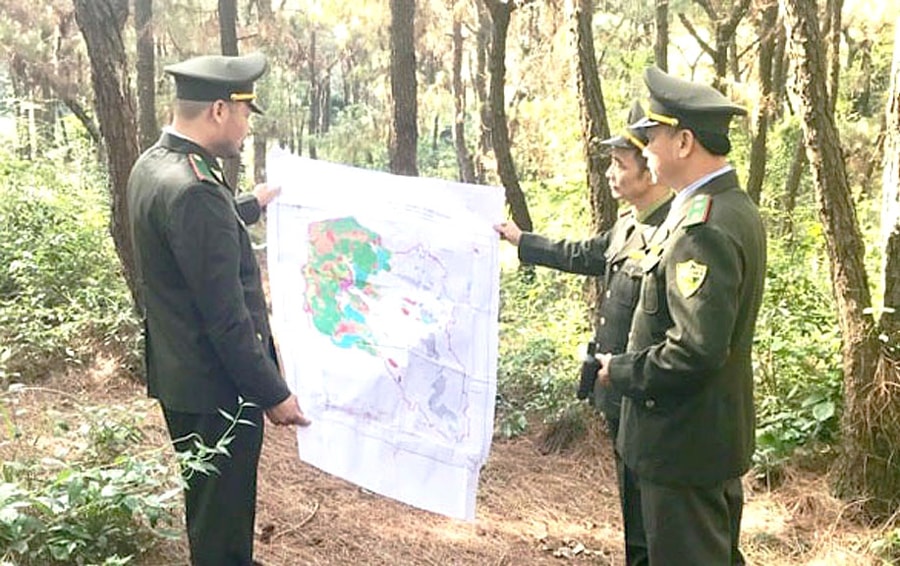
- We have determined that this is a task for the entire political system, including the coordination of departments, agencies, and localities. The Sub-Department advises the Hanoi Department of Agriculture and Environment to focus on implementing a detailed forest development plan year by year, determined to achieve a forest cover rate of 6.2% by 2030 and stabilize it at 6.58% by 2045. An urgent task is to take the lead in coordinating with the Department of Planning and Architecture and the authorities of communes and wards to strictly protect forest land; determine the planning boundaries by March 2026 and complete the demarcation of boundaries on the ground for handover of management before June 2026. Simultaneously, the department will coordinate the allocation of land specifically for green spaces and water bodies, considering this an inseparable framework infrastructure in the overall planning of Hanoi Capital City with a 100-year vision.
The unit will also conduct a comprehensive review of inefficient agricultural land to convert it to forestry land, while promoting forestry solutions from new planting to care and protection, ensuring that each stage of development increases ecological value and sustainable adaptability for the capital city. In addition, the sub-department will strengthen coordination with the People's Committees of communes and wards to manage, maintain, and prevent encroachment on forest land.
- With these repositioning efforts, what do you think a green Hanoi will look like in 2045?
- From a policy management perspective, in my opinion, Hanoi in 2045 will be a city that achieves an optimal balance between technical infrastructure and ecological infrastructure. At that time, with a forest cover rate of 6.58%, Hanoi will have formed natural buffer zones capable of mitigating the negative impacts of urbanization.
The urban structure would then ensure seamless connectivity between the riverside green corridors and the urban forests within the complex. This system acts as a natural "filter," helping to regulate temperature and improve air quality.
More importantly, Hanoi will become a model of sustainable development, where natural resources are conserved and used efficiently. We believe that by institutionalizing the Hanoi Capital City Master Plan with a 100-year vision starting today, we will leave a valuable green legacy for many future generations.
Thank you very much, sir!
Source: https://hanoimoi.vn/chi-cuc-truong-chi-cuc-kiem-lam-ha-noi-le-xuan-thang-dua-rung-vao-long-do-thi-kien-tao-mot-thanh-pho-xanh-747136.html

![[Image] Nearly 125,000 Hanoi students completed the Literature exam for the 10th grade entrance exam.](https://vphoto.vietnam.vn/thumb/1200x675/vietnam/resource/IMAGE/2026/05/30/1780117233041_ndo_br_thiet-ke-chua-co-ten-2-png.webp)























![[Photo] Admire the coral "masterpiece" amidst the million-year-old heritage of Dak Lak province.](https://vphoto.vietnam.vn/thumb/1200x675/vietnam/resource/IMAGE/2026/05/30/1780107638639_y25-jpg.webp)


































































Comment (0)