According to Le Quang Tu Do, Director of the Department of Radio, Television and Electronic Information, with hundreds of entries and hundreds of millions of views on social media platforms, the "News" campaign has spread its values to the community.
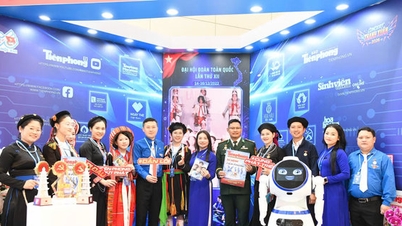
On the evening of November 23rd, the Department of Broadcasting, Television and Electronic Information ( Ministry of Information and Communications ) collaborated with VnExpress newspaper to organize the "Internet - Raising Awareness of Internet Users in Vietnam" program. The program was part of the "News" campaign with the message "News on the internet, news that is accurate."
The "News" campaign, held from September to November, aimed to provide basic information and skills to help Internet users recognize, detect, and prevent fake news and harmful information online.
Over the past two months, the "News" campaign has received significant attention from media outlets and the general public, helping to raise public awareness and understanding of preventing and reducing fake news and misinformation on the internet. The program's official website also attracted nearly 50,000 visits within one month.
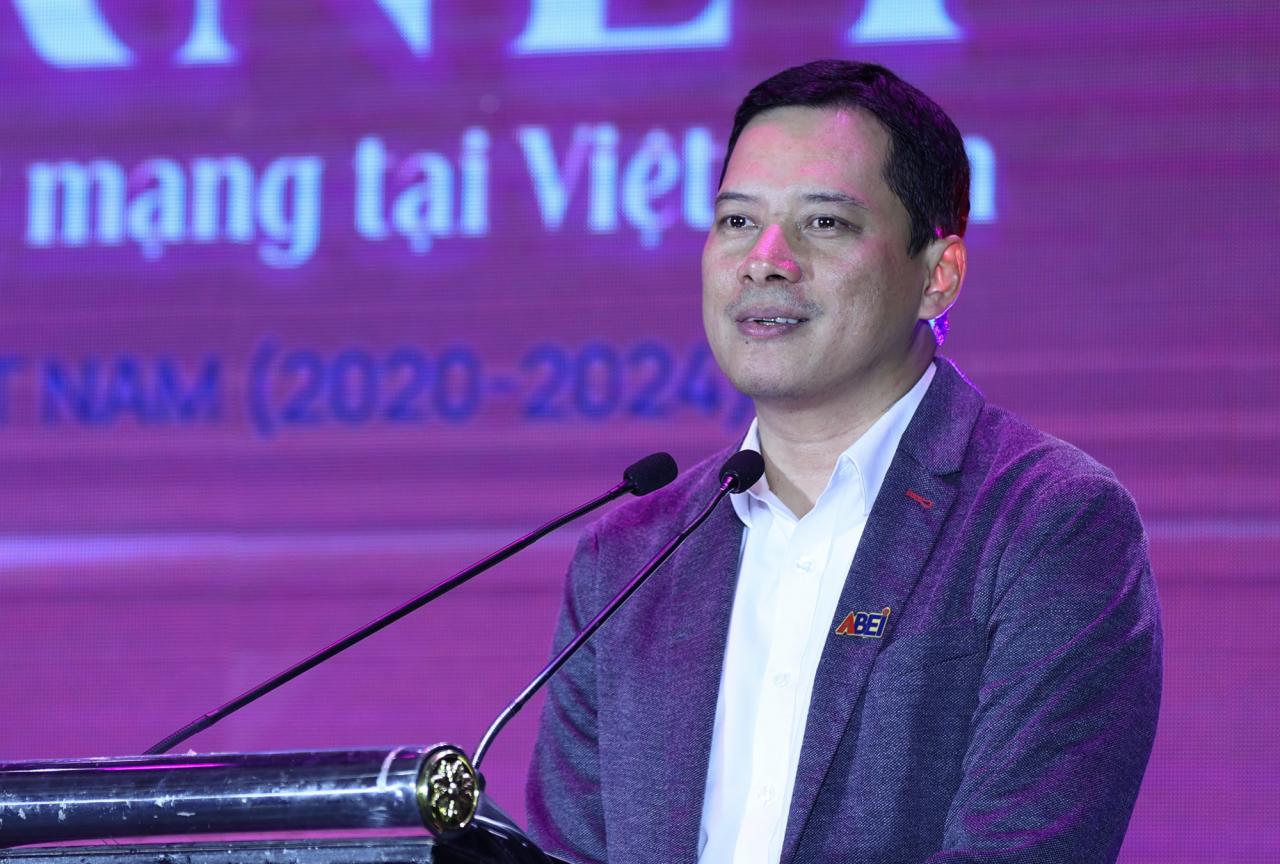
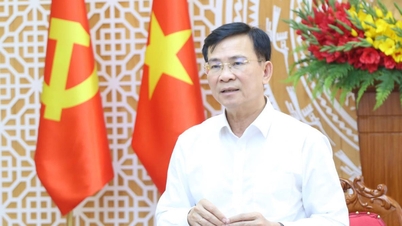
Director of the Department of Radio, Television and Electronic Information, Le Quang Tu Do.
The Anti Fake News content creation contest, part of the campaign, attracted over 50 entries and garnered more than 130 million views in nearly a month. In addition to the contest videos , over 100 other videos reporting on the program also participated, accumulating nearly 280 million views.
In particular, the Anti-Fake News message has been widely embraced by content creators through the use of hashtags in their posts. By November 20th, nearly 1.5 million videos had been tagged with the Anti-Fake News hashtag on TikTok, reaching over 5 billion views.
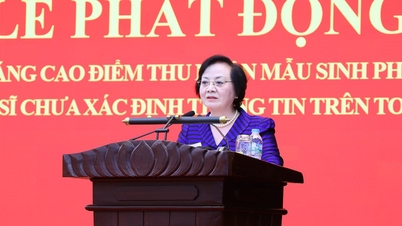
Speaking at the event, Director of the Department of Radio, Television and Electronic Information Le Quang Tu Do shared that when the Department launched this campaign, they were "very nervous" because they didn't know how the online community would react. This is the first time the Ministry of Information and Communications has launched a focused online campaign on the topic of "fake news," which everyone encounters. After two months of implementation, he expressed his delight at the positive response from the online community, hot TikTokers, famous content creators, and media agencies.
According to Mr. Le Quang Tu Do, within one month of launching the campaign, there were over 50 entries with more than 130 million views, and 1.5 million videos tagged with the hashtag "Anti Fake News" with approximately 5 billion views. This is an impressive number, demonstrating the solidarity and joint efforts of state management agencies to combat fake news online.



He expressed his hope that young people, students, and university students would join the Ministry of Information and Communications in the "battle against fake news," because this is the generation of internet users who will build the online culture.
The Director General stated that in 2024, the Ministry of Information and Communications will continue to organize activities to raise user awareness and improve online culture, and hopes to receive support from TikTokers, content creators, media agencies, and universities.
At the event, Miss World Vietnam 2019 Luong Thuy Linh, the program's ambassador, shared that one of the scariest things during the Covid-19 pandemic was fake news.
In 2022, research from a team of authors at Oxford University, published by UNICEF, revealed that 76% of teenagers are exposed to fake news from online sources at least once a week. This figure represents a 50% increase compared to two years prior.
Miss Luong Thuy Linh stated: "This shows that the more technology develops, the more we are exposed to fake news... Artists are often victims of fake news and misinformation. Fake news will negatively impact artists' careers, and worse, their mental health."
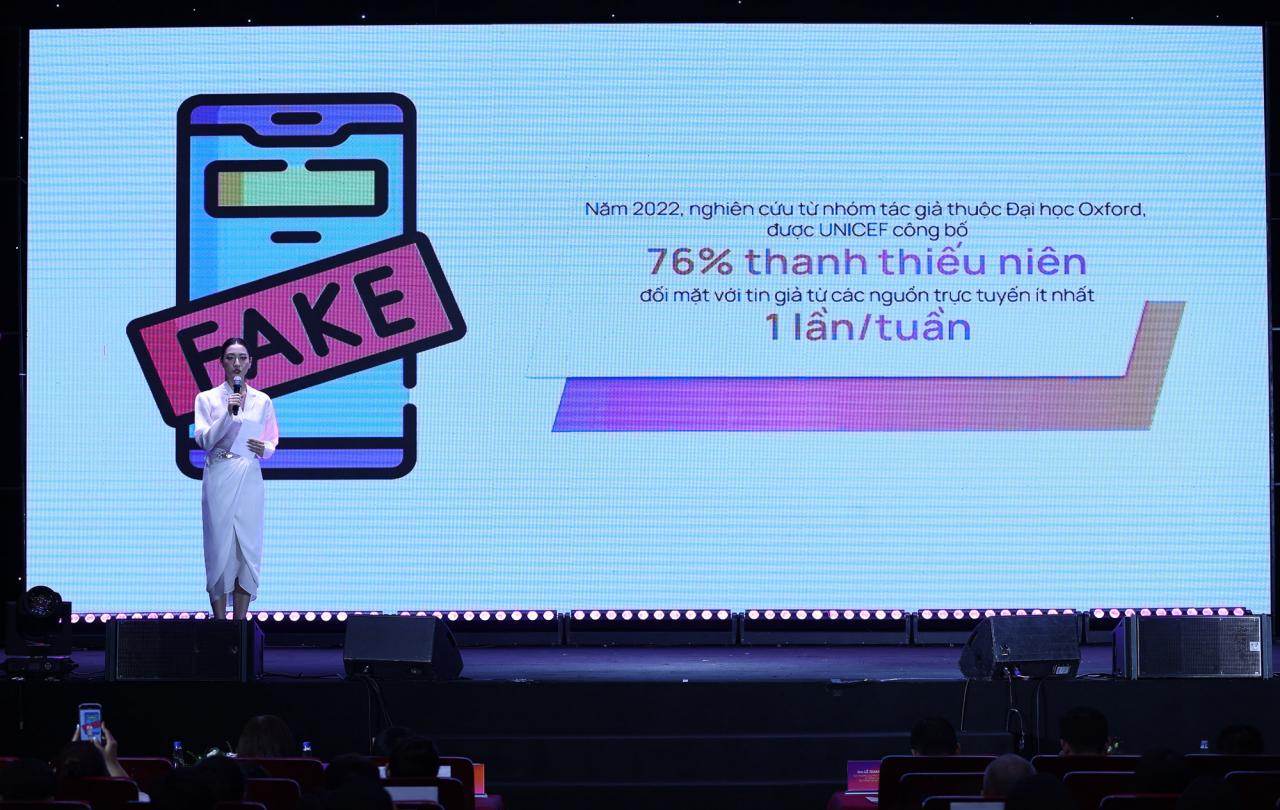
76% of teenagers are exposed to fake news.
"A lie can run around the world before the truth has a chance to put on its shoes," she quoted to illustrate the spread of fake news. While 100,000 people may encounter fake news, only 1,000 will access the truth.
According to Miss Luong Thuy Linh, fake news spreads easily because it's novel, addresses hot topics that many people are interested in; it often has sensational and attractive headlines that immediately impress readers.
She shared how to check for fake news, including: the source and author; the information in the article and other credible sources.



Meanwhile, Nguyen Ba Diep, co-founder of MoMo, believes that fake news is among the world's leading risks. According to a 2019 study by the University of Baltimore, the total cost of losses from this problem was $78 billion for the US market, with 70% of this loss affecting stock prices. With technological advancements, there is an overwhelming amount of news, and we often only read the headlines, rarely considering the content carefully.
The trend of fake news is also increasing in the financial world. According to him, this is partly due to individual cognitive biases. Therefore, malicious actors exploit people's psychology to create fake news.
He cited the example of the fire in a mini-apartment building in Hanoi, where the online community spread rumors that the fire was caused by an electric scooter, but that was not true.
To minimize damage, he encouraged young people to ask questions before interacting with online news: Is it trustworthy? Will it harm anyone? Is it being manipulated? These questions clarify three factors: authenticity, legitimacy, and proactiveness.
Vietnamnet.vn
![[Photo] Prime Minister Le Minh Hung presides over the thematic session on promoting science and technology development and innovation.](https://vphoto.vietnam.vn/thumb/1200x675/vietnam/resource/IMAGE/2026/06/23/1782207872934_ndo_br_dsc-1724-jpg.webp)