

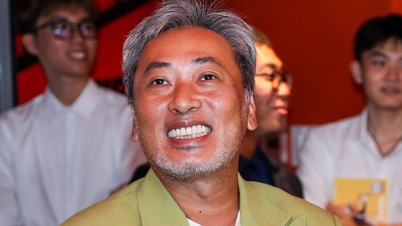
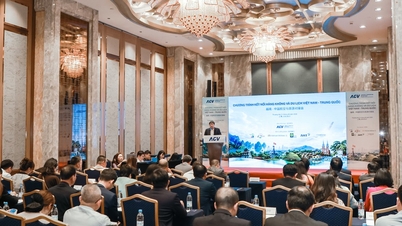
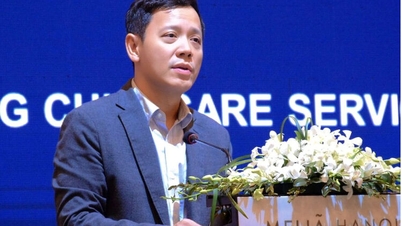
Dr. Luong Hoai Nam, a member of the Tourism Advisory Council, raised the issue at the "Opening Visas, Restoring Tourism" workshop organized by Thanh Nien Newspaper on March 10th.
Increase the stay to 30-45 days and allow multiple entries and exits.
Discussing the issue of visa easing, Dr. Luong Hoai Nam stated that it's a long and much-discussed topic, but the issue raised by Thanh Nien Newspaper today is different, in a different context. That is, Vietnam's tourism and aviation industries are facing extreme difficulties after the pandemic, directly due to the international tourism market's recovery being far too slow compared to pre-Covid-19 levels. He posed the question: "We can do everything to change the tourism industry. Why? Because we have no way back. The tourism landscape is sluggish and we need solutions to change it."
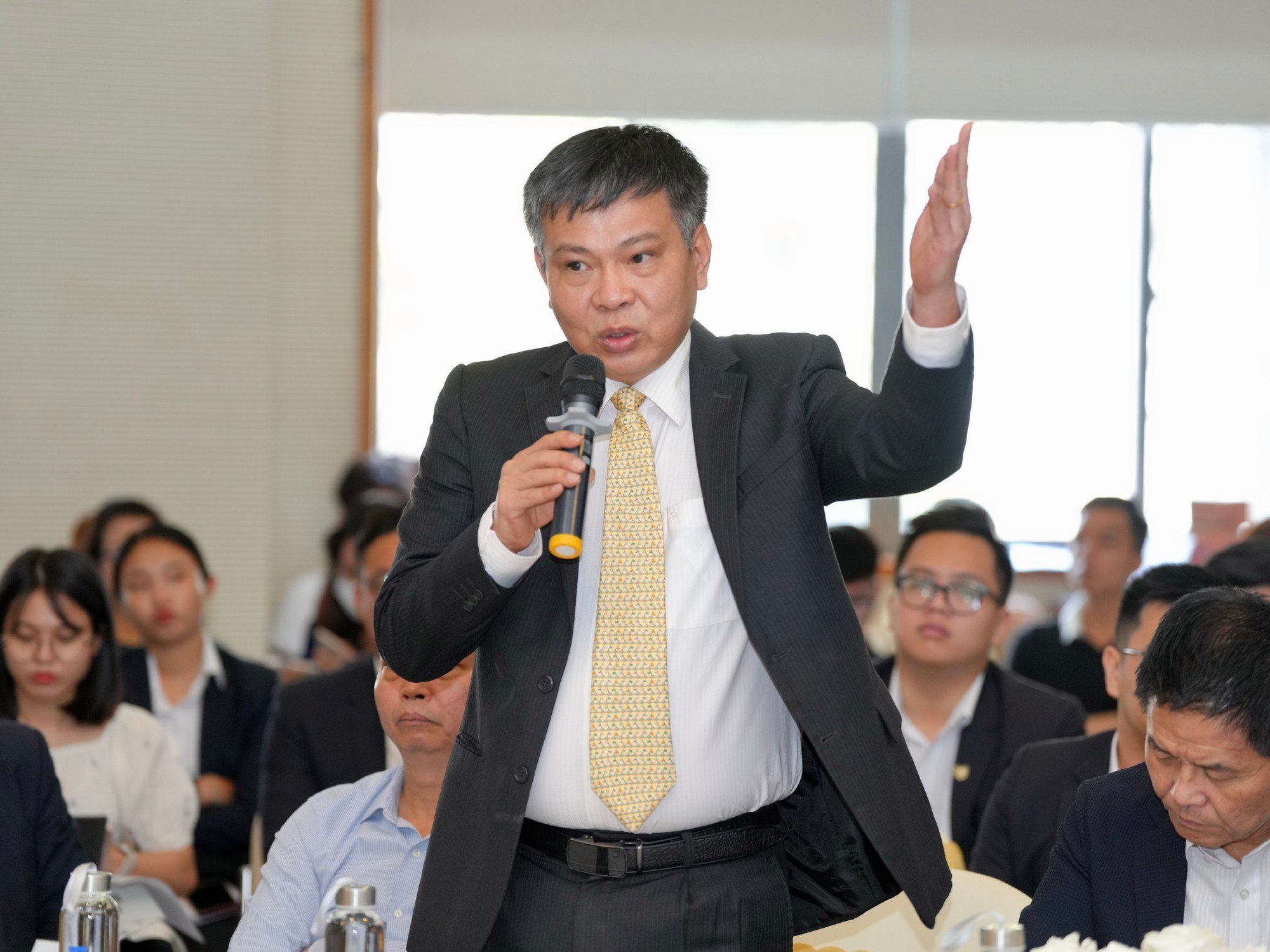
Dr. Luong Hoai Nam spoke at the "Opening Visas, Restoring Tourism" seminar organized by Thanh Nien Newspaper on the morning of March 10.
Mr. Nam cited the following example: In 2022, the number of international tourists entering Vietnam was only one-fifth of that in 2019. Before the pandemic, Vietnam received only half the number of international tourists that Thailand received. This is a sad comparison, considering our immense tourism potential and advantages, especially our rich natural, cultural, and historical heritage. However, last year, the number of international tourists entering Vietnam dropped to only one-third of that of Thailand. This year, if we are not careful, there is a risk of an even deeper decline.
"This reality forces us to worry, not just feel disappointed. If we continue to regress, the Vietnamese aviation and tourism industries are in great danger. The financial health of businesses is very poor. Thousands of tourism businesses, hotels, attractions, and entertainment venues are experiencing heavy losses due to a lack of international tourists, accumulating massive debts, and laying off workers. Many hotels are being offered for sale to repay bank debts," Dr. Nam informed.
Similarly, all of our country's airlines are "drowning in losses and debt." Specifically, Vietnam Airlines has accumulated losses of over 34,000 billion VND, negative equity of over 10,000 billion VND, and is at risk of delisting. Its subsidiary, Pacific Airlines, has accumulated losses of over 10,000 billion VND, three times its equity. Bamboo Airways, which has only been operating for a short time, has been hit by the Covid-19 pandemic, and the previously positive news has disappeared. It recently announced accumulated losses of over 16,000 billion VND. Vietjet Air, after more than 10 years of reporting profits, also incurred a loss of 2,170 billion VND in 2022. Even Mr. Nguyen Quoc Ky (Chairman of the Board of Directors of Vietravel Corporation), a "hero" in the aviation industry during Covid-19, stated that after the pandemic, this youngest airline is "like a bird with no feathers left."
"Personally, I would never say that visa policy is the cause of the difficulties that Vietnamese tourism and aviation businesses have been and are facing. However, if visa policies are opened up while simultaneously promoting tourism, it will boost economic development, help tourism businesses, and especially bring more foreign currency into the country," Mr. Luong Hoai Nam shared.
"Rescuing international tourism is not only about saving tourism businesses, airlines, and primary and secondary resort real estate investors, but also about creating more sales opportunities and increasing income for poor street vendors in tourist cities, whose lives are much more difficult due to the lack of tourists. With each international visitor, the opportunity for the children selling souvenirs in Sa Pa to sell increases, and this also creates opportunities for the poor to escape poverty," Mr. Nam added.
Quickly eliminate the problem of visa services.
From there, Dr. Luong Hoai Nam suggested: "We need to increase the number of countries with unilateral visa exemptions. Thailand currently grants visa exemptions to 68 countries. Vietnam could equal Thailand, increasing the length of stay from 15 days to 30-45 days. In particular, we should allow multiple entries and exits for tourists. Currently, tourists staying in Vietnam and then returning to Singapore are not allowed to do so, so they leave immediately. Without this policy, Long Thanh Airport will have difficulty handling transit in the future. Or, we could grant visa exemptions to all tourists from EU member countries. These are safe, civilized, and friendly tourists. We should extend the duration of unilateral visa exemption programs to 5 years so that businesses can confidently market, develop products, introduce, and expand..." - Dr. Nam proposed.
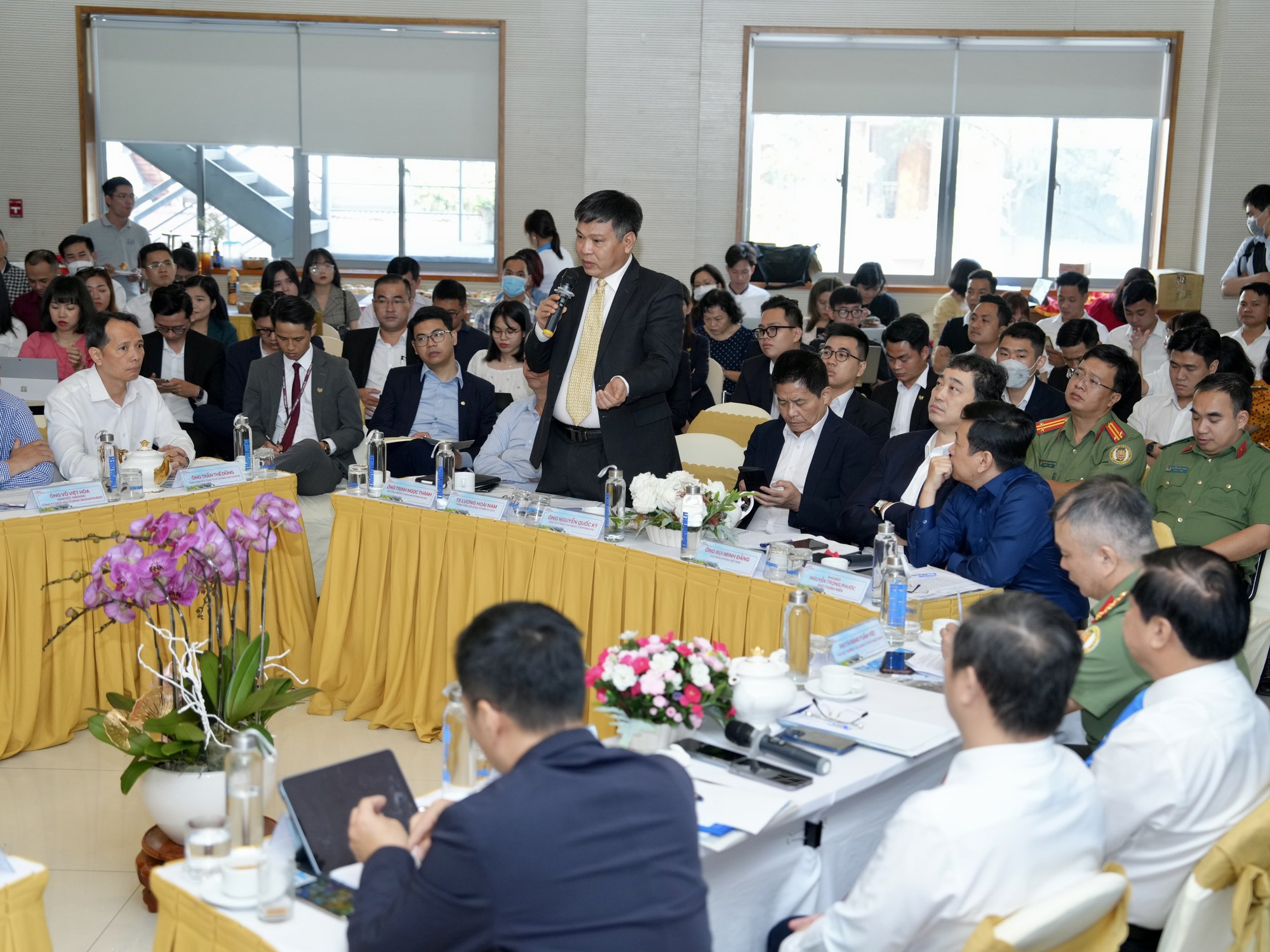
The current type of tourist visa service is distorting visa policy, and instead of assisting, visa service companies are "harassing" tourists to extort money.
For tourists from the US, China, and India (major tourism markets with direct flights to Vietnam), a bilateral agreement on long-term visa policies with a validity period of 5-10 years should be reached soon, similar to the long-term visas that some countries have been granting to Vietnamese citizens.
Visa exemptions should be granted to foreign delegations entering Vietnam to participate in MICE events and golf tourism (based on lists provided by MICE and golf event organizers); visa exemptions should also be granted to tourists and crew members arriving in Vietnam by private jet for business or tourism purposes. Facilitating entry for the ultra-wealthy is necessary to increase revenue for airports and luxury hotels…
Specifically, expand the list of countries eligible for eVisa; upgrade the eVisa system in terms of features and website interface; and continuously adjust eVisa policies to remain competitive with other countries. Visa policy should be considered a "competitive tool to attract international tourists to Vietnam."
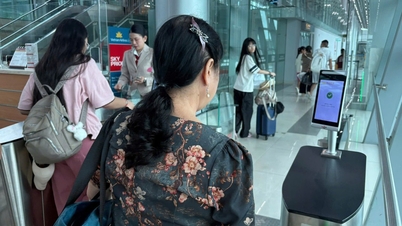
He noted that it is necessary to quickly promote the application of facial recognition technology and passport readers in immigration management for both Vietnamese and foreign citizens. Many countries have implemented these technologies, even eliminating entry and exit stamps on passports and separate visas, and managing everything entirely through technology based on immigration databases. "Recently, when I entered the US, they didn't need to show my passport; border security told me to look at the camera and asked if I was Mr. Nam, and that was it. In my opinion, investing in modern technology is extremely important. Sometimes, a smile isn't that important there; with technology..." Mr. Nam said.
Specifically, Dr. Luong Hoai Nam stated: "There is a problem where many tourism businesses focus more on visa services than tourism services, distorting the industry. Many customers report that some companies quote visa processing prices on a daily basis, while others are more expensive or cheaper… These are not government-set prices but service prices, leading to unhealthy competition between tourism businesses that are poor at tourism but excellent at visa services, and vice versa. This type of tourist visa service is distorting visa policy, and instead of supporting tourists, they are 'harassing' them to make money. Visa policy needs to 'eradicate' this negative problem."
Source link


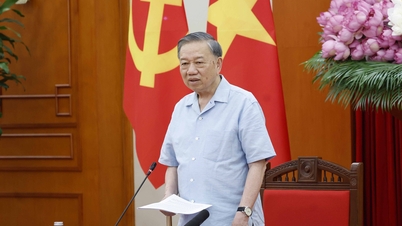
![[Photo] General Secretary and President To Lam presides over a meeting on preparations for the review of one year of operation of the three-tiered government system.](https://vphoto.vietnam.vn/thumb/1200x675/vietnam/resource/IMAGE/2026/06/02/1780391821195_a1-bnd-4595-9717-jpg.webp)


























































Comment (0)