

The emergence of AI is changing the structure of occupations and jobs.
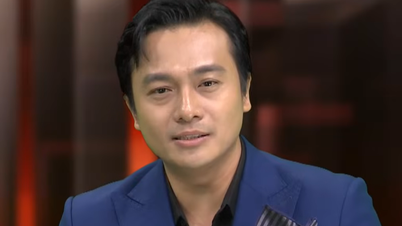
Professor Hoang Van Kiem, former Chairman of the State Council for Professor Titles in Information Technology, currently a senior advisor on information technology and a member of the Science and Training Council of Saigon International University, stated that the emergence and rapid development of AI has changed the structure of professions and jobs globally.

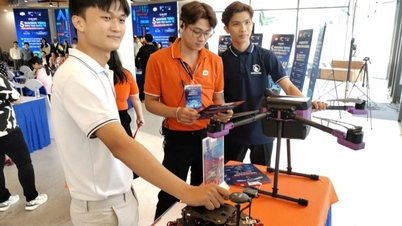
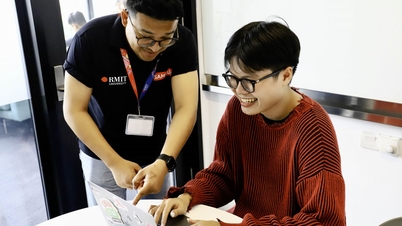
Universities tend to offer interdisciplinary, cross-disciplinary, and inter-university training programs to increase job opportunities for graduates.
PHOTO: NHAT THINH
"According to analyses of technology trends, reports from technology companies, and the historical patterns of industrial revolutions, the emergence of AI will cause many jobs to disappear or decline sharply, not because they are unnecessary, but because AI does things faster, cheaper, and more reliably. These include programmers who write repetitive code, data entry clerks, customer service representatives, basic translators, and parts of traditional teaching."
The professions that won't disappear but will change completely, and are also the largest group, include doctors, teachers, and lawyers. According to Professor Hoang Van Kiem, AI helps with reading X-rays and diagnosis, but patients still need human intervention, so doctors will become doctors plus AI health experts. Teachers will no longer be lecturing but inspiring figures and thinkers, while lawyers will perform the irreplaceable AI task of debating and developing legal strategies.
Mr. Kiem commented: "The professions that will increase in value the most are AI systems architects – the most powerful profession in the future. These aren't AI users, but AI system designers. Besides that, there are those who combine AI with other fields, for example, AI + medicine, AI + education, AI + economics . This is the new elite group. The next profession is innovator. AI doesn't stifle creativity; it enhances it. People with imagination and unique thinking will thrive. Psychologists and human development specialists will also increase in value."
Meanwhile, entirely new professions will emerge, predicted to appear in the next 10 years—proposed to be professions that don't exist today. For example, personal AI coaches who help others use AI effectively; AI personality architects who design the personalities and behaviors of AI; AI ethicists who decide what AI should and shouldn't do; and AI team managers—someone who can manage 10-100 AIs like managing employees...
Mr. Tran Anh Tuan, a human resource forecasting expert and Vice President of the Ho Chi Minh City Vocational Education Association, commented: "The labor market is undergoing a strong restructuring process under the impact of AI, shifting from quantitative growth to qualitative growth. Scientific studies predict that by 2030, approximately 40-70% of jobs may be affected, requiring workers to enhance their digital skills, creative thinking, and ability to collaborate with AI in order to survive."
WHAT PROFESSIONS AND JOBS WILL AI IMPACT?
Ms. Vo Thi Bich Thuy, Director of Senior Recruitment Services in Southern Vietnam, Manpower Vietnam (ManpowerGroup), stated: "AI will directly impact the skill sets that constitute a job." According to a survey report by ManpowerGroup in the Vietnamese market conducted in early 2026, the top three job skills that most businesses in Vietnam (over 90%) believe are most likely to be replaced by AI this year are: skills related to ideas and creativity, problem-solving, and training. Other job skills that are also increasingly being affected by AI in Vietnam include: customer service, project management, team management, strategic thinking, and sales skills.

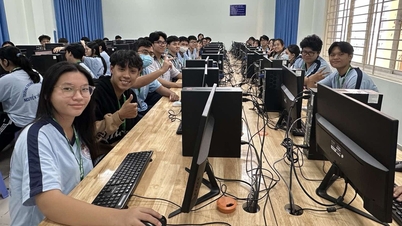
Many students raised questions about choosing a major in the era of the AI boom at the Thanh Nien Newspaper's Exam Season Counseling program.
PHOTO: NGOC DUONG
"Therefore, it's impossible to say which specific profession will be affected by AI; in reality, any field or profession that utilizes these skill sets will be impacted," Ms. Bich Thuy emphasized.
However, Ms. Vo Thi Bich Thuy observed: "Currently, 'understanding AI' is still a rather vague concept in job descriptions. In the future, the market will demand clearer and more substantive competencies such as: command creation skills (prompting), critical thinking to evaluate AI output, the ability to operate AI processes ethically, and especially the mindset of mastering AI - using AI as a tool to improve work, enhance efficiency and increase the capabilities of both employees and organizations, rather than being completely dependent on or dominated by AI."
Ms. Bich Thuy added: "Although the applications of technology in general and AI in particular are growing, according to a survey by ManpowerGroup, up to one-third of businesses globally agree that AI skills, which are irreplaceable until now, belong to the group of core human competencies – also known as soft skills. These are skills such as communication, collaboration, professional ethics, adaptability, empathy, and emotional intelligence. Therefore, young workers need to focus on cultivating these soft skills alongside professional skills and AI."
RECRUITMENT CRITERIA HAVE CHANGED
Ms. Dang Thi Phuong Loan, Director of Talent Acquisition at MISA Joint Stock Company, noted that AI is changing the way people work, automating many repetitive tasks (supporting content production, translation, software testing, etc.). At the same time, it opens up many opportunities for people to develop creative skills, critical thinking, and technology management skills.
"Recruitment needs in businesses are clearly shifting towards prioritizing candidates who are proactive learners and proficient in using digital tools and AI. Recruiters also highly value teamwork skills, creative thinking, and the ability to adapt flexibly to change. Notably, there is a desire for employees who know how to apply AI to improve individual performance and contribute to the digital transformation of the business," Ms. Loan noted.
According to observations of the recruitment market, Ms. Nguyen Thi My Hau, Head of Human Resources at Sieu Viet Group, Vieclam24h, believes that AI is impacting the job market more in a way that restructures jobs rather than eliminating professions. The demand for many professions is not disappearing but is shifting towards higher requirements for strategic thinking, the ability to control and optimize AI, creativity and personalization capabilities, and analytical and complex problem-solving skills.
Ms. Hau believes that businesses are reducing their recruitment needs for purely operational positions such as data entry, basic report compilation, or simple content writing. Instead, they prioritize young candidates who can use AI as a work tool, possess strong soft skills, and have a quick learning and adaptability mindset. "In other words, AI is raising the entry standards of the labor market, but at the same time, it is opening up many new opportunities in fields related to technology, data, and digital transformation," Ms. Hau assessed.
According to Mr. Tran Anh Tuan, AI is eliminating "apprenticeship jobs," requiring recent graduates to have practical skills and the ability to adapt more quickly. However, AI is also creating new demands; businesses are no longer looking for people who only know how to work according to procedures, but rather for people who know how to use AI as a tool to improve productivity.
Vo Ngoc Nhon, Deputy Director of the Admissions Counseling Center at Ho Chi Minh City University of Technology, observed: "Most businesses today no longer have the patience to train students from scratch. They want an entry-level position but one that requires a mindset of someone who can master tools and use AI to improve work efficiency."
Based on the reality of student training and employment, Dr. Truong Thanh Cong, Head of the Data Science Department at the University of Finance and Marketing, commented: "In the future, whether they like it or not, workers must be able to use AI because if they cannot, they will be quickly eliminated. If they have good professional knowledge combined with proficient AI application skills, workers will be able to sustainably withstand the rapid changes in technology," Dr. Truong Thanh Cong stated. (to be continued)
Predicting the top 3 fastest-growing skill groups.
According to Ms. Vo Thi Bich Thuy, a report on AI skills by ManpowerGroup in collaboration with LinkedIn, scheduled for release in late 2025, indicates that 40% of global workers now regularly use AI in their work. In the future, 70% of the skills required for an average job in 2015 will change by 2030 due to the impact of AI and automation.
The World Economic Forum's (WEF) Future of Jobs 2025 report also mentions the powerful impact of AI. According to the report, the demand for technology-related skills is skyrocketing, especially in AI and big data, networking and cybersecurity, and understanding of technology tools – predicted to be the top three fastest-growing skill groups from now until 2030. However, the supply of AI-skilled labor in the market is very limited. ManpowerGroup's recently released Talent Shortage 2026 report indicates that developing AI models and applications, and proficiently using AI, are among the most difficult professional skills to recruit globally.
The expert pointed out three other factors affecting the labor market: labor costs, labor productivity, and the legal framework.
The most important profession of the future is that of a "learner".
According to Professor Hoang Van Kiem, the most important profession of the future is "being a learner." "Knowledge is becoming commonplace, but the ability to learn remains a rare skill. It's not just about learning from books, but learning from real-world experience. In the age of AI, the ability to learn is more important than ever. Previously, the most capable people were those who knew a lot. Today, AI knows more than any individual. A student can ask AI how to write code, how to analyze data, how to write an essay, and get an answer in seconds. Therefore, the advantage is no longer 'knowing the answer,' but knowing what questions to ask, knowing how to evaluate which answers are correct, and knowing how quickly to learn new things," Professor Kiem emphasized.
According to Professor Hoang Van Kiem, in the future, your learning ability will determine how many professions will choose you. "There was a time when a university degree could last a person's entire life. Engineers worked as engineers until retirement. Doctors worked as doctors in a familiar hospital. Teachers stood on a fixed podium for decades. But that era is closing. AI is not just changing tools; AI is changing the lifecycle of professions. A profession can be born, develop, and disappear in just a few years. But it is in this instability that a new rule emerges: Whoever maintains their learning ability will maintain their future," Professor Kiem asserted.
Source: https://thanhnien.vn/chon-nganh-hoc-thoi-bung-no-ai-185260308211255033.htm









![[Weekend Podcast] SpaceX and the global shift in technological power](https://vphoto.vietnam.vn/thumb/402x226/vietnam/resource/IMAGE/2026/05/23/1779525128142_anh-thumb-podcast.png)
























































































Comment (0)