

Interdisciplinary collaboration for public health
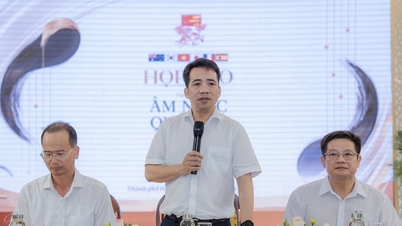
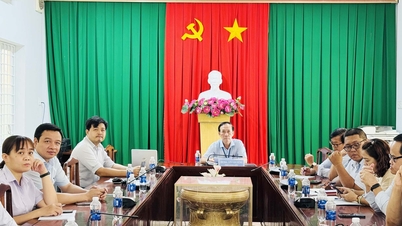
In his opening remarks at the Conference, People's Physician, Associate Professor, Doctor Dau Xuan Canh - President of the Vietnam Traditional Medicine Association - emphasized the goal of exchanging and discussing comprehensive coordination plans to develop traditional medicine, aiming to serve members and community health care from the perspective of proactive public participation and mainstream medical services.
The Chairman of the Vietnam Traditional Medicine Association expressed his desire to promote the healthcare capabilities of the previous generation of former youth volunteers, and warmly welcomed cooperation in technology and management from the private healthcare sector and other associations.

The event was not simply a professional meeting, but aimed at deeply connecting the unique strengths of the five organizations: the Vietnam Traditional Medicine Association, the Vietnam Private Medical Practice Association, the Vietnam Automation Association, the Vietnam Former Youth Volunteers Association, and the Institute for Research, Preservation and Development of National Culture.
Speaking at the conference, Professor Phan Van Tuong, Vice President and Secretary General of the Vietnam Private Medical Practice Association, stated that the non-public healthcare network is currently developing very strongly with over 200 specialized practice facilities and the participation of the Institute for Health Development. The private healthcare sector plays a crucial role in advising people on standardized services amidst a market flooded with conflicting information.

Recently, the Association signed an agreement with the Ministry of Health - National Center for Physicians on digital transformation training for private healthcare nationwide, including electronic medical records, pharmacies, and provincial-level management connectivity. In the future, the Association aims to further strengthen the network of Departments of Health and facilities in Hanoi.
The integration of Eastern and Western medicine is an inevitable trend.
Assessing development trends, Professor Dr. Nguyen Van Nam - Chairman of the Vietnam Private Medical Practice Business Club - pointed out that traditional medicine worldwide (e.g., China) is undergoing a strong transformation, applying technological advancements no different from Western medicine. He raised the question of how to strengthen Vietnamese traditional medicine by collaborating with scientists and the world of biology, especially given the significant interest from international partners such as the Federal Republic of Germany.

From a professional treatment perspective, Specialist Doctor Trinh Dinh Can and Doctor of Pharmacy Phung Tuan Giang shared that combining Eastern and Western medicine is an inevitable trend. Modern medicine cannot deny the power of Eastern medicine when combined correctly; sometimes, just 5-6 ingredients combined can bring about healing effects that Western medicine finds difficult to replace independently.
Currently, the unit holds and conducts in-depth research on over 200 traditional medicine formulas to support the development of cancer treatment. Delegates emphasized the government's commitment to the National Program for the Development of Traditional Medicine and the orientation of "Healing Medicine," while affirming: "Only a nation that preserves its culture can achieve sustainable development."
Mr. Ngo Van Tuyen, Standing Member of the Presidium of the Vietnam Association of Former Youth Volunteers, stated that the Association's core activities focus on caring for the lives of its members, resolving issues related to policies and regulations, and mobilizing social resources to help members engage in economic activities and healthcare. However, current difficulties include the fact that many former youth volunteers from after 1975 still lack health insurance cards; mobile medical examinations and treatments also face procedural obstacles from management agencies at both the provincial and district levels. Despite facing numerous administrative hurdles, the Association affirms its determination to overcome these difficulties and bring the most practical benefits to its members.
To ensure effective implementation, Mr. Ngo Van Tuyen proposed the need for close coordination with the Private Healthcare Association to organize reputable screening examinations, with well-organized statistical data records, to prevent some organizations from using the guise of medical examinations to sell overpriced functional foods, thus damaging their reputation. This model is proposed to be piloted in Hanoi first to gain experience.
Representatives of the Vietnam Former Youth Volunteers Association also proposed a production linkage model: Former Youth Volunteers would cooperate in providing land or areas for growing medicinal herbs, and the Traditional Medicine Association would be responsible for providing seeds and guaranteeing the purchase of the finished products.
Proposal to recognize traditional medicine as cultural heritage.
Representing the unit in charge of traditional culture, People's Artist Le Tien Tho - Director of the Institute, shared that the Institute has been established and operating for over 20 years, associated with many prominent figures such as Professor Vu Khieu and researcher Hoang Khe.
The Director expressed strong agreement with the proposal to recognize traditional medicine as a cultural heritage. Vietnam possesses a treasure trove of tens of thousands of valuable traditional remedies, but the field of traditional medicine is currently facing a difficult challenge in standardizing the list of authentic traditional remedies. He affirmed: "Every product needs a cultural story behind it."
Based on this reality, the Institute proposes coordinating the documentation of heritage, working alongside the Traditional Medicine Association to compile traditional remedies for future generations. The Institute will take the lead in organizing events, creative centers, and exhibitions to introduce the scientific basis, thereby building trust among the people, because deeply ingrained culture is built on trust.
In addition, the Institute proposed digitizing heritage, collaborating with the Vietnam Automation Association to build a "Medical Map," and closely engaging with the community of former Youth Volunteers.

Mr. Do Nguyen Hung, Secretary General of the Vietnam Automation Association, proposed incorporating the digital transformation of traditional medicine into the development strategy for the 2026-2030 period, applying technology in a flexible and adaptable way to reality.
In terms of concrete actions, the Vietnam Automation Association is committed to building a cooperation program with effective "touchpoints": coordinating the development of a digital data system on medicinal herbs, growing areas, membership management, and healthcare businesses; developing free programs with a strategic vision; and connecting resources in terms of capital, human resources (local expertise), and ministerial-level research programs for traditional medicine.
Agreement reached on signing five core action programs.
Concluding the Conference, People's Physician, Associate Professor, Dr. Dau Xuan Canh and leaders of the participating units agreed not to follow the conventional path of individual or bilateral cooperation. The parties resolved to establish a 5-party multilateral cooperation alliance and included 5 core action programs in the Draft Memorandum of Understanding (MOU):
Vietnam Community Health Program : Focuses on health maintenance, exercise, nutrition, and direct healthcare for member groups, with a particular priority given to former Youth Volunteers.
The Digital Transformation and AI Application Program : Building a digital healthcare ecosystem, digitizing health records, linking member data, and ensuring information security, led by the Automation Association.
School and Workplace Health and Wellness Program : Expanding the model of proactive health care into schools (addressing malnutrition, stunting, obesity, etc.) and office environments.
The Traditional Medicine Cultural Knowledge Preservation Program : Compiling and documenting traditional remedies, creating a map of medical heritage, and organizing scientific exhibitions to build trust.
Community-Serving Business Linkage Program : Establishing a value chain: Former Youth Volunteers provide cultivation areas/labor - Traditional Medicine Association standardizes seeds/techniques - Private enterprises produce/guarantee output and distribute standardized services to the people.
Regarding the next steps, the parties will appoint a focal point to participate in the Multilateral Cooperation Coordination Committee to finalize the official MOU text, and at the same time develop a set of criteria for piloting the model in Hanoi within the next 1-3 months before expanding it nationwide.
Source: https://baophapluat.vn/chung-tay-cham-care-health-community-and-preserve-national-medicine.html

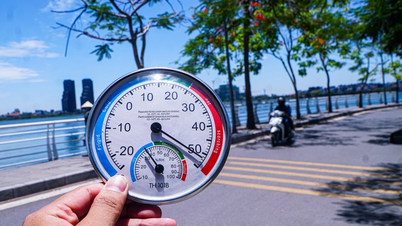
![[Image] Hanoi's urban life under the challenge of a "scorching hot" environment](https://vphoto.vietnam.vn/thumb/1200x675/vietnam/resource/IMAGE/2026/05/25/1779706979265_nang-nong-t5-2026-minh-duy-7-4636-jpg.webp)

















































Comment (0)