

Risk of pesticide residue
After the merger, Can Tho City became the second largest locality in the Mekong Delta region in terms of agricultural land area, with approximately 511,000 hectares, of which rice cultivation land accounts for 319,000 hectares.
Rice production is facing many pressures such as volatile prices, rising production costs, and low profits, leading to a strong trend of conversion to other farming models in the locality. According to the Department of Agriculture and Environment of Can Tho City, by 2025, the total area of inefficient rice land converted in the city will reach nearly 5,200 hectares.
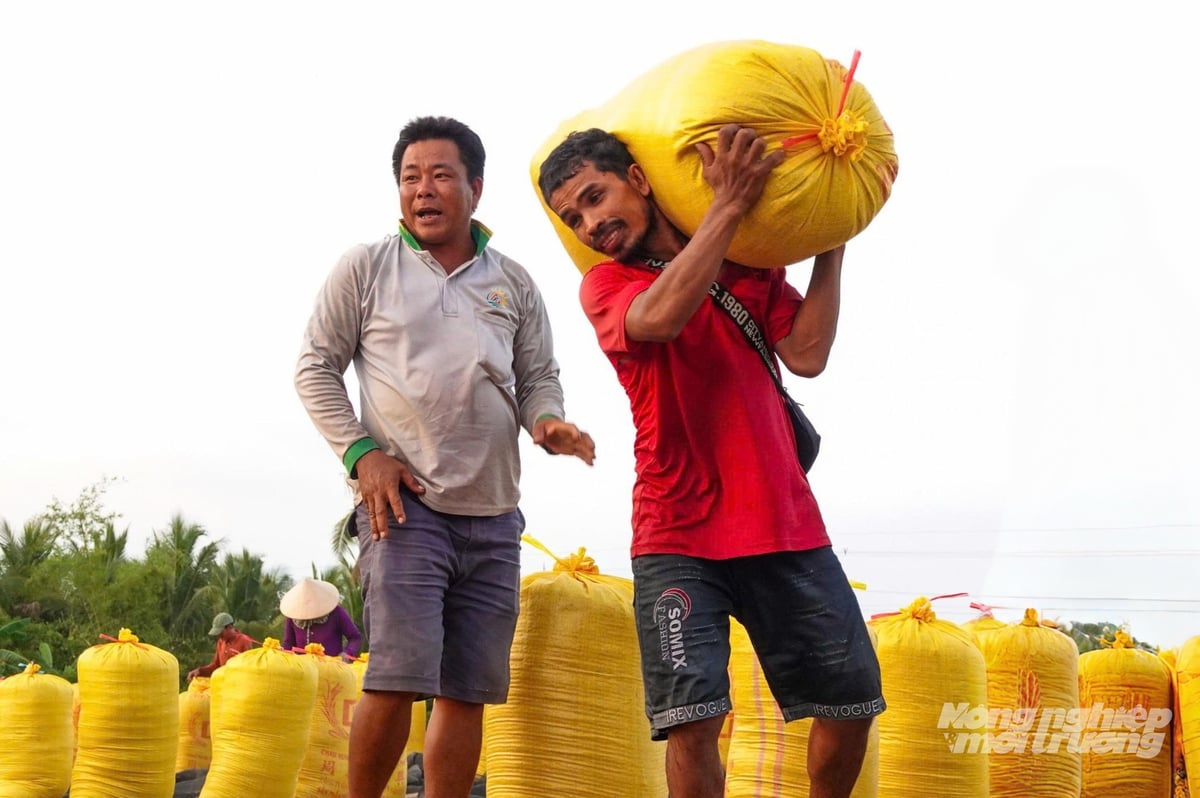
Many rice farmers are looking to switch to a more economically efficient farming model. Photo: Kim Anh.
However, the reality shows that not all rice land conversion models are successful. One of the important reasons, often overlooked by farmers, is the persistence of pesticides in the soil after many years of intensive rice cultivation.
According to Associate Professor Dr. Nguyen Khoi Nghia, an expert from the Department of Soil Science at the University of Agriculture (Can Tho University), rice production currently still relies heavily on pesticides and fungicides. In particular, in areas where 2-3 crops are grown per year, certain active substances accumulate in the soil, making them difficult to decompose. Therefore, when farmers switch from rice cultivation to fruit tree cultivation, the roots of the new trees develop in an unclean soil environment, making them susceptible to adverse effects.
An analysis of soil samples from a rice-to-mango conversion model conducted by the Agricultural University revealed high levels of rice blast fungicide residue in the soil, posing a risk to fruit quality. In conditions where rice paddy soil has not been properly improved, pesticide residue, and even heavy metals, can lead to significant risks for the new crop.
"If you convert rice paddy land to fruit tree land and simply till the soil and form mounds, it will damage the tree roots due to poor drainage, making them susceptible to pests, fungal diseases, and nematodes, leading to tree death. This explains why many conversion models fail from the start," said Associate Professor Dr. Nguyen Khoi Nghia.
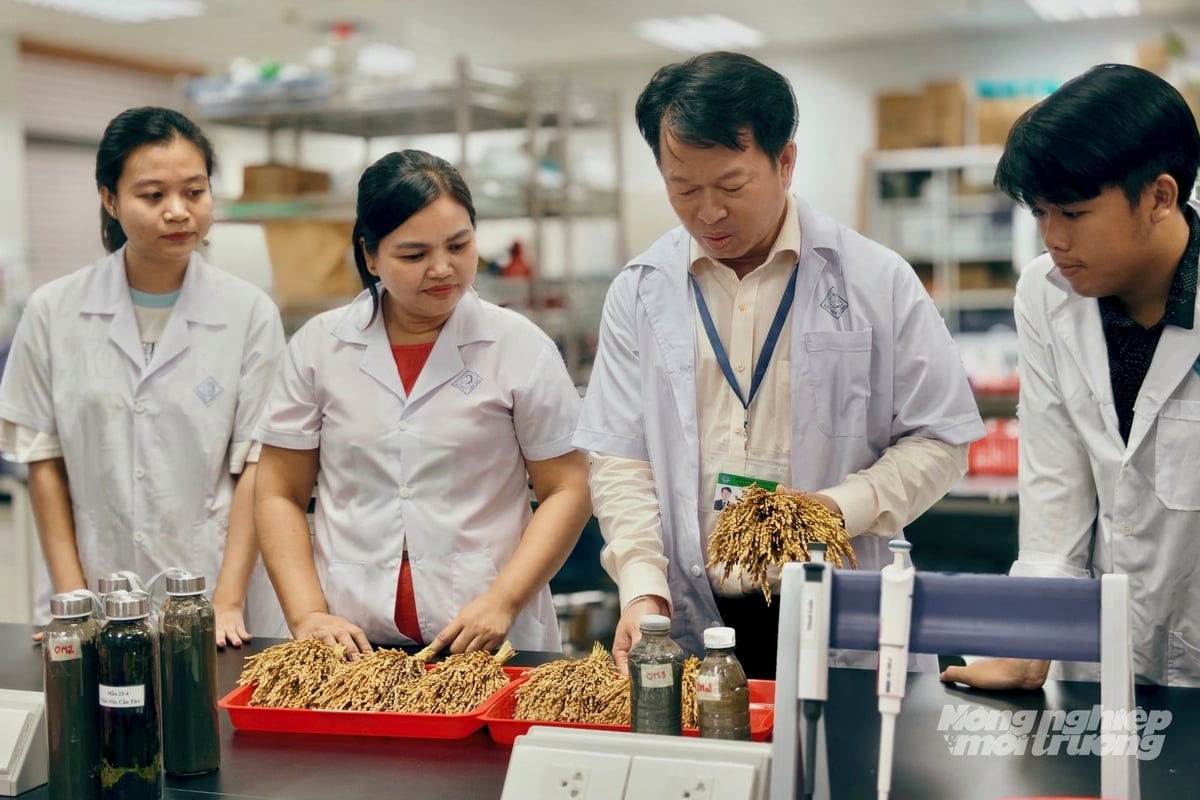
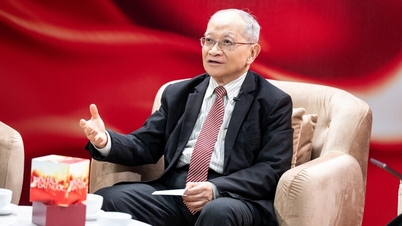
Associate Professor Dr. Nguyen Khoi Nghia - Department of Soil Science, School of Agriculture (Can Tho University) analyzes the impact of pesticide residue when converting rice land. Photo: Kim Anh.
Furthermore, in the context of Can Tho City's efforts to boost agricultural exports, standards regarding chemical residue levels are becoming increasingly stringent. Without proper control from the soil preparation stage, the risk of chemical residue in agricultural products is significant, directly impacting their marketability. Notably, in some production areas near industrial zones or urban centers, rice paddies may also be contaminated with heavy metals from wastewater, further increasing the risk.
Furthermore, the spontaneous and abrupt conversion of rice land disrupts the ecological balance of the fields. When the biological balance is broken, pests and diseases are more likely to break out, forcing farmers to increase the use of pesticides, inadvertently increasing the amount of chemical residue in the soil, creating an uncontrollable cycle.
In response to this situation, at the end of 2025, the People's Committee of Can Tho City issued Decision No. 3021/QD-UBND on the Plan for restructuring crop and livestock production on rice-growing land in 2026. Accordingly, the city plans to allow the conversion of nearly 3,150 hectares of land specifically used for rice cultivation and single-crop rice land to annual crops, perennial crops, and rice cultivation combined with aquaculture.
Soil cleaning solution
Soil improvement is a crucial step in mitigating risks when converting rice land. Associate Professor Dr. Nguyen Khoi Nghia advises farmers to send soil samples for analysis to accurately assess basic indicators related to pesticides, heavy metals, and soil nutrients. These results will serve as a basis for farmers to determine the appropriate soil improvement process and fertilizer formula for the new crop.

Analyzing the quality of rice paddy soil before conversion helps farmers develop appropriate fertilization solutions for the new crop. Photo: Kim Anh.
"If farmers don't know the soil's nutrient needs and only rely on estimations, it's very dangerous. This can lead to under-fertilization or over-fertilization, causing waste and risks," Mr. Nghia noted.
To help farmers clean up pesticide residues or heavy metals in rice paddy soil, Associate Professor Dr. Nguyen Khoi Nghia advises them to apply a comprehensive set of solutions, from physical and chemical to biological methods. These include liming to improve soil pH, using biochar, minerals, and organic fertilizers to increase adsorption capacity and improve soil structure. This approach also creates a favorable environment for microorganisms to thrive, contributing to the decomposition of residual compounds.
Biological solutions such as supplementing microorganisms (bacteria, fungi, actinomycetes), raising earthworms to increase the ability to filter and eliminate toxins in the soil, and planting plants that can absorb pesticide toxins such as ferns, purslane, watercress, and water spinach are low-cost solutions suitable for farmers' production conditions.
According to the Department of Crop Production and Plant Protection (Ministry of Agriculture and Environment), the current number of registered rice land conversions in the Mekong Delta is nearly 40,000 hectares. This figure accurately reflects the reality and legitimate desire of the people to seek new farming models with higher profits compared to rice cultivation.
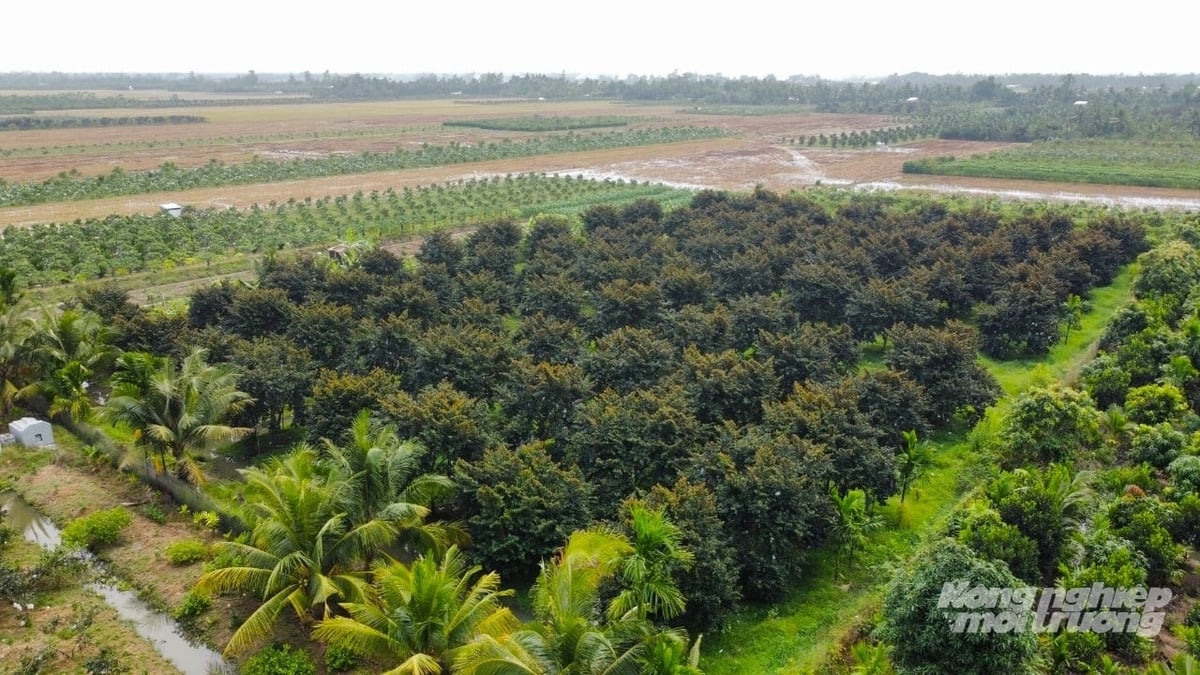
Localities in the Mekong Delta region are in need of converting nearly 40,000 hectares of low-yield rice land, and this number may continue to increase. Photo: Kim Anh.
Mr. Nguyen Quoc Manh, Deputy Director of the Department of Crop Production and Plant Protection, stated that for this transition to be on the right track and effective, three key factors need to be considered by localities. Firstly, training and technical guidance on production for farmers when switching to other crops is crucial. This includes advising farmers to minimize the use of chemical pesticides and instead apply integrated pest management (IPM) methods, using biological products, insect traps, etc., to control pests and diseases.
Secondly, after the transition, local authorities need to strictly control input materials, especially seedlings, ensuring their quality and origin.
Ultimately, the product consumption stage determines the effectiveness of the transformation. If production is good but the products cannot be sold or the price is low, farmers will revert to old methods or make spontaneous, uncontrolled changes.
Commenting on policy, expert Nguyen Khoi Nghia suggested that localities should prioritize the development of high-quality rice-growing areas, reducing emissions, organic rice, and rice cultivation combined with aquaculture.
Furthermore, the transition must be linked to supporting farmers in finding markets for their products. Because farmers transition according to local planning, even if the model is good, if they cannot sell their products or the prices are low, farmers will lose confidence.
Source: https://nongnghiepmoitruong.vn/chuyen-doi-dat-lua-can-xu-ly-ton-du-hoa-chat-tu-dau-d807630.html

![[Photo] General Secretary and President To Lam presides over a working session with the Central Policy and Strategy Committee on the development of the materials industry.](https://vphoto.vietnam.vn/thumb/1200x675/vietnam/resource/IMAGE/2026/05/21/1779359935432_a3-bnd-3129-1412-jpg.webp)


![[Photo] National Assembly Chairman Tran Thanh Man working with the Standing Committee of the Law and Justice Committee](https://vphoto.vietnam.vn/thumb/1200x675/vietnam/resource/IMAGE/2026/05/21/1779378929214_ndo_br_1-4610-jpg.webp)





















































Comment (0)