

 |
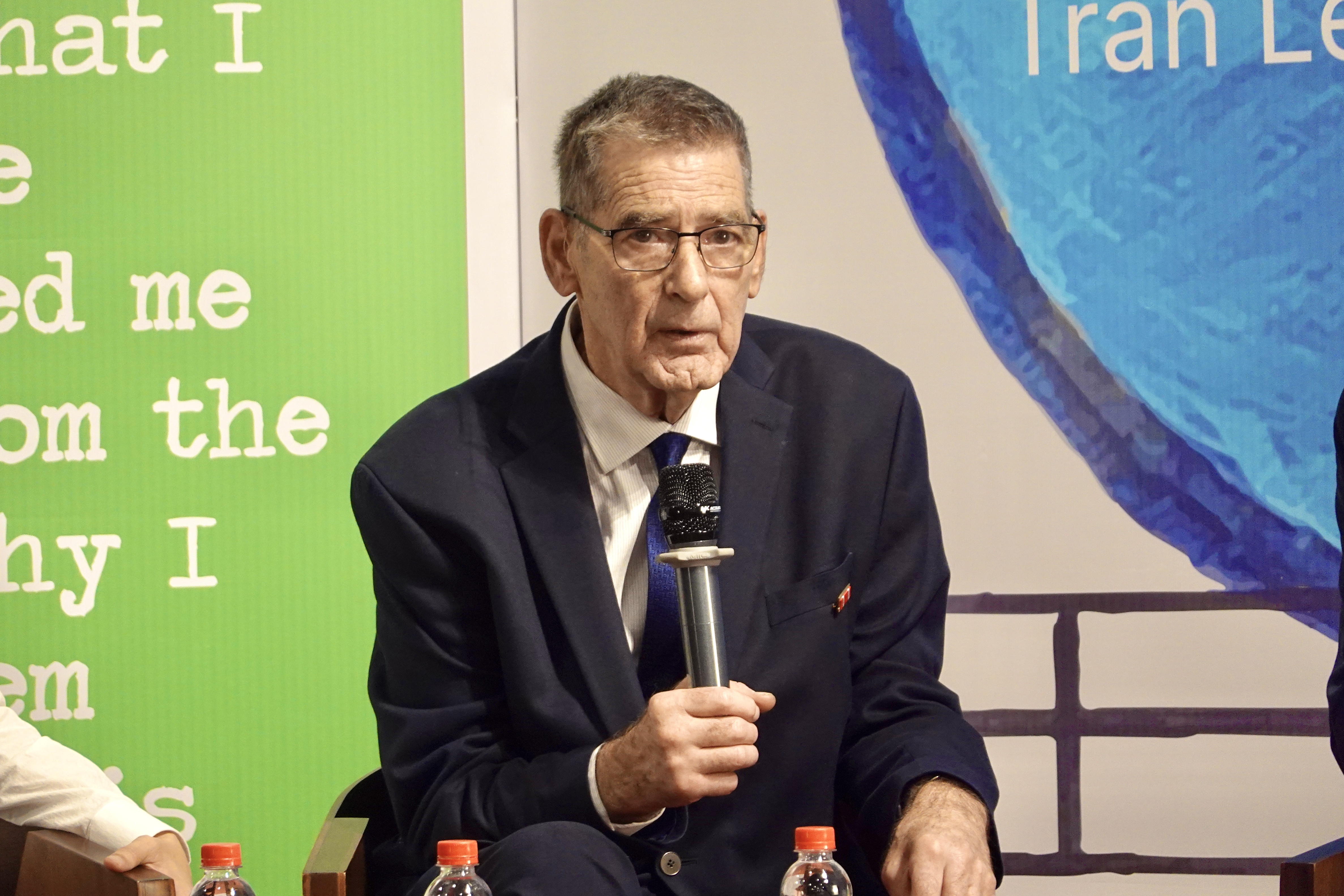
Professor, Doctor of Science, poet and former American soldier Bruce Weigl launches his poetry collection "The Enchantment of Ho Guom Lake". Photo: Thuy Hanh. |
"The Enchantment of Ho Guom Lake is a record of Hanoi , both a spiritual diary of a veteran, a post-war reflection, and a prayer for peace," poet Nguyen Viet Chien remarked about the poetry collection " The Enchantment of Ho Guom Lake" by Professor, Doctor, poet and former American soldier Bruce Weigl, translated by Tran Le Khanh, which was launched in Hanoi on the morning of June 2nd.
The Vietnamese soul of a former American soldier
Bruce Weigl has a peculiar connection with Vietnam. Sixty years ago, as an 18-year-old soldier, he came to Vietnam to fight, armed only with guns and ammunition. Sixty years later, he returns to Vietnam, bringing with him a collection of passionate poems about Hanoi.
Bruce Weigl's love for Vietnam is complex. It's not an exaggeration to say that his love is somewhat obsessive. He travels back and forth to Vietnam frequently, at least once every two years. He often tells the press that he loves the natural scenery, the food, and the people of Vietnam. He once said that perhaps he was Vietnamese in a previous life.
But his connection to Vietnam, especially to Hanoi, is perhaps deeper than he himself says. It is a spiritual, intuitive connection. This is evident right in the introduction to the poetry collection.
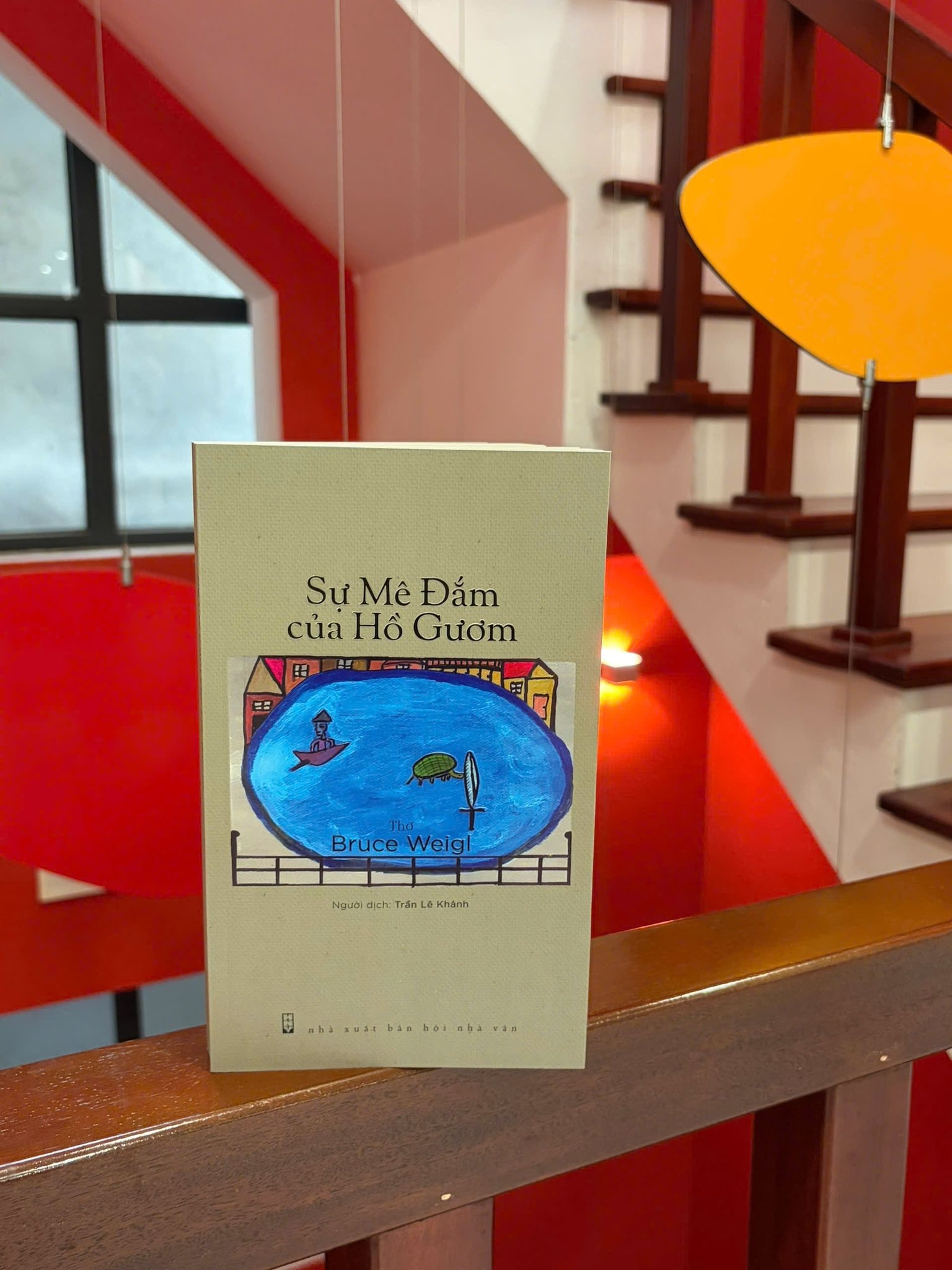 |
The poetry collection "The Enchantment of Ho Guom Lake". Photo: Vietnam Writers Association Publishing House. |
He wrote: "I believe I am always haunted by spirits [...] For reasons that are not entirely clear, probably related to the war and my experiences there, every time I return to Vietnam, those spirits follow me, mingling with other spirits speaking a different language."
The author spent eight weeks in Hanoi, experiencing a "poetic outpouring." He confessed that he surrendered himself to the guidance of "invisible forces" as he wandered through the thousand-year-old city. Poems found him, and he described his poetry as "a collaboration with many voices, appearing collectively as in a dream."
"In Hanoi, I was immersed in something that transcended myself," he wrote. He was immersed in that unnamable aspect of Hanoi, letting his emotions surge to the point of almost overwhelming him, then being honest with that storm of emotions, letting it pass through him, onto paper.
A collection of poems about pain, love, history, and forgiveness.
Poet Nguyen Viet Chien has offered many reflections on Bruce Weigl's poetry collection. "He is not only a poet who writes about war from an American perspective, but also a man haunted by history throughout his life. He came to Vietnam as a place for dialogue, repentance, rebirth, and learning to love again. Many works about war often stop at feelings of trauma, guilt, and crisis, but in this collection, he goes further," commented poet Nguyen Viet Chien.
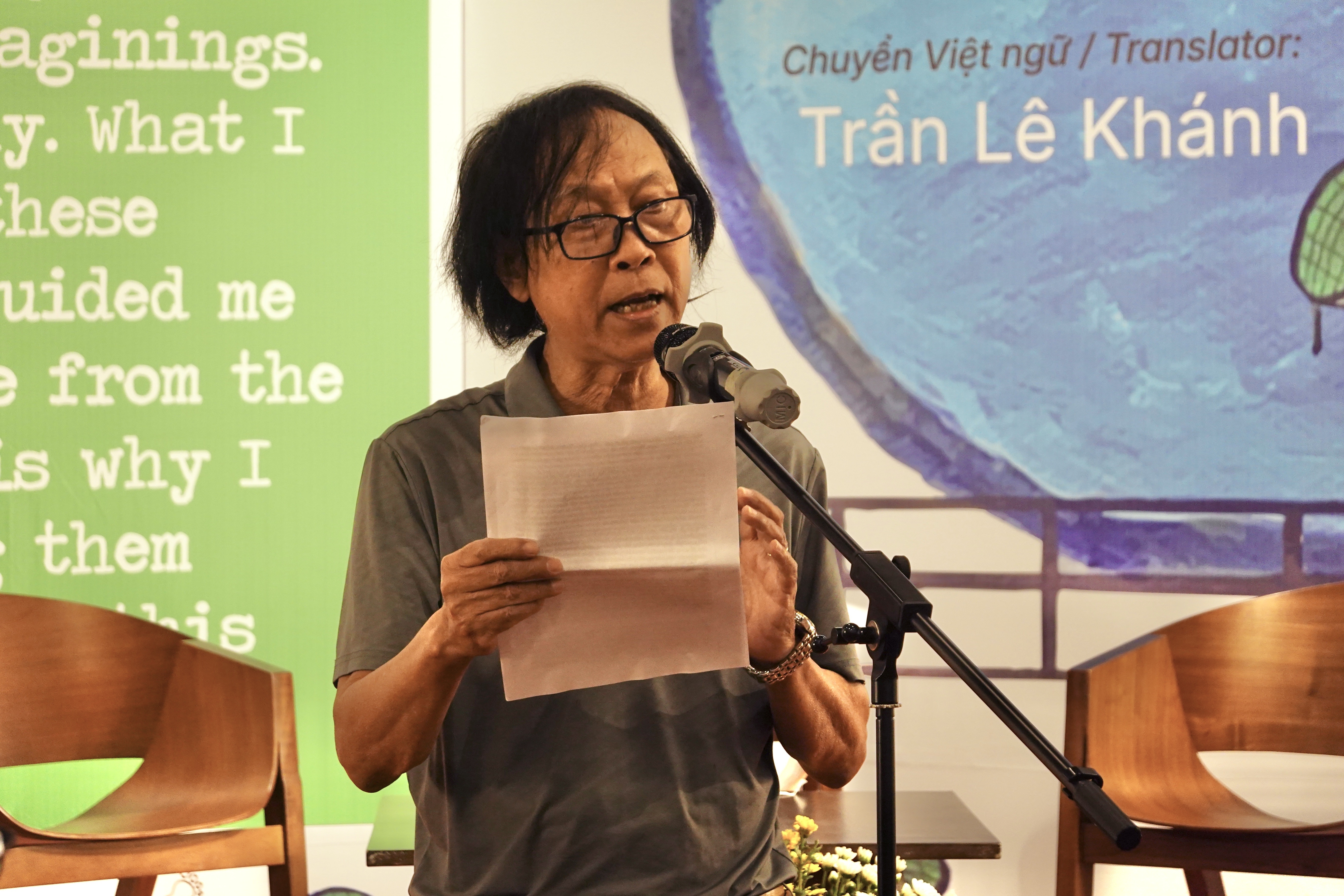 |
Poet Nguyen Viet Chien at the book launch. Photo: Thuy Hanh. |
Bruce Weigl not only recalls the war, but also transcends it, to see the Vietnamese people in their lives today. He not only confronts the past, but also seeks healing; he not only writes about personal pain, but also places that pain within a space where love, compassion, historical memory, and forgiveness coexist.
Hanoi in his poetry appears as it truly is. But, amidst the peaceful scenery of Hanoi, sometimes the "ghosts of the past"—memories of the battlefield—unexpectedly resurface. In peacetime, he remembers loss. War memories always unexpectedly intrude into the present, shaking it to its core.
But ultimately, Bruce Weigl chose healing, reconciliation, and resurrection. That choice is partly reflected in the concluding lines of his poem, "The Enchantment of Hoan Kiem Lake." He wrote: "Sometimes there is no antidote to loss / except the resurrection of a soul / that someone finds within you."
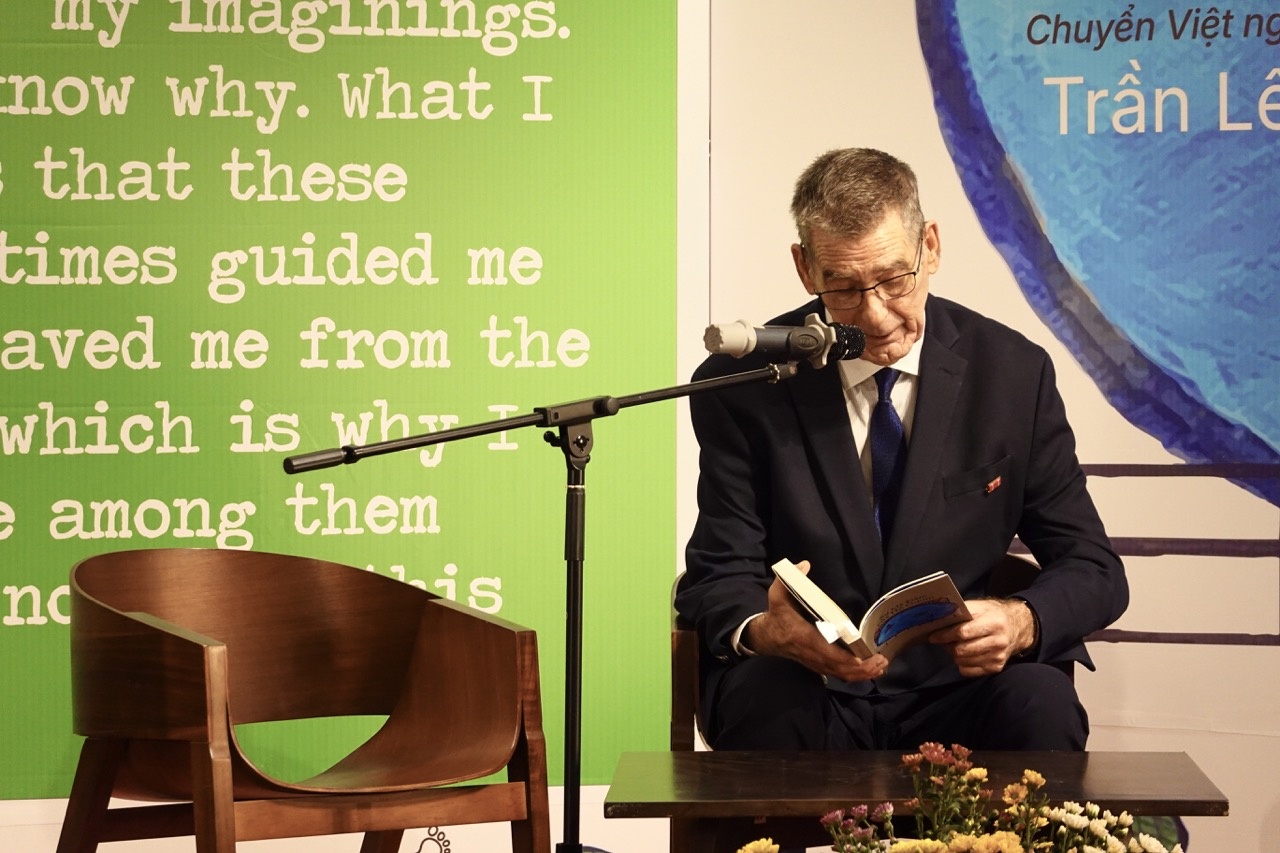 |
The author reads her poems at the book launch. Photo: Thuy Hanh. |
The poetry collection also bears the significant mark of poet Tran Le Khanh, who translated the collection into Vietnamese. Moved by the American poet's affection for Vietnam, Mr. Tran Le Khanh strived to find a similar way of expressing it, translating it in a simple manner, in a way that Vietnamese people can understand, while still conveying the meaning of the original work.
According to Mr. Tran Le Khanh, the most difficult thing when translating poetry is how to make Vietnamese readers feel the author's emotions and the emotions of the scene in the poem. Each language has different ways of evoking emotions, and the translator must both empathize with the author's emotions and understand the reader's emotions.
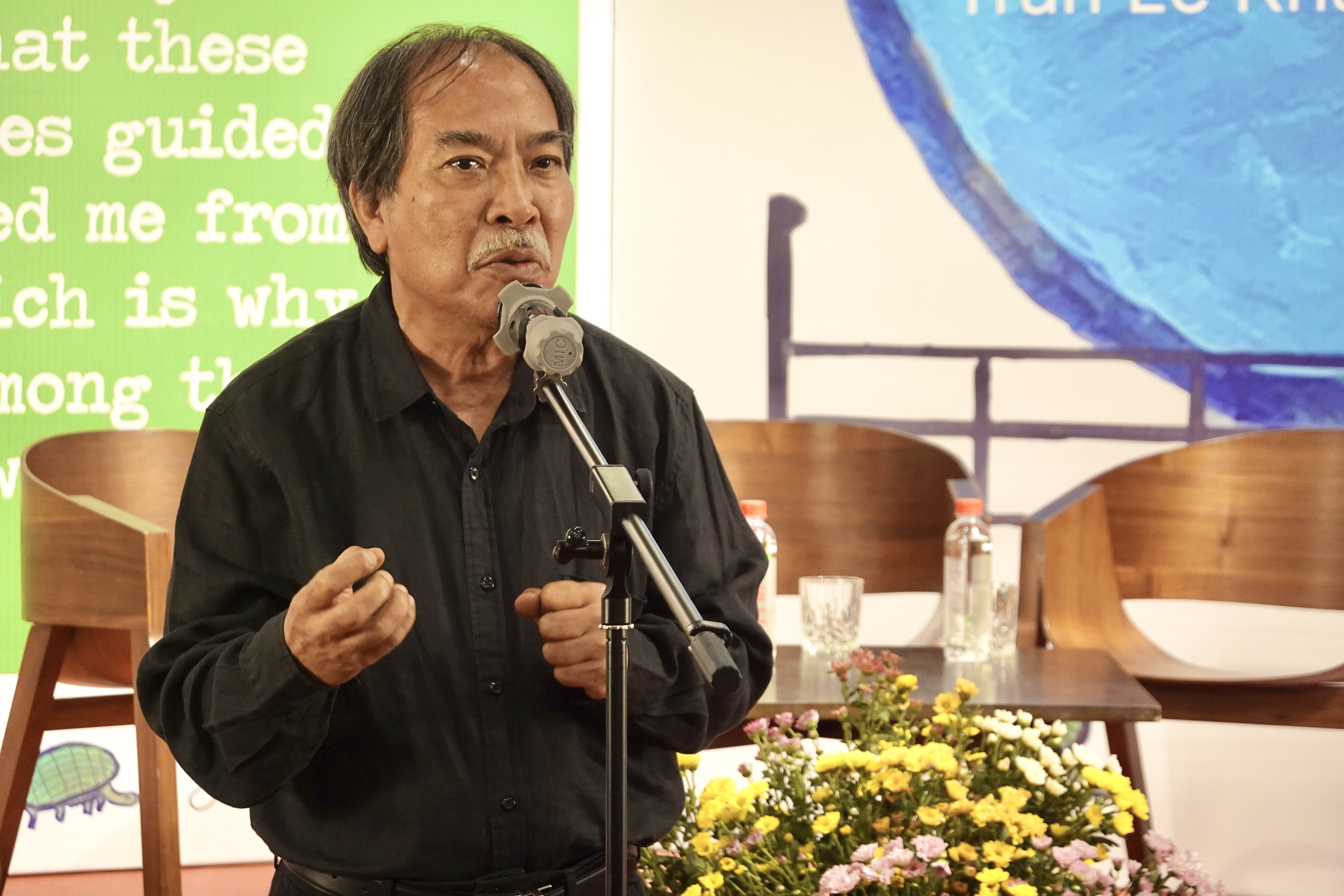 |
Chairman of the Vietnam Writers Association, Nguyen Quang Thieu, shared many memories with the poet Bruce Weigl. He recounted: "One of Bruce's biggest dreams was to be laid to rest forever on this Vietnamese soil. I think that was a very beautiful dream."
Source: https://znews.vn/chuyen-mot-nguoi-my-me-dam-ho-guom-post1656357.html


![[Photo] General Secretary and President To Lam presides over a meeting on preparations for the review of one year of operation of the three-tiered government system.](https://vphoto.vietnam.vn/thumb/1200x675/vietnam/resource/IMAGE/2026/06/02/1780391821195_a1-bnd-4595-9717-jpg.webp)






















































Comment (0)