The market demands high quality and high added value.
According to the Ministry of Agriculture and Environment , the EU is one of the markets with very high requirements for imported agricultural products, including rice. However, it is also a market that brings significant added value to exporting businesses.
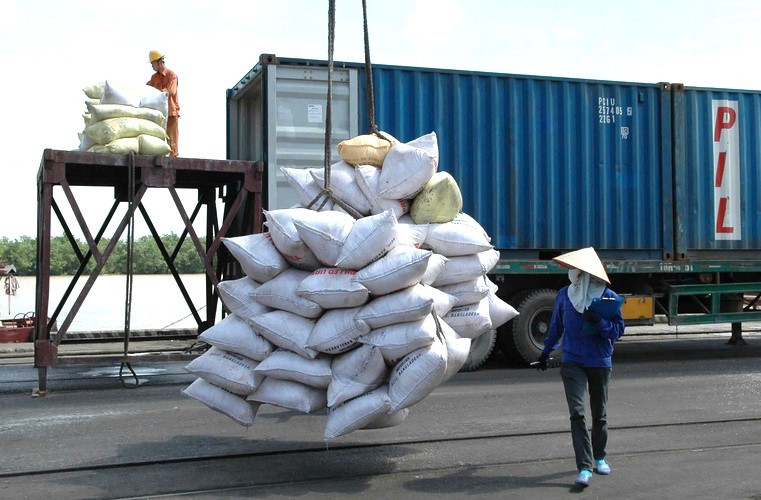
For rice, the EU applies various mechanisms depending on the segment, such as fragrant rice, high-quality white rice, or rice for processing. Specifically for fragrant rice, the EU has regulations specifying a list of rice varieties eligible for preferential tariffs under the Vietnam-EU Free Trade Agreement (EVFTA).
For Vietnam, this list currently includes many specialty fragrant rice varieties that have been recognized by the EU. The important thing is that businesses must prove the authenticity of the rice variety. For example, if they declare it as ST25 rice, the entire production, harvesting, and export process must demonstrate that it is indeed ST25 rice. This requirement aims to ensure transparency and traceability, not to create a new technical barrier.
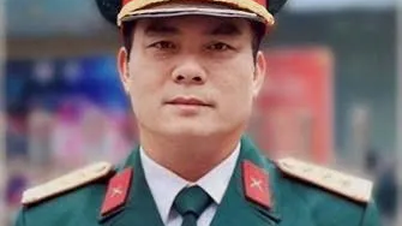
Mr. Nghiem Quang Tuan, Deputy Director of the Department of Crop Production and Plant Protection (Ministry of Agriculture and Environment), informed: Recently, the EU adjusted the list of fragrant rice varieties eligible for preferential treatment, which is a positive sign.
In fact, in recent years, the Vietnamese rice industry has continuously seen the emergence of new rice varieties with better quality, higher yields, and better suitability to market demands. Meanwhile, some once-popular varieties may gradually see their cultivated area reduced or no longer be widely produced. Therefore, the EU's periodic review and updating of the list of fragrant rice varieties is necessary to align with production practices.
“This process is usually carried out on the basis of exchanges between the EU and Vietnam. We proactively propose new varieties with export potential to be added to the preferential list. Therefore, this should not be seen as the EU tightening import conditions, but rather as an opportunity for new Vietnamese rice varieties to access high-value markets,” Mr. Nghiem Quang Tuan commented.
Notably, from July 1, 2026, the procedures for certifying and re-certifying fragrant rice varieties eligible for preferential tariffs under the EVFTA and the Vietnam-UK Free Trade Agreement (UKVFTA) will be officially decentralized to provincial People's Committees.
Many experts consider this a positive administrative procedure reform. Decentralization will help localities be more proactive in handling documents, shorten processing times, reduce pressure on central government agencies, and create more favorable conditions for businesses.
Low-emission rice will be a new advantage for Vietnam.
Regarding the advantages of Vietnamese rice, Le Thanh Tung, Vice President and General Secretary of the Vietnam Rice Industry Association, said that Vietnam's rice exports currently rely on not just one segment but include many different product groups such as specialty rice, fragrant rice, high-quality rice, and rice for processing.
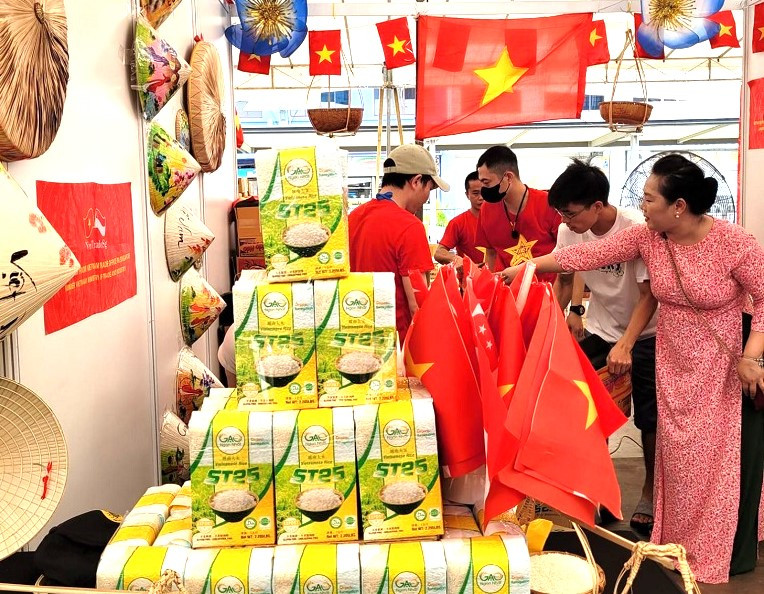
In this context, the EU market offers a crucial direction for Vietnam's rice industry. Beyond product quality requirements, the EU sets high standards for food safety, traceability, sourcing organization, and sustainability in production. To meet these requirements, businesses must establish stable sourcing areas, forge close links with farmers, and maintain consistent product quality over many years.
"This is the greatest value that the EU market brings. It not only creates export opportunities but also promotes the upgrading of the entire Vietnamese rice industry's production chain. By meeting EU standards, businesses also have more favorable conditions to access other demanding markets such as Japan, South Korea, Australia, or North America," Mr. Le Thanh Tung emphasized.
With low-emission rice, many experts agree that this product will become a new competitive advantage for Vietnam in the international market. Currently, the market size specifically for low-emission rice worldwide is still relatively small. Some European countries and consumer groups interested in sustainable development are willing to pay higher prices for products that meet these criteria.
Expert Hoang Trong Thuy believes that the most important thing for farmers is still economic efficiency. If reduced-emission farming helps lower input costs, increase productivity, improve product quality, and create conditions for selling at better prices, then farmers will be willing to participate.
Meanwhile, consumer awareness of low-emission products is still developing. Currently, many consumers still prioritize delicious rice, strong brands, or attractive packaging before considering emission factors.
Therefore, along with developing production, Vietnam needs to gradually build a market for low-emission rice products. In the long term, as global emission reduction commitments are implemented more strongly, this will be a significant advantage helping Vietnamese rice increase its competitiveness in high-end markets.
You may also likeÔ tô “điên” đâm liên hoàn hàng loạt xe máy trên cầu ở An GiangNgày 23/6, một vụ tai nạn giao thông nghiêm trọng đã xảy ra trên cầu An Hòa (phường Rạch Giá, tỉnh An Giang) khi một ô tô con bất ngờ mất lái, lao sang làn ngược chiều và đâm vào nhiều xe máy.Implement various models to support citizens in carrying out administrative procedures.(CT) - From the beginning of 2026 until now, the People's Committee of Ninh Kieu ward has implemented many models to support people in carrying out administrative procedures.Maintaining and expanding a presence in the EU market not only helps increase export turnover but also serves as a "passport" for Vietnamese rice to enter other high-end markets around the world. As quality is proven by market realities and international standards, the Vietnamese rice brand will be increasingly strengthened, thereby opening up new growth opportunities for the rice industry in the coming years.
Le Thanh Tung, Vice President and General Secretary of the Vietnam Rice Industry Association



Source: https://hanoimoi.vn/co-hoi-de-nganh-lua-gao-viet-nang-cap-chuoi-san-xuat-1208687.html



![[Photo] Prime Minister Le Minh Hung presides over the thematic session on promoting science and technology development and innovation.](https://vphoto.vietnam.vn/thumb/1200x675/vietnam/resource/IMAGE/2026/06/23/1782207872934_ndo_br_dsc-1724-jpg.webp)