

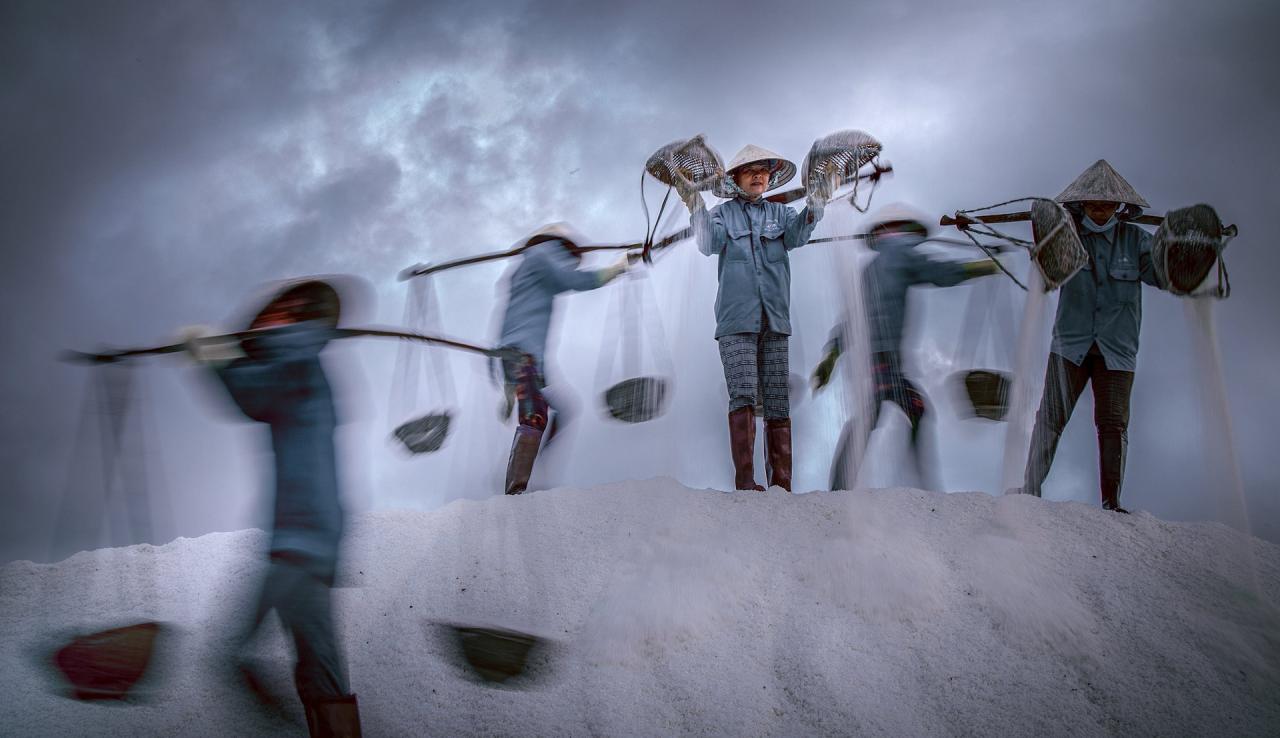
Salt is salty. The sweat of salt farmers is even saltier. For centuries, they have toiled amidst the sea, sun, and wind, clinging to their profession – through times of prosperity and hardship, depending on the times. Salt-making regions in Vietnam are numerous and diverse, from North to South, depending on the soil conditions of each area.
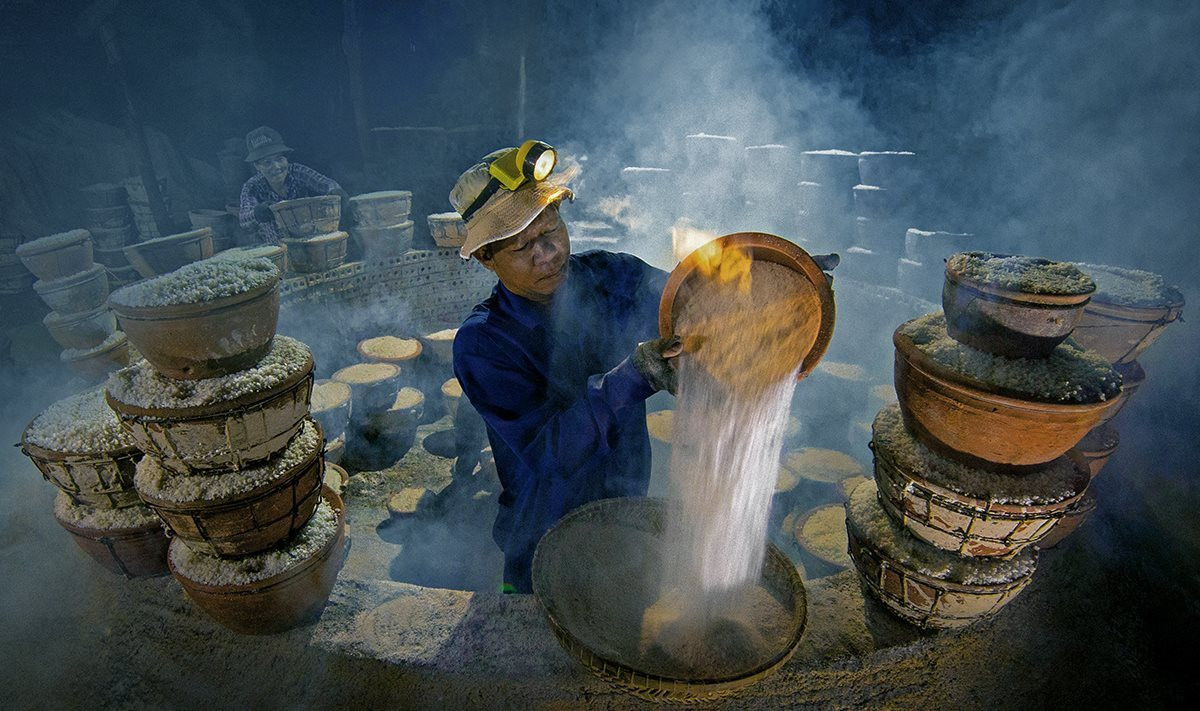
Toiling under the scorching sun in the fields, the backs of men and women alike are drenched in salty sweat. Viewed from above, the scene resembles a work of art. But in reality, these age-old salt-producing regions of Vietnam are struggling due to a shrinking market. Finding a way for sea salt to become a branded Vietnamese specialty, and then dreaming of reaching the global market , remains a distant dream.
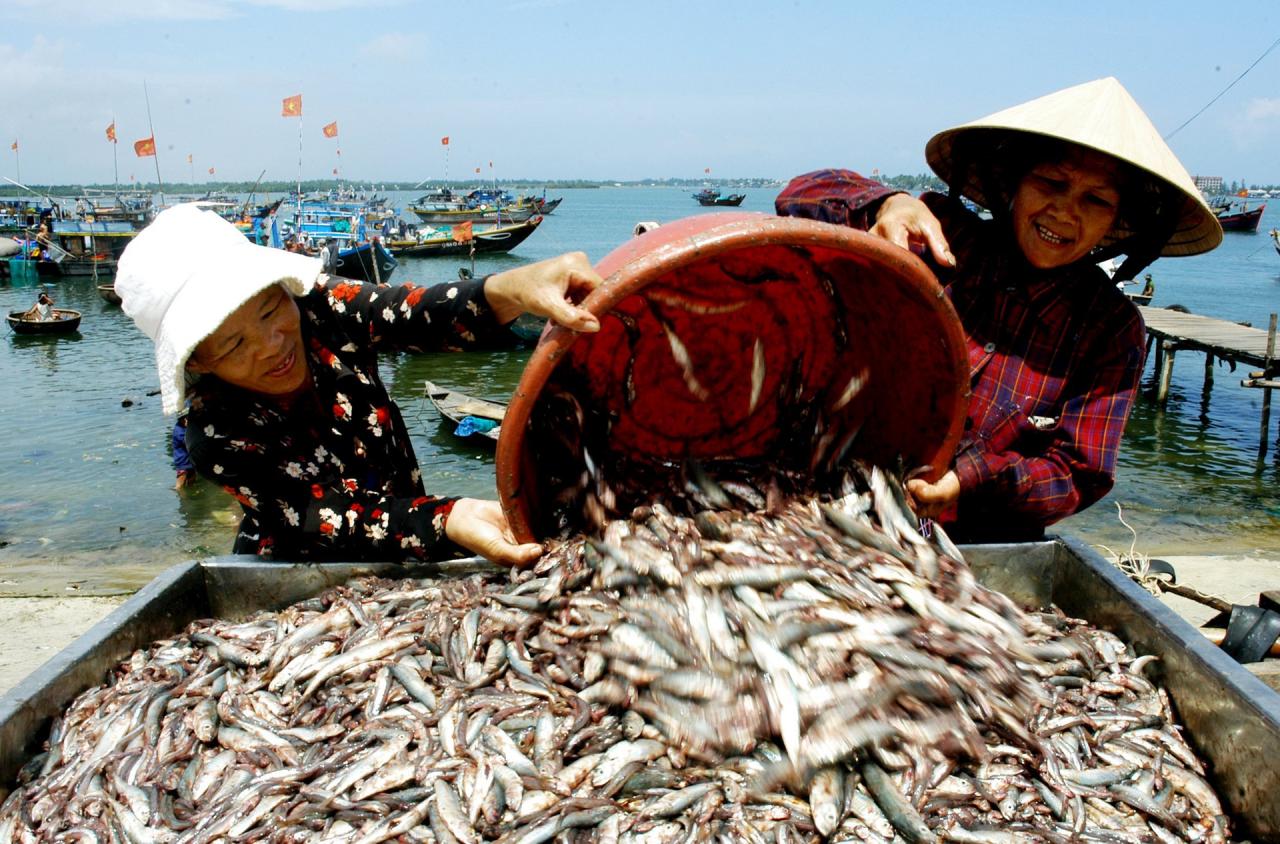
The salt trade leaves not only traces on the shore. The salt grains are incorporated into the savory flavor of the fish sauce. Anchovies, fermented with sea salt, create a traditional bottle of fish sauce, fragrant with aroma that lingers through the years.
Historically, when people in Quang Nam mention the "salt road," they also think of a route running along the Truong Son mountain range, a testament to the trade and exchange between the Co Tu people.
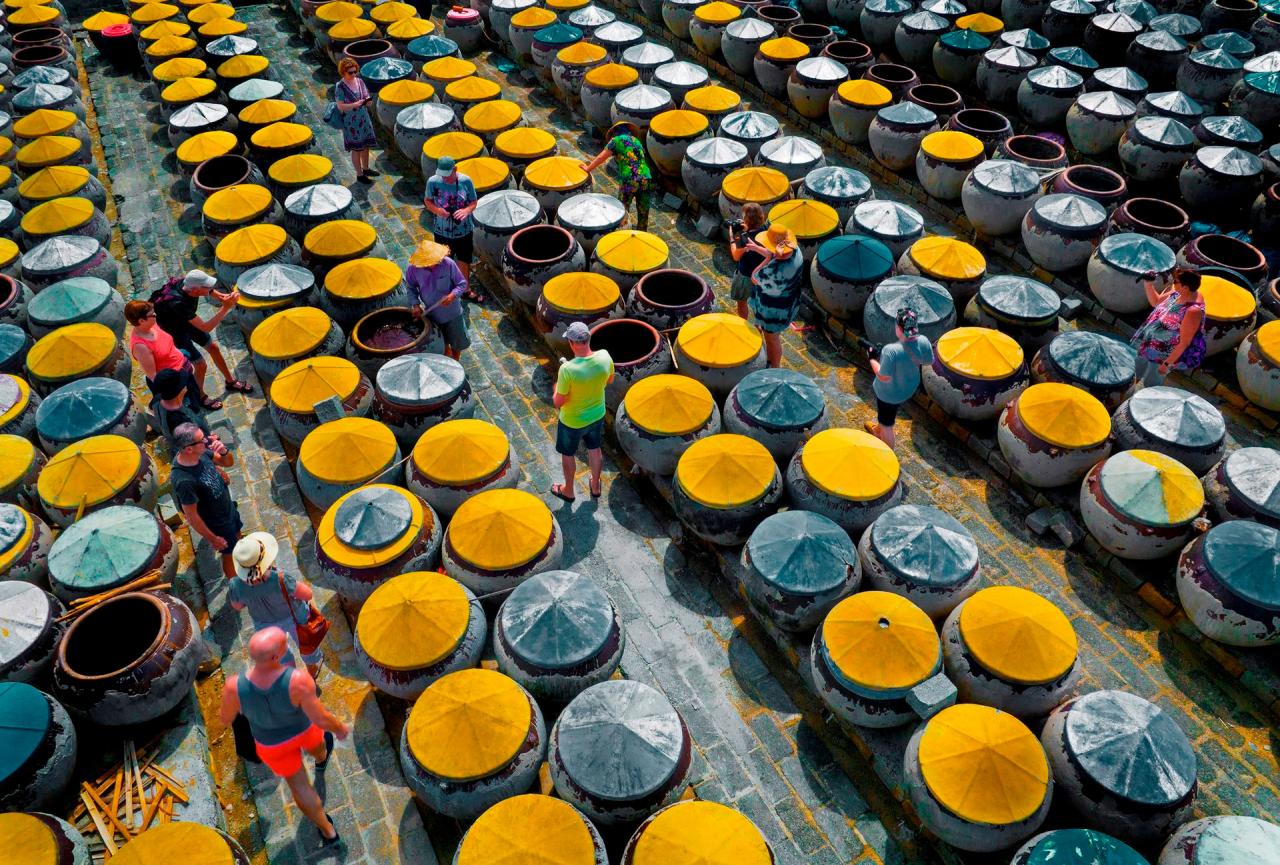
Salt is the most valuable commodity in the trade between the highlands and the lowlands. Traces of salt-offering sites and ancient characters believed to be Sanskrit on the cliffs in Achia (Lang commune, Tay Giang district) are considered remnants of this unique "salt route."
Under the sun and sea breeze, the shadows of the "salt" forms are cast...

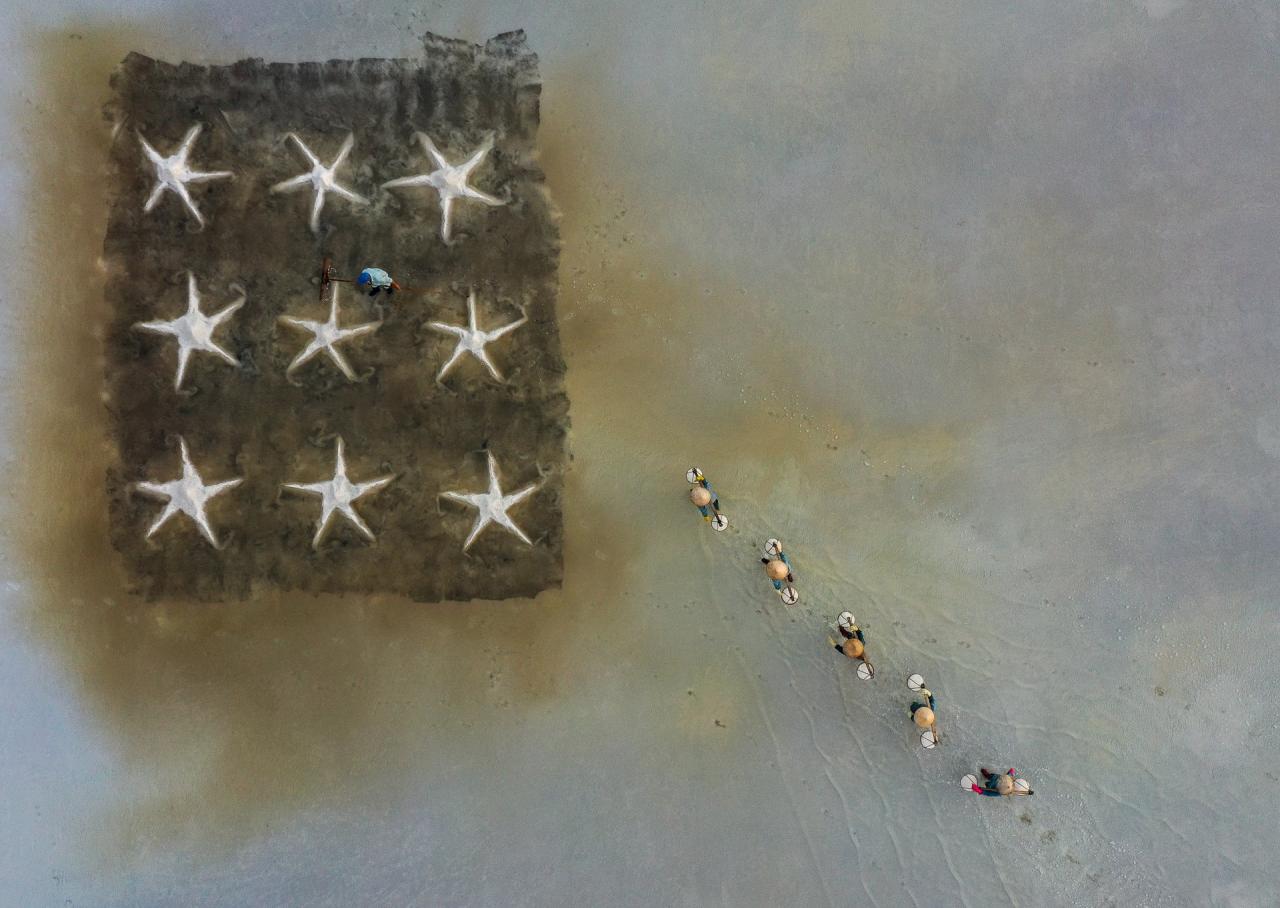

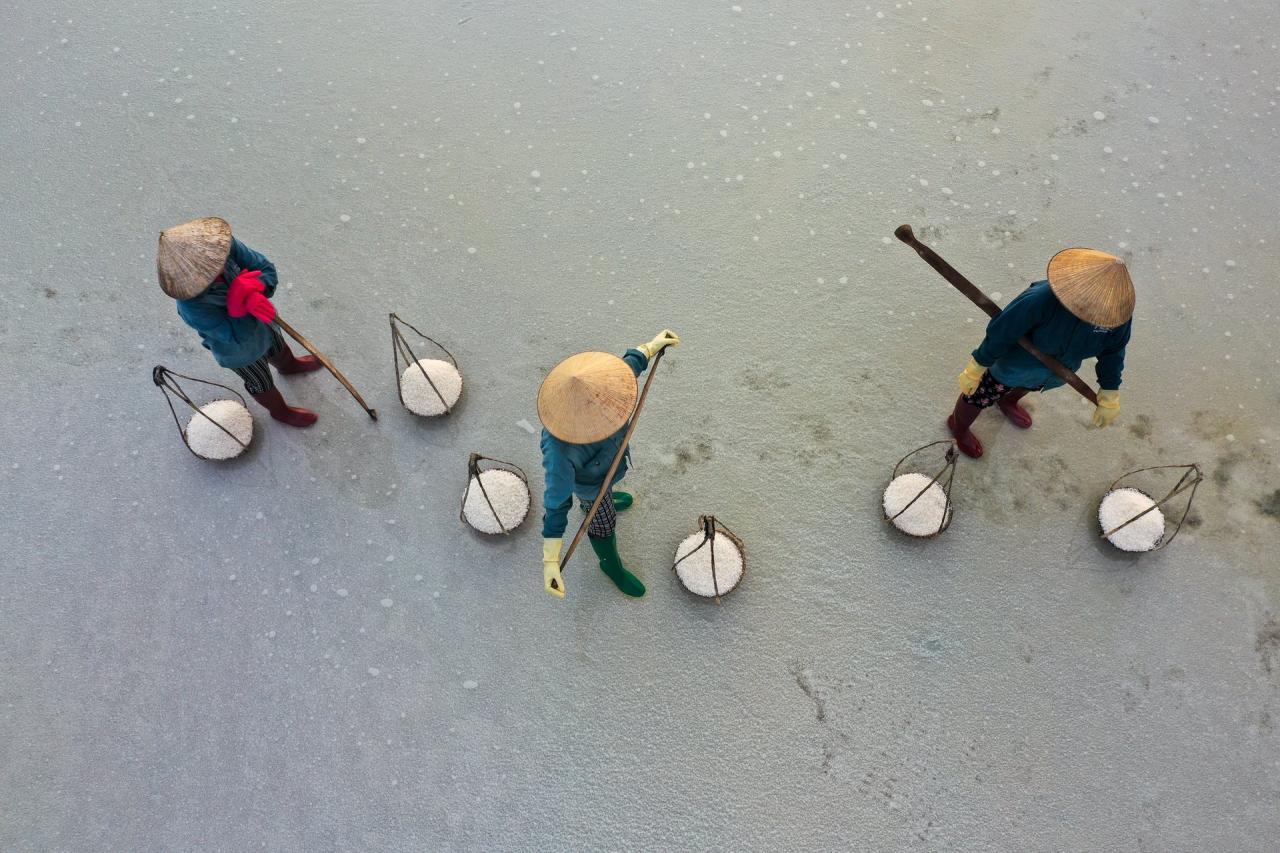
Source
![[Photo] General Secretary and President To Lam presides over a working session with the Central Policy and Strategy Committee on the development of the materials industry.](https://vphoto.vietnam.vn/thumb/1200x675/vietnam/resource/IMAGE/2026/05/21/1779359935432_a3-bnd-3129-1412-jpg.webp)

![[Photo] National Assembly Chairman Tran Thanh Man working with the Standing Committee of the Law and Justice Committee](https://vphoto.vietnam.vn/thumb/1200x675/vietnam/resource/IMAGE/2026/05/21/1779378929214_ndo_br_1-4610-jpg.webp)

















































































Comment (0)