


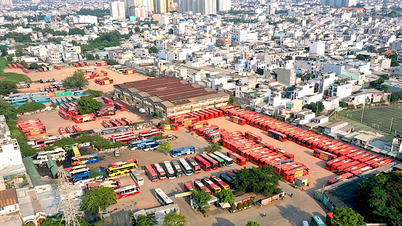
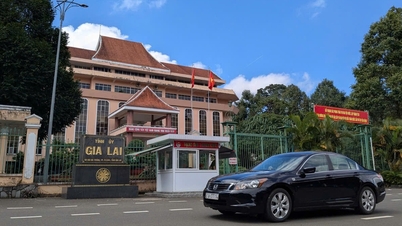
Of these, five localities reported having few recovered and transferred properties that had not yet been fully exploited and processed: Lai Chau, Dien Bien, Cao Bang, Lang Son, and An Giang. However, many other localities still have a large number of properties and land that need to be processed in the second phase. "Some ministries and central agencies still have many surplus properties and land that have not been fully processed, such as the Central Committee of the Vietnam Fatherland Front and the Supreme People's Court," a representative from the Ministry of Finance stated.
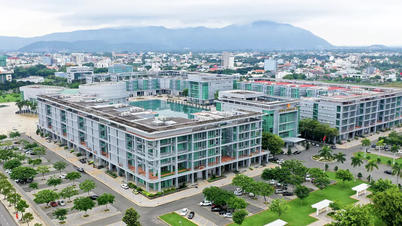
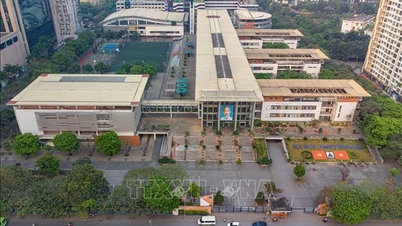
Following the reorganization of administrative units and streamlining of the apparatus, localities have completed the initial processing of over 26,400 properties. However, 11,412 surplus properties remain unutilized or not fully processed. According to the Ministry of Finance, the arrangement, allocation, and processing of surplus offices and properties after the reorganization of administrative units have basically ensured the working needs of agencies and units under the two-tiered local government model; while also creating additional resources for socio -economic development.
To date, localities have completed the initial phase of arranging and handling 26,447 properties under their management following the reorganization of the administrative apparatus and units. Of these, 3,015 properties have been allocated for educational and training facilities; 648 for medical facilities; 2,385 for cultural and sports institutions; and 626 for other public purposes.
However, according to statistics from the Ministry of Finance, progress remains slow for facilities that have been reclaimed and transferred to local authorities for further processing. As of May 27th, only 4,709 surplus land and buildings have been processed or put into operation. Meanwhile, 11,412 facilities remain unprocessed or not fully utilized.
Notably, among the underutilized facilities, 5,329 have been assigned to housing businesses or land development organizations for management but have not yet been put into operation; 2,823 have had their disposal plans approved but not yet completed; and 3,260 facilities do not yet have disposal or exploitation plans.
Regarding central government ministries and agencies, the Ministry of Finance reported that it had processed 3,446 properties (houses and land), but 702 properties remain unprocessed. Of these, 474 properties have yet to receive a processing decision.
According to the Ministry of Finance's assessment, the restructuring and re-utilization of surplus housing and land has contributed to creating additional resources for the fields of education, health, culture, and sports, while saving approximately 30,000 billion VND in compensation and land clearance costs that would have been incurred if similar public works projects had to be built.
The Ministry of Finance noted that the progress in handling surplus housing and land varies unevenly among localities. Some localities still have a large number of facilities that need to be processed in the second phase, while some ministries and agencies still have a significant amount of surplus housing and land that has not yet been processed.
Specifically, in the current stage, the processing and exploitation in step 2 still faces some difficulties such as: When reorganizing the administrative apparatus and restructuring administrative units at all levels, a large number of surplus offices, houses, and land are generated that need to be put into use, creating a large supply; while the demand from the State sector (for offices and operational facilities) and the non-State sector (the demand for renting houses and land from non-state organizations and individuals) in areas with surplus assets decreases (due to agencies and units relocating to new provincial centers and new communes, and the shift of business models from direct to online), leading to an imbalance between supply and demand.
"Many surplus properties are small-scale, scattered, located in difficult areas, remote regions, and lack commercial advantages. Non-state organizations and individuals have no need to rent them, while using them for public works requires funding and personnel for management. Many surplus properties are assigned to commune-level authorities for management, exploitation, and disposal, but some commune-level units are still struggling with implementation," a representative from the Ministry of Finance informed.
To expedite the process, the Ministry of Finance has submitted to the Government a draft Resolution on specific mechanisms and policies to promote the handling and exploitation of surplus houses and land after administrative unit reorganization and streamlining of organizational structures.
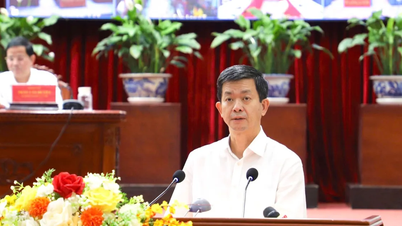
The Ministry of Finance will continue to review and improve the legal system for managing and using public assets from the central to local levels, especially detailed regulations and guidelines on standards and norms for the use of specialized public assets, and documents on decentralization in the management and use of public assets. "Identifying the management, exploitation, and disposal of surplus land and buildings as one of the criteria for evaluating the performance of key performance indicators (KPIs) for heads of ministries, central agencies, provinces, cities, communes, wards, special zones, and other agencies, organizations, and units," a representative from the Ministry of Finance proposed.
Source: https://baotintuc.vn/kinh-te/con-so-luong-lon-nha-dat-doi-du-phai-xu-ly-o-giai-doan-2-20260603123658215.htm



![[Photo] First session of the 14th Congress of the Vietnam Trade Union](https://vphoto.vietnam.vn/thumb/1200x675/vietnam/resource/IMAGE/2026/06/03/1780465947883_ndo_br_img-3852-jpg.webp)
















































![[Video] Sunset at Lap An Lagoon – Where the sun sets over the fishing nets](https://vphoto.vietnam.vn/thumb/1200x675/vietnam/resource/IMAGE/2026/05/31/1780192137701_beach-landscape-sea-water-nature-grass-745871-pxhere-com.jpeg)




























Comment (0)