

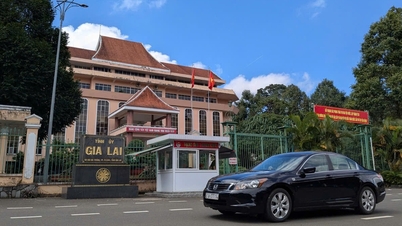
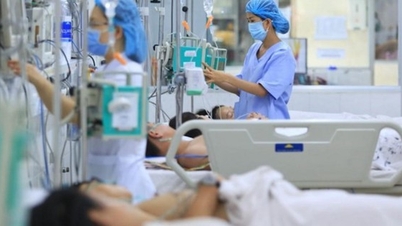
Notably, a large-scale infrastructure resource is being repurposed to prioritize essential public services for citizens. Among these, 3,015 facilities are allocated for education and training; 648 for healthcare; 2,385 for cultural and sports institutions; and 626 for other public purposes. This saves approximately 30 trillion VND by eliminating the need for land compensation and clearance.
Furthermore, many localities have effectively utilized this resource restructuring opportunity to boost economic growth. For example, in Hai Phong, many land plots after restructuring are being studied for use in industrial infrastructure, warehousing, and port services – sectors that are the city's main growth drivers. Meanwhile, Bac Ninh is taking advantage of the review process to create clean land for industrial and urban service development.
Many previously small, fragmented land plots have now been consolidated by local authorities into larger areas, facilitating comprehensive planning and more efficient long-term exploitation. This was very difficult to achieve under the old management model, where public assets were dispersed across different administrative levels and individual management agencies.
Along with positive developments, the process of handling and utilizing surplus housing and land is also facing numerous bottlenecks. Some localities have not yet fully completed the mechanism for decentralizing public asset management, the standards and norms for asset use, or the plans for handling them after restructuring. The lack of uniformity in planning and land procedures also slows down the progress of utilizing housing and land resources in many places. In particular, in many localities, the handling of surplus assets still mainly stops at the inventory and planning stages, without being truly linked to socio-economic development strategies or specific exploitation needs.
Currently, the country still has 11,423 surplus land and buildings transferred to localities that have not been fully processed or put into complete use. Central ministries and agencies also have 702 unprocessed properties. This is a matter of particular concern, as the biggest risk today is the waste of development opportunities. A public building or a public land plot left abandoned for many years not only depreciates in asset value but also means that the locality loses the opportunity to expand urban development space, public services, or generate additional revenue for the budget.
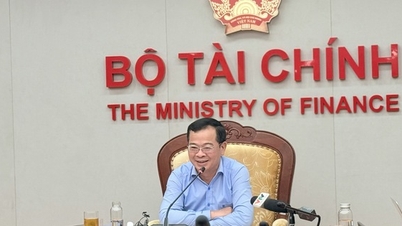
In this context, the Ministry of Finance has submitted to the Government a draft Resolution on specific mechanisms and policies to accelerate the handling and exploitation of surplus houses and land. The overarching spirit of the draft is to increase decentralization, shorten procedures, and simplify processes while still ensuring the principle of strict management of public assets; focusing on the actual efficiency of exploitation rather than just preserving assets on paper. This is expected to be an important institutional breakthrough that will strongly unlock public asset resources in the coming time.
For specific mechanisms and policies to be effective, it is crucial not only to grant more authority but also to link them with accountability and transparent oversight mechanisms. After all, public assets are resources of the entire society. Without transparency, openness, and clear criteria for their use, the process of exploiting land after restructuring can easily lead to vested interests or inefficient use. If done well, this will be a valuable resource for localities to improve the quality of life for their people, while opening up new development opportunities and contributing to the realization of double-digit growth targets.
Source: https://daibieunhandan.vn/bien-nha-dat-doi-du-thanh-nguon-luc-phat-trien-10418955.html
















































































Comment (0)