

"Ambitionary, yet entirely feasible."
According to the plan, in the period 2024-2025, the Gross Regional Domestic Product (GRDP) of Ho Chi Minh City will reach approximately 100 billion USD, the actual population (including unregistered immigrants) will fluctuate between 10 and 14 million people, and the GRDP per capita will be nearly 7,500 USD/person/year. With a projected GRDP of approximately 1,200 billion USD by 2050, this means the city's economy will surge by about 12 times in the next 25 years. Regarding per capita income, if it reaches 14,000 USD by 2030, it will almost double the current level; by 2035, it will reach 25,000 USD – nearly 3.5 times; and by 2045, it will be equivalent to a tenfold increase, reaching 75,000 USD.

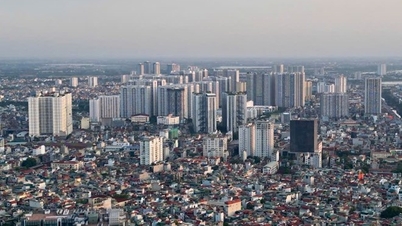
Ho Chi Minh City sets a planning vision for the next 100 years.
PHOTO: NGOC DUONG
Dr. Nguyen Van Dien, Head of the Department of Political Economy at the Regional Political Academy II, assessed that the proposed plan for economic growth and per capita income increase in Ho Chi Minh City, while ambitious, is entirely feasible. This confidence stems from the city's geoeconomic and geopolitical advantages, and especially the institutional breakthrough achieved when the central government allowed the city to develop a law on Special Urban Areas.
Mr. Nguyen Van Dien pointed out: Ho Chi Minh City has already had its free trade zone and integrated smart logistics zone projects approved, and has established an international financial center. These are not only "machines" that generate very high added value, but also attract strong investment flows from major economies. In the context of many countries facing labor shortages and aging populations, resources will be channeled to dynamic locations with young, "golden" populations like Ho Chi Minh City. Capital and resources from Singapore, Hong Kong, Japan, or the United States will also flow here.
Furthermore, Ho Chi Minh City's strategic location allows for the strong development of high-quality marine economy in Can Gio and Cai Mep - Thi Vai; combined with connecting infrastructure including railways, high-speed rail, roads, and waterways, this will create marine economic "hubs" attracting high-quality residents, resources, and capital flows. This will be one of the driving forces behind rapid economic growth. In addition, Ho Chi Minh City also attracts a large amount of remittances annually, creating a boost for investment growth.
"Another point to note is that for developing countries with room for growth, a young population, and favorable potential, the growth rate is always higher than that of developed countries like Japan or the US. The average growth rate of major powers is only about 1-3% per year. This means that during the next 50 years, Ho Chi Minh City can still completely reach a per capita income level among the top in Asia," said Dr. Nguyen Van Dien.
It requires thinking beyond the limitations of a term in office.
Dr. Tran Viet Anh, Vice Rector of Hung Vuong University in Ho Chi Minh City, commented that Ho Chi Minh City's recent approval of the planning outline is a very special step, because this is no longer just an ordinary plan but a strategy to position the future of the country's largest city. According to the outline, the city aims to maintain an average GRDP growth rate of at least 10% per year throughout the 2025-2050 period, and the GRDP is projected to reach approximately US$1,200 billion by 2050. In an international context, the US$1,200 billion GRDP target is very ambitious. This figure is many times higher than Ho Chi Minh City's current economic size and equivalent to the GDP of many developed economies worldwide . This shows that the city is no longer aiming to become the largest economic center in Vietnam but is instead striving for the position of a growth pole with regional influence.
Looking ahead to the next 100 years, Ho Chi Minh City will be a leading sustainable, innovative, and livable megacity in the Asia-Pacific region, developing harmoniously between economic growth, environmental protection, social equity, and the preservation and promotion of cultural values.
(Excerpt from the Master Plan Outline for Ho Chi Minh City for the period 2025 - 2050)
(100-year vision)
However, Dr. Tran Viet Anh argues that the important issue is not the GRDP figure but the quality of that GRDP. In the plan previously approved by the Prime Minister, Ho Chi Minh City aims for a per capita GRDP of approximately US$14,800-15,400 by 2030, with the service sector accounting for over 60% of GRDP, the digital economy contributing over 40%, and total factor productivity (TFP) contributing about 60% to growth. These are the indicators that truly reflect the quality of development and competitiveness of the city.
What makes this planning special is its 100-year vision. Globally, very few cities develop development strategies with such a long timeframe, as it requires thinking beyond the limitations of typical management terms and investment cycles. According to the new outline, Ho Chi Minh City is positioned as an international trade hub, a national gateway to the sea, operating as a multi-centered megacity with a modern infrastructure and smart governance. Therefore, according to Dr. Tran Viet Anh, within this 100-year vision, Ho Chi Minh City needs to define three strategic goals. First, to become a leading financial and innovation center in Asia. Comparing it only to other localities within the country would be too narrow a vision. Ho Chi Minh City's benchmarks should be centers like Singapore, Shanghai (China), or Seoul (South Korea).
Secondly, the model shifts from a "unipolar city" to a "mega-urban region." After expanding its development space, the scope of Ho Chi Minh City's planning study now covers an area of approximately 6,772 km2 and connects with surrounding localities such as Tay Ninh, Dong Nai, Dong Thap, Lam Dong, and related coastal areas. This forms the basis for the development of a regional megacity instead of just a central city as before.
Thirdly, the focus should be on people. According to current planning, the permanent population of Ho Chi Minh City is projected to reach approximately 11 million people by 2030 and about 14.5 million people by 2050. Some new master plan scenarios even forecast that the population could reach around 22 million people in the long term. This indicates immense pressure on housing, transportation, education, healthcare, and the living environment.
"I believe the greatest value of a 100-year plan doesn't lie in the target of a $1.2 trillion GRDP or double-digit growth. Those figures can change at different stages of development. More importantly, Ho Chi Minh City is beginning to answer a bigger question: By the end of the 21st century, what kind of city does Ho Chi Minh City want to be known to the world? If the answer is an international financial center, a leading innovation hub in Asia, and a livable city in the region, then all planning regarding infrastructure, urban space, education, science, technology, and talent attraction from today must be designed to serve that goal. That is the core spirit of a 100-year plan, not forecasting the future, but creating the future," Dr. Tran Viet Anh expected.
Source: https://thanhnien.vn/kien-tao-tuong-lai-cho-mot-sieu-vung-do-thi-185260601213041592.htm



![[Photo] General Secretary and President To Lam presides over a meeting on preparations for the review of one year of operation of the three-tiered government system.](https://vphoto.vietnam.vn/thumb/1200x675/vietnam/resource/IMAGE/2026/06/02/1780391821195_a1-bnd-4595-9717-jpg.webp)











![[Video] Prime Minister Le Minh Hung: Completing breakthrough mechanisms to develop an international financial center](https://vphoto.vietnam.vn/thumb/402x226/vietnam/resource/IMAGE/2026/06/02/1780416130959_tt-jpg.webp)

![[Video] General Secretary and President To Lam: Shifting from completing the restructuring of the apparatus to ensuring its smooth operation.](https://vphoto.vietnam.vn/thumb/402x226/vietnam/resource/IMAGE/2026/06/02/1780415840629_tbt-jpg.webp)




































































Comment (0)