

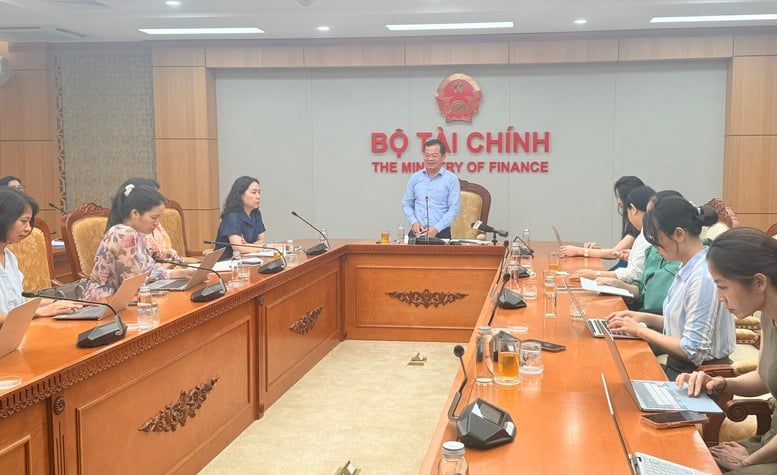
The process of streamlining the organizational structure and reorganizing administrative units has created a large land and housing fund for socio- economic development - Photo: VGP
Thousands of facilities were converted to serve education and healthcare.
On the afternoon of June 1st, in an exchange with the press, Ms. Tran Dieu An, Deputy Director of the Public Assets Management Department ( Ministry of Finance ), stated: Following the reorganization of the political system's organizational structure and the restructuring of administrative units according to the two-tiered local government model, the management, handling, and exploitation of public assets are being focused on by ministries, sectors, and localities. According to the Ministry of Finance, the arrangement of office space for the new apparatus has been largely ensured. The Ministry has submitted to the Government for promulgation decrees on the management and handling of public assets, standards, and norms for the use of office space, and has guided ministries, sectors, and localities to review and arrange office space in accordance with the new organizational model.
In implementing Conclusion No. 18-KL/TW of the Central Committee of the Communist Party, many localities have maximized the use of existing offices. In many communes not located in the former district center, officials continue to work in the dispersed offices of the communes before the merger in order to limit new investment and avoid waste.
According to the report, localities have completed the initial phase of arranging and handling properties and land under their management after the reorganization of the administrative apparatus and units.
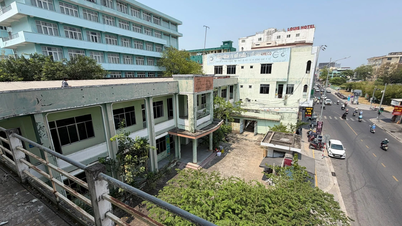
Notably, many surplus land and buildings have been prioritized for the essential needs of the people. Specifically, 3,015 facilities have been used for education and training; 648 for healthcare; 2,385 for cultural and sports facilities; and 626 for other public purposes.

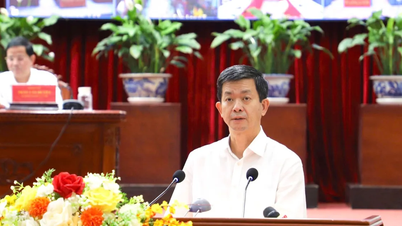
Ms. Tran Dieu An, Deputy Director of the Department of Public Assets Management (Ministry of Finance) - Photo: VGP
As of May 27th, localities had completed the processing or put into operation 4,709 surplus land and buildings that had been recovered and transferred. However, 11,412 facilities remain unprocessed or not fully utilized. Of these, 5,329 facilities have been handed over to housing businesses or land development organizations for management but have not yet been put into operation; 2,823 facilities have had their processing plans approved but not yet implemented; and 3,260 facilities lack processing plans…
For central ministries and agencies, 3,446 properties (houses and land) have been processed. However, 702 properties remain unprocessed, including 474 that have yet to receive a processing decision.
There are still many difficulties in the asset exploitation phase.
The Ministry of Finance assesses that the arrangement, allocation, and handling of public assets have made a significant contribution to ensuring the operation of the administrative apparatus after restructuring, while also creating additional resources for essential public services such as education, health, culture, and sports.
Through this process, many localities gain additional housing and land resources for long-term development, while also creating resources for investment and development in accordance with land law regulations.
However, the progress in handling surplus assets varies unevenly among localities. Some localities, such as Lai Chau, Dien Bien, Cao Bang, Lang Son, and An Giang, have few facilities yet to complete the handling process, while many others still have a large number of assets that need to be processed in the next phase.
Some central agencies still have many properties and land parcels that have not been fully processed, such as the Central Committee of the Vietnam Fatherland Front and the Supreme People's Court.
According to the Ministry of Finance, the biggest challenge is the enormous volume of assets to be processed, coupled with a short implementation timeframe and simultaneous implementation nationwide. Furthermore, the new organizational model has different requirements compared to the headquarters system built for the old model, necessitating flexible arrangement and organization.
Furthermore, subsequent processing and exploitation face obstacles due to a sharp increase in the surplus supply of housing and land while demand decreases. Many facilities are small-scale, located in remote areas, and lack commercial advantages, making it difficult to attract organizations or individuals to rent or operate them.
Some assets have been assigned to the commune level for management, but many localities are still struggling with the implementation process.
To expedite the process, the Ministry of Finance stated that it will continue to improve the legal system for managing and using public assets; strengthen guidance to ministries, sectors, and localities to put assets into efficient operation; and consider the results of handling surplus houses and land as a criterion for evaluating the performance of heads of departments.
"The Ministry of Finance is actively coordinating with the Government Office. The Ministry has submitted to the Government a draft resolution on specific mechanisms and policies to accelerate the processing and exploitation of surplus houses and land after the streamlining of organizational structures and the rearrangement of administrative units through simplified procedures," said Ms. Tran Thi Dieu An.
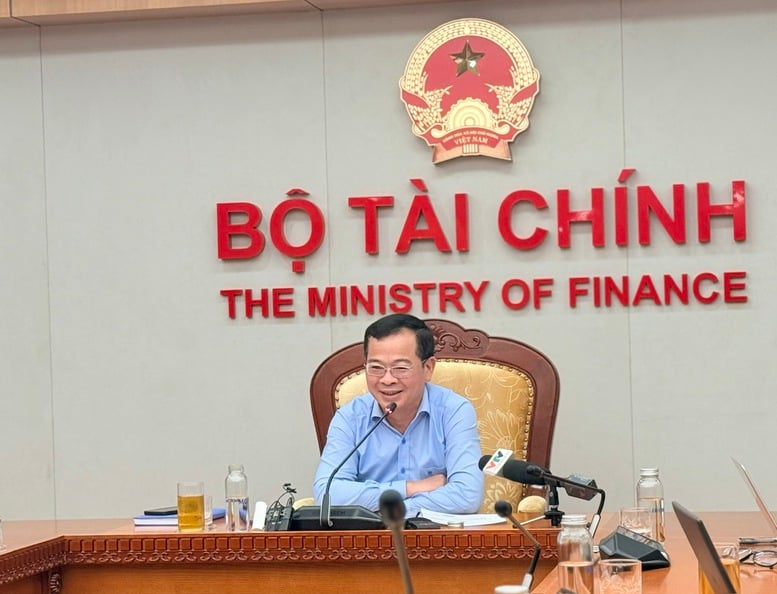
Mr. Nguyen Tan Thinh, Director of the Department of Public Assets Management (Ministry of Finance) - Photo: VGP
Regarding the transfer of 5,300 properties (houses and land) to land development organizations, housing management organizations, and land development centers, Mr. Nguyen Tan Thinh, Director of the Department of Public Assets Management (Ministry of Finance), stated: After receiving the properties, the organizations assigned to manage them are responsible for utilizing the land and properties in various ways. Depending on the actual conditions, the assets may be temporarily allocated to state agencies in need, leased short-term, or allocated or leased according to the provisions of land law.
However, the transfer of most properties will only take place from the beginning of 2026, and in some localities, it may not be completed until May 2026. Therefore, management units need time to review, classify, and develop exploitation plans for each property.
To expedite progress, the Ministry of Finance has included several new solutions in the draft resolution on specific mechanisms and policies. Notably, this includes simplifying the procedures for developing exploitation plans. Instead of having to periodically prepare management and exploitation plans for approval by the Chairman of the People's Committee at the competent level, as is currently the case, units can report and seek opinions immediately upon completion of the plan for each facility or group of facilities (houses and land).
The Ministry of Finance also proposed a flexible adjustment mechanism between management levels. If a commune-level unit lacks the capacity to organize exploitation, the assets can be transferred to the provincial level for management. Similarly, if the initial exploitation plan is unsuitable, the competent authority is allowed to adjust to another form to ensure the efficient use of the assets.
Regarding leasing activities, Mr. Nguyen Tan Thinh stated: The Ministry of Finance proposes allowing adjustments to the announced price in cases where all steps of public disclosure and transparency have been taken but no tenant has been selected. The adjustment will be carried out through a simpler process, while still ensuring a control mechanism to bring the asset into use as soon as possible.
Regarding planning issues, the Director of the Public Assets Management Department stated that current legislation has strongly decentralized the authority of local governments in adjusting planning. Localities can proactively make localized adjustments to facilitate land allocation and leasing according to regulations. In cases where planning adjustments cannot be completed in time, Decree 102, guiding the implementation of the Land Law, allows for short-term exploitation of land plots for a maximum of 5 years. This form does not require auctions or bidding as in the case of normal land allocation and leasing, nor does it require immediate conformity with the land use plan. According to the Ministry of Finance, this is a relatively flexible mechanism, creating conditions for localities to quickly put surplus housing and land into use, avoiding waste of public resources.
Huy Thang
Source: https://baochinhphu.vn/tang-toc-xu-ly-nha-dat-doi-du-sau-tinh-gon-to-chuc-bo-may-102260601175305658.htm






















![[Photo] Reception to welcome General Secretary and President To Lam and his wife on their State visit to the Philippines](https://vphoto.vietnam.vn/thumb/1200x675/vietnam/resource/IMAGE/2026/06/01/1780295488620_vna-potal-chieu-dai-chao-mung-tong-bi-thu-chu-tich-nuoc-to-lam-va-phu-nhan-tham-cap-nha-nuoc-toi-philippines-8798060-7855-jpg.webp)
























































Comment (0)