

 |
A corner of the Alpha Store in Shenzhen. Photo: Nhat Tuong |
For many years, tech stores were primarily showrooms for new devices, where people advised on configurations and finalized orders. But as smartphones become increasingly difficult to differentiate themselves with just hardware, tech companies are beginning to change how they tell their brand story in the real world.
HONOR's Alpha Store in Shenzhen is a prime example of an innovative approach, collaborating with industry partners to demonstrate how AI connects multiple devices in everyday life scenarios.
The retail model of the future
At Alpha Store, HONOR has built an AI Smart Living Innovation Hub that allows visitors to directly explore the latest devices and technologies, including intelligent robots. This space also offers insights into how AI will be present in future life.
Instead of displaying hardware by device categories, Alpha Store divides the space and arranges devices based on real-life scenarios such as travel or entertainment. This approach helps users easily visualize how a multi-device connected AI ecosystem serves their lives.
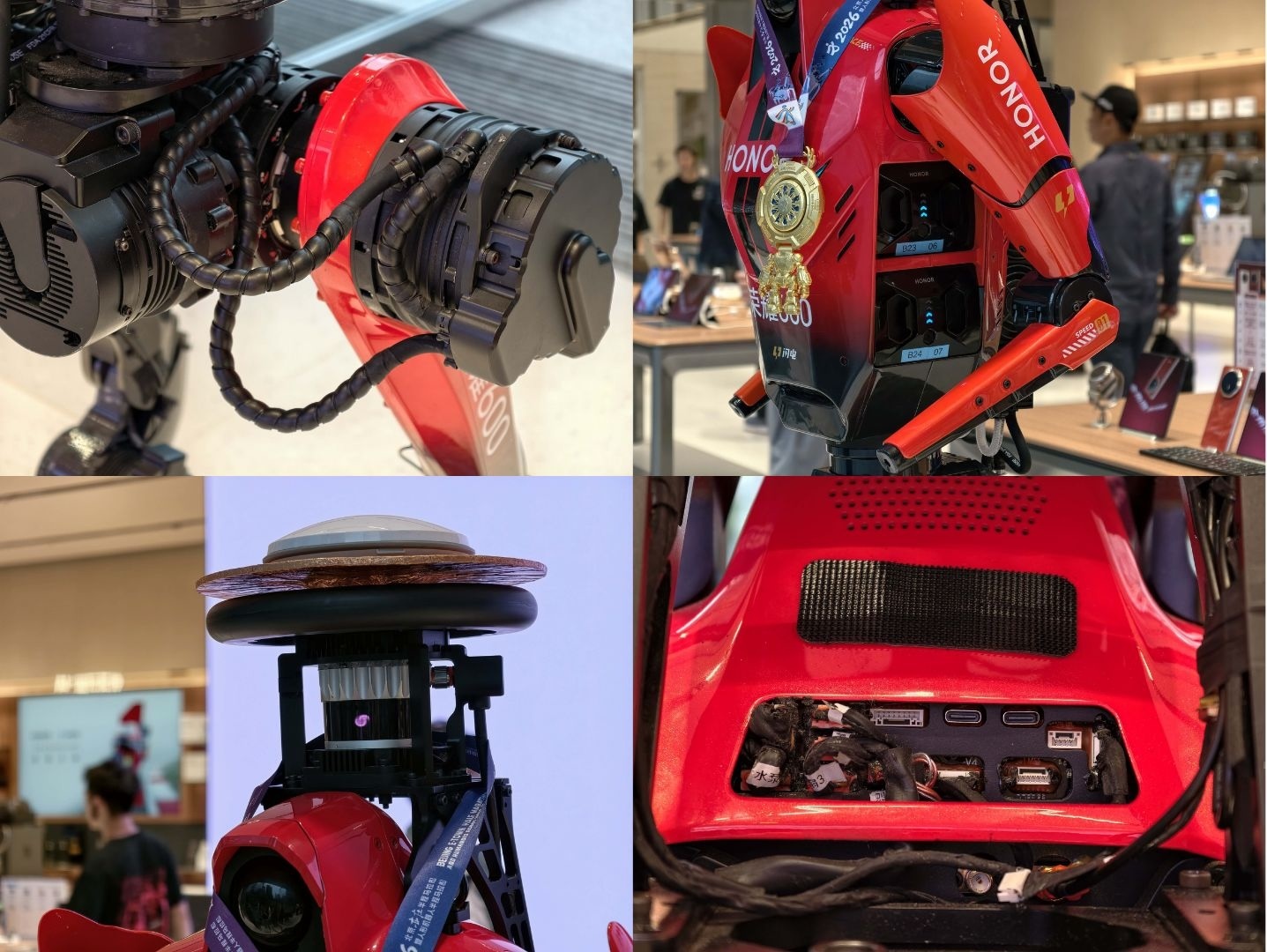 |
A close-up of the Flash robot on display in the store. Photo: Tran Phong. |
Right at the entrance, visitors can encounter Flash, the humanoid robot that gained attention on social media for completing a half-marathon in just 50 minutes and 26 seconds. Through its sophisticated liquid cooling system and high-torque joints, Flash visually demonstrates the operational capabilities of the company's physics-based robot.
One notable feature is the YOYO Zone, an AI assistant experience area capable of remembering user habits and proactively assisting with daily tasks. Additionally, the store integrates the AI Inspiration Café as a meeting point for the tech-loving community.
The entire space is part of HONOR's "Alpha Plan," which positions its AI development philosophy towards a "human-centered" approach, focusing on features that understand behavior, provide companionship, and serve as an intelligent assistant.
Based on these three technological platforms, HONOR is gradually realizing a larger ambition, starting with integrating AI into compact smartphones. Then, AI will progress to connecting all devices into a smart home ecosystem and eventually to a smart world model.
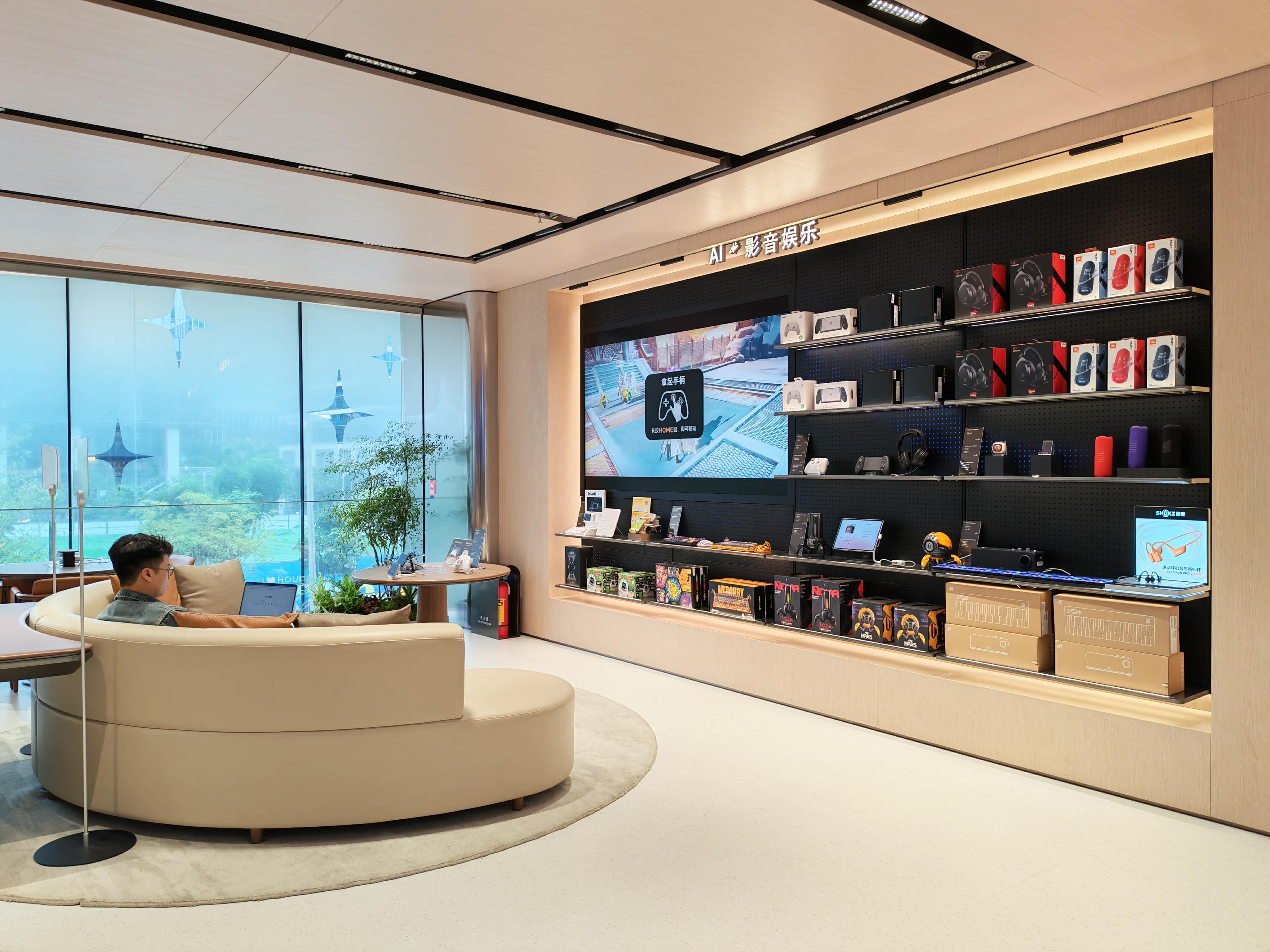 |
Many areas are divided to suit different usage scenarios. Photo: Tran Phong. |
However, observers believe that the experience at flagship stores is still more of a showcase than a practical user experience. The biggest challenge lies in transforming AI demos in showrooms into a stable experience for the general public.
What opportunities are there in other markets?
Speaking to Tri Thức - ZNews, a representative from HONOR stated that the group has taken strategic steps to expand its new retail model. The company is planning to take Alpha Store beyond China's borders, specifically to Malaysia and Dubai (UAE), leveraging the established infrastructure and ecosystem there.
Furthermore, this person believes that Vietnam has great potential and is well-suited to developing a similar model, thereby bringing next-generation AI experiences closer to local consumers.
In fact, this model is part of a larger trend called “experiential retail.” According to Spectra Global , stores now not only compete on sales but also want to connect with customers through multiple direct touchpoints.
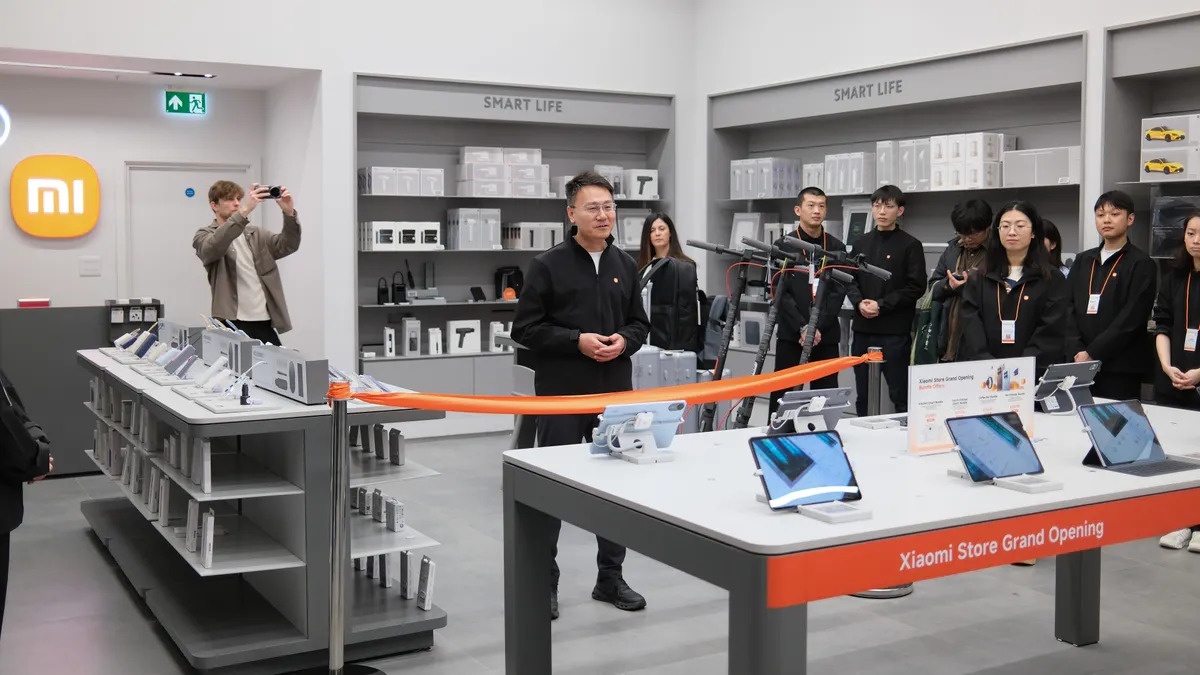 |
Xiaomi stores in the UK allow users to experience the company's latest camera. Photo: Digital Camera World. |
Furthermore, this trend is gradually emerging to restore the balance between online and traditional commerce. A study from Penghu University indicates that the model is particularly effective when brands want to convey AI features in a credible way, without confusing users.
In 2019, Apple pioneered this experiential model by organizing workshops and creative classes right at iPhone sales points. Subsequently, Huawei also began integrating cafes, gyms, smart home areas, and electric vehicle showrooms.
Meanwhile, Xiaomi, with its flagship store in the UK, allows users to experience the entire ecosystem, from phones and robot vacuums to EVs. According to Reuters, the reason corporations are competing to expand their physical stores is because they no longer just sell smartphones.
As smartphones become increasingly difficult to differentiate themselves through hardware alone, the retail experience is emerging as a new way for tech companies to build brand recognition and stay connected with young users. The experiential retail model in Vietnam is also on the rise, with many choosing prime locations in bustling shopping malls.
This shows that brands are willing to pay high rental costs in exchange for brand value and media attention. This strategy is considered effective by brands in reaching Gen Z and Millennials, generations whose shopping is based on experience and brand understanding, rather than simply looking at technical specifications.
Source: https://znews.vn/cua-hang-dien-thoai-gio-da-khac-post1653548.html


![[Photo] The heat at the fireworks display site on the opening night of the Da Nang International Fireworks Festival 2026](https://vphoto.vietnam.vn/thumb/1200x675/vietnam/resource/IMAGE/2026/05/27/1779889741485_ndo_br_z7872039145157-fecaba5112f39e8352544099d7ef4738-5140-jpg.webp)

![[Photo] The courage of new recruits of Brigade 144 on the training ground.](https://vphoto.vietnam.vn/thumb/1200x675/vietnam/resource/IMAGE/2026/05/27/1779881651341_anh-man-hinh-2026-05-27-luc-18-32-52.png)


















































![[Photo] The courage of new recruits of Brigade 144 on the training ground.](https://vphoto.vietnam.vn/thumb/402x226/vietnam/resource/IMAGE/2026/05/27/1779881651341_anh-man-hinh-2026-05-27-luc-18-32-52.png)





























Comment (0)