

Developing a carbon market is key to Vietnam's commitment to net-zero emissions; however, caution is needed when selling carbon credits, according to Tang The Cuong, Director of the Climate Change Department.
Vietnam is in the process of building a carbon market with the goal of piloting it by 2025 and soon putting the exchange into operation. VnExpress interviewed Mr. Tang The Cuong, Director of the Climate Change Department, Ministry of Natural Resources and Environment , to clarify the progress, opportunities, and challenges of this market.
- How do you assess Vietnam's carbon credit (CO2) potential?
- In Vietnam, the exchange of carbon credits with the world has been carried out by businesses since the 2000s when implementing programs and projects under the Clean Development Mechanism (CDM). To date, more than 300 programs have been registered, of which about 150 programs and projects have been granted 40.2 million credits and traded on the world carbon market, making Vietnam one of the four countries with the most registered CDM projects, after China, Brazil, and India.
Regarding credits earned from programs and projects under the CDM mechanism, Vietnam currently ranks 9th out of 80 countries with CDM projects that have been awarded credits. Projects that have been awarded credits are concentrated in the fields of renewable energy production and energy efficiency.

Mr. Tang The Cuong answers VnExpress's questions about the carbon market. Photo: Gia Chinh
Our carbon credit potential is quite large, for example from forests with over 14.7 million hectares, a forest cover of 42%, including over 10 million hectares of natural forests and over 4.5 million hectares of planted forests. Forestry experts quantify that with this area, forests absorb nearly 60 million tons of CO2 per year. However, it should be noted that only the amount of CO2 absorbed in addition to the reference absorption level (or baseline) can be converted into credits, not the entire 60 million tons of CO2 per year.
- How will the implementation of a carbon market contribute to Vietnam's goal of net-zero emissions by 2050?
- First and foremost, it must be affirmed that the net zero emissions target that Vietnam committed to at COP26 in 2021 is a very ambitious and challenging goal. However, we are making concerted efforts to implement many measures to fulfill this commitment, and building a carbon market is key.
The establishment of a carbon market will contribute to achieving the goal of reducing greenhouse gas emissions at low costs for businesses and society, promoting the development of low-emission technologies. To achieve the national emission reduction target, the Prime Minister has assigned specific greenhouse gas emission reduction targets to the energy, transportation, agriculture , waste management, and industrial processes sectors; and assigned greenhouse gas absorption targets to the forestry sector.
Alongside national efforts, Vietnam urgently needs international support through bilateral and multilateral cooperation to implement greenhouse gas emission reduction activities. When receiving international support, we may need to share ownership of the carbon credits earned. The Ministry of Natural Resources and Environment is researching and proposing policies for managing carbon credits, including the percentage of credits shared from program and project implementation, ensuring a balance of interests among participating parties.
- What is the current progress in implementing the carbon emission quota and credit exchange as 2025 approaches?
- We are working closely with the Ministry of Finance and relevant agencies to implement this work. Some regulations currently under urgent development include: State management of carbon credits; auctioning, transferring, borrowing, repaying, and recovering greenhouse gas emission quotas; using carbon credits to offset greenhouse gas emissions; financial management mechanisms for carbon market operations; and technical procedures and regulations for measuring, reporting, and assessing greenhouse gas emission mitigation in sectors subject to carbon inventory.
Simultaneously, specialized agencies are compiling information and data on greenhouse gas emissions to organize the allocation of emission quotas, as well as conducting awareness campaigns on the carbon market for officials, civil servants, and employees at all levels, businesses, and communities nationwide.
One of the immediate priorities is to establish a national registration system to manage all carbon credits generated within Vietnam. Accordingly, organizations and individuals will be required to register accounts, providing relevant information about the type of carbon credit, the amount of credits held, and other necessary information.
- Some experts argue that if Vietnam sells off all its carbon credits at the current price of $2-50, it may have to buy them back at a higher price later. What are your thoughts on this?
- Recently, several international organizations have expressed interest in purchasing carbon credits, or recognized results of greenhouse gas emission reduction, particularly carbon sequestration from natural forests in Vietnam. Selling forest carbon credits will contribute to increasing income for forest owners, individuals, and businesses through revenue from emission reductions, improved productivity of planted forests, and enhanced sustainable livelihoods; it will also contribute to protecting existing forest areas and increasing forest cover.

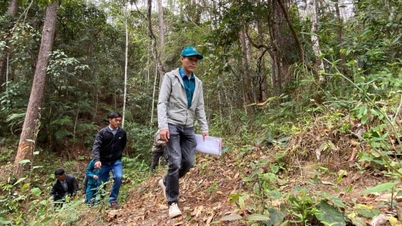
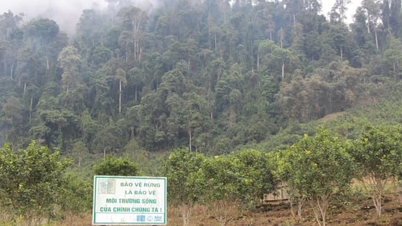
Vietnamese forests have carbon credit potential. Photo: Ngoc Thanh
However, the role of the forestry sector is crucial in achieving the Nationally Determined Contribution (NDC) emission reduction targets by 2030, as well as the net-zero emissions target by 2050. Therefore, localities with forests need to coordinate with the Ministry of Agriculture and Rural Development to determine the proportion of greenhouse gas absorption contributed by forests in their area to ensure the national greenhouse gas emission reduction target is met before selling off resources.
Furthermore, carbon credits are a commodity with a limited lifespan, and their price depends on the type of project that generates them. Therefore, deciding whether to sell or hold them requires careful consideration of many factors to ensure the best results.
- What are the biggest challenges when implementing a carbon market?
- Vietnam has been identified as having the potential to implement measures to reduce emissions and absorb greenhouse gases, thereby generating carbon credits. However, to implement these measures, Vietnam also needs international support through financial and technological investment; and needs to improve the quality of greenhouse gas inventories and emission reduction assessments. Currently, the practical implementation process faces many challenges, focusing on the lack of timely and comprehensive regulations and guidelines; and a shortage of human resources in both the public and private sectors for these activities, lacking experience.
In fact, developed countries all aim to reduce greenhouse gas emissions, and they also recognize that achieving this will require offsetting with carbon credits from other countries. Therefore, we must understand that to receive the financing and technology to implement measures to reduce emissions and absorb greenhouse gases, we must share ownership of the carbon credits obtained to ensure a balance of interests among all parties.
Furthermore, in order to generate carbon credits and compete in the market, projects must meet the standards of the mechanisms, apply the correct methodology, implement data monitoring and measurement measures as prescribed, and especially demonstrate that the project has reduced emissions or absorbed greenhouse gases, with a complementary effect, and be assessed by an independent, licensed entity. Businesses have to pay high costs to hire such assessment units.
In the short term, we can mitigate risks by implementing pilot projects to gain more experience in developing credit management policies – a new type of commodity with constantly changing international regulations. Investors will also gain more experience and confidence in implementing greenhouse gas emission reduction projects in Vietnam.
CO2 credits (carbon credits) are tradable certificates representing the right to emit one ton of CO2, or an equivalent ton of other greenhouse gases. The trading mechanism is such that a company producing 12 tons of emissions while the permitted limit is 10 tons can purchase 2 tons of credits from a company that emits less than the limit. This is verified by a third party. The ultimate goal of carbon credits is to reduce greenhouse gas emissions into the atmosphere.
Source link


![[Photo] Prime Minister Pham Minh Chinh presides over a meeting on private sector economic development.](/_next/image?url=https%3A%2F%2Fvphoto.vietnam.vn%2Fthumb%2F1200x675%2Fvietnam%2Fresource%2FIMAGE%2F2025%2F12%2F20%2F1766237501876_thiet-ke-chua-co-ten-40-png.webp&w=3840&q=75)

![[Photo] Prime Minister Pham Minh Chinh presides over the conference announcing the establishment of the International Finance Centre in Vietnam.](/_next/image?url=https%3A%2F%2Fvphoto.vietnam.vn%2Fthumb%2F1200x675%2Fvietnam%2Fresource%2FIMAGE%2F2025%2F12%2F21%2F1766309817714_ndo_br_dsc-3400-jpg.webp&w=3840&q=75)





























































































Comment (0)