

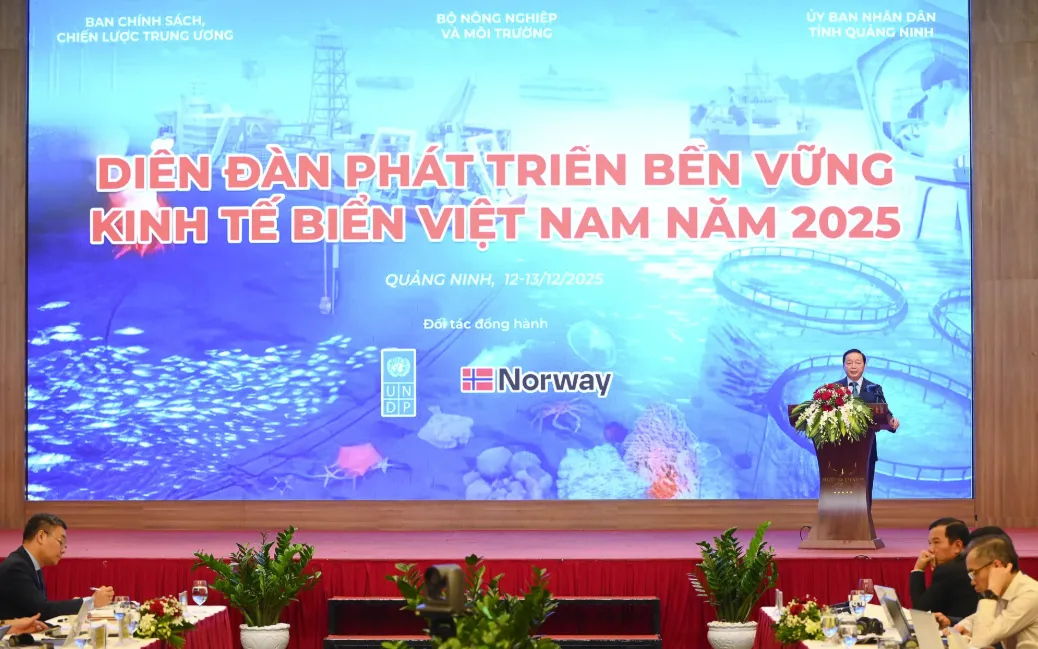
An open discussion space for innovative thinking on the maritime economy .
The Vietnam Marine Economic Sustainable Development Forum 2025 took place over two days, December 12-13, in Quang Ninh , coinciding with the Government's review of the first five years of implementing Resolution 26/NQ-CP on the Strategy for Sustainable Marine Economic Development. The event was seen as a significant milestone in the journey to make the marine economy a new growth engine for the country.
Many thought-provoking topics were discussed: natural capital and green carbon credits; spatial orientation of the marine economy linked to administrative unit reorganization; exploitation of marine space from a green economic perspective; attracting international financing for offshore wind power; and the marine aquaculture cluster model - a solution for upgrading the fisheries industry.
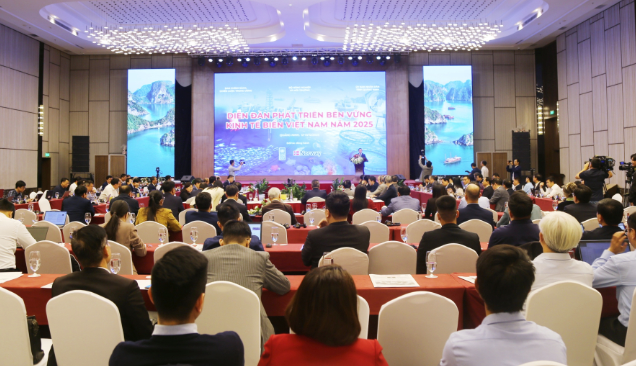
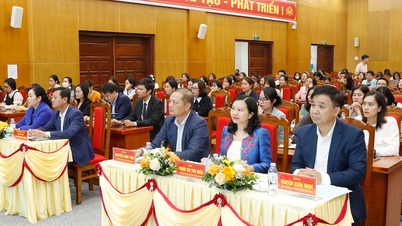
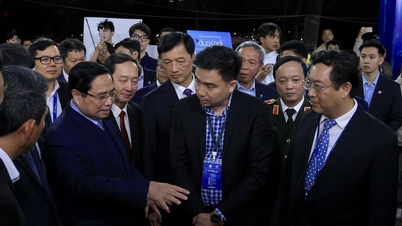
The forum's setting. Photo: Nguyen Cung.
According to many experts, the maritime economy today is a strategic space connecting growth, security, the environment, and national standing. Maritime governance capacity will be a measure of a nation's stature in the 21st century.
Quang Ninh, the host province of the forum, is considered a testament to the successful transition from a "brown economy" to a "green economy." From coastal infrastructure and marine tourism and services to renewable energy and high-tech aquaculture, the province has made significant breakthroughs. However, according to the Chairman of the Provincial People's Committee, Bui Van Khang, the province's marine economy is still not commensurate with its potential and needs more mechanisms, resources, and regional linkages.
The forum attracted attention not only from domestic localities but also from many countries with developed maritime economies. Norwegian Ambassador Hilde Solbakken shared her country's experience, noting that 70% of Norway's export revenue comes from the maritime economy, and pledged support for Vietnam in marine spatial planning, high-tech aquaculture, and waste treatment using the Dressing Restoration System (DRS).
Meanwhile, representatives from Seychelles – a pioneering nation protecting 32% of its ocean surface – introduced the "Ocean Bank" model, which absorbs over 18 million tons of CO2 annually. According to Dr. Nico Barito, Special Envoy of the President of the Republic of Seychelles, this is proof of a blue economy model that combines conservation with financial investment and technological innovation, and could be piloted in Vietnam.
Strategic thinking and long-term orientation from the Government
The most important highlight of the 2025 Forum was the keynote address by Deputy Prime Minister Tran Hong Ha, which was assessed as providing strategic direction for the new phase of development of Vietnam's maritime economy.
The Deputy Prime Minister expressed his pleasure at attending the forum in Quang Ninh – a locality considered a symbol of the transition to a green economic model. He affirmed that the Party and State's policy on the sea in Resolution 36 remains valid, with fundamental principles including: affirming the role and position of the sea; ensuring freedom of navigation and overflight; maintaining sovereignty; developing a sustainable marine economy; and participating with the international community in addressing global maritime issues.
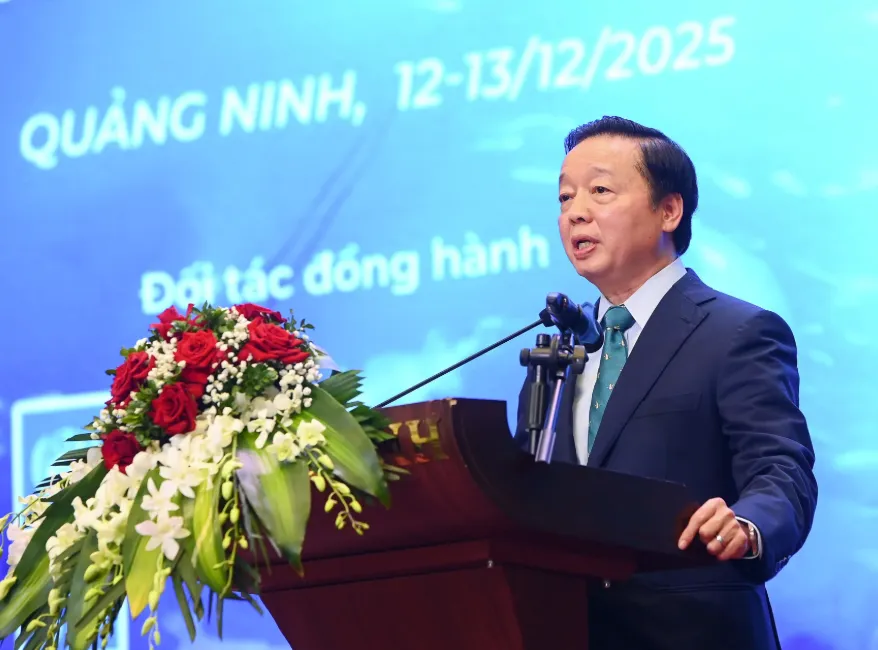
Deputy Prime Minister Tran Hong Ha emphasized: The need to update strategic thinking, in which digital transformation and green transformation will be the "common thread" running through the model for marine resource development.
Against the backdrop of the new context and in preparation for the 14th National Congress, the Deputy Prime Minister emphasized the need to update strategic thinking, in which digital transformation and green transformation will be the "common thread" running through the model of marine resource development. According to him, this will be the foundation to help Vietnam take advantage of opportunities from the Fourth Industrial Revolution and overcome the middle-income trap.
The Deputy Prime Minister highly appreciated the presentations by UNDP and the data-driven analytical toolkit, and suggested transferring it to Vietnamese research institutions to operate as a "new standard" in cost-benefit assessment for each sea area, thereby determining the priority order between wind power, aquaculture, energy, or tourism.
The Deputy Prime Minister particularly emphasized the potential of carbon credits from the sea, a field requiring a transparent global monitoring mechanism; and requested developed countries to support high-tech marine aquaculture, marine renewable energy, and green hydrogen-ammonia conversion models.
Deputy Prime Minister Tran Hong Ha affirmed that the Government will commission adjustments to thinking and policies on the green economy, perfecting laws and mechanisms to encourage conservation linked to development. He expects to soon receive a concise, comprehensive, and highly feasible recommendation containing strategic projects to usher Vietnam into an era of quality growth.
Towards a modern and sustainable marine economic ecosystem.
Domestic and international experts agree that to become a strong maritime nation, Vietnam needs to build a modern marine economic ecosystem that integrates institutions, infrastructure, science and technology, data, and high-quality human resources.
In the field of marine aquaculture, Associate Professor Dr. Nguyen Huu Dung - Chairman of the Vietnam Marine Aquaculture Association - believes that the marine aquaculture industrial cluster model is a breakthrough solution, helping Vietnam transition from small-scale, manual farming to industrialized farming, effectively utilizing marine space and better controlling the environment. He proposed that the Government issue a policy to build a system of marine aquaculture industrial clusters in 21 coastal provinces.
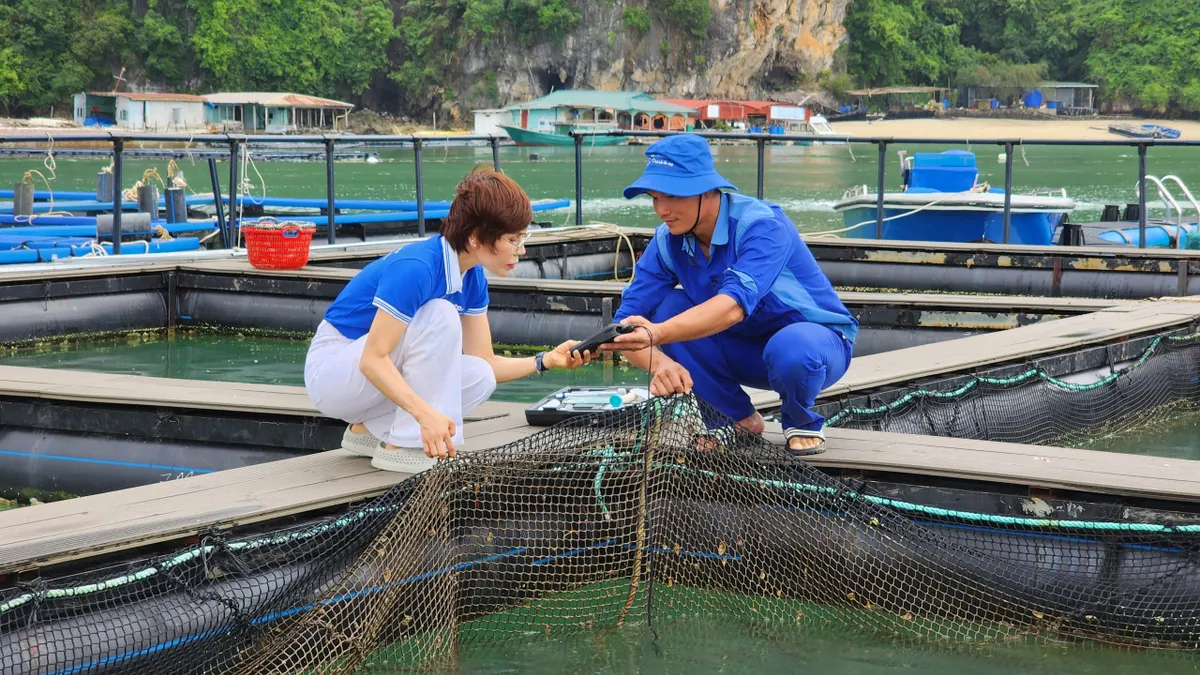
The model of marine aquaculture clusters will create a "leap forward," helping Vietnam transition from manual to industrialized marine farming, efficiently exploiting 0.1% of its sea area but potentially generating up to 10 million tons of fish per year. Photo: Nguyen Cung.
The offshore wind power sector is also receiving significant attention. According to the revised Power Development Plan VIII, Vietnam aims for 6-17 GW by 2030-2035 and 113-139 GW by 2050.
Mark Hutchinson, Chairman of the Southeast Asia Working Group of the Global Wind Energy Council (GWEC), commented that this is an important step forward, but noted that large-scale wind power projects need a clear risk allocation mechanism between the Government - EVN - investors - banks. Only with good risk management will financing costs decrease and wind power prices become competitive.
From a local perspective, Quang Ninh aims to develop 4,000MW of offshore wind power, 1,500MW of gas-fired power, and establish coastal industrial zones to become new growth poles in the North.
The beginning of a new era of blue, modern, and integrated marine development.
Concluding the forum, Minister of Agriculture and Environment Tran Duc Thang emphasized that the 2025 event has ended with many important milestones, clarifying Vietnam's outstanding advantages with over 1 million square kilometers of sea area. According to the Minister, this is a particularly important time for Vietnam to enter a new stage of development, in which "the need to innovate the model of marine economic growth towards science, modernity, and sustainability has become more urgent than ever."
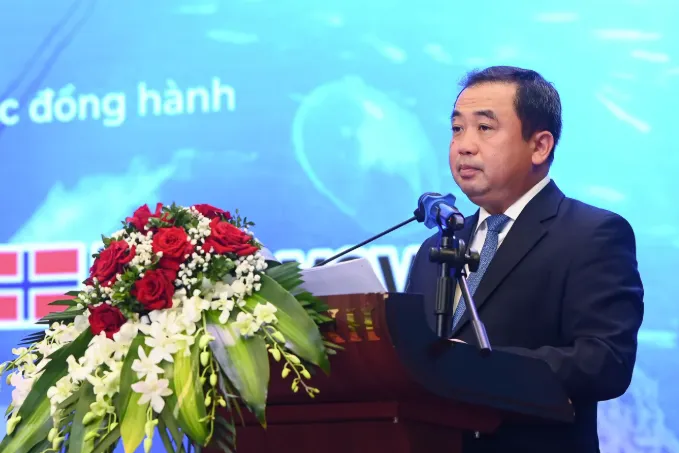
Minister of Agriculture and Environment Tran Duc Thang speaks at the forum. Photo: Nguyen Cung.
The forum agreed on four key directions to create a modern marine economic ecosystem: Reorganizing marine development space to harmonize conservation and development; Developing new marine economic sectors such as renewable energy, logistics, high-tech coastal industries, carbon credits, high-tech aquaculture, and high-quality marine tourism; Building a modern, data-driven marine management system linked to regional cooperation; and Encouraging the role of the private sector in a transparent and stable investment environment.
According to the Minister, the forum's outcomes will be concretized into an action program; in 2026, the Ministry will submit to the Government and the National Assembly amendments to the Law on Marine and Island Resources and Environment, and at the same time accelerate the review of Resolution 36.
The 2025 Forum not only opens up a new development vision but also spreads the spirit of innovation and responsibility, contributing to shaping Vietnam's journey to become a strong maritime nation, based on science, technology, and modern governance.
Source: https://vtv.vn/dua-kinh-te-bien-tro-thanh-dong-luc-tang-truong-chien-luoc-cua-quoc-gia-100251212213335521.htm


































































Comment (0)