

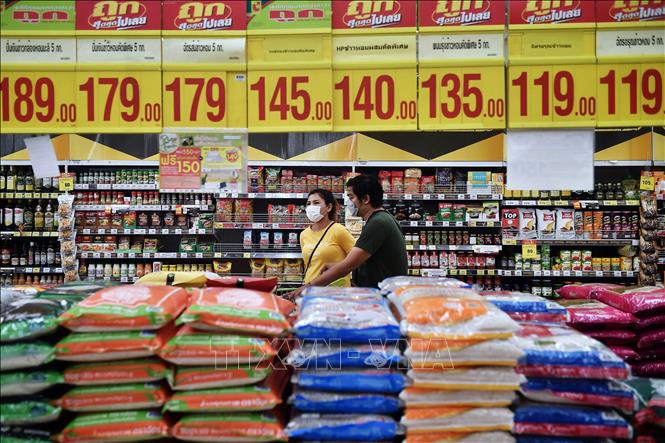
Asian rice market
In Thailand, the price of 5% broken rice surged to around US$400 per ton this weekend, up from US$375 per ton last week, reaching its highest level since late May 2025. The increase is primarily driven by concerns about shrinking supply due to flooding in several areas of the country, coupled with expectations of improved demand as China commits to purchasing 500,000 tons of Thai rice and is nearing completion of the deal this month. According to traders in Bangkok, the prospect of exports to China, along with the possibility of additional orders from the Philippines, has fueled the rice market's increased activity.
In contrast to Thailand, Indian export rice prices remained virtually unchanged last week. Parboiled rice with 5% broken grains was offered at $347–354 per ton, while white rice with 5% broken grains ranged from $340–345 per ton. The weakening rupee, nearing record lows against the US dollar, helped exporters offset some of the increased costs caused by high domestic paddy prices. High paddy prices in India are partly due to the government raising the minimum purchase price, which in turn drives up input costs for businesses.
In Vietnam, the price of 5% broken rice is being offered at around US$365–370 per ton, almost unchanged from last week. Traders say trading activity is slow due to weak demand. Official figures show that Vietnam's rice exports in November 2025 fell sharply by 49.1% year-on-year to 358,000 tons, clearly reflecting the sluggishness of the market in the short term.
In other markets in the region, Bangladesh has approved a plan to purchase 50,000 tons of rice through an international tender, amid ongoing government struggles to control domestic rice prices despite perceived ample supply and production.
Recent reports indicate that the global rice market is showing signs of stabilization after a year of significant volatility. Rice prices in Asia are trending upwards due to tight supply, while some countries continue to import to replenish reserves, although overall demand remains sluggish. Meanwhile, exporters in the Americas are facing downward pressure on rice prices due to slower delivery times and weakening foreign demand. This development is widening the price gap between Asian and Western rice markets.
Global rice trade is projected to undergo significant adjustments in the near future, as inventories increase in some major producing countries in Asia and trade flows shift. Some Asian countries are expected to expand exports, while import demand in some African and Asian markets is trending upwards again. Analysts predict the global rice market will enter 2026 on a more stable foundation, but with clear regional differences that will shape pricing and trade strategies in the coming year.
US agricultural market
Soybean futures prices on the Chicago Board of Commodities traded sideways on Friday, December 12, but are still on track for a second consecutive weekly decline, as support from the US dollar weakened and demand from China was overshadowed by ample supply and slowing US exports.
Meanwhile, wheat futures prices rose, while corn prices remained virtually unchanged, thanks to strong US export sales for both commodities. Corn recorded a slight weekly gain, while wheat saw its fourth consecutive weekly decline due to a global supply surplus.
Specifically, soybean futures, the most actively traded commodity on the Chicago Board of Trade (CBOT), stood at $10.93-1/4 per bushel at the end of this week's trading session, unchanged from the previous session but down 1.1% from the end of last week. Wheat prices rose 0.3% to $5.35 per bushel, but were still down 0.2% for the week. Meanwhile, corn prices remained at $4.46 per bushel, up 0.4% from last week. (1 bushel of wheat/soybeans = 27.2 kg; 1 bushel of corn = 25.4 kg).
The US dollar stabilized after two consecutive sessions of decline, as the Federal Reserve cut interest rates and offered a less hawkish policy outlook than expected. A weaker dollar typically makes US agricultural products more competitive in export markets.
Soybean prices reached a 17-month high of $11.69 per bushel in November 2025, driven by expectations of strong Chinese purchases. However, the upward momentum cooled as actual buying did not meet expectations. Nevertheless, the US Department of Agriculture (USDA) confirmed on December 11th the sale of 264,000 tons of US soybeans to China, 226,000 tons of soybeans to undisclosed markets, and 186,000 tons of corn to undisclosed customers.
In China, the national grain reserve agency Sinograin sold most of the soybeans offered in an auction of reserves – a move seen as the beginning of a series of sales aimed at making room for upcoming soybean imports from the United States.
In Brazil, the agricultural agency Conab estimates that the country's soybean production for the 2025-2026 season will decrease by approximately 550,000 tons, to 177.12 million tons, but this is still a record high. Meanwhile, Argentina's Rosario Grain Exchange has raised its forecast for the country's 2025-2026 wheat production to a record 27.7 million tons, up from 24.5 million tons, thanks to favorable weather conditions that have improved yields.
World coffee prices
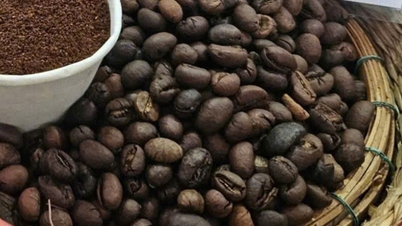
Coffee prices on both the London (UK) and New York (US) exchanges fell sharply on December 13th. Robusta coffee prices, in particular, dropped to their lowest level in four months as traders reported that the harvest in Vietnam is gradually accelerating after delays caused by storms and floods.
Specifically, the price of robusta coffee on the London Commodity Exchange for January 2026 delivery fell by $84 (equivalent to 1.99%), to $4,122 per ton. Meanwhile, the price of robusta for March 2026 delivery dropped by $108 (equivalent to 2.62%), to $3,999 per ton.
On the New York exchange, the price of Arabica coffee for December 2025 delivery fell sharply by 8.25 cents (equivalent to 2.02%), to 397.20 cents/lb. Meanwhile, the price of Arabica coffee for March 2026 delivery reversed course and fell by 6.9 cents (1.82%), to 369.30 cents/lb. (1 lb = 0.4535 kg)
According to the consulting firm Hedgepoint, Brazil's coffee production for the 2026-2027 season is projected to recover strongly, reaching 71-74.4 million bags (60 kg each). This growth is primarily driven by the recovery of arabica coffee, while robusta production is expected to remain high, thus helping to replenish and stabilize global coffee reserves.
Arabica production is projected to reach 46.5–49.0 million bags, a significant increase from the 37.7 million bags of the 2025-2026 crop year. Conversely, robusta coffee production is estimated to decrease slightly to 24.6–25.4 million bags compared to 27 million bags of the previous crop year. Favorable rains in October and November supported the flowering of arabica, signaling a positive outlook for the upcoming crop.
However, Brazil's coffee production for the 2025-2026 crop year faces several challenges. The Foreign Agricultural Service (FAS) of the USDA has cut its forecast for the 2025-2026 crop year to 63 million bags, a decrease of 2 million bags from the previous forecast and lower than the 65 million bags of the 2024-2025 crop year.
This decline was primarily due to a 13.6% drop in arabica coffee production caused by erratic weather, prolonged drought, and frost and hailstorms in key growing regions such as Minas Gerais and São Paulo. Conversely, robusta coffee production reached a record high, increasing by 19% to 25 million bags thanks to favorable weather conditions and significant investment in irrigation, particularly in Espírito Santo and Bahia.
The USDA also lowered its forecast for Brazilian coffee exports in the 2025-2026 crop year to 40.75 million bags. Although domestic consumption is expected to increase by 1.4%, higher retail prices could be a factor in revising these forecasts downward.
Source: https://baotintuc.vn/thi-truong-tien-te/thi-truong-nong-san-gia-gao-thai-lan-cao-nhat-sau-thang-dau-tuong-tiep-tuc-giam-20251213171644719.htm





























































































Comment (0)