

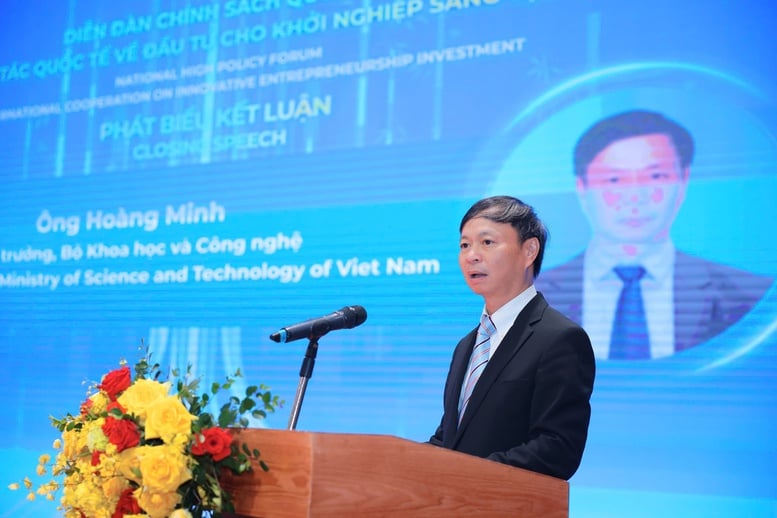
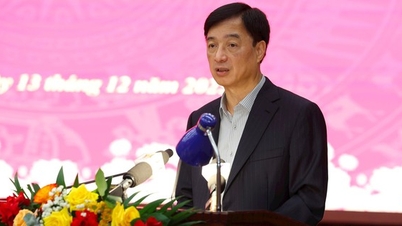
Deputy Minister of Science and Technology Hoang Minh shared his views at the Forum - Photo: VGP/TG
Deputy Minister of Science and Technology Hoang Minh provided the above information at the National Policy Forum on International Cooperation for Investment in Innovative Startups, held on December 13th in Hanoi . The forum was one of the main activities within the framework of Techfest Vietnam 2025.
Vietnam's startup ecosystem has matured, but there are still many "bottlenecks".
According to Deputy Minister Hoang Minh, the general trend worldwide shows that countries have become very aware of the crucial role of science, technology, and innovation in socio-economic development. Many countries have demonstrated strong determination by increasing investment in research and development of technology and supporting innovative businesses.
In Vietnam, Resolution No. 57 of the Politburo further affirms that strategic direction. In the context of setting a double-digit economic growth target for the coming period, Vietnam has "no other choice" than to pursue a development path based on science, technology, and innovation. This is a consistent direction established by the Party and the State, running throughout national development strategies.
In this process, the innovative startup ecosystem is identified as a particularly important component, playing a leading role in testing and disseminating new business models, technologies, and development methods for the entire economy.
Deputy Minister Hoang Minh pointed out that the scale of venture capital investment for innovative startups globally is showing a clear downward trend. From approximately $600 billion in 2021, this capital flow decreased to about $350 billion in 2022 and only about $300 billion in the period of 2023-2024. Vietnam is also not outside this general trend, with the scale of venture capital investment decreasing from about $1.5 billion in 2021 to about $500 million in recent years.
However, despite the overall challenges, investors continue to prioritize investing in fundamental and strategic technology sectors such as artificial intelligence, biotechnology, and green technology. This demonstrates the increasingly fierce competition among countries in attracting capital, talent, and technology, which has become one of the pillars of national competitiveness.
Assessing the domestic situation, Deputy Minister Hoang Minh stated that Vietnam's innovative startup ecosystem has made significant progress and matured in recent years. Currently, the country has more than 4,000 innovative startups, over 200 supporting intermediary organizations, 2 technology unicorns, and more than 20 businesses with the potential to become unicorns.
Several localities, such as Hanoi, Ho Chi Minh City, and more recently Da Nang, have been included in the group of creative cities in the world. Vietnam's Global Innovation Index ranks 44th out of 132 countries; its startup ecosystem index ranks 55th globally; and its ecosystem growth rate ranks 3rd in ASEAN and 5th in Southeast Asia.
Nevertheless, innovative startups in Vietnam still face many limitations, especially the lack of a strong and widespread spirit of daring to think, act, and take risks; the small scale of businesses; and limited investment capital. With a population of over 100 million, a young workforce, and increasingly high levels of education and access to technology, Vietnam cannot afford to miss the opportunity for development based on science, technology, and innovation.
Establishing a National Venture Capital Fund: A strong message of support from the State.
According to Deputy Minister Hoang Minh, Vietnam's perspective is to build a "nation of entrepreneurship," where anyone can start a business based on science, technology, innovation, and digital transformation. In this context, technology startups play a pioneering role, accepting high risks, creating breakthroughs, and providing a ripple effect for the economy.
One of the key tools for promoting this ecosystem is the venture capital fund. The Capital City Law (amended) and the Digital Technology Industry Law have created a legal framework for the formation of venture capital funds at both national and local levels.
By design, the state-owned venture capital fund allows for the mobilization of diverse resources, not only from the budget but also from domestic and foreign organizations and individuals; it is allowed to invest over long-term periods of 10-15 years; it focuses on strategic technology sectors; and it is even permitted to invest abroad to access new technologies and knowledge, thereby bringing resources back to serve Vietnam.
"The establishment of a state-owned venture capital fund clearly demonstrates the government's message: The state not only provides policy support but also directly participates in the startup ecosystem," Deputy Minister Hoang Minh emphasized.
In addition, Vietnam is exploring the possibility of establishing a specialized stock exchange for innovative startups and venture capital funds, thereby creating a transparent and efficient exit channel for the startup community.
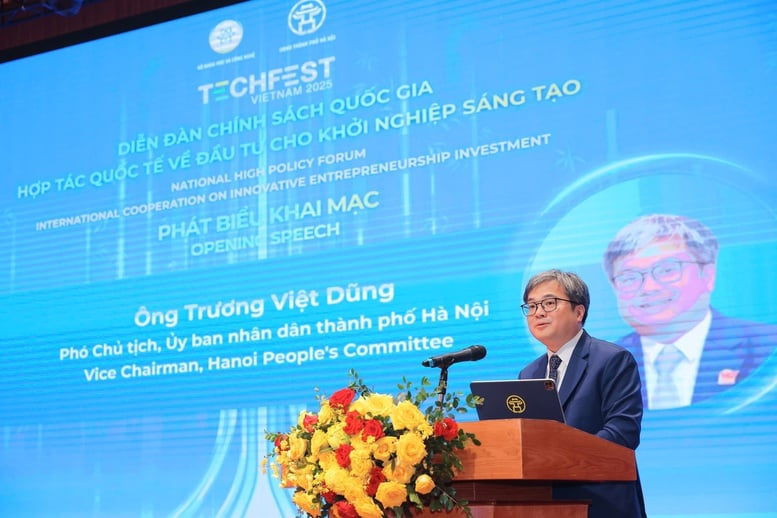
Vice Chairman of Hanoi People's Committee Truong Viet Dung shared his views at the Forum - Photo: VGP/TG
Hanoi is pioneering the testing of groundbreaking mechanisms.
From a local perspective, Vice Chairman of the Hanoi People's Committee Truong Viet Dung believes that innovation is only truly effective when it is realized in local practice. In the process of perfecting the institutional framework for innovation, Hanoi has been entrusted with the pioneering mission of experimenting with and leading new mechanisms.
Based on the amended Capital City Law, Hanoi has issued six important resolutions covering all stages from research and testing to commercialization. The city has also established the Hanoi Technology Exchange and the Hanoi Innovation Center, operating under a public-private partnership model.
The biggest highlight is the establishment of the Hanoi Venture Capital Fund with a maximum size of VND 1,200 billion , in which the State budget contributes no more than 49%. According to Vice Chairman Truong Viet Dung, State capital plays the role of "seed capital," sharing initial risks to attract social resources.
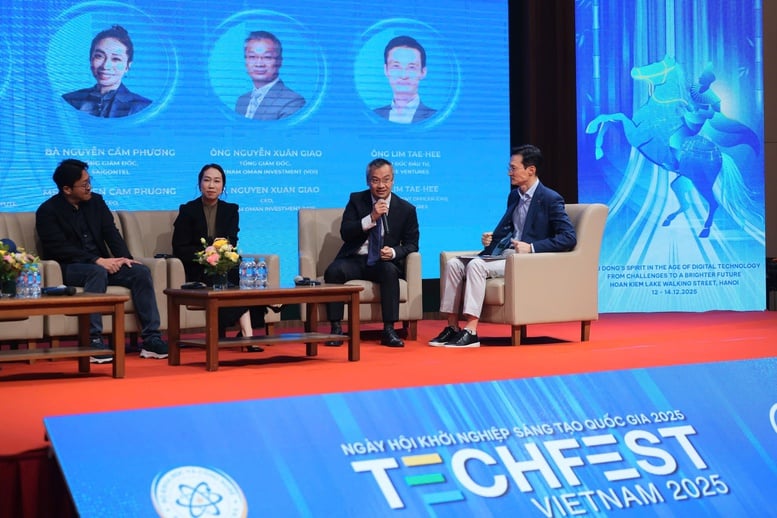
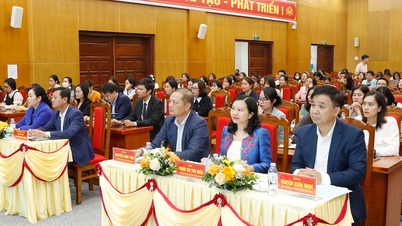
Discussion session on promoting investment cooperation within the framework of the Forum - Photo: VGP/TG
At the Forum, many international experts shared their experiences. Mr. David Lewis, Chairman and CEO of Energy Capital Vietnam, said that Singapore's public-private partnership model in venture capital is a valuable lesson, in which the State provides "seed capital" and builds a synchronized ecosystem.
Samuel Ang, a senior expert at the ADB, introduced the concept of "prairie gazelles"—fast-growing businesses capable of solving systemic societal problems.
Taking Hanoi as an example, ADB experts believe that issues such as environmental pollution, traffic congestion, and access to credit are all major challenges. Businesses that offer effective solutions to these problems are potential candidates for the "grass gazelle" group.
According to him, state investment funds need to play a role in providing initial leverage for this group of businesses.
From the perspective of private equity funds, Mr. Le Thanh Nam, Investment Director of Touchstone Partner, emphasized that the value of venture capital funds lies not only in capital, but also in their ability to assess, manage risks, and support businesses in expanding into international markets.
Opinions expressed at the Forum suggest that venture capital funds, along with specialized stock exchanges, will be crucial "pieces" in completing Vietnam's innovative startup ecosystem.
With the proactive participation of the State, the leading role of the private sector, and the support of local authorities, Vietnam is gradually building the institutional foundation to transform innovation into a core driving force for rapid and sustainable growth in the coming period.
Thu Giang
Source: https://baochinhphu.vn/se-thanh-lap-quy-dau-tu-mao-hiem-quoc-gia-cho-khoi-nghiep-sang-tao-10225121315452312.htm

























































































Comment (0)