 |
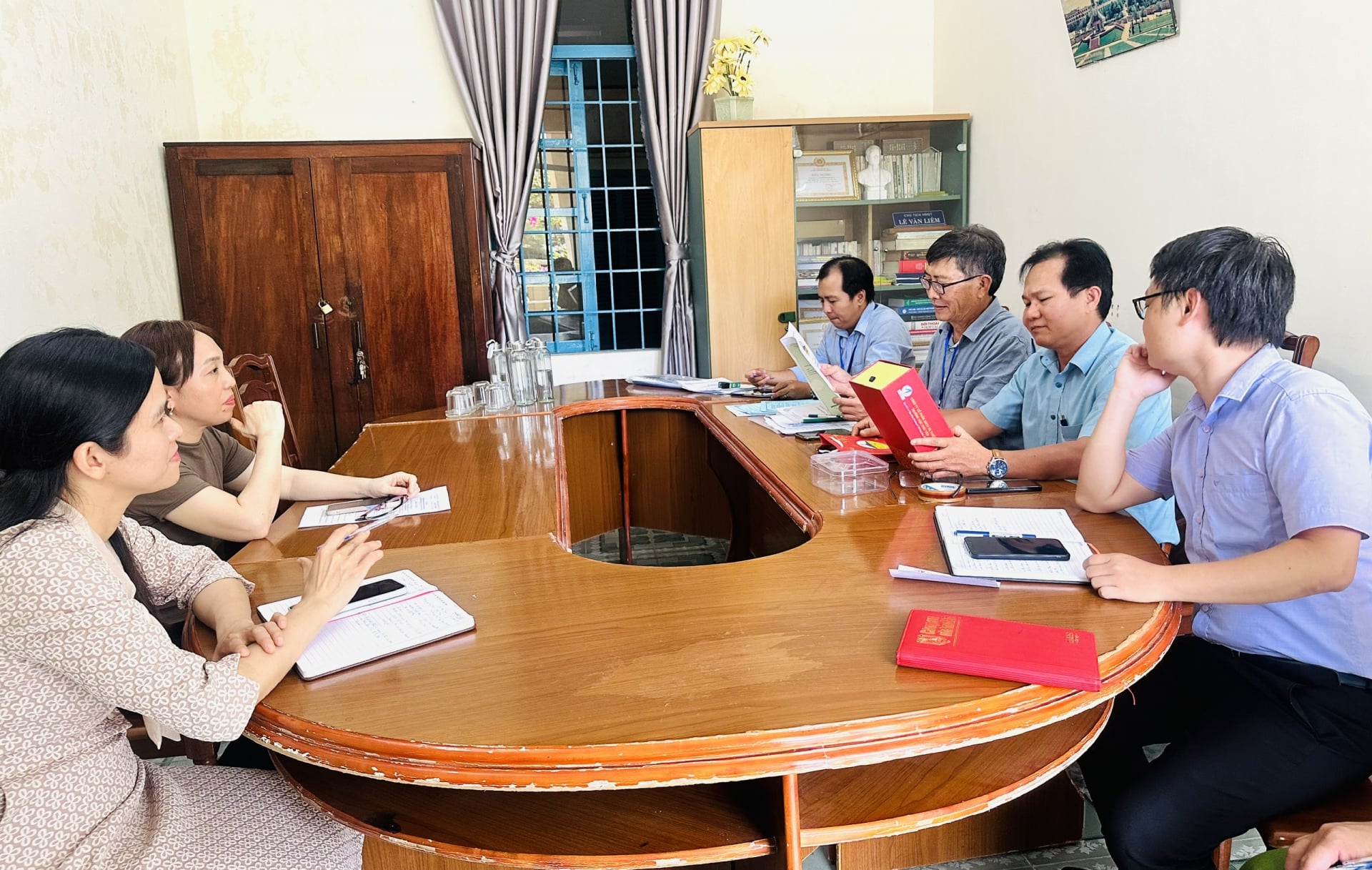
| A joint inter-agency inspection team from the province checks procedures at a food production and business facility in Tuy Hoa City. Photo: YEN LAN |
Raising awareness and taking collective action.
The 2025 Food Safety Action Month, taking place from April 15th to May 15th, aims to promote propaganda and education , raise awareness, and define the responsibilities and actions of Party committees, organizations, officials, Party members, and the people in ensuring food security and safety; to emphasize the role and responsibility of organizations, individuals, and businesses in enforcing food safety laws; and to promptly provide information on safe and high-quality agricultural and food value chains, as well as establishments that violate regulations and pose potential risks to food security and safety. During the action month, inspection, monitoring, and supervision activities will be intensified. Authorities are determined to combat, prevent, and strictly handle organizations, individuals, and production and business establishments that violate food safety regulations, especially food service establishments, collective kitchens, and street food vendors. At the same time, the action month aims to improve the capacity to prevent and proactively handle food poisoning and foodborne illnesses at establishments with collective kitchens, food service businesses, and street food vendors; and to minimize poisonings caused by the consumption of unsafe food.
According to the Provincial Inter-sectoral Steering Committee on Food Safety, in recent times, food safety assurance has received the attention and guidance of the entire political system from the province to local levels; Party committees and authorities at all levels have participated and created significant changes, achieving important results. Food safety propaganda, inspection, and enforcement have been strengthened, contributing to timely prevention and reduction of food safety risks. The legal framework, regulations, and standards on food safety basically meet the requirements of state management and international integration; clean raw material areas and safe food supply chains have begun to be established. The fight against commercial fraud in food production and business has gradually achieved many successes. Consumer awareness and responsibility have been enhanced.
Emphasis should be placed on hygiene conditions of facilities and equipment in food production and processing.
Disseminate and publicize regulations on hygiene conditions of facilities, equipment, and tools in food production, processing, and trading; raw materials must have clear origins and sources; food additives and processing aids must be on the list of permitted substances, used in the correct dosage and for the correct purposes as prescribed in food production and processing; and the use of counterfeit, substandard, or unsafe food ingredients and products is prohibited.
However, despite the achievements, food safety assurance still reveals many shortcomings and limitations. The situation of food poisoning is becoming increasingly complex, especially food poisoning in collective kitchens of companies, businesses, and schools, and food poisoning from street food. Food advertising on digital platforms and social media is becoming increasingly common and difficult to manage.
This situation necessitates further strengthening of food security and safety measures, enhancing the role and responsibility of Party committees and government agencies at all levels, managers, producers, businesses, and consumers of food; and meeting increasingly higher standards in ensuring food security and safety.
Communication goes hand in hand with inspection and auditing.
During the 2025 Food Safety Action Month, a strong communication campaign will be implemented to disseminate messages about ensuring food safety; popularize knowledge on preventing food poisoning; commend organizations and individuals with initiatives and techniques to ensure food safety and contribute to economic development; and publicly disclose organizations and individuals who violate food safety regulations causing serious consequences...
According to Mr. Le Sy Kim, Head of the Food Safety Department (Department of Health): In addition to visual communication activities through 45 banners on main roads, the Department of Health is coordinating with press agencies to disseminate information on ensuring food safety through mass media, with the content of the communication following the guidelines of the Food Safety Administration. At the same time, the Department of Health has sent official letters to food production and business establishments and food service businesses in the province, requesting them to participate in communication activities on ensuring food safety.
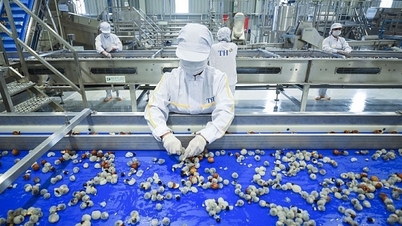
Alongside communication activities, inter-agency inspections and checks were organized, focusing on key food production, business, and processing facilities, and promptly and strictly handling violations. At the provincial level, the Department of Health advised on the establishment of an inter-agency inspection team to inspect food production, business, and processing facilities under provincial management. In localities, based on the plan for the 2025 Food Safety Action Month and guidance documents from relevant departments and agencies, the People's Committees of districts, towns, and cities directed the inter-agency food safety steering committees at the district, town, and city levels to develop food safety assurance plans, implementing them from the district, town, and city levels down to the commune, ward, and town levels; and assigned the inter-agency food safety inspection teams of districts, towns, and cities to conduct inspections of food production and business facilities according to their assigned levels within their respective areas.
Mr. Le Sy Kim stated: For food production and business establishments, the inspection team focuses on ensuring food safety and hygiene from production to storage. For food service establishments, the inspection team checks food safety practices, especially the three-step food inspection process and the retention of food samples for traceability when needed.
To date, the provincial inter-agency inspection team has inspected five food production and business establishments in Phu Hoa district and Tuy Hoa city. Mr. Le Sy Kim assessed that the establishments have performed relatively well in ensuring food safety and hygiene.
10 Golden Rules for Safe Food The World Health Organization (WHO) recommends 10 golden rules for safe food, with simple, easy-to-follow, and effective guidelines. 1. Choose fresh and safe food: Raw vegetables should be soaked and thoroughly washed with clean water; fruits should be peeled before eating. Frozen food that has been thawed and then refrozen is unsafe. 2. Cook thoroughly before eating: Cook food thoroughly, ensuring the core temperature of the food reaches 70 degrees Celsius. 3. Eat immediately after cooking: always eat food right after it's cooked, because the longer food sits, the more dangerous it becomes. 4. Carefully store cooked food: To keep food for more than 5 hours, it must be kept continuously hot above 60°C or cold below 10°C. 5. Reheat food thoroughly: Cooked food that is left out for more than 5 hours must be thoroughly reheated. 6. Avoid cross-contamination between cooked and raw food and dirty surfaces: Cooked food can become contaminated with pathogens through direct contact with raw food or indirectly through contact with surfaces used for food preparation. 7. Wash your hands thoroughly before preparing food and after each interruption to do other tasks. If you have a hand infection, carefully and completely bandage the wound before preparing food.  Vietnam encourages US businesses to expand investment in high technology.On the morning of June 26th, at the Government Headquarters, Deputy Prime Minister Ho Quoc Dung received Mr. Jeff Place, Supply Chain Director of Coherent Group (USA). During the meeting, the Deputy Prime Minister affirmed that Vietnam encourages US businesses to expand investment, especially in high-tech, innovation, and semiconductor industries.  Encourage U.S. businesses to expand investment in high-tech sectors.Deputy Prime Minister Ho Quoc Dung said that Vietnam welcomes US businesses to continue expanding their operations in Vietnam, especially in high-tech industries and sectors with high added value.  Vietnam and the United States strengthen cooperation in addressing the consequences of war.VTV.vn - On June 22, General Secretary and President To Lam received Acting Secretary of the US Navy Hung Cao. 8. Keep food preparation surfaces clean: Because food is easily contaminated, any surface used for food preparation must be kept clean. Dishcloths should be boiled and replaced frequently before reuse. 9. Cover food to prevent insects and other animals: Keep food in airtight containers, covered, in glass cabinets, or under food covers. This is the best way to protect it. 10. Use clean and safe water: Clean water is colorless, odorless, tasteless, and free of pathogens. Boil water before making ice for drinking. Be especially careful with the water used for cooking for children. |
Source: https://baophuyen.vn/xa-hoi/202504/cung-hanh-dong-vi-an-toan-thuc-pham-e0c420e/

![[Photo] National Assembly Chairman Tran Thanh Man attends the Conference to announce the Master Plan for Hanoi Capital City with a 100-year vision.](https://vphoto.vietnam.vn/thumb/1200x675/vietnam/resource/IMAGE/2026/06/29/1782709639728_ndo_br_1-jpg.webp)

![[Image] A look back at the capital's preparations for the century-long master plan.](https://vphoto.vietnam.vn/thumb/1200x675/vietnam/resource/IMAGE/2026/06/29/1782750453122_quy-hoach-100-nam-minh-duy-1-2118-jpg.webp)
![[Photo] General Secretary and President To Lam works with the Party Committee of the Government on the work of preventing and combating storms, floods, extreme natural disasters and climate change.](https://vphoto.vietnam.vn/thumb/1200x675/vietnam/resource/IMAGE/2026/06/29/1782729441945_a1-bnd-0385-9454-jpg.webp)