

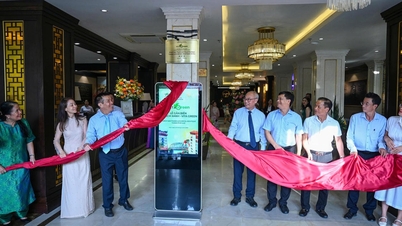
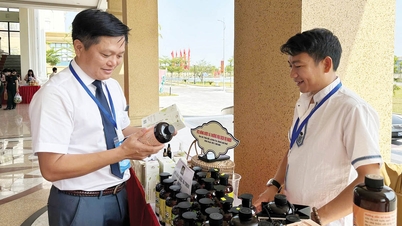
The Chinese Cultural Center in Hanoi recently organized an exchange and sharing program to celebrate China Tourism Day, with the participation of many businesses and organizations operating in the cultural and tourism sectors of both countries.
The event is not only an opportunity to promote the unique cultural values and rich tourism resources of Vietnam and China, but also opens up opportunities to strengthen connections between businesses, travel agencies, localities, and investors in the tourism sector.
According to Mr. Truong Duc Son, Director of the Chinese Cultural Center in Hanoi , tourism not only creates cultural experiences for the people of both countries but also contributes to strengthening the friendship between Vietnam and China through people-to-people exchanges. In recent years, the flow of tourists in both directions has continuously grown, showing the increasing attractiveness of each country to tourists from the other.
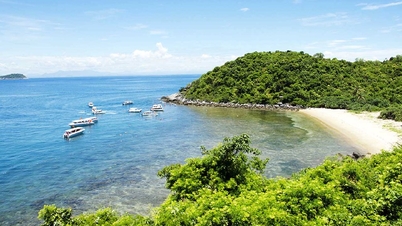
While many Vietnamese tourists choose to explore famous Chinese destinations such as Guilin, Lijiang, Zhangjiajie, or Tianshan Tianchi, conversely, Hanoi, Ho Chi Minh City, Ha Long Bay, Da Nang, and Nha Trang continue to be favorite destinations for Chinese tourists.
According to statistics from Vietnam's tourism industry, in 2025, China will continue to be the largest international tourist market for Vietnam with over 5.28 million visitors, accounting for approximately 25% of the total number of international tourists to Vietnam. In the first four months of 2026, the number of Chinese tourists to Vietnam reached over 1.85 million.

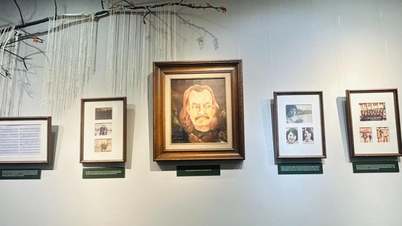
A special feature of this year's program is that it coincides with the anniversary of President Ho Chi Minh's birthday. According to Mr. Truong Duc Son, during his revolutionary activities in China, President Ho Chi Minh visited many places such as Guangzhou, Guilin, Liuzhou, Chongqing, Kunming, Nanning, and Yan'an. Many historical sites associated with him are still preserved intact today.
China is continuing to develop themed tourist routes "Following in the Footsteps of President Ho Chi Minh," connecting historical sites and improving service quality to welcome Vietnamese tourists to visit, learn about history, and feel the depth of the friendship between the two nations, which is "both comrades and brothers."
Beyond just tourist exchanges, cultural cooperation between the two countries is also being strengthened through various artistic exchanges, exhibitions, heritage promotion, and humanitarian exchange programs.
Cultural cooperation mechanisms are regularly maintained based on agreements signed over many years, contributing to strengthening friendly neighborly relations and enhancing the bond between the people of the two countries.
Mr. Chu Quoc Hung, Chairman of the UNESCO Hanoi Travel Club, shared that China is one of the countries with a dynamically developing tourism industry and a significant influence in the world.
Today, international tourists, including Vietnamese visitors, come to China not only for sightseeing, but also to experience the cultural life, cuisine, art, smart tourism, and modern developed cities of China such as Beijing, Shanghai, and Chongqing.
China's green tourism, ecotourism, night tourism, and digital cultural tourism models are creating new trends for the Asian region.
According to Mr. Nguyen Trung Quan, CEO of Avitour, China is currently a key outbound market for many Vietnamese travel businesses thanks to its diverse landscapes, culture, modern infrastructure, and well-developed transportation network.
Vietnamese tourists are increasingly interested in in-depth experiential journeys to destinations like Tibet, Xinjiang, Gansu, Guilin, and Lijiang, instead of focusing solely on traditional Beijing-Shanghai routes. The trend of themed tourism, cultural experiences, technology, spatial exploration, and live performances is opening up new product lines for young Vietnamese travelers.
In recent meetings and working sessions between the cultural and tourism management agencies of the two countries, both Vietnam and China affirmed that cooperation in culture, sports, and tourism is one of the important pillars of bilateral relations.
Both sides agreed to continue strengthening coordination in organizing cultural exchange activities, promoting tourism, fostering local connectivity, and developing inter-provincial tourism products, railway tourism, border tourism, as well as products for young people.
Many tourism experts believe that, in the context of increasing demand for experiencing local culture, green tourism, and smart tourism, Vietnam and China have great potential to develop high-quality tourism products based on their cultural and historical advantages and similarities in East Asian exchanges. This also forms the basis for the two countries to expand cooperation not only in the tourism sector but also in the cultural, media, and creative industries.
Source: https://baophapluat.vn/cung-kham-pha-non-song-tuoi-dep-trung-quoc.html


![[Image] Hanoi's urban life under the challenge of a "scorching hot" environment](https://vphoto.vietnam.vn/thumb/1200x675/vietnam/resource/IMAGE/2026/05/25/1779706979265_nang-nong-t5-2026-minh-duy-7-4636-jpg.webp)
![[Image] Close-up view of the interchange connecting the two expressways and Long Thanh Airport.](https://vphoto.vietnam.vn/thumb/1200x675/vietnam/resource/IMAGE/2026/05/25/1779703378210_ndo_br_z7863716673926-224453a31600126cce10622af6290afd-4549-jpg.webp)




















































Comment (0)