

In the two previous articles, the VOV-Mekong Delta reporting team clearly outlined the initial achievements as well as the difficulties encountered during the implementation process. From this, it was affirmed that the Project for Sustainable Development of 1 Million Hectares of High-Quality Rice Specialization is extremely significant for farmers in the Mekong Delta, for the rice industry, and for the task of responding to climate change... This project is extremely meaningful for farmers in the Mekong Delta region to develop sustainable production, aiming for safety against natural disasters, reducing greenhouse gas emissions, and bringing net emissions to "zero" in accordance with Vietnam's commitments at COP26.
In the final article of the series "Restructuring the Rice Industry for Steadfast Progress in the New Era," the VOV-DBSCL reporting team will highlight the determination of the Government , ministries, and localities to strive for "A revolution for rice cultivation in the Mekong Delta in the new era."
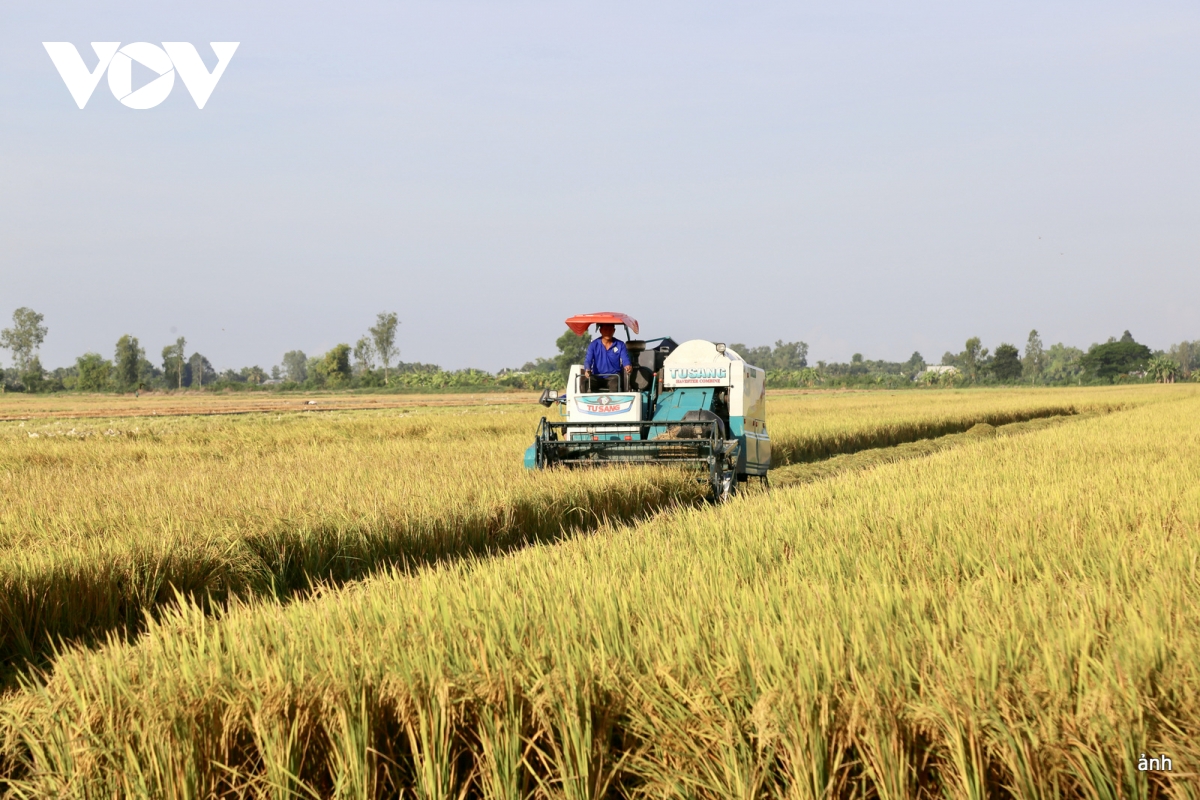
The Mekong Delta has many advantages for agricultural development, especially in the rice and seafood industries. Rice production in this region plays a vital role not only in ensuring national food security and social stability, but also as a crucial source of income for tens of millions of Vietnamese farming households. This, in turn, promotes exports, contributes to global food security, and enhances Vietnam's standing and prestige internationally.
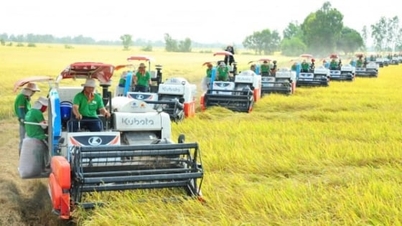
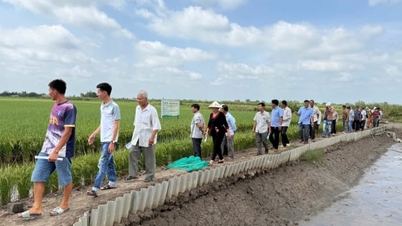
After nearly a year of implementing the Project on 1 million hectares of high-quality rice cultivation, the Ministry of Agriculture and Rural Development and local authorities in the region have demonstrated determination; striving to overcome difficulties, building infrastructure, promoting growth; and developing pilot models to be replicated throughout the region.
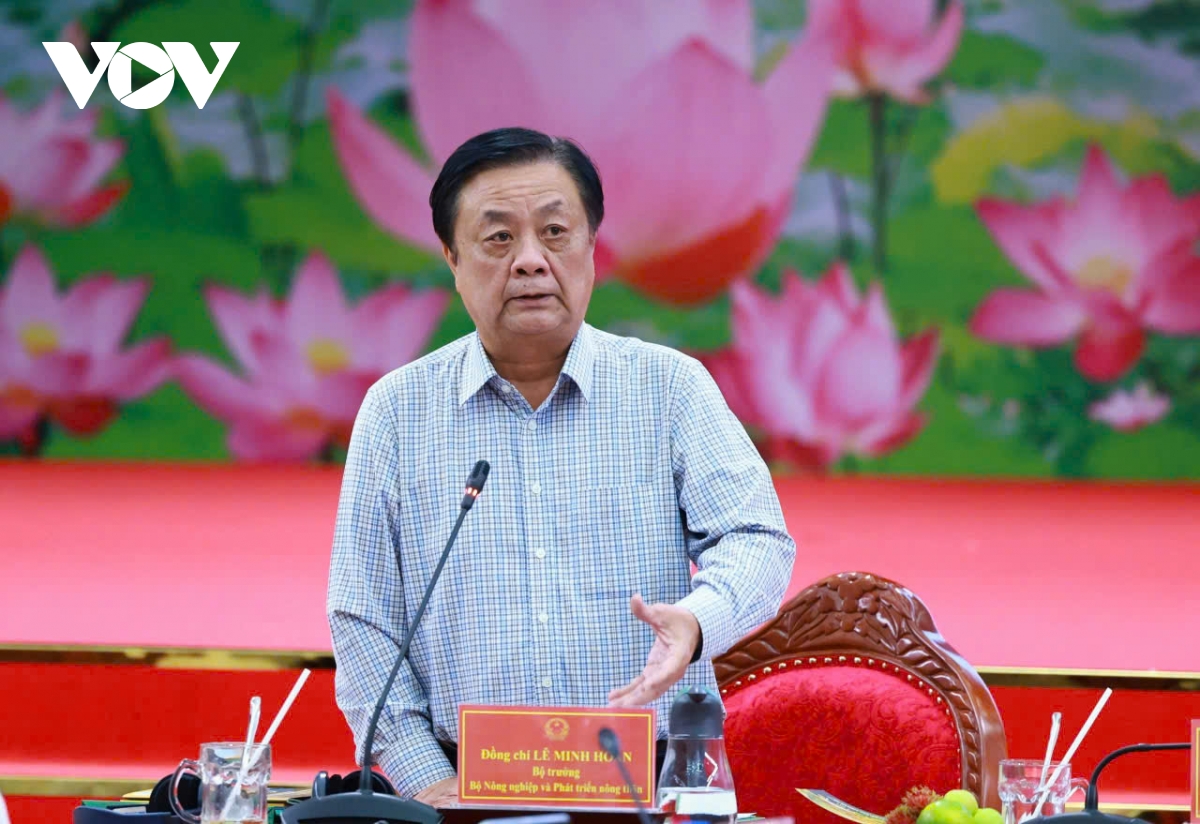
“The first step is to change the entire process, the entire form, and the entire approach to our rice farming bank. This starts with what we said: we will reduce emissions for the rice farming sector in the Red River Delta, the Central region, the Southeast region, and other localities. Now, localities are starting to do it, even though they don't have capital, they are doing it in their own way. From reducing emissions in the rice industry, we are expanding to reducing emissions in the crop farming sector, the livestock sector, and the aquaculture sector,” Minister of Agriculture and Rural Development Le Minh Hoan stated.
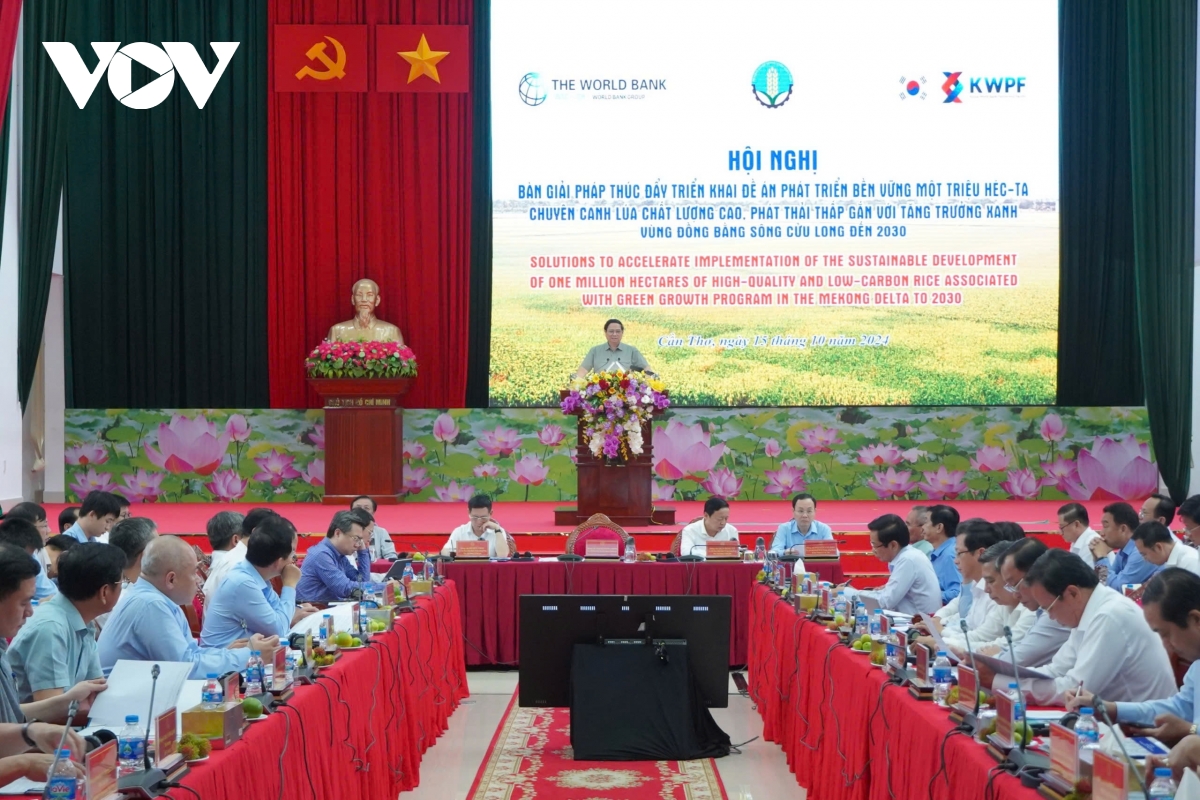
At the recent conference in Can Tho to implement the project "Sustainable development of one million hectares of high-quality, low-emission rice cultivation associated with green growth in the Mekong Delta by 2030," Prime Minister Pham Minh Chinh commended the efforts of localities in the region; and directed them to focus on accelerating and making breakthroughs to achieve the goal of one million hectares of high-quality, low-emission rice as soon as possible, thereby achieving approximately 14-15 million tons of paddy rice and 9-10 million tons of high-quality milled rice. This goal must be achieved by 2030 at the latest, and efforts should be made to achieve it even sooner.
Regarding funding, the Prime Minister also directed the banking sector to continue implementing existing credit packages and to research and implement a credit package of approximately 30,000 billion VND for the Project in 2025; and to provide loans to businesses for purchasing materials, seeds, and for production and business activities.
Regarding this matter, Mr. Dao Minh Tu, Deputy Governor of the State Bank of Vietnam, stated that the State Bank and the banking sector are committed to continuing to cooperate and actively coordinate with relevant agencies to promote the implementation of the lending program in particular and the scheme under Decision 1490 in general.
“Firstly, interest rates will have to be lower across all loan terms, with participants in the linked bond offering a minimum of 1% lower than the current lending rates for the same borrowers. Secondly, the loan term will depend on the borrower's needs and requirements. Thirdly, we have a very favorable mechanism to support loans up to 3 billion VND without requiring collateral. These are very preferential policies for this program,” said Deputy Governor of the State Bank of Vietnam, Dao Minh Tu.
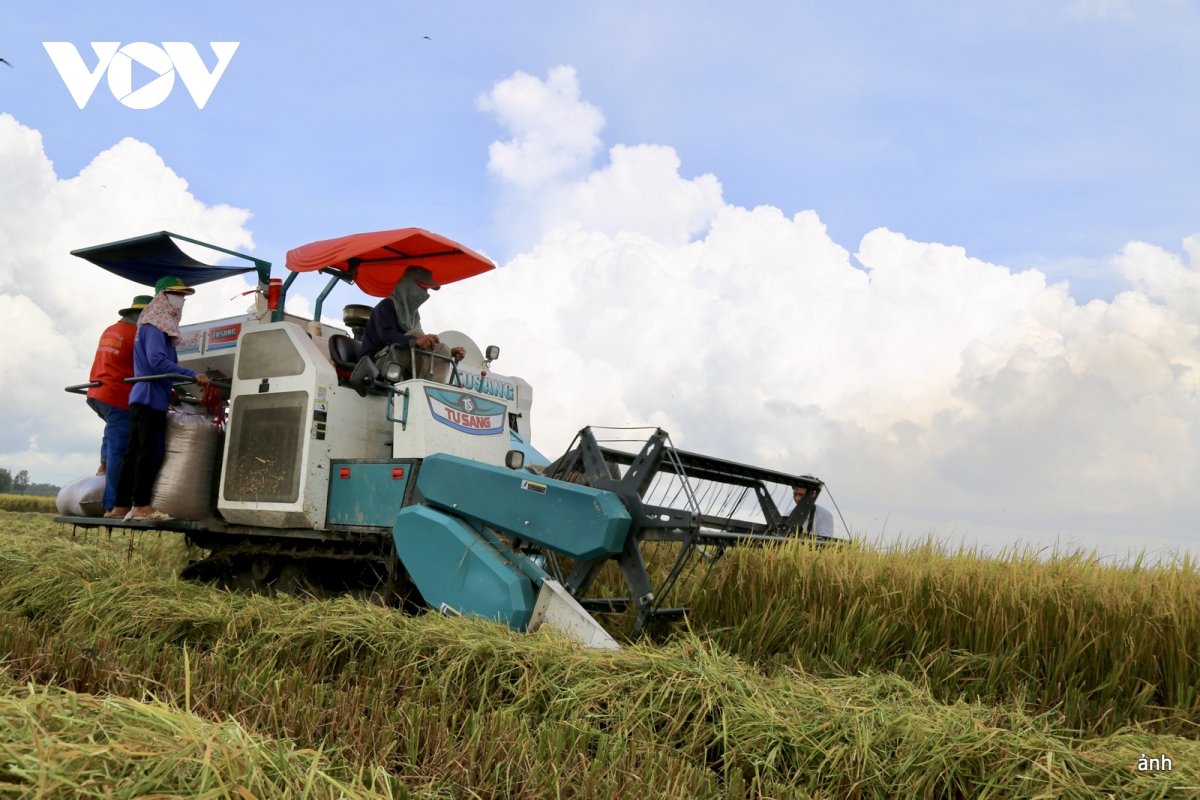
Regarding the mobilization of resources for the 1 million hectare rice project, as early as the end of 2023, the Ministry of Agriculture and Rural Development (MARD) developed a project proposal titled "Support for infrastructure and technology for high-quality and low-emission rice in the Mekong Delta" to be financed by a World Bank loan worth US$430 million. However, after working with the Ministry of Finance and the Ministry of Planning and Investment, MARD will have to change its approach from "Project" to "Public investment program to support infrastructure and technology for high-quality and low-emission rice in the Mekong Delta," using preferential loan capital, as stipulated in Clauses 5 and 9, Article 4 of the amended Law on Public Investment, which is expected to be approved by the National Assembly in the next session.
The leaders of the Ministry of Agriculture and Rural Development (MARD) have proposed that the Prime Minister approve the principle of finalizing the pilot policy dossier for the public investment program "Supporting infrastructure and technology for high-quality and low-emission rice in the Mekong Delta" using preferential loans from the World Bank, estimated at approximately US$330 million. Following this, MARD will report to the Government to submit the proposal to the National Assembly for the issuance of a Resolution at the nearest session. During the process of finalizing the dossier and issuing the National Assembly Resolution on the pilot policy, MARD will coordinate with the People's Committees of provinces and cities, and the donor to prepare and finalize the necessary documents to ensure that this public investment program can be implemented as early as 2026.
Following these recommendations, and based on a proposal from the Ministry of Agriculture and Rural Development, Prime Minister Pham Minh Chinh directed the establishment of a fund to support 1 million hectares of rice cultivation. This fund includes state capital, carbon credit sales, support from partners, and socialized capital. The purpose of establishing the fund is to have a readily available source of capital without going through many procedures.
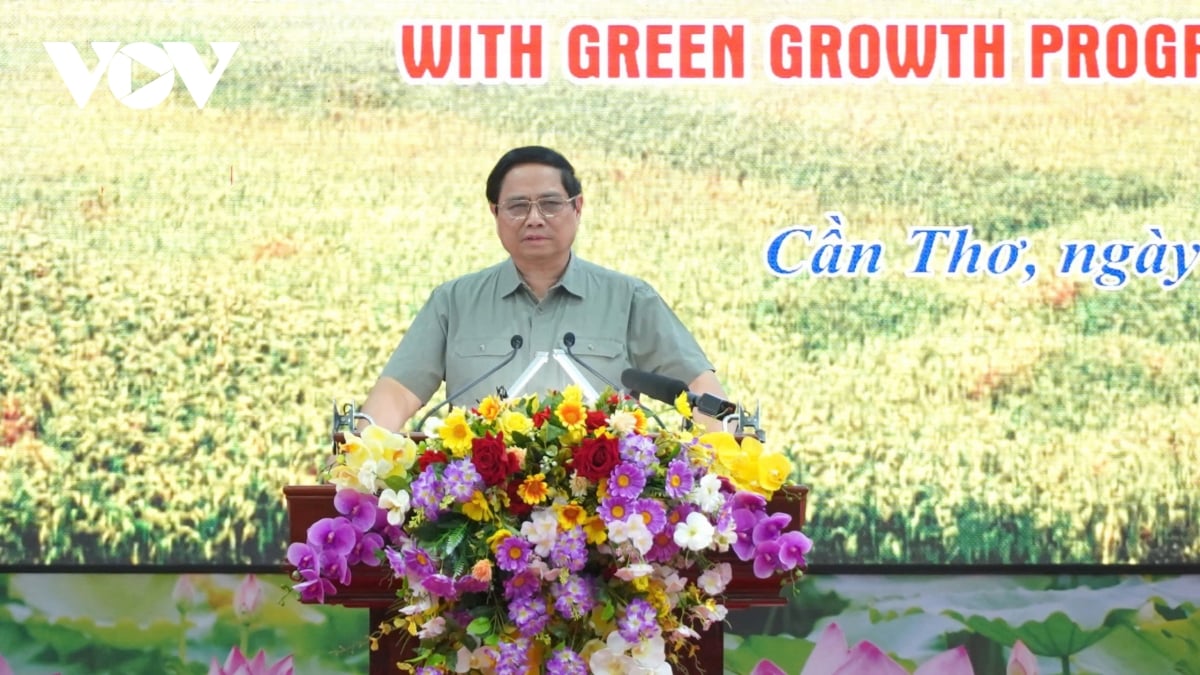
At the conference to implement the project in Can Tho, chaired by the Government, Deputy Prime Minister Ho Duc Phoc announced that he would direct the Ministry of Finance to establish a fund to support 1 million hectares of rice cultivation, with immediate budget allocation for 2025.
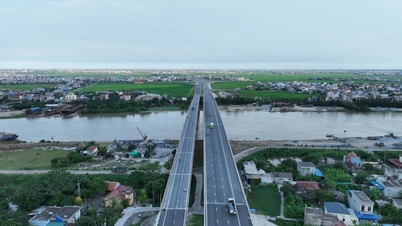
“In the project, we focus on investing in infrastructure, irrigation, and transportation infrastructure. We must consider landslide prevention, drought prevention, the capacity of water reservoirs, roads, and flood and salinity control… The second issue is focusing on increasing labor productivity and building brands, which requires the application of science and technology. Thirdly, we need to train agricultural extension technicians to ensure sustainable development, and possibly research the establishment of a fund for these 1 million hectares of rice, using the proceeds from carbon credits to support farmers and focus on investing in cooperative projects,” Deputy Prime Minister Ho Duc Phoc emphasized.
The World Bank highly appreciates Vietnam's 1 million hectare rice project, which has three main objectives: increasing income for rice farmers, enhancing the competitiveness of the rice value chain, and contributing to addressing the challenges of climate change in Vietnam and the world.
Mr. Li Guo, Senior Agricultural Economist at the World Bank, stated that the World Bank has committed credit to Vietnam to implement the project.
“In fact, to be eligible for the $40 million in carbon credits, this pilot project will have to demonstrate that it is fulfilling its emission reduction commitments. Currently, the World Bank is working with the Ministry of Agriculture and the International Rice Research Institute (IRRI) to develop the measurement methodology, meaning there must be tools and methods to measure MRV emission reductions and tools to collect measurement data to prove it,” said Li Guo of the World Bank.
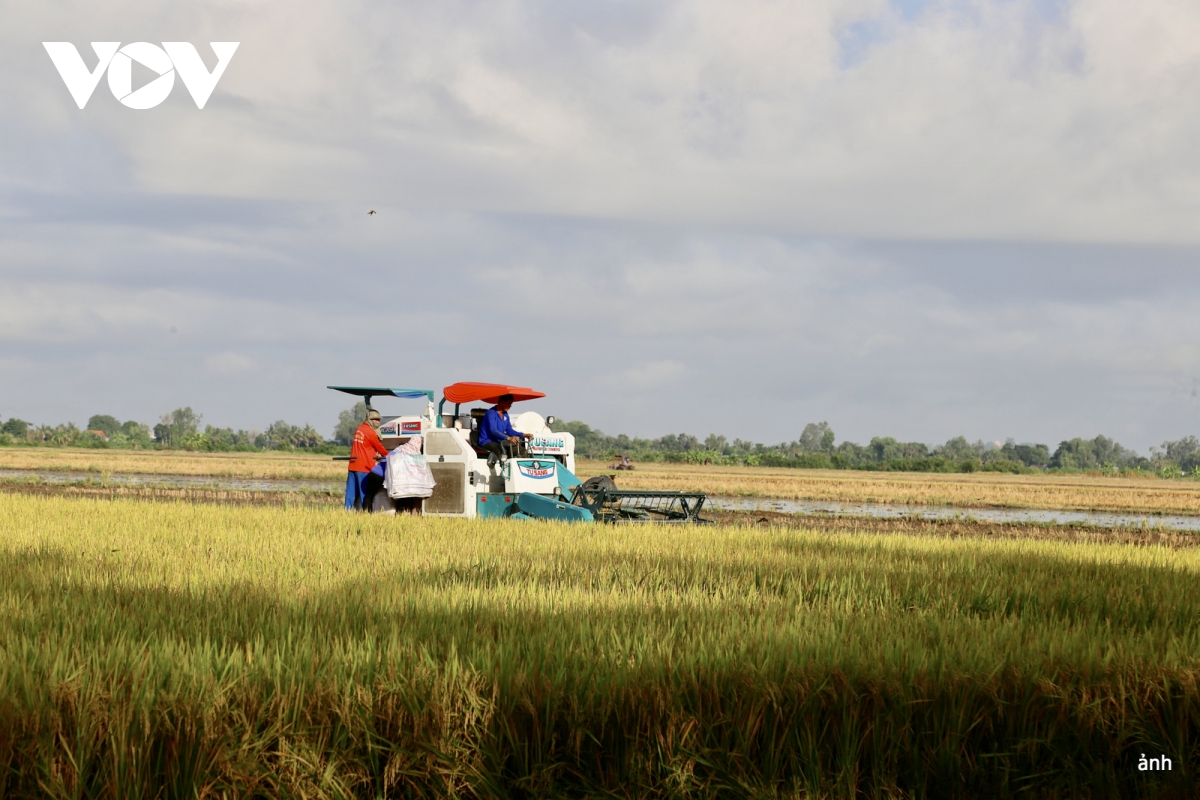
“We must cherish rice as much as we cherish ourselves, as much as we cherish most in our lives, thereby creating a revolution for rice cultivation and the Mekong Delta.” Based on this guiding principle, Prime Minister Pham Minh Chinh agreed with the proposal to establish a Steering Committee to implement the Project, chaired by Deputy Prime Minister Tran Hong Ha, with the spirit of only discussing and acting, never backing down; what is said must be done, what is committed must be implemented, and what is done must yield concrete, measurable results.
Prime Minister Pham Minh Chinh stated that food security in the world is constantly under threat. This highlights the value and importance of the Mekong Delta region.
Regarding the project to develop 1 million hectares of high-quality, low-emission specialized rice in the Mekong Delta in the coming period, the Prime Minister also outlined 5 guiding issues and 11 specific tasks and solutions. The Prime Minister emphasized the need to "breathe life" into rice cultivation, injecting new vitality into the rice industry through digital technology, green development, circular economy, sharing economy, knowledge economy, application of science and technology, and innovation. This will contribute to ensuring food security, guaranteeing income for tens of millions of farming households, boosting exports, and contributing to global food security.
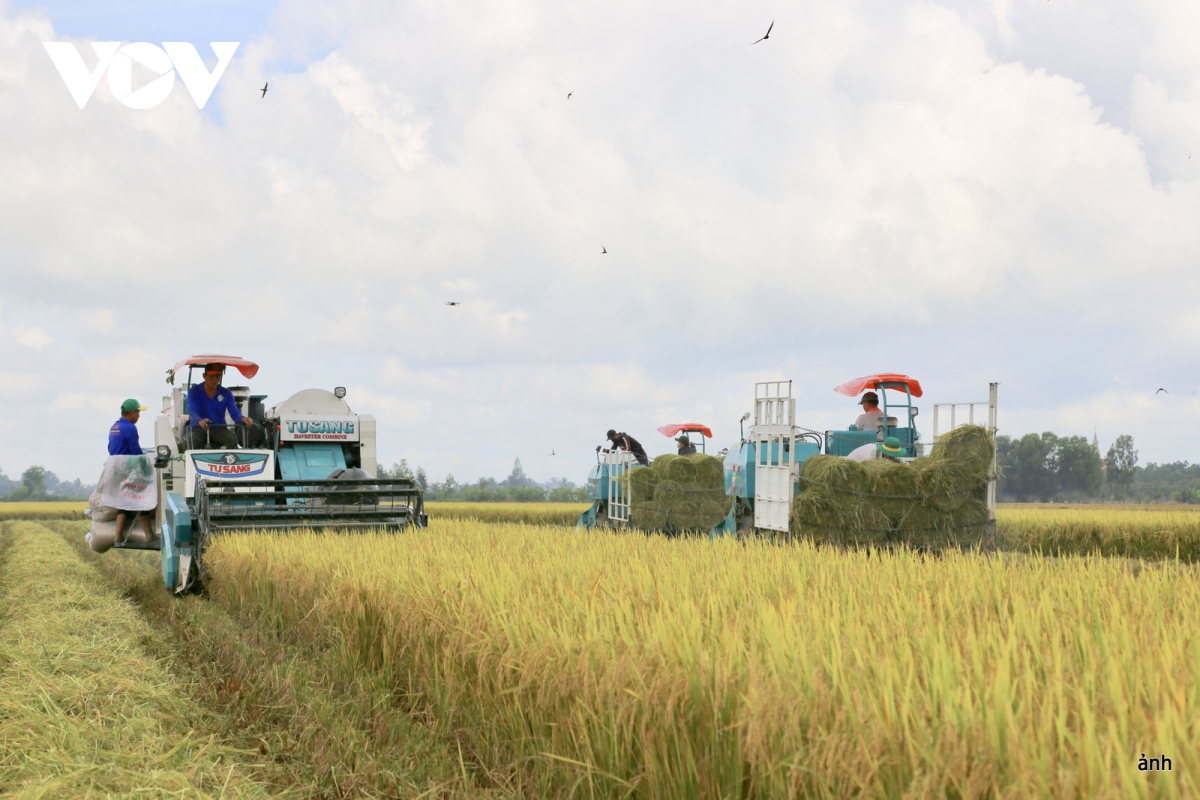
The three-part series "Restructuring the Rice Industry for Steadfast Progress in the New Era" by the VOV-Mekong Delta reporting team clearly analyzed the Government's new determination to gradually modernize the country's rice production industry; creating a breakthrough in agricultural thinking in the "Nine Dragons" region, which is facing the impacts of rapid and unpredictable climate change; and contributing to improving the income and living standards of rice farmers and businesses.
The "Sustainable Development Project of One Million Hectares of High-Quality, Low-Emission Rice Cultivation Associated with Green Growth in the Mekong Delta by 2030" is a "breath of fresh air," further affirming Vietnam's responsibility in ensuring global food security and reducing greenhouse gas emissions, realizing the goal of achieving net-zero emissions by 2050.
>>Article 1: The 1 Million Hectare Project: Positive Signals from the Mekong Delta's Rice Granary
>>Article 2: Removing bottlenecks and elevating the rice value chain
Part of the series: Restructuring the rice industry for a secure transition into the new era.
Article 1 - The 1 Million Hectare Project: Positive Signals from the Mekong Delta's Rice Granary
Lesson 2 - Removing Bottlenecks - Elevating the Rice Value Chain
Lesson 3 - The revolution for rice cultivation in the Mekong Delta in the new era
VOV.VN - A new mindset in rice production, linked to environmental protection and adaptation to climate change, will contribute to the government's fulfillment of international commitments to reduce greenhouse gas emissions, creating a boost for the rice industry in the Mekong Delta region.
Source: https://vov.vn/kinh-te/cuoc-cach-manh-cho-cay-lua-dbscl-trong-ky-nguyen-moi-post1131725.vov
































































Comment (0)