When launching the military campaign against Iran on February 28, U.S. President Donald Trump described it as a historic turning point that could reshape the Middle East. However, more than 100 days later, as the U.S. and Iran reached a vague memorandum to end the conflict, many analysts are asking: what has really changed?
According to them, neither the war nor the new agreement eliminates the core threats that the US and Israel believe originate from Iran. Tehran's nuclear program has suffered significant damage but has not been eradicated, and its future continues to depend on future negotiations.
Similarly, the agreement made no mention of Iran's ballistic missile arsenal. The theocratic regime in Tehran remains in place despite the leadership change. Iranian proxy forces remain a source of instability in the region, while Israel and Hezbollah—an Iranian-backed militia in Lebanon—continue to attack each other.
Even the most important immediate outcome of the agreement – Iran reopening the Strait of Hormuz, a strategic shipping lane that Trump considers a top priority – has become uncertain.
"This is not a document that the U.S. achieved by demonstrating Washington's newfound military superiority through the war," said Caitlin Talmadge, a professor at MIT and expert on Gulf security.
"I believe this document emerged because the U.S. had become embroiled in a war beyond its capacity and did not want to escalate it further," she added.
According to her, avoiding escalation is a worthwhile goal, but it also raises the question: what has the US actually achieved, especially compared to the previous Iran nuclear deal?
Has the US lost some of its strategic leverage?
US Vice President JDVance argued that the agreement still gives the US leverage over Iran, as Washington can turn economic incentives on or off like adjusting a faucet. However, many experts disagree.
Analysts argue that Trump broke what was once a US taboo – directly attacking Iran – but at the same time depleted Washington's most powerful tool since the Islamic Revolution: the threat of using force.
The US used military options but failed to achieve its initial goals—a lesson Iran will surely remember, according to experts.
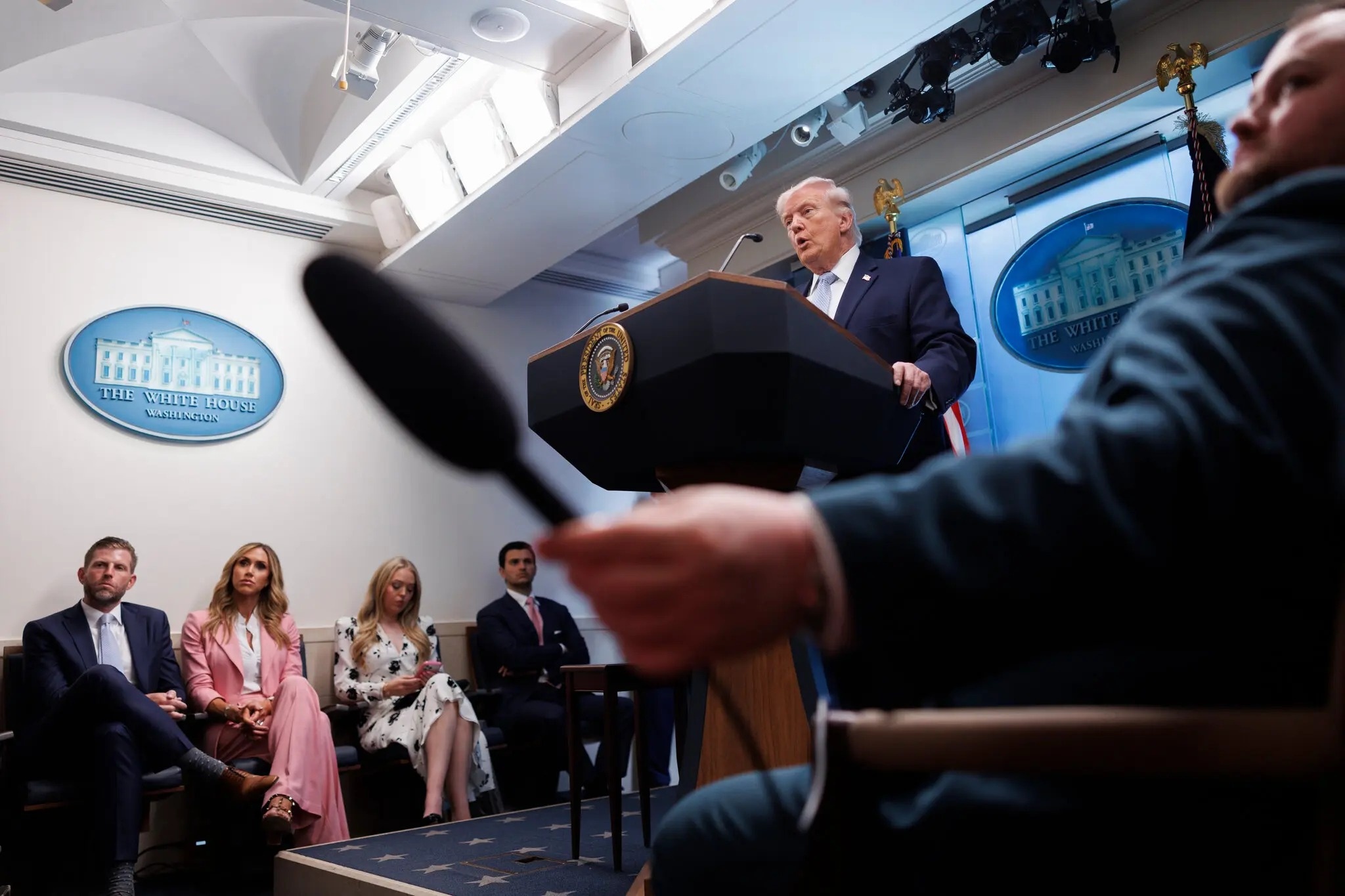 |
Trump at a press briefing on the situation in Iran at the White House in April. Photo: NYT. |
During the 12-day war last June, the U.S. military put significant pressure on the long-term prospects of Iran's nuclear program by deploying long-range bombers to destroy nuclear facilities deep inside mountains, Talmadge said.
However, the recent conflict has had the opposite effect, as Trump has not escalated it further.
"I think the U.S., in some respects, has undermined the leverage it had," she said.
At the same time, Iranian attacks on US military bases in the region inflicted significant damage, further undermining the image of the invincibility of American power.
The memorandum also included a clause requiring unidentified US forces to withdraw from the area “near” Iran within 30 days.
“When have we ever sat down to negotiate with Iran about the future deployment of U.S. forces?” asked Robert S. Ford, former U.S. ambassador to the region.
Iran suffered heavy losses but still declared victory.
The war left devastating consequences for Iran. According to reports, approximately 1,700 civilians were killed. Much of the military and industrial infrastructure was destroyed, the air defense system revealed numerous weaknesses, while the economy, already strained by sanctions, continued to fall into crisis with soaring inflation and rising unemployment.



Iran also lost many high-ranking figures, including Supreme Leader Ali Khamenei and many key military commanders. The cost of rebuilding the country is projected to reach hundreds of billions of dollars.
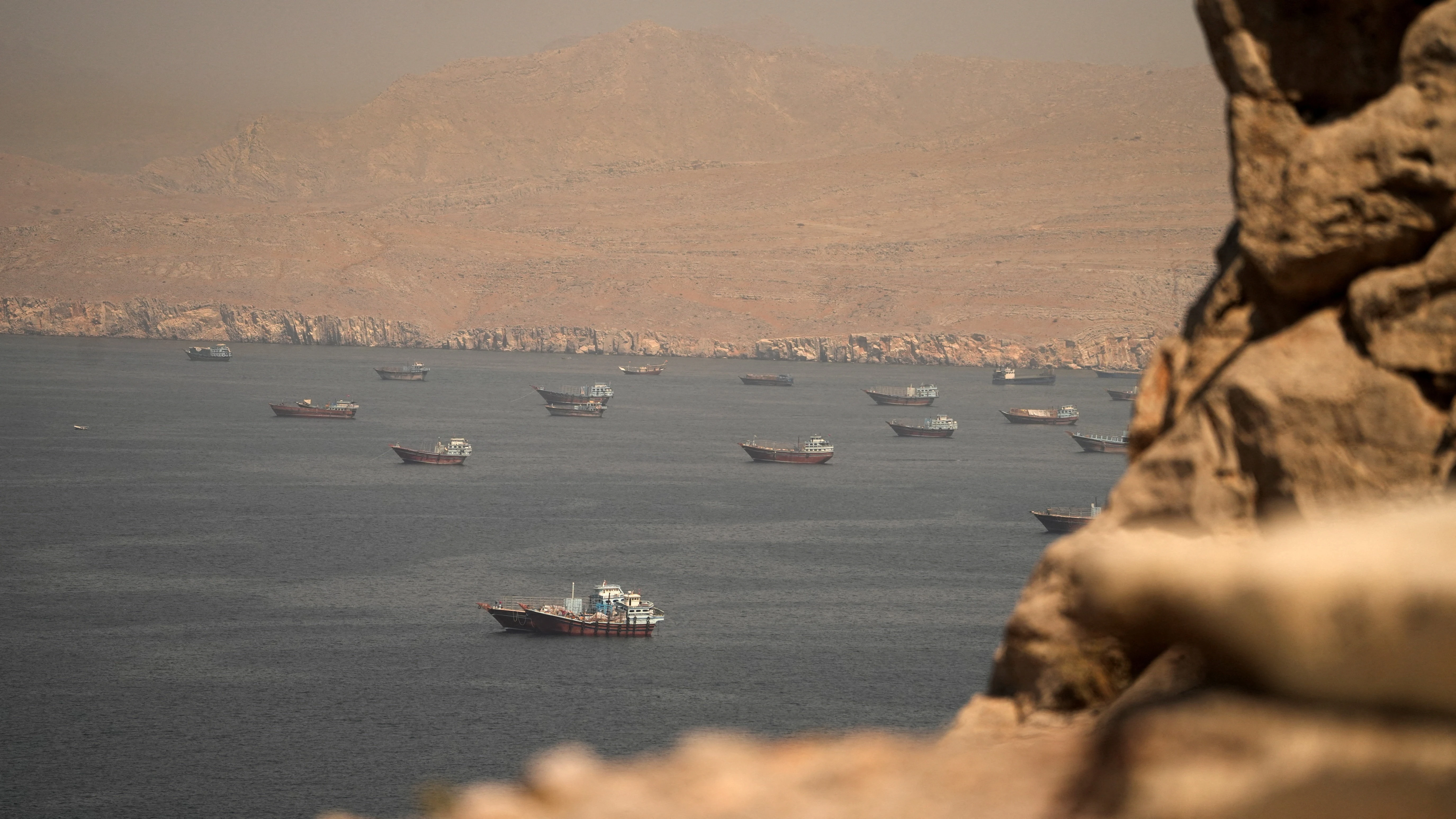 |
After the war, Iran became more aware of the strategic leverage of the Strait of Hormuz. Photo: Reuters. |
Nevertheless, the Tehran government still considers surviving attacks from its two most powerful rivals, the US and Israel, a symbolic victory.
Mohammad Bagher Ghalibaf, Speaker of the Iranian Parliament and one of the chief negotiators, argued that the war helped Tehran realize a crucial tool for exerting pressure: the ability to control the Strait of Hormuz.
According to him, this was previously just a potential capability that had never been used, but the war itself made Iran more aware of its strategic value.
Although the memorandum allows ships free passage through the Strait of Hormuz for two months, Tehran has signaled that it may impose fees on shipping services in the future – a mechanism that did not exist before the war.
From another perspective, Iran also has the opportunity to receive significant economic benefits if it complies with the terms of the agreement, including the lifting of the naval blockade, the release of frozen assets, the end of US sanctions, and a $300 billion reconstruction fund supported by Gulf Arab states.
This is a major test for Iran's new government: whether Tehran is willing to trade its decades-long policy of confrontation with the US for economic recovery.
Israel: From aiming to weaken Iran to feeling left out
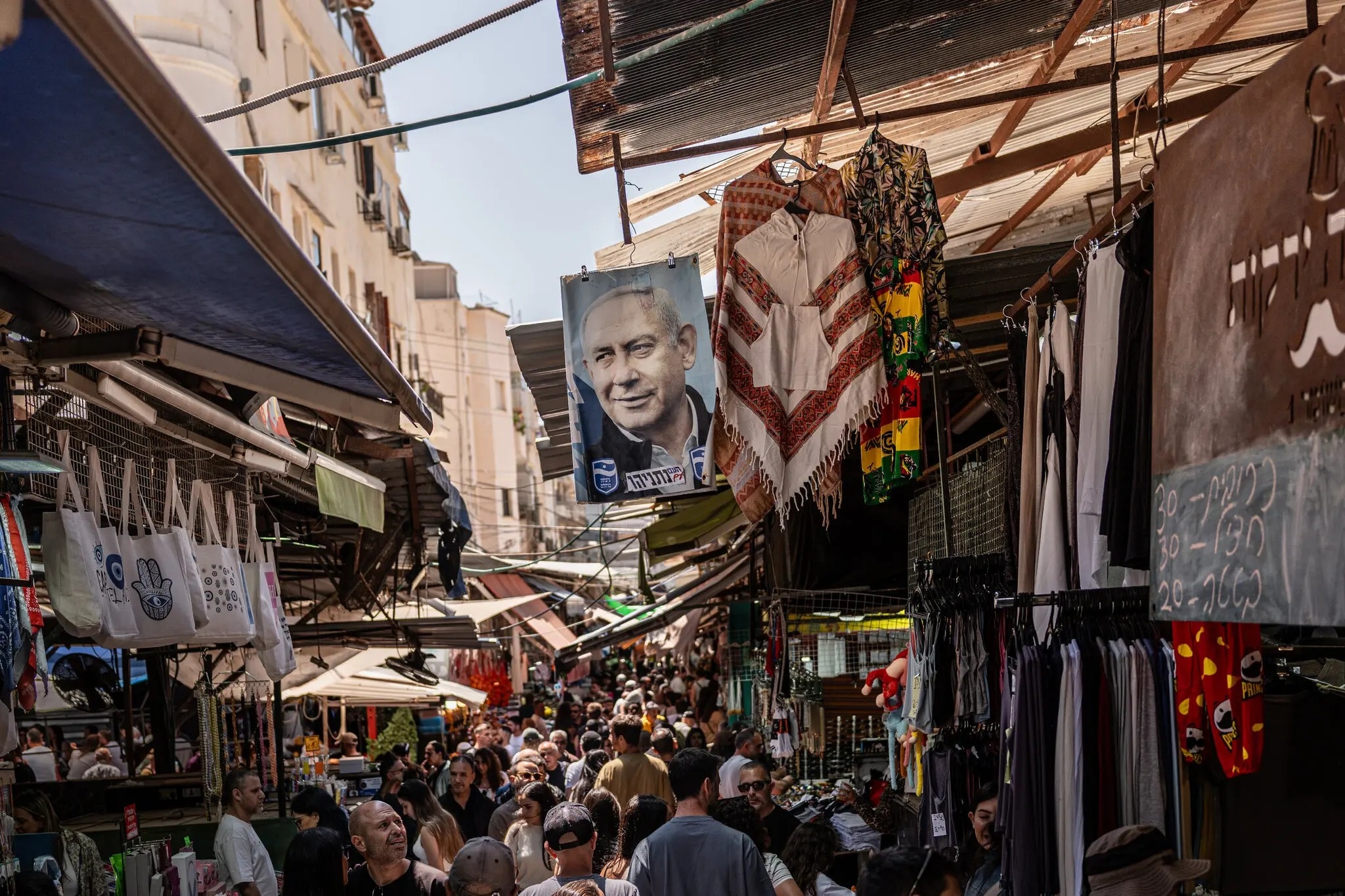 |
In just four months, Israel went from a close ally of the US to a "marginalized" player in the US-Iran agreement. Photo: NYT. |
Israel entered the conflict believing it could weaken Iran for at least a generation. However, Tel Aviv was ultimately sidelined by its own ally, the United States, in an agreement that failed to meet its objectives and even restricted its ability to conduct military operations in Lebanon.
Trump has also repeatedly and publicly criticized Prime Minister Benjamin Netanyahu, revealing rare cracks in US-Israel relations at a sensitive time as Israel approaches its elections.
From Israel's perspective, the memorandum was a disaster.
"This represents the collapse of the entire strategy we had been pursuing toward Iran," commented Danny Citrinowicz, a former Israeli intelligence officer specializing in Iran.
Lebanon, a fragile link in the chain.
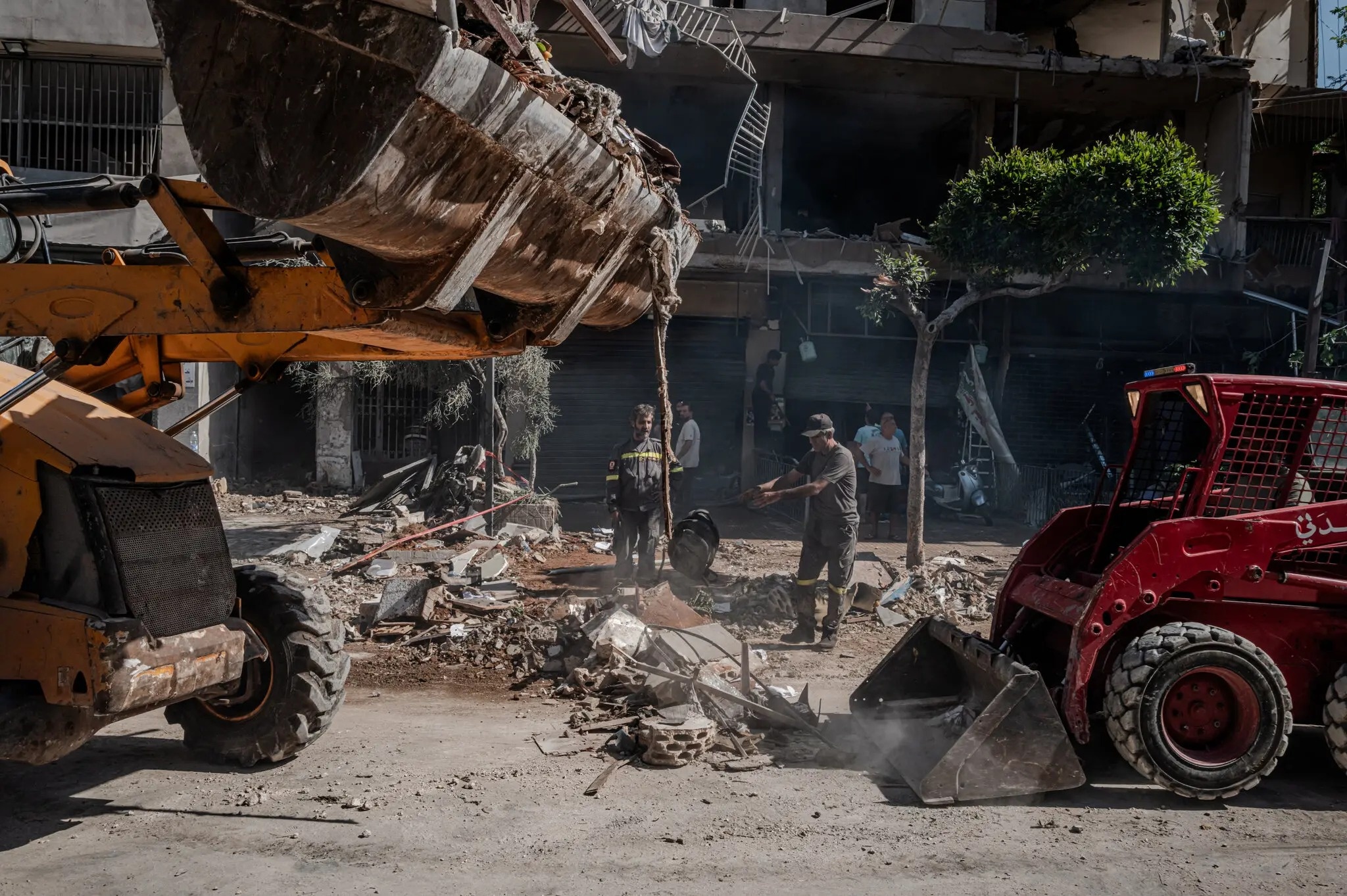 |
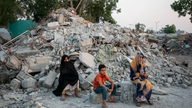
Civil defense and security personnel at a residential building in the Dahiyeh area, a southern suburb of Beirut, following Israeli attacks. Photo: NYT. |
According to many analysts, Lebanon is the “Achilles' heel” of the memorandum. Hezbollah has alienated many of its supporters, primarily the Shiite Muslim community, by dragging the country into two devastating wars: one to support Hamas in Gaza and the other that erupted after Israel attacked Iran.
Violence has claimed thousands of lives, including nearly 4,000 civilians this year alone, according to the Lebanese Ministry of Health.
Iran's lack of financial resources to support reconstruction has further fueled public anger. However, the Iranian Islamic Revolutionary Guard Corps (IRGC) is still working to restore Hezbollah's military capabilities, and some of the reconstruction funds intended for Tehran may flow to this force.
This gives Hezbollah further incentive to abide by the agreement. While both Trump and Vance acknowledge that violence in Lebanon could continue, it remains unclear what level of escalation would be sufficient to warrant strong US intervention.
The Gulf region seeks to adapt to a new order.
The six Gulf Arab nations had hoped to remain neutral in the protracted confrontation between Israel and Iran. However, Iran's blockade of the Strait of Hormuz and attacks on oil infrastructure have inflicted severe economic shocks on the region.
Although U.S. interceptor systems helped prevent the worst damage, the war forced Gulf nations to reconsider their level of dependence on Washington for security.
Currently, an idea for a “golden bridge” towards Iran is emerging: promoting mutual investments that are impossible under sanctions.
“We can benefit from each other, intertwining interests to make the cost of returning to war higher. If I had an Iranian factory in Kuwait City, they would have to think twice before attacking us,” said Bader Al-Saif, a historian at Kuwait University.
However, overall, many experts believe that this memorandum brings about very few substantive changes.
"I doubt there will be much progress on the nuclear issue, given that the U.S. has relinquished its most important leverage," said Paul Salem, a Middle East expert at the Center for Strategic and International Studies (CSIS) in Washington.
"In a way, this agreement is just an empty pie – the end of a long and brutal war that yielded very few tangible results," he said.
Source: https://znews.vn/cuoc-chien-lich-su-cua-ong-trump-chi-la-cong-da-trang-post1661968.html




![[Photo] Prime Minister Le Minh Hung presides over the thematic session on promoting science and technology development and innovation.](https://vphoto.vietnam.vn/thumb/1200x675/vietnam/resource/IMAGE/2026/06/23/1782207872934_ndo_br_dsc-1724-jpg.webp)