

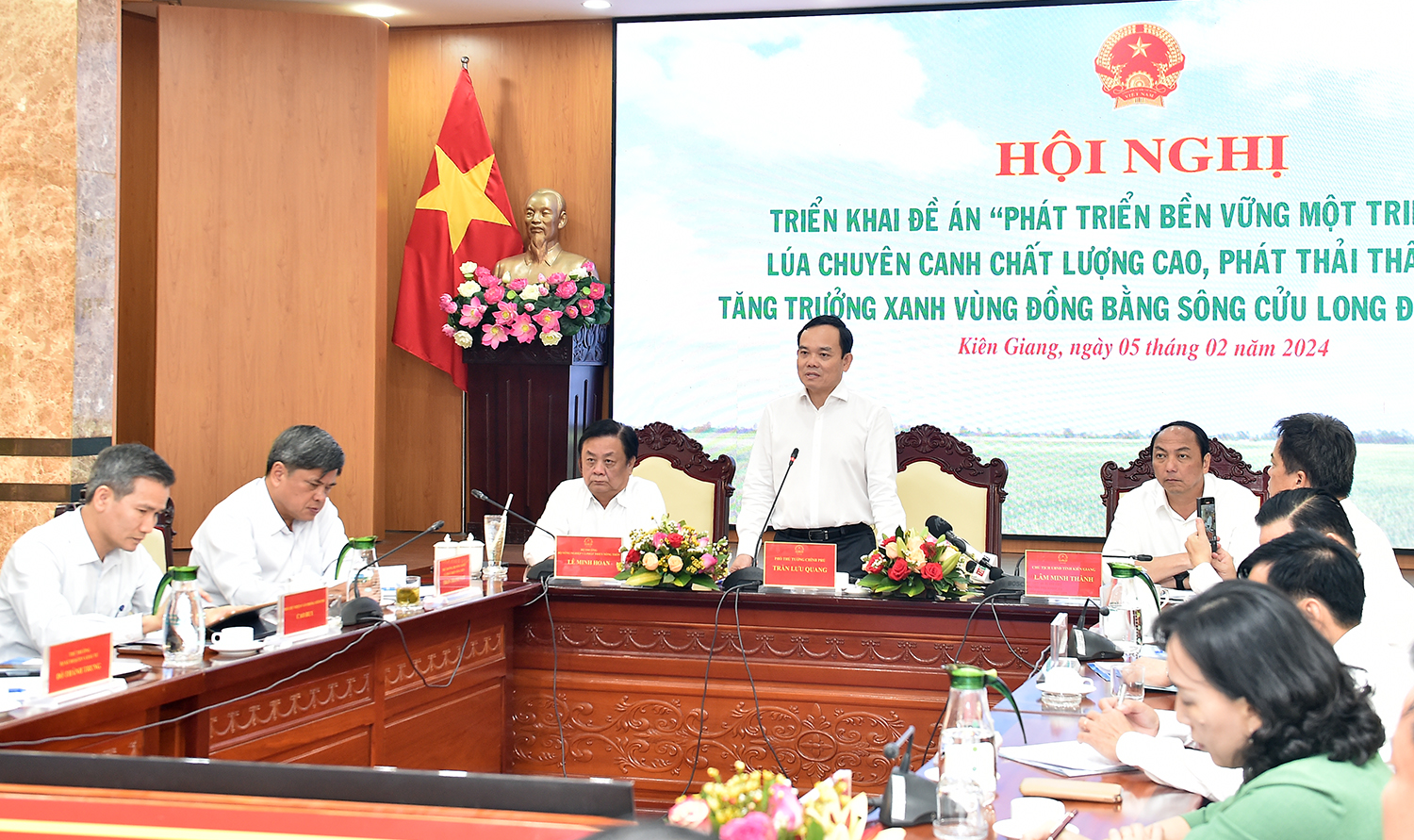
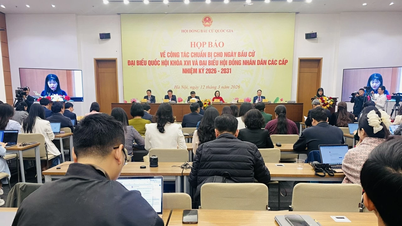
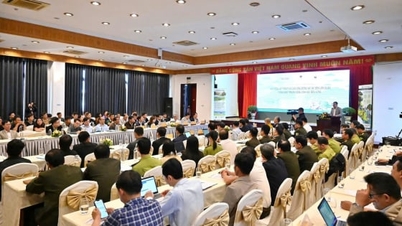
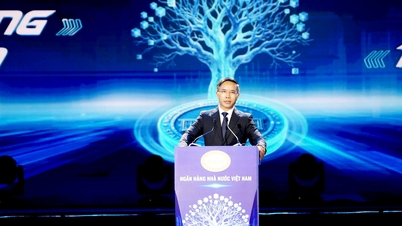
Deputy Prime Minister Tran Luu Quang chaired the conference to implement the project "Sustainable development of 1 million hectares of high-quality, low-emission specialized rice cultivation associated with green growth in the Mekong Delta by 2030" - Photo: VGP/Hai Minh
Attending the conference were Minister of Agriculture and Rural Development Le Minh Hoan, leaders of several central ministries and agencies, representatives from 12 localities in the Mekong Delta, scientists, and representatives from several international organizations.
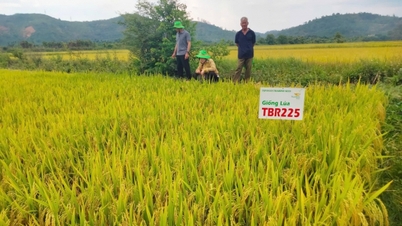
The Mekong Delta, with a natural area of 4,092,000 hectares, of which 2,575,000 hectares are used for agricultural production, is one of Vietnam's main rice-producing regions. Rice production in the region has remained stable at 24-25 million tons in recent years, accounting for over 55% of the country's total rice production and over 90% of its rice exports, providing jobs and income for millions of agricultural households in the region.
Rice exports in 2023 reached over $4.8 billion, an increase of 17.4% in volume and 39.4% in value compared to 2022. The export price of Vietnamese rice continues to rise and is gradually approaching the highest in the world.
Despite its achievements, the Mekong Delta still faces limitations such as the lack of large-scale, concentrated rice-growing areas with linkages and cooperation along the value chain between rice farmers and cooperatives or businesses; unsustainable rice cultivation due to farmers' continued use of chemical fertilizers and pesticides, which negatively impact the environment and increase greenhouse gas emissions…
With its large rice production, the Mekong Delta generates approximately 26-27 million tons of rice straw, of which 70% is burned and buried in the soil, while the remaining 30% is collected and used for mushroom cultivation, mulching crops, fruit transport bedding, and animal feed. Burning rice straw causes environmental pollution, while burying it in flooded fields increases methane (CH4) and other greenhouse gas emissions. This situation necessitates managing rice straw in a circular agricultural manner to maximize nutrient content, reduce nutrient loss, minimize environmental pollution, reduce greenhouse gas emissions, and simultaneously increase income for rice farmers and related commercial production services.
On the other hand, in recent times, market demands have become increasingly stringent, and regulations from importing countries have become stricter, requiring improved rice quality and food safety, including minimizing the use of chemical inputs and reducing emissions in production. Furthermore, at COP26, the Prime Minister also signed a commitment to strive for net-zero emissions by 2050.
Against this backdrop, the Government has approved the Project "Sustainable Development of 1 Million Hectares of High-Quality, Low-Emission Rice Specialization Linked to Green Growth in the Mekong Delta by 2030".
This project is of particular importance in guiding the transformation of sustainable rice farming methods in the Mekong Delta and in forming and developing large-scale, concentrated raw material areas that are stable and sustainable in the long term, ensuring sustainable and efficient farming quality.
The project aims to reduce input costs by 30%, contributing to a reduction in rice production costs for farmers of approximately 9,500 billion VND; increase the profit margin of rice growers by 50%; and contribute to a 10% reduction in greenhouse gas emissions.
The project is linked to reorganizing the production system along the value chain, applying sustainable farming processes to increase the value and sustainable development of the rice industry, improve production and business efficiency, increase income and living standards of rice farmers, protect the environment, adapt to climate change and reduce greenhouse gas emissions, contributing to fulfilling Vietnam's international commitments.
During the implementation of the Project, several new policies, in line with global trends, will be piloted, such as performance-based carbon credit payments for 1 million hectares of high-quality, low-emission rice linked to green growth, circular production, and multi-value exploitation in rice production, along with investment or credit policies aimed at attracting businesses in the rice production and processing sector.
Following a successful pilot program in the Mekong Delta, this model will be expanded nationwide, aiming to make "Green development, reduced emissions, high quality" the brand of Vietnamese rice.
The Ministry of Agriculture and Rural Development estimates the total funding for the Project to be approximately 800 million USD from various sources: the State budget; credit; social mobilization; non-refundable grants; official development assistance loans; and other legal sources, with the main sources being non-refundable aid, loans, credit, and revenue from carbon credits.
According to Deputy Minister of Agriculture and Rural Development Tran Thanh Nam, the World Bank (WB) has agreed to select the project as one of the key projects in the Asia-Pacific region and will provide Vietnam with a loan of 500 million USD.
Deputy Minister Tran Thanh Nam said that the Ministry of Agriculture and Rural Development has established a Steering Committee to implement the Project, chaired by Minister Le Minh Hoan, with the participation of leaders from the Ministries of Planning and Investment, Finance, Natural Resources and Environment, the State Bank of Vietnam, representatives from the World Bank, and leaders from 12 localities in the Mekong Delta region.
The Ministry is also working with the World Bank to develop and mobilize non-refundable grant funding and prepare loan projects; it is coordinating with experts from the Carbon Asset Transfer Fund to build an MRV system for the Project to serve as a basis for granting carbon credits for rice production and trading on the market, contributing to increasing income for rice producers while reducing emissions.
The Ministry also worked with the State Bank of Vietnam, commercial banks, and the Agricultural and Rural Development Bank to develop credit programs to support businesses and cooperatives participating in the Project.
The Ministry will establish a Coordination Office for the Project implementation located at the Ministry's headquarters and in Can Tho City, Minister Le Minh Hoan said.
According to the Ministry of Agriculture and Rural Development, the People's Committees of the Mekong Delta provinces, based on the criteria for specialized farming areas, will identify areas that meet the criteria, register, and develop plans to implement the Project for 2024 and for each phase; consolidate and strengthen the organization, allocate funds, and complete the initial conditions for implementing the Project in 2024 and subsequent years.
Local authorities are strengthening the infrastructure system for rice-growing areas participating in the Project, especially irrigation infrastructure; issuing local mechanisms and policies to attract investment from businesses; supporting and developing cooperatives, training cooperative management personnel, and upgrading infrastructure to participate in the sustainable rice production value chain.
At the same time, localities will develop specific plans to implement the Project, report to the Ministry of Agriculture and Rural Development; and organize a preliminary review of the Project's implementation in 2025.
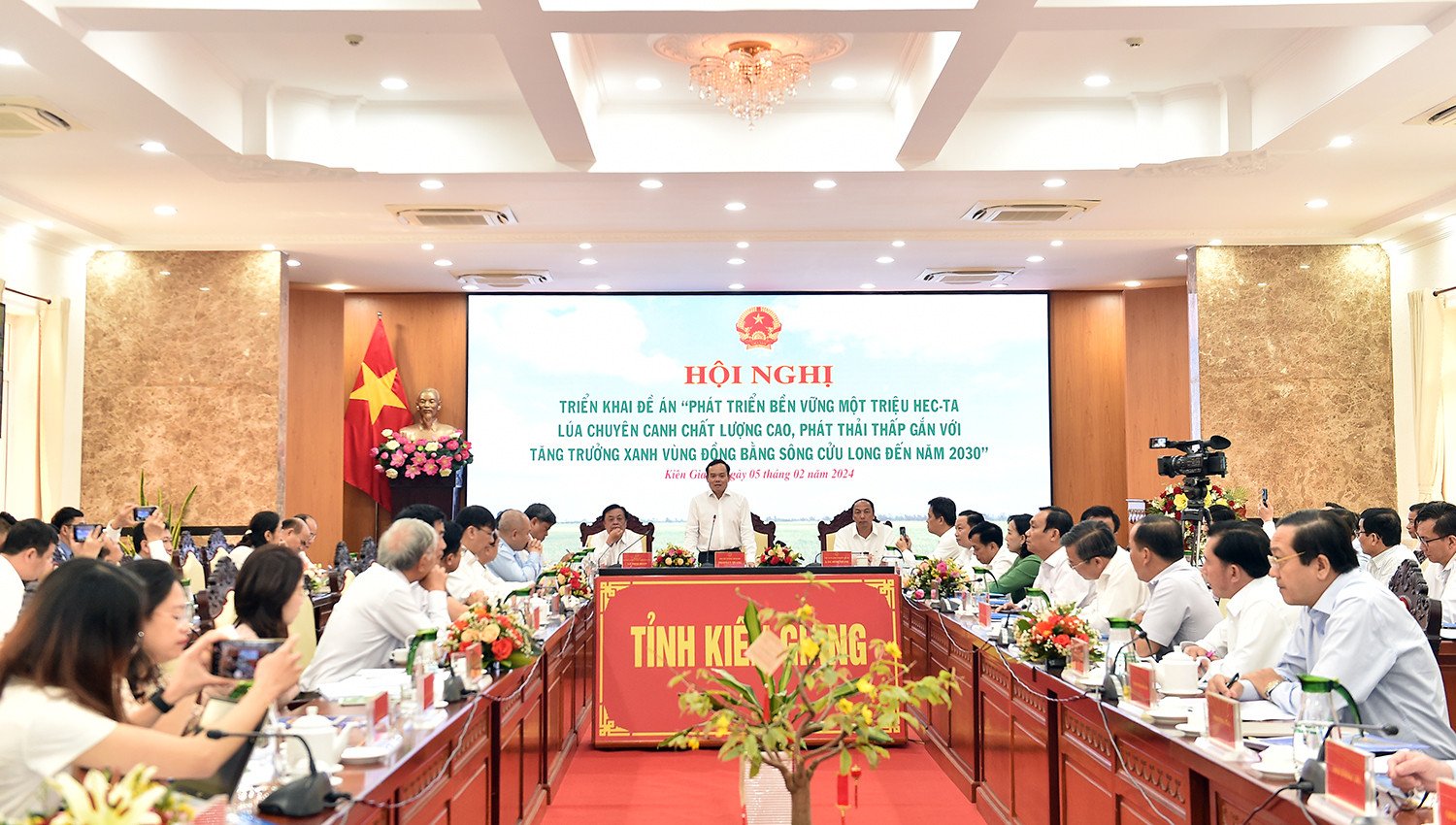
Photo: VGP/Hai Minh
Establishing a symbiotic ecosystem to implement the Project.
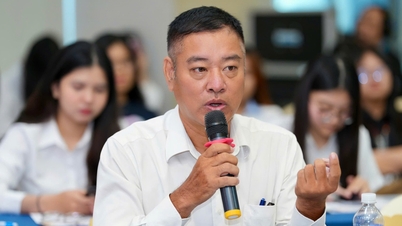
Speaking at the conference, representatives from associations, research institutes, and localities all assessed the Project as a "breath of fresh air," demonstrating the Government's renewed determination to gradually modernize the country's rice production industry.
The project not only directly benefits nearly 1.5 million farmers, but also contributes to affirming Vietnam as a responsible nation in ensuring global food security and reducing greenhouse gas emissions.
Suggesting various directions and solutions for implementing the Project effectively, delegates emphasized the need to pay special attention to training so that farmers can master and become proficient in the technical support packages; to incorporate scientific and technological advancements and rice varieties with outstanding nutritional characteristics into the program as quickly as possible; and to establish an internationally recognized monitoring and reporting system so that the Project's products truly become "high-quality, low-carbon rice".
Delegates emphasized the need for mechanisms that clearly define the benefits for businesses participating in the implementation of the Project; strong investment in mechanization and irrigation infrastructure to retain freshwater for rice production; a mechanism to coordinate rice export activities to ensure maximum benefits for farmers and Vietnam's rice export industry; and strengthening information and communication efforts to raise awareness about the Project.
The discussions emphasized the need to develop a national-level scientific and technological research program on rice to prepare for the next 5-10 years; and to pilot a carbon credit program in the context of international organizations committing to supporting Vietnam financially and in accessing markets.
The delegates also emphasized the need to integrate the Project with other programs; strengthen the mobilization of resources for the Project through public-private partnerships; and enhance international cooperation.
Concluding the conference, Deputy Prime Minister Tran Luu Quang emphasized that Vietnam's image and international standing have continued to improve in recent times, including the contribution of the rice industry in ensuring national food security and contributing to global food security while some countries have stopped exporting rice.
In diplomatic exchanges, countries and international organizations have highly appreciated Vietnam's agricultural development achievements and expressed their desire for Vietnam to share its experience and support many countries in developing agriculture and ensuring food security.
Appreciating the heartfelt opinions expressed at the Conference, Deputy Prime Minister Tran Luu Quang emphasized that the Project is a major undertaking, therefore there are four difficulties: Difficulty because it is the first time setting a target of 1 million hectares of high-quality rice with reduced emissions; difficulty because of changing habits in dealing with it; difficulty because it is always immediately affected by the erratic changes in rice prices on the market; difficulty in unifying some issues related to the interests of some organizations and individuals, typically the unification of export rice prices.
To ensure the grand scheme achieves its objectives, the Deputy Prime Minister emphasized a ten-word principle: Dedication, compliance, flexibility, cooperation, and control.
The Deputy Prime Minister emphasized the need for joint efforts from the Government, localities, and businesses to gradually encourage each farmer to wholeheartedly support this project. Experience shows that difficult tasks can be accomplished with the right approach, the right methods, and determination, as exemplified by Vietnam's ranking 9th in the world in terms of COVID-19 prevention and control results.
According to the Deputy Prime Minister, failure to "adhere" to plans, principles, and standards will lead to failure, but at the same time, we must be "flexible" and creative in our approach, adapting to each region and locality, and especially to the increasingly serious and unpredictable impacts of climate change.
The Deputy Prime Minister emphasized the need for good "cooperation," first and foremost in loan negotiations, coordination between central agencies, between central and local authorities, and between businesses; stressing that "we will fail if businesses participate in this Project in their own unique way, without compliance and coordination." In addition, it is necessary to integrate programs effectively to create synergy and achieve a win-win situation.
The Deputy Prime Minister also emphasized the need for good "control" to prevent deviations from standards and directions, and to make timely adjustments to suit the actual situation, based on regular reviews and summaries, especially of successful models and practices.
Affirming the Government's commitment and support in the implementation of the Project, the Deputy Prime Minister instructed the Ministry of Agriculture and Rural Development to promptly submit to the Government and the Prime Minister: the World Bank loan project to implement the Project; the pilot policy and mechanism for returning carbon credits based on results for 1 million hectares of high-quality, low-emission rice; and a proposal to supplement public investment capital for the Ministry to support investment items in the Project.
The Deputy Prime Minister instructed the Ministry of Finance to calculate a plan for mobilizing capital to implement the Project; and to propose a mechanism for integrating the Project with other programs, possibly similar to the pilot mechanism where each locality has two districts allowed to combine capital from all three national target programs.
Regarding ODA funding, the Deputy Prime Minister emphasized the need to pay close attention to the negotiation process to harmonize procedures between Vietnam and donors, facilitating disbursement after loan disbursement.
Source







































































Comment (0)