

The Hajj is one of the five pillars of Islam, and all Muslims must perform it at least once in their lifetime if they are physically and financially able. For pilgrims, it is a profound spiritual experience that helps to cleanse sins...
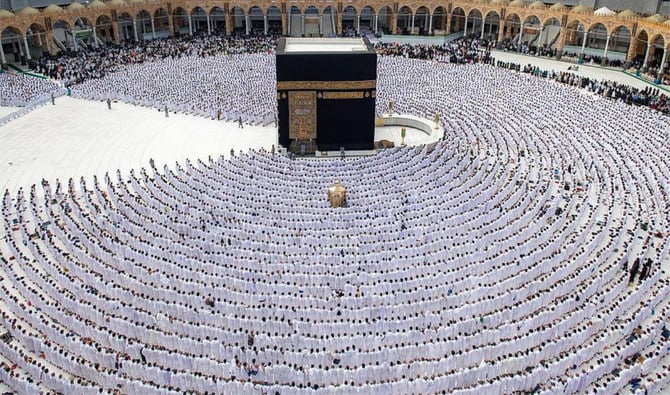
Images of Muslims performing rituals in Mecca during the Hajj pilgrimage. Photo: AN
Authorities have invested billions of dollars in modern infrastructure, but the Hajj pilgrimage is sometimes still marred by unforeseen tragedies. In 2015, more than 2,400 pilgrims died in a stampede.
History of the Hajj pilgrimage
The pilgrimage draws Muslims from all over the world to the holy city of Mecca in Saudi Arabia, where they follow in the footsteps of the Prophet Muhammad and reenact the journey of Ibrahim and Ismail.
In the Quran, Ibrahim is called upon to sacrifice his son Ismail to test his faith, but God intervenes at the last moment to save him. Ibrahim and Ismail are later believed to have built the Kaaba together.
The Kaaba was originally a polytheistic center of worship for pagan Arabs until the advent of Islam in the 7th century, when the Prophet Muhammad began the Hajj pilgrimage.
Muslims do not worship the Kaaba, but they consider it their holiest site and a powerful symbol of unity. Wherever they are in the world, Muslims must face the Kaaba during their daily prayers. The Hajj pilgrimage has been observed annually ever since, even amidst wars, epidemics, and other instability.
During the Middle Ages, Muslim rulers organized large caravans with armed escorts, departing from Cairo, Damascus, and other cities. It was a grueling journey through deserts where Bedouin tribes carried out attacks and looting. A notorious Bedouin raid in 1757 wiped out entire Hajj pilgrimages, killing thousands.
In 2020, when the Covid-19 pandemic broke out, Saudi Arabia limited the pilgrimage to a few thousand pilgrims and local residents.
How do Muslims prepare for Hajj?
Some pilgrims spend their entire lives saving for the journey. They also have to wait years before receiving a "pilgrimage permit." This permit is distributed by Saudi Arabia to countries based on a quota system. Travel agencies offer packages, and charities also support pilgrims in need.
Pilgrims begin by entering a state of spiritual purity called “ihram.” Women remove their makeup and cover their hair, while men wear jumpsuits. These garments are not allowed to have patterns, a rule intended to promote solidarity between the rich and the poor.
Pilgrims are forbidden from cutting their hair, trimming their nails, or engaging in sexual activity while in ihram. They are also not permitted to argue or fight.
Many Muslims also visit Medina, the burial place of the Prophet Muhammad and where he built the first mosque, before going to Mecca.
How is the Hajj pilgrimage performed?
The Hajj begins with Muslims circling the Kaaba in Mecca seven times counterclockwise while reciting prayers. They then walk between two hills to reenact the scene of Hagar searching for water for her son, Ismail. These events take place inside Mecca's Grand Mosque.
The following day, the pilgrims journeyed to Mount Arafat, about 20 kilometers east of Mecca, where the Prophet Muhammad delivered his final sermon. There, they stood praying all day, asking God to forgive their sins.
At sunset, pilgrims walk or take a bus to an area called Muzdalifa. They collect pebbles to use in the stoning ritual the following day in the Mina valley, where Muslims believe Ibrahim was tempted to defy God's command. The pilgrims stay for several nights in Mina.
The pilgrimage concludes with a final circumambulation of the Kaaba. Men typically shave their heads and women cut a lock of hair, signaling renewal. Many participants receive the title “hajj” or “hajja,” a great honor in the Muslim community.
The final days of the Hajj coincide with the Eid al-Adha festival, a joyous occasion celebrated by Muslims around the world to commemorate the testing of Ibrahim's faith. During the three days of Eid, Muslims slaughter livestock and distribute the meat to the poor.
Quoc Thien (according to AP)
Source




![[Image] Nearly 125,000 Hanoi students completed the Literature exam for the 10th grade entrance exam.](https://vphoto.vietnam.vn/thumb/1200x675/vietnam/resource/IMAGE/2026/05/30/1780117233041_ndo_br_thiet-ke-chua-co-ten-2-png.webp)




























































































Comment (0)