

Buy early to avoid paying high prices.
In modern European football, the transfer race no longer begins when a player has already made a name for themselves at the age of 22 or 23, but starts much earlier: from when a player is only 15, 16, or 17 years old, having just played a few professional matches, or even just emerging in youth leagues. Names like Kennet Eichhorn of Hertha Berlin, Endrick from Palmeiras to Real Madrid, or Franco Mastantuono from River Plate show a clear trend: big clubs don't want to wait for young talent to mature before buying them. They want to "reserve a spot" early on.
The first reason is the price issue. The current transfer market has been pushed to very high levels. An attacking player who has proven his ability in the Premier League, La Liga, or Bundesliga can easily be valued at 70-100 million euros. Meanwhile, a very promising teenage talent can still be bought for a much lower fee. For the big clubs, this is a "budget-friendly" investment compared to the risk of having to pay many times that amount after a few seasons.
In reality, European football has seen too many examples of "being slow to act is costly." A young player only needs one breakout season, an impressive U20 tournament, or a few brilliant performances in the Champions League for their value to skyrocket. At that point, the race is no longer about scouting talent, but a battle of money between the big clubs. Therefore, major clubs increasingly want to get ahead of the market, discovering players before they become hot commodities.
Kennet Eichhorn is a prime example of this logic. The 16-year-old Hertha Berlin midfielder has attracted interest from many big clubs thanks to his maturity beyond his years. The appeal lies not only in his technique or physique, but in the fact that a teenage player is already capable of playing professionally. For scouts, this is a crucial sign: this talent isn't just good at youth level, but has begun to handle real pressure.
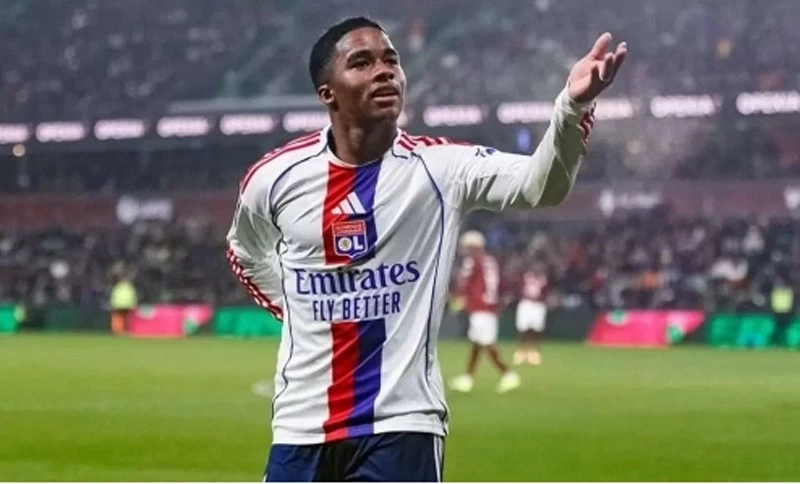 |
| Endrick's move from Palmeiras to Real Madrid illustrates a clear trend: big clubs don't want to wait for young talent to mature before buying them. |
Data, networks, and the race for the future.
The second major change comes from scouting technology. Previously, clubs relied heavily on direct scouting networks, major leagues, or the prestige of their academies. Now, data, video , analytical algorithms, and global tracking systems allow a young player in Germany, Brazil, Argentina, or Colombia to be spotted very early on.
A 16-year-old midfielder with good tackling, consistent forward passing, and superior positional awareness will be discovered much faster than before. A South American winger with speed, one-on-one skills, and outstanding chance-creating stats can also immediately appear in reports from European clubs. Modern football doesn't wait for the old-fashioned "seeing and hearing" method; it combines scouting intuition with quantitative data.
That's why teams like Real Madrid, Manchester City, Liverpool, Bayern Munich, Chelsea, and PSG are all actively pursuing young players. They're not just buying a player, but also acquiring the time for development. If a player arrives early, the club can shape everything from nutrition, fitness, mentality, language, tactics, to media handling. A 17-year-old talent placed in the right ecosystem can develop according to the team's philosophy.
Real Madrid is one of the most successful clubs with this model. Instead of just buying established superstars, they made early bets on Vinicius Junior, Rodrygo, Endrick, and many other young South American talents. Not everyone shines immediately, but when a deal is successful, the return is enormous: they acquire world-class players, commercial icons, and avoid having to spend huge sums of money later.
Manchester City also has its own advantages thanks to the City Football Group network. A young player can be bought and then developed through satellite clubs or a suitable environment before reaching the level to compete for a first-team spot. Chelsea, on the other hand, chooses to gather many young talents, accepting higher risks, but expecting some to become major assets. Dortmund, Leipzig, and Brighton have turned the discovery and development of young players into a core business model.
It's not just expertise, it's a strategic asset.
It's noteworthy that teenage players today are not only considered professional talents but also financial and media assets. A club that signs a "new prodigy" will have another story to tell its fans: this is the future of the team, a symbol of a long-term project, proof that the club is ahead of its time.
In the context of increasingly stringent financial regulations, investing in young players is also a way to manage risk. Buying an established star means high transfer fees, large salaries, signing bonuses, and the pressure to succeed immediately. Conversely, buying young players can spread the risk: if they develop well, the club gets a star at a lower price; if they are not yet good enough, they can be loaned out; if they are not a good fit, they can still be sold if they still have value.
South America therefore continues to be a "gold mine" for European football. Brazil, Argentina, Uruguay, and Colombia consistently produce players with strong technique, personality, and competitive instincts. Young talents from this region often mature in a demanding football environment, possessing natural ball-handling skills and a high level of competitiveness. For European clubs, signing a South American player early is a way to seize the opportunity before he becomes a global phenomenon.
However, the teen scouting frenzy also has a downside. Not every "prodigy" becomes a star. Media pressure, cultural changes, language differences, fan expectations, and fierce competition can cause a young player to stagnate. Martin Odegaard arrived at Real Madrid at a very young age but had to go through several loan spells before maturing. Endrick also needs time to adapt, because talent doesn't automatically mean you can immediately break into a star-studded team.
Therefore, it's not just about which club pays more, but which club offers a more compelling development plan. A 16-year-old player and his family will have to consider: join the biggest club for prestige, or choose a place with more playing opportunities? Stay for another season to mature, or move to Europe early to get acquainted with the top-level environment? These are decisions that can shape an entire career.
From Kennet Eichhorn to South American talents, European football is entering an era of "pre-maturity transfers." The big clubs are no longer just buying the present, but the future. They're not just asking how well a player is playing today, but how much he might be worth in three years, how well he'll fit into their system, and whether he can become a new icon.
This race will only get hotter, because in modern football, being one step behind can mean losing an entire generation of talent. And for big clubs, sometimes the most important summer transfer isn't a famous €100 million star, but a 16-year-old who is little known today, but could become the centerpiece of the team tomorrow.
Source: https://baoquocte.vn/cuoc-san-than-dong-trieu-euro-cua-bong-da-chau-au-398689.html



































































































Comment (0)