

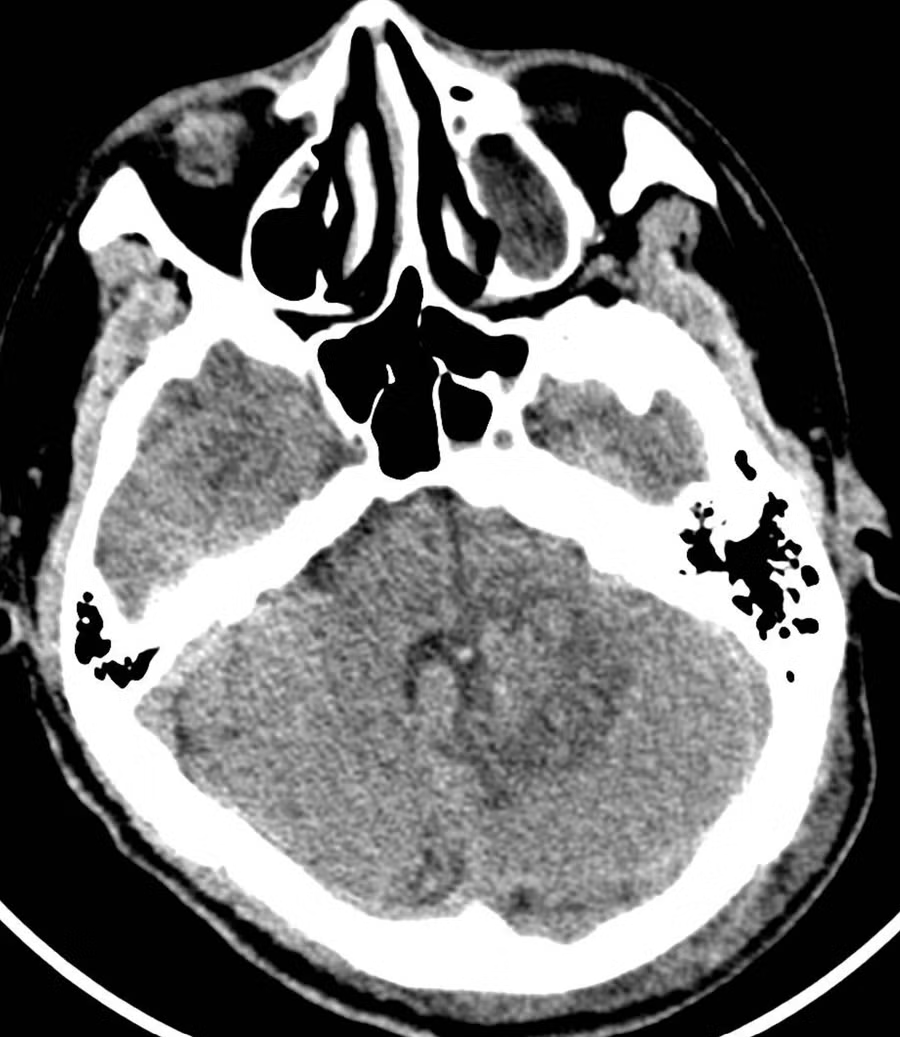
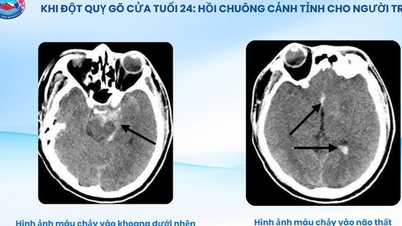
On May 17th, information from People's Hospital 115 indicated that patient NNHV (30 years old) was admitted to the emergency room with sudden severe headache, dizziness, vomiting, and unsteadiness. Magnetic resonance imaging (MRI) revealed a cavernous hemangioma in the left cerebellum with hemorrhagic complications.
Even more concerning, doctors discovered two additional cerebral aneurysms. One of them was located directly in the vertebral artery, an extremely dangerous position with a very high risk of rupture.
Dr. Nguyen Van Tuan, Head of the Neurosurgery Department and Head of the surgical team, assessed that cavernous hemangioma is a rare congenital vascular malformation. Although surgery can completely remove the tumor, the procedure carries the risk of leaving severe sequelae that can have a long-term impact on the patient's life.
After more than 20 days of intensive medical treatment, but with no improvement in patient V.'s condition, the doctors decided surgical intervention was necessary to prevent further bleeding. However, the simultaneous appearance of an aneurysm complicated the surgery, as manipulation could rupture the aneurysm and cause massive hemorrhage.
Faced with this situation, the treatment team decided to adopt a multimodal strategy, performing embolization to treat the aneurysm first, and then proceeding with microsurgery to remove the tumor.
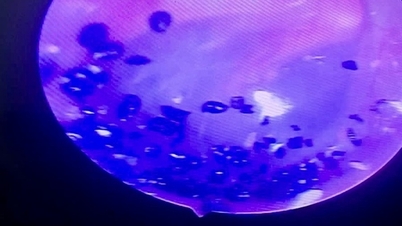
Dr. Tran Thanh Vu, Head of the Neurovascular Intervention Unit, said that to remove this "ticking time bomb," the team applied the Balloon Test Occlusion (BTO) technique. This technique accurately assesses whether the contralateral cerebral circulation is capable of supplying the brain region after occluding the blood vessel containing the aneurysm.
After a successful vascular intervention and stable condition, the patient was thoroughly prepared for major surgery.
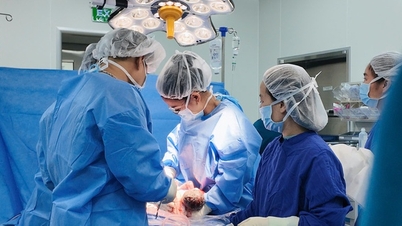
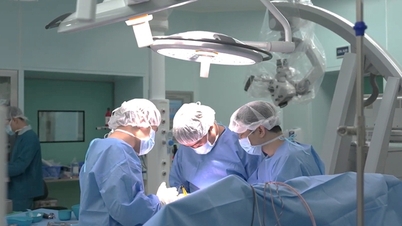
The microsurgery lasted approximately 3 hours, completely dissecting and removing the vascular malformation in the cerebellum. The results were extremely positive, with patient V. fully conscious just two days after the surgery. Previous severe clinical symptoms such as vomiting and dizziness had disappeared. Currently, the patient is undergoing rehabilitation to return to normal life as soon as possible.
Through this case, Dr. Tuan warned that cerebral hemorrhage due to vascular tumors often progresses silently, with unclear symptoms, making it easy to misdiagnose. When acute hemorrhage occurs, the risk of death or disability is extremely high.
"People need to proactively prevent this by controlling their blood pressure well, avoiding stress, maintaining a healthy lifestyle, getting enough sleep, exercising, and limiting alcohol and tobacco. When experiencing abnormal neurological symptoms such as persistent headaches, dizziness, loss of balance, or numbness and weakness in the hands and feet, they should immediately go to specialized medical facilities for timely examination," Dr. Tuan advised.
Source: https://giaoducthoidai.vn/cuu-nam-thanh-nien-mac-u-mach-mau-hy-huu-post778074.html


![[Image] Hanoi's urban life under the challenge of a "scorching hot" environment](https://vphoto.vietnam.vn/thumb/1200x675/vietnam/resource/IMAGE/2026/05/25/1779706979265_nang-nong-t5-2026-minh-duy-7-4636-jpg.webp)
![[Image] Close-up view of the interchange connecting the two expressways and Long Thanh Airport.](https://vphoto.vietnam.vn/thumb/1200x675/vietnam/resource/IMAGE/2026/05/25/1779703378210_ndo_br_z7863716673926-224453a31600126cce10622af6290afd-4549-jpg.webp)


























































































Comment (0)