

On the policy implementation side, credit institutions are also actively and proactively researching and developing green capital mobilization products and green credit to finance projects that bring environmental benefits, respond to climate change, and promote circular production models and sustainable linkages.
This is reflected in the outstanding green credit balance reaching approximately VND 750,000 billion (as of November 30, 2025), increasing by an average of 21% per year during the period 2017 - September 2025, higher than the overall credit growth rate of the entire economy .
However, compared to the requirements for achieving national green growth targets, the need for financial resources remains very large. According to the Ministry of Finance , by 2050, the total long-term investment needed for green and sustainable economic development is estimated at approximately US$670–700 billion; of which the need for climate change adaptation is about US$368 billion (accounting for approximately 6.8% of GDP per year).
Although the banking sector is leading the way in driving green capital flows, the significant investment needs necessitate strengthening and mobilizing all resources for the national green growth target. Deputy Governor Nguyen Ngoc Canh emphasized that diversifying financial resources requires the participation of domestic and foreign capital channels, especially from the private sector and capital markets (in this case, the stock market), working together with the banking system.
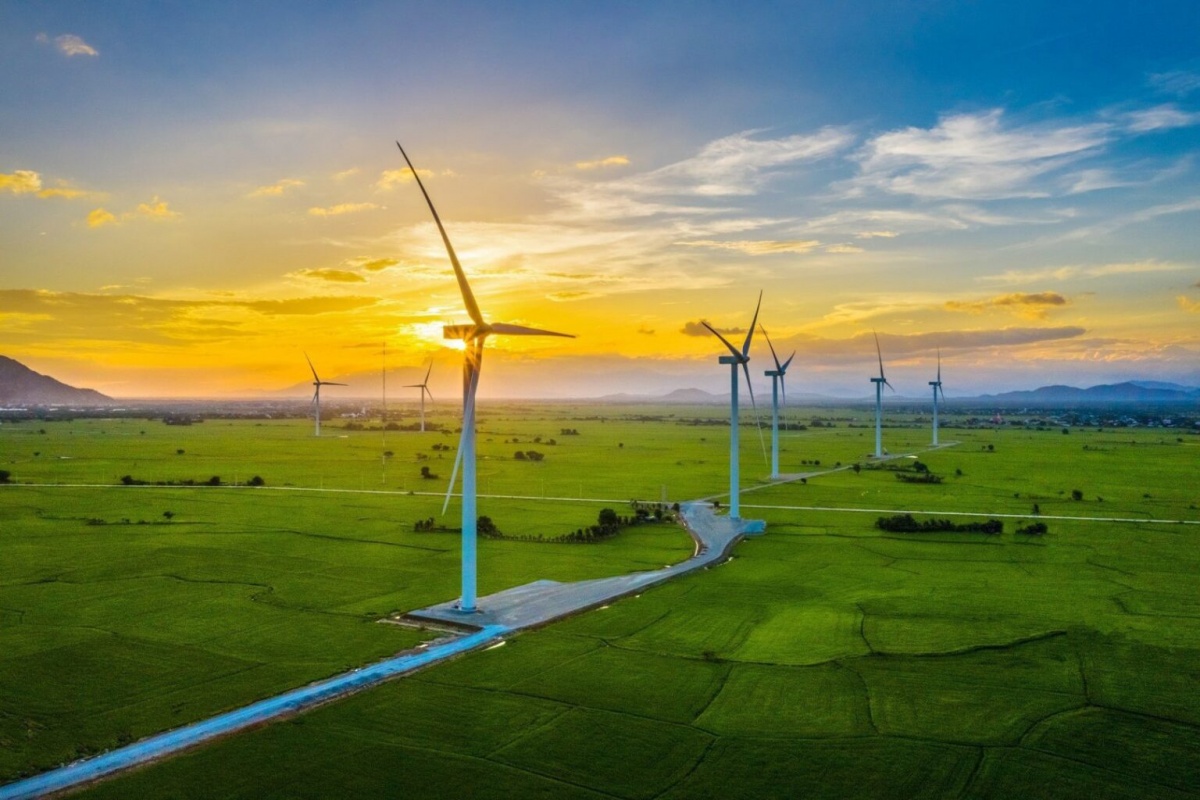
Sharing her insights on resources for green growth, Ms. Pham Thi Thanh Tung, Deputy Director of the Department of Credit for Economic Sectors (State Bank of Vietnam), stated that previously, commercial banks primarily relied on their own resources to implement preferential loan programs for this sector. However, with the new policy framework, the flow of support capital will no longer depend entirely on the banks' "internal resources." Specifically, Resolution 68-NQ/TW dated May 4, 2025, of the Politburo on the development of the private economy and Resolution 198/2025/QH15 of the National Assembly stipulate a mechanism to support interest rates of 2% per year for private enterprises, business households, and individual businesses borrowing capital to implement green, circular projects or those applying ESG (Environmental, Social, Governance) standards through the Small and Medium-sized Enterprise Development Fund. This means that in the future, there will be more budgetary resources allocated to this sector, creating favorable conditions for businesses to access preferential capital more easily and promoting the transformation of business models towards sustainability.
In addition, the State Bank of Vietnam is actively finalizing the draft Government Decree stipulating interest rate support from the state budget for private sector enterprises, households, and individual business owners borrowing capital from commercial banks to implement green, circular projects applying the ESG framework. The draft has been reviewed by the Ministry of Justice and will soon be submitted to the Government, expected to take effect early next year.
From the perspective of commercial banks, to promote capital for green growth, Mr. Vuong Van Quy, Deputy Head of the Credit Policy Department of Agribank, proposed the need to build a national database on emissions, energy, and biodiversity, open for businesses and financial institutions to use when evaluating projects. At the same time, regulations on measuring and inventorying greenhouse gas emissions must be standardized. In addition, the bank representative proposed the issuance of specific incentive policies such as reducing corporate income tax for green loans; providing interest rate subsidies or refinancing with preferential interest rates, especially for energy transition and sustainable agriculture sectors; establishing a national green guarantee fund to share risks with banks, and creating mechanisms to encourage banks to expand their green credit portfolios. To further diversify green capital sources, it is necessary to soon complete the legal framework for green bonds according to international standards (such as the Green Bond Principles)…
Source: https://thoibaonganhang.vn/da-dang-nguon-luc-dau-tu-cho-tang-truong-xanh-175199.html




















![[Photo] Reception to welcome General Secretary and President To Lam and his wife on their State visit to the Philippines](https://vphoto.vietnam.vn/thumb/1200x675/vietnam/resource/IMAGE/2026/06/01/1780295488620_vna-potal-chieu-dai-chao-mung-tong-bi-thu-chu-tich-nuoc-to-lam-va-phu-nhan-tham-cap-nha-nuoc-toi-philippines-8798060-7855-jpg.webp)





























































Comment (0)