


According to Vice Chairman of the Da Nang City People's Committee Ho Quang Buu, in the process of digital transformation, Da Nang city identifies data as a crucial infrastructure and a new resource that needs to be effectively exploited to create more added value for the economy .
The city has proactively issued and implemented a digital transformation plan and a smart city development plan, with the unlocking of public data as a central task.
Da Nang is one of the first localities to build and operate the city's Open Data Portal, which is identified as a shared data infrastructure platform serving citizens, businesses, and society.
Da Nang is implementing four main groups of solutions: firstly, institutional and approach-oriented. Da Nang promptly issued a catalog of open data in 2023 and regulations on data sharing.
Simultaneously, the target of providing open data is included in the annual digital transformation plan, requiring 100% of state agencies to participate in data provision. In particular, Da Nang adopts an "open data based on people's needs" approach, requiring local agencies to periodically solicit feedback from businesses and schools regarding their needs and requirements for open data provision.
Secondly, Da Nang is a pioneer in terms of technical infrastructure. It was the first locality to research and pilot the Open Data Service Portal. By 2023, the portal will officially require unified use throughout the city.
The data gateway is designed as a single point of contact, a single platform, supporting multiple services and devices, along with various exploitation methods such as direct lookup and digital applications, maximizing convenience for data utilization.
The open data portal is built not only as a shared platform for government agencies to share data in order to develop sustainable data infrastructure in digital government, but also as a hub providing free open data for citizens, businesses, and the community to exploit, use, and innovate.
Thirdly, it promotes the digital economy and innovation. As a free resource for innovation, the Da Nang Open Data Portal has made more than 1,500 datasets publicly available, attracting over 1,800 registered users and more than 5.8 million visits.
This is a rich, free resource for businesses, startups, and individuals to develop applications for new services such as promoting smart tourism , efficient traffic and urban management, and attracting transparent investment…
Fourthly, open data is being applied in providing digital utility services to citizens and businesses. Open data portals have made public much important information such as urban planning, land, and environmental quality, making it easy for citizens and businesses to access, search, and monitor this information.
This contributes to enhancing transparency and strengthening the trust of citizens, businesses, and investors in the city government. Based on this, open data can also be effectively utilized to develop applications that address practical social issues such as disaster prevention, epidemiological mapping, hospital data, pharmacy data, etc.
Based on the experience and results of implementation to date, in the period 2026-2030, Da Nang will continue to orient the development of the Open Data Portal not only as a technological solution but also as a new management method and a key to unlocking growth potential.
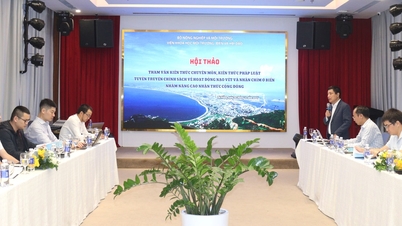
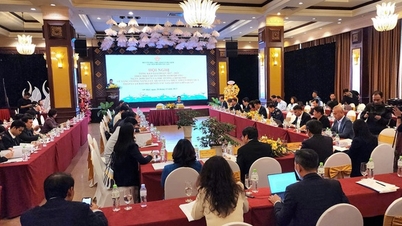
Within the framework of the forum, Da Nang proposed three points: firstly, to further improve the national legal framework. The city proposed that the Government, the Ministry of Science and Technology, and the Ministry of Public Security consider issuing a National Strategy on Open Data and detailed technical guidelines so that localities have a clear legal and technical basis for publishing and reusing open data.
The National Open Data Readiness Index will be issued. This index will become a mandatory target for national digital transformation rankings, creating an incentive for ministries, agencies, and localities to implement it effectively.
The guidelines clearly classify and detail the categories of open data, data that is permitted to be opened, data that is conditionally opened, and data that is absolutely not allowed to be opened. This helps government agencies feel more secure in ensuring the information security of the State and the people.
Secondly, we need to promote the adoption of new technologies. The city proposes that the Ministry of Science and Technology issue technical guidelines on open data portals, publication formats, levels of detail, and update frequency to ensure that open data adheres to the principles of "accuracy, completeness, cleanliness, and viability," and is used uniformly.
Encourage agencies to publish data in machine-readable formats to promote the use of new technologies such as artificial intelligence (AI) in big data to fully exploit the added value from data. Develop focused training programs for officials on data management skills and the publication of standardized open data.
Thirdly, we propose that the Ministry of Public Security, the Ministry of Science and Technology, and the Ministry of Finance guide localities in building and developing data exchange platforms. Developing a data exchange platform is a necessary step after establishing an open data portal. If open data is a free resource, then a data exchange platform is where data is commercialized, generating new revenue streams and promoting the digital economy at the local level.
Da Nang City is committed to further promoting data sharing, creating a sustainable open data ecosystem, and contributing to the successful achievement of the country's digital economy and digital society development goals, as well as double-digit growth targets in the coming period.
Source: https://baodanang.vn/da-nang-dung-du-lieu-mo-de-phat-trien-kinh-te-so-va-xa-hoi-so-3315833.html





























































































Comment (0)