

CUTTING THE FOREST IN SEARCH OF PRODUCTS
While working in A Lưới district (Thừa Thiên-Huế province), I was often urged by locals to return to their villages for Tet (Lunar New Year) so they could treat me to delicious and unique dishes only available during the holiday. "You won't be disappointed! Many people who celebrate Tet with the ethnic minorities have likened the Tet in the A Lưới valley to a ' culinary festival' with many specialties from various ethnic groups that not everyone gets the chance to enjoy once in their lifetime," invited Lê Văn Hôi (33 years old, a Pa Kôh ethnic minority resident of Hồng Thượng commune).
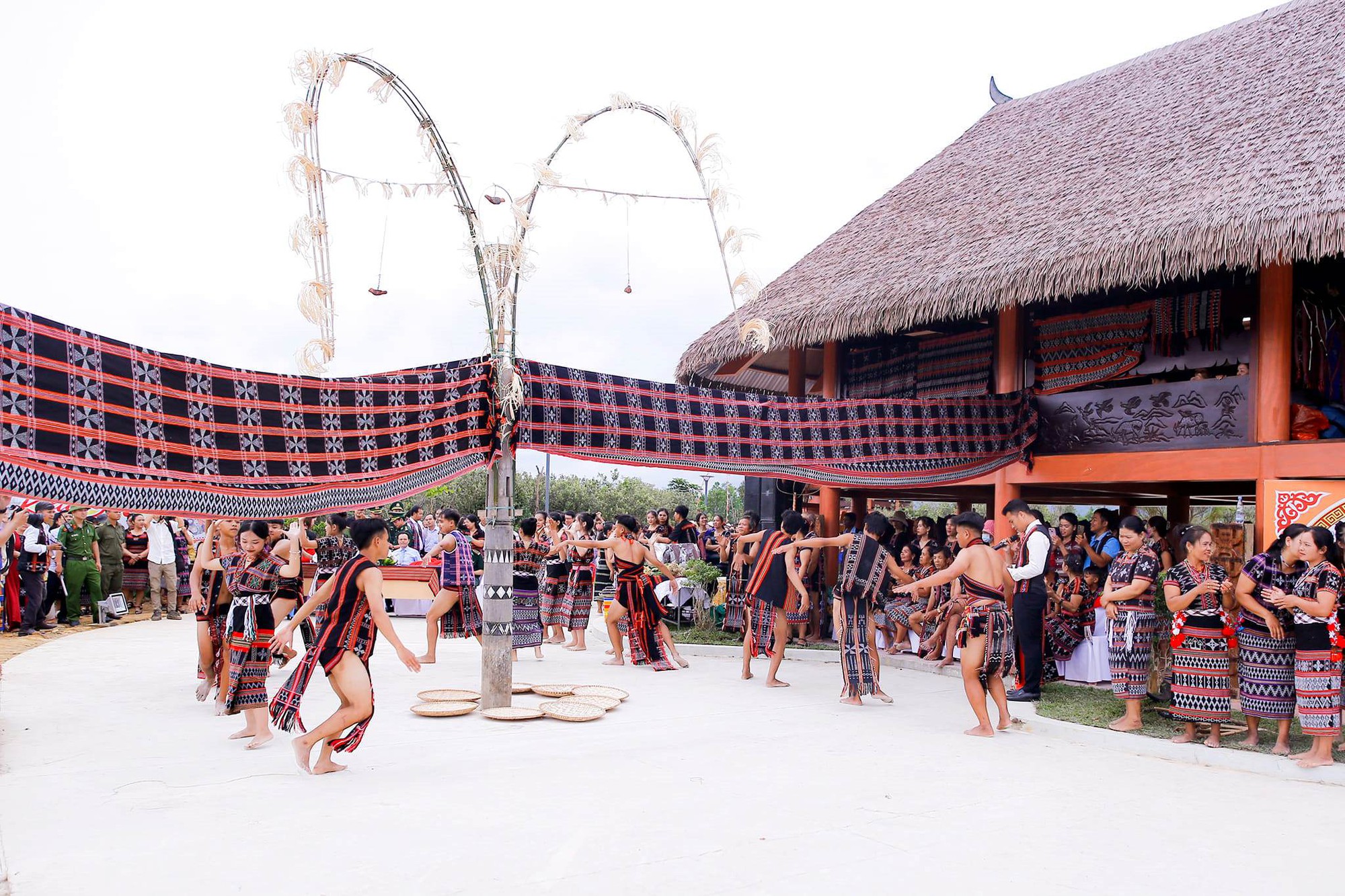
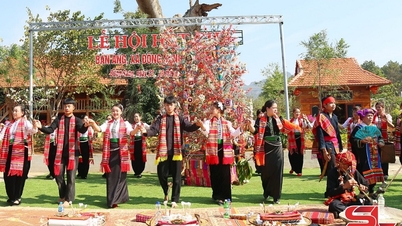
The unique traditional Aza koonh festival of the Ta Oi people.
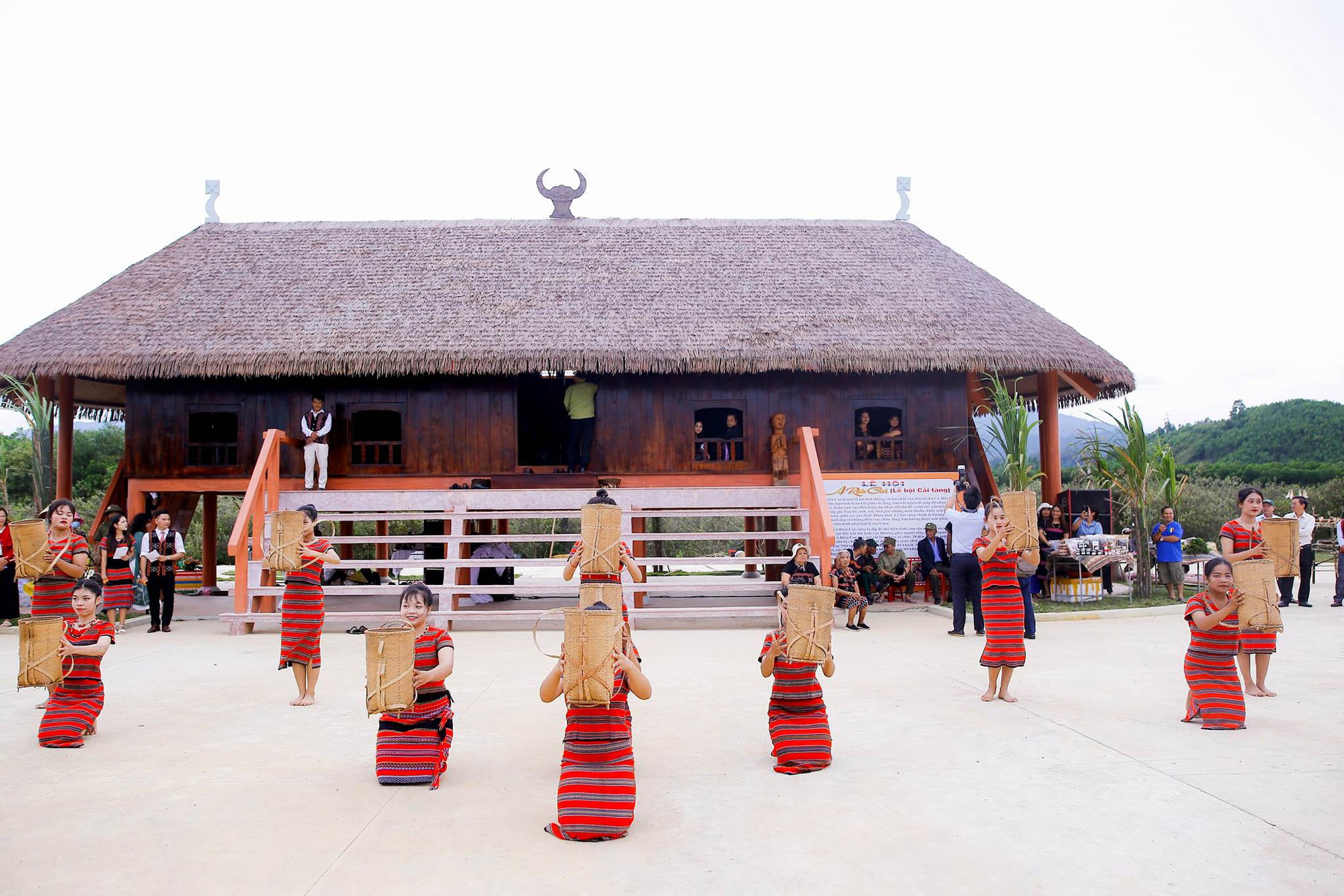
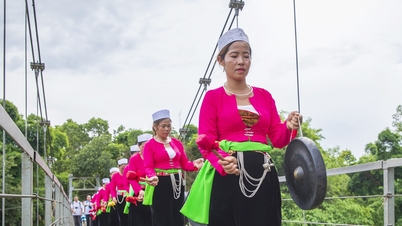
Pa Kôh girls celebrate the festival and welcome the New Year.
Mr. Hoi cited examples of dishes that not every local person has had the chance to taste stir-fried bamboo worms (a type of worm that lives in bamboo tubes) with shallots, called P'reng . This is because, before September and after around February-March each year, the worms have already emerged from the bamboo stalks and transformed into butterflies. Or there's the dish of forest rat marinated with ginger, chili peppers, and a little salt, then roasted in bamboo tubes. Then there's A choor (a type of stream fish) wrapped in several layers of banana leaves and buried in hot coals… These are dishes that "money can't buy" because the ingredients and spices are endemic species that only appear seasonally and are only found in the Truong Son mountain range. Normally, these dishes are unavailable, but during the Lunar New Year, many Pa Kôh families prepare them to offer to guests.
"About a month before Tet (Lunar New Year), the young men in the village would call each other to go into the forest to search for forest products, not, of course, prohibited wild animals, but stream fish, snails, frogs, tadpoles… We also went to pick and dig up various spices such as wild pepper (mac khen), ginger, galangal… and brought them back to store. On Tet day, when guests came to visit, depending on the dish, we would just grill them, stir-fry them with shallots, or cook them with taro… and we would have a delicious, hot meal," Mr. Hoi said.
A month before Tet (Vietnamese Lunar New Year), the Ta Oi community is busy preparing dishes with the distinctive flavors of the highlands. Some dishes are made ten days in advance, especially the various types of cakes made from glutinous rice. Mrs. Can Hoan (80 years old, a Ta Oi woman residing in Hong Thai commune) said that the men go to find snacks and make rượu (rice wine), while the women pound the rice, select the glutinous rice, and find leaves to wrap the cakes. The Ta Oi people usually choose fragrant local glutinous rice varieties such as ra du, cu cha, trui… to make cakes and sticky rice in tubes. "My mother usually makes them to offer to Yang ( Heaven ) during Tet. Among them, the a quat cake is the most difficult to wrap because you have to make both ends pointed with fresh bamboo leaves before putting the glutinous rice inside. When finished, the cake looks like two buffalo horns, so it's also called buffalo horn cake. Eating it with grilled meat is very delicious," Mrs. Can Hoan said. She still makes a special cake made from pounded glutinous rice mixed with black sesame seeds ( adeep man ), a unique dish that is in danger of disappearing.
Having lived in the Truong Son mountain range for many years, researcher Tran Nguyen Khanh Phong observes that during Tet (Lunar New Year), the Ta Oi people express their traditions through their culinary culture with unique and elaborately prepared dishes. "Because they live in the cold, mountainous region and move around a lot, the Ta Oi people prefer dry, salty, and spicy food. Therefore, most of their dishes are prepared by grilling, roasting, boiling, or blanching," Phong explained.
N GAT NGAY MEN CHUON
Some unique dishes from the highlands during Tet (Lunar New Year) include grilled fish and meat in bamboo tubes (meat is placed in bamboo tubes, covered with corn cobs, and grilled over hot coals), taro cut into pieces and mixed with marinated meat, then grilled in tubes... Surprisingly, according to Mr. Tran Nguyen Khanh Phong, dishes that might sound unappealing at first glance, such as grilled birds, rats, and fermented crabs, are actually high-class delicacies. After the ingredients are cleaned and seasoned, they are placed in bamboo tubes, reeds, or dried gourds, then grilled over a fire for a short time to generate heat. Afterward, they are stored in baskets or placed on a rack above the stove. After a few days, when opened and smelled, they are ready to eat. The Ta Oi people believe that offering these dishes to guests during Tet shows the host's affection and respect for their visitors.
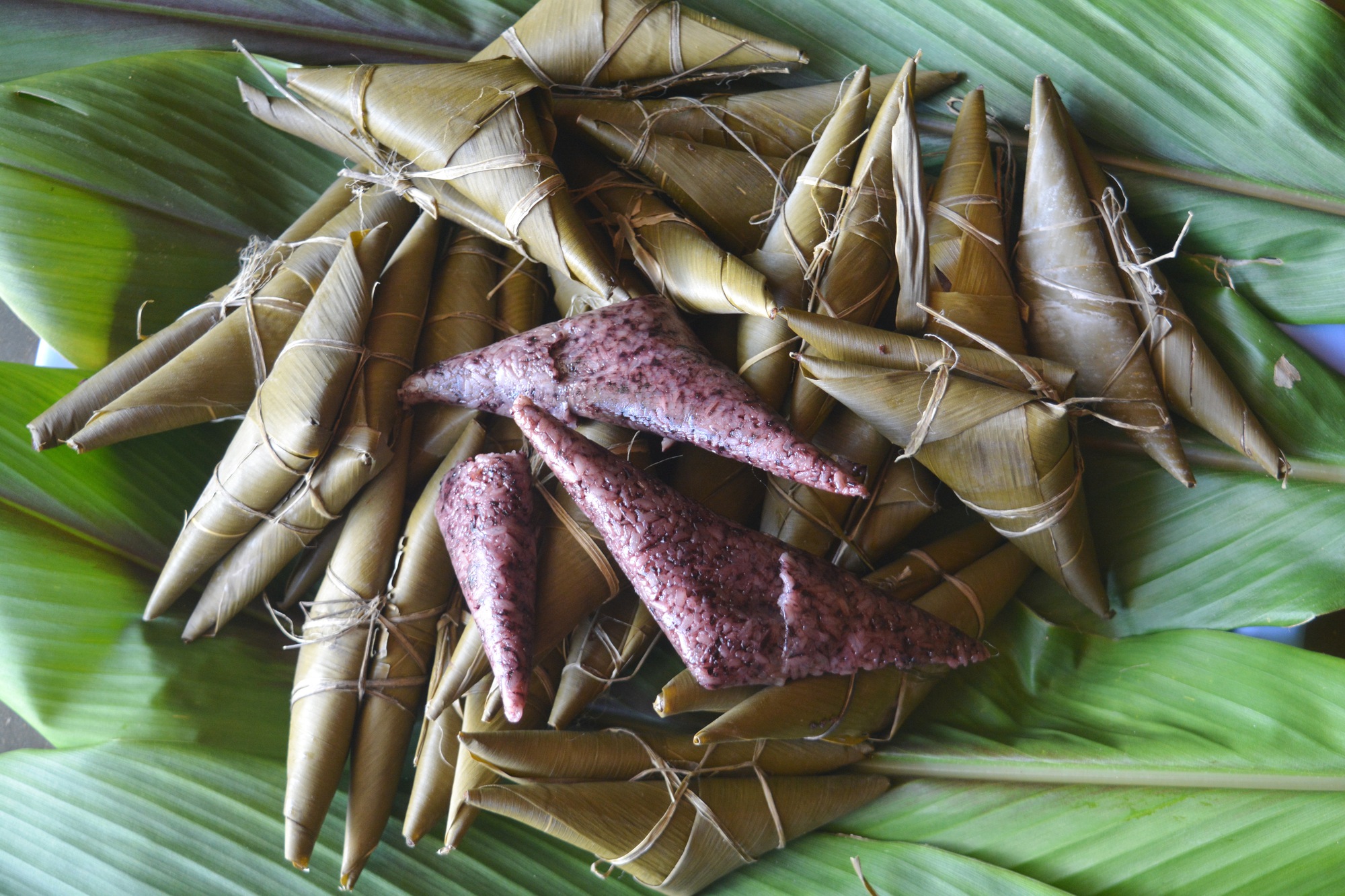
A-quat cake is an indispensable part of the Tet (Lunar New Year) celebrations for the ethnic groups in the Truong Son Mountains.
Distinguished artisan Ho Van Hanh (77 years old, residing in Trung Son commune), known as the "living dictionary of the Truong Son mountain range," said that the agricultural calendar of the ethnic communities in A Luoi usually ends in the 10th lunar month, after which people celebrate the Aza New Rice Festival (choosing a day between November 6th and the 24th of the 12th lunar month). Celebrating the Lunar New Year of the country, people consider it as combining two festivals into one. Therefore, families spare no effort in finding local produce to offer to guests. The specialties of each ethnic group are meticulously prepared, and they celebrate the New Year in the same way as they would offer the Aza sacrifice.
"Dad cares more about 'drinks' than 'food.' It's Tet! Men need something to enjoy with friends to have fun. Dad likes tr'din wine the most, meaning 'heavenly wine' because it's distilled right on the treetop," old Hanh chuckled. Although a Pa Kôh person, old Hanh prefers the traditional wine of the Cơ Tu people. According to him, this is the most fragrant and delicious wine in the Trường Sơn mountains, extracted from the tr'din tree growing deep in the forest. The winemaker only needs to make a cut in the tree trunk and collect the juice in a container. Adding a little dried chuồn tree bark, the juice will ferment on its own, producing a unique flavor.
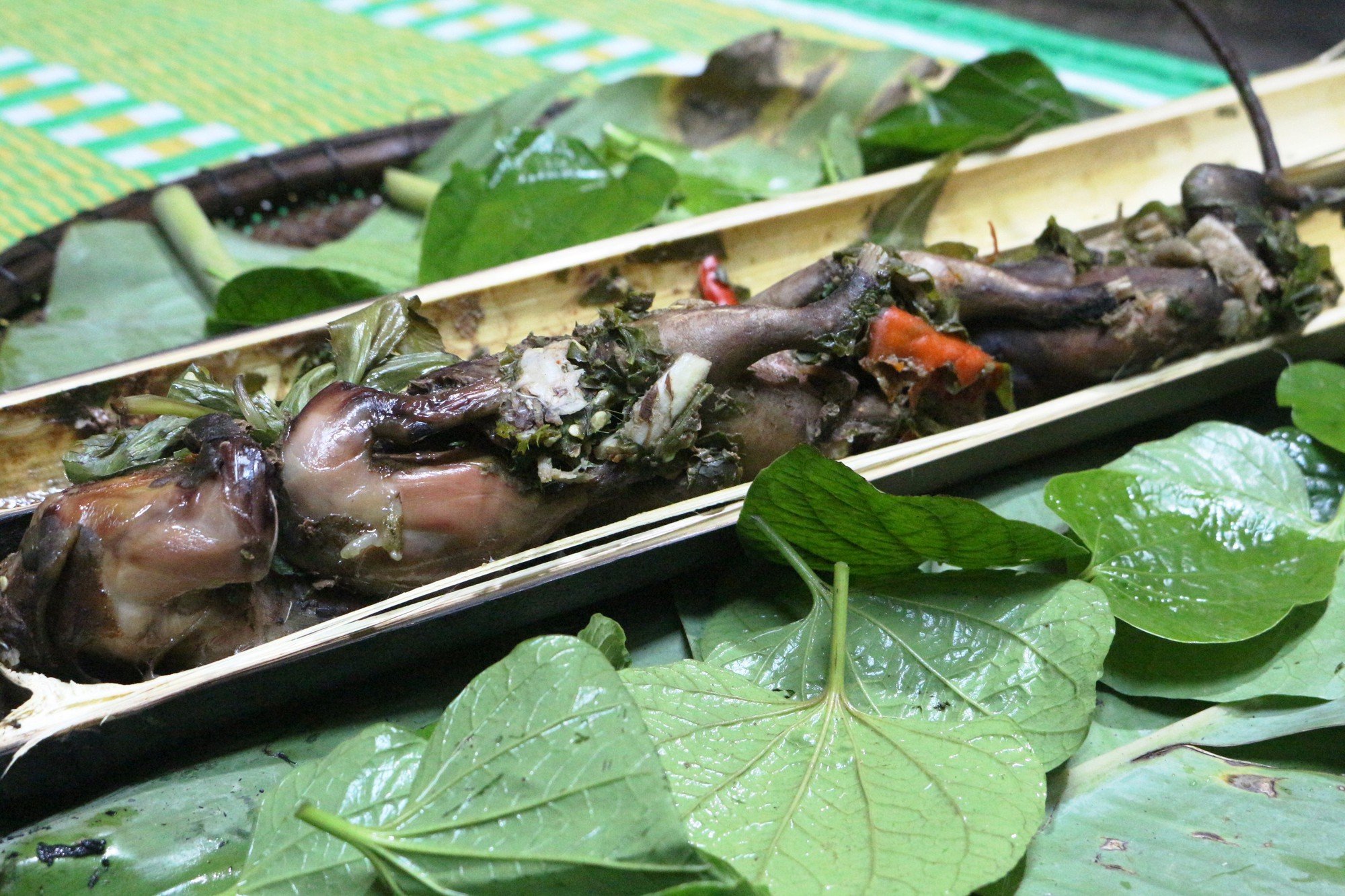
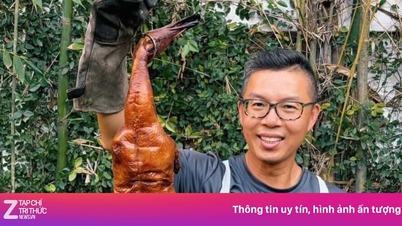
Grilled wild rat in bamboo tubes
Distinguished artisan Nguyen Hoai Nam (79 years old, a Co Tu ethnic minority residing in Hong Ha commune) proudly boasts that tr'din wine is loved by other ethnic groups, including the Kinh people in A Luoi, and is "out of stock" during Tet (Lunar New Year). Mr. Nam explains that the Pa Koh, Ta Oi, and Co Tu people also have a similar type of wine called ta vat, distilled from the palm tree. The palm tree is easier to find, but harvesting it is more dangerous because it requires climbing higher than the tr'din tree. "These are probably the only types of wine in the world that are taken directly from the tree and consumed without distillation," Mr. Nam laughs. Depending on individual tastes, during Tet, ethnic minority people also brew sticky rice wine ( xieu ), ferment rice wine ( a rieu ), sugarcane wine made from the bark of the dragonfly tree ( a vec ), and forest rattan wine made from the bark of the dragonfly tree ( ta via )...
Ms. Le Thi Them, Head of the Culture and Information Department of A Luoi District, noted that each ethnic group has its own unique traditional Tet customs. However, it is truly admirable that the people blend their "unique Tet" into the "common Tet" of the country, and that the ethnic groups still maintain their unique culinary traditions, rich in the flavors of the mountains and forests. "When Tet arrives, every household prepares delicious dishes to invite guests. It feels like Tet in A Luoi is a 'grand gathering' of ethnic cuisines with countless unique and delicious dishes and drinks… Even more interesting, families exchange food by sharing tubes of meat, baskets of cakes, jars of wine… so they can enjoy dishes they don't have at home. It's a Tet of unity and warmth," Ms. Them shared.
Source: https://thanhnien.vn/dai-hoi-am-thuc-o-truong-son-185250106174804198.htm
![[Image] Checking the security conditions at the exam site, ready for the 10th grade exam.](https://vphoto.vietnam.vn/thumb/1200x675/vietnam/resource/IMAGE/2026/05/28/1779943458889_z7872507660648-d764421a26e8cd7b61d70d142a48a685-jpg.webp)




![[Photo] Opening Ceremony of the National People's Council Conference on the Implementation of Directions and Tasks for the 2026-2031 Term](https://vphoto.vietnam.vn/thumb/1200x675/vietnam/resource/IMAGE/2026/05/28/1779939257690_ndo_br_bnd-1991-jpg.webp)










































































Comment (0)