

Electronic waste mining - An under-exploited source of precious metals in urban areas.
At least $10 billion worth of electronic waste ends up in landfills worldwide every year. This is a shocking figure. It's truly surprising to learn that discarded computers and phones often contain precious metals like gold, lithium, and cobalt, which are highly valuable in the modern electronics industry. Many experts liken the mountains of electronic waste in cities to gold mines waiting to be exploited.
According to the United Nations' 2024 Global E-Waste Monitoring Report, a record 62 million tons of electronic waste were discarded worldwide. On a per capita basis, Norway generated the highest amount of electronic waste, at 27 kg per person in 2022.
However, less than a quarter of the world's electronic waste is recycled. The majority of waste is burned outdoors, wasting materials and releasing toxic substances. This highlights the crucial role of recycling in recovering precious metals from electronic waste; otherwise, it would lead to serious waste.
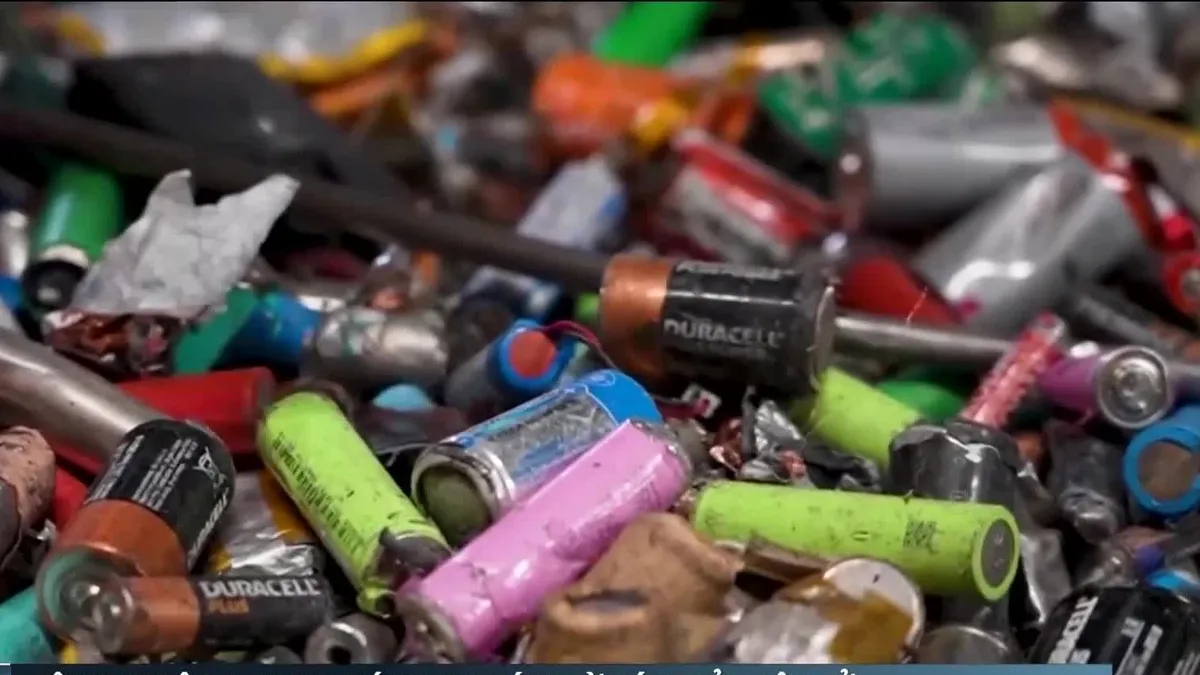
Currently, less than a quarter of the world's electronic waste is recycled.
AI technology is extracting "treasures" from electronic waste.
In the UK alone, it's estimated that households discard around 103,000 tonnes of electronic waste each year. This waste not only contributes to overflowing landfills but also results in nearly £1 billion in wasted resources. Faced with this situation, a startup company has developed a groundbreaking solution called Artificial Vision System, designed to detect materials like batteries and other electronic devices in household waste, allowing for specialized recycling.
Inside those seemingly worthless used batteries lies a forgotten treasure trove: lithium, cobalt, gold, palladium, and rare earth elements crucial for magnets and next-generation batteries. The problem is, when these devices reach the end of their lifespan, they are often discarded in household waste, resulting in the loss of many essential metals to landfills each year.
Scott Butler, CEO of Material Focus, said: "Inside electronic devices are technological metals that we are importing at great cost. And we have them right here in a 'mine' in the middle of the city. It's illogical that we're throwing away so much while simultaneously mining new resources."
The rise of fast, cheap technology like headphones and chargers is further accelerating the trend of waste, with people buying and discarding hundreds of millions of items each year. The explosion of disposable e-cigarettes, in particular, is speeding up the rate of technological metal loss.
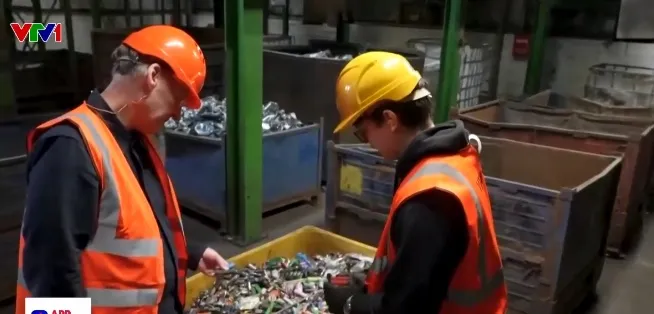
Inside those seemingly worthless used batteries lies a forgotten treasure trove.
The Artificial Vision (AI) system from the startup LionVision has been deployed at an electronic waste recycling plant in Sittingbourne, Kent, England. Instead of relying on inefficient manual sorting, the AI is programmed to serve a clear economic goal – maximizing material recovery efficiency. The system uses cameras to continuously scan the stream of waste on a conveyor belt. Instantly, the AI identifies and marks the highest-value items, such as lithium-ion batteries and disposable e-cigarettes – which are concentrated sources of lithium and cobalt.
Once identified, a compressed air blower pushes these items out of the mixed waste stream. This process not only separates batteries to avoid the risk of fire and explosion – a major problem causing significant losses for sorting facilities – but also creates a clean and valuable stream of raw materials for specialized recycling facilities.
"This system is constantly updated with training data to adapt to new battery brands and types, ensuring the economic viability of technological metal recovery," said George Hawkins, a machine learning engineer.
Better early-stage sorting, as LionVision is doing, can significantly boost the recovery of valuable and essential materials. This helps reduce reliance on imported raw materials, stabilize supply chains, and lower production costs in the long run.
Dangers of unregulated electronic waste mining
It is clear that technology plays an extremely important role in extracting gold from electronic waste. Without advanced technology and strict guidance and management, the uncontrolled extraction of electronic waste could lead to unforeseen health consequences, the monetary gains of which could never compensate for the losses.
A stretch of road in Manila, the capital of the Philippines, is the workplace of hundreds of people engaged in a job called: dismantling electronic waste. Their tools are quite rudimentary, often just pliers, to take apart old laptops and air conditioners, extracting the metals inside such as nickel, aluminum, and copper, which they sell to secondhand shops.
Sammy Oligar, a Filipino resident, stated: "When disassembling computer circuit boards, you can get 470 pesos for every kilogram of copper and aluminum recovered."
470 pesos is equivalent to over 200,000 Vietnamese dong. For many workers in the Philippines, this is a considerable amount of money. However, the price they pay is their health. For example, circuit boards contain particularly high concentrations of toxic metals that can cause nerve damage when inhaled.
"I know it's toxic. But I have to keep doing it to support my family," shared Dexter Barsigan, a Filipino.
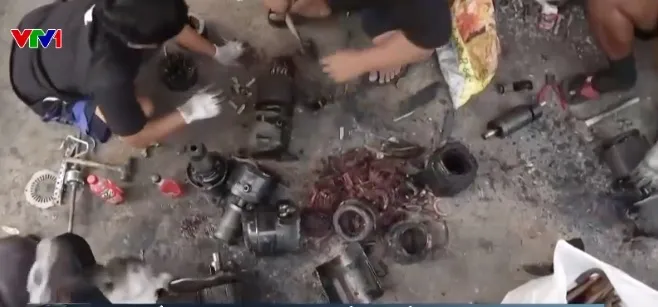
Unauthorized recycling of electronic waste can lead to unforeseen health consequences.
According to the United Nations' Global E-Waste Monitoring Programme, the Philippines is one of the largest e-waste generators in Southeast Asia, with approximately 600,000 tons in 2022. Dismantlers working at legally licensed facilities must adhere to strict guidelines.
However, those working independently often lack the necessary training, regulations, and protective equipment to properly safeguard themselves. For example, to separate copper, people often burn electrical wires, which is faster than stripping by hand, but this releases toxic chemical mixtures, including lead and mercury, into the air.
Currently, the Philippines' capacity for recycling electronic waste is very limited and cannot keep up with the rate of waste generation. Electronic waste here is still mainly handled in three ways: storage at home, spontaneous manual dismantling, and landfilling.
"Extracting gold from trash": Requires technology and effective management.
Although considered an "urban gold mine" with a much higher content of precious metals than traditionally mined ore, electronic waste is not something that can be exploited indiscriminately.
To make the extraction process more economically valuable and safe for health, many new technologies are currently being applied, such as bio-mining, hydrometallurgy, and pyrometallurgy. Currently, Switzerland, Germany, and Japan are leading countries in the rate and technology of electronic waste recycling.
Source: https://vtv.vn/dai-vang-tu-rac-dien-tu-10025101610514567.htm



![[Image] Close-up view of the interchange connecting the two expressways and Long Thanh Airport.](https://vphoto.vietnam.vn/thumb/1200x675/vietnam/resource/IMAGE/2026/05/25/1779703378210_ndo_br_z7863716673926-224453a31600126cce10622af6290afd-4549-jpg.webp)
![[Image] Hanoi's urban life under the challenge of a "scorching hot" environment](https://vphoto.vietnam.vn/thumb/1200x675/vietnam/resource/IMAGE/2026/05/25/1779706979265_nang-nong-t5-2026-minh-duy-7-4636-jpg.webp)




















































































Comment (0)