

Ensuring the quality and progress of the appraisal of the North-South high-speed railway project.
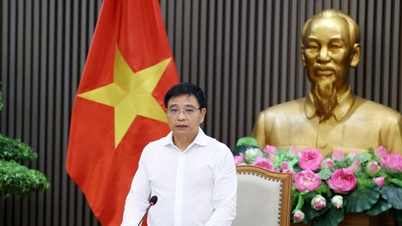
This is the directive of Minister of Planning and Investment Nguyen Chi Dung, Chairman of the State Appraisal Council, regarding the pre-feasibility study report for the North-South high-speed railway project.
 |
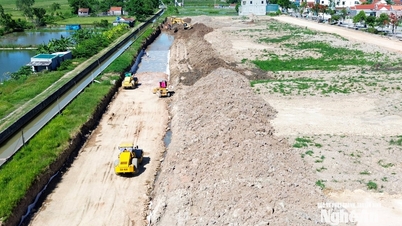
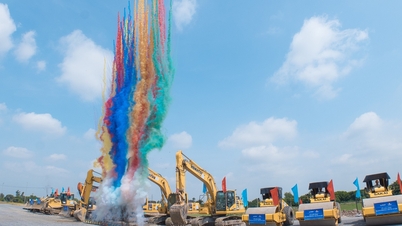
| Illustrative image |
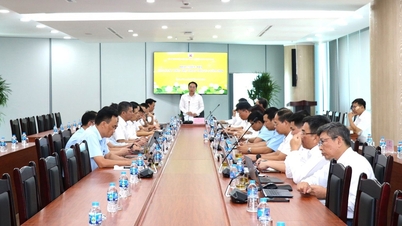
This afternoon (October 14th), the State Appraisal Council for the North-South High-Speed Railway Project held its second meeting to appraise the Pre-feasibility Study Report for the North-South High-Speed Railway Project, which was submitted to the Council by the Ministry of Transport (MOT) in Submission No. 10625/TTr – BGTVT dated October 2nd, 2024.
We commend the responsible work ethic of the project planning consultant, the verification consultant, the interdisciplinary expert appraisal team, and the members of the State Appraisal Council for completing the verification report, the project dossier after explanation, and the draft appraisal results report in a very short time, ensuring both timeliness and quality.
"This is a very special and important transportation infrastructure project in terms of scale and technology, with an impact lasting for hundreds of years. Therefore, the appraisal process must demonstrate dedication, vision, and intelligence to be able to propose high-quality opinions on the pre-feasibility study report to the competent authorities," Minister Nguyen Chi Dung noted.
The process of reviewing and providing feedback on the Project's pre-feasibility study report must adhere closely to the directives of the Politburo , the Central Committee of the Party, and the Standing Committee of the Government.
Specifically, the Politburo unanimously agreed on the policy of investing in a high-speed railway on the North-South axis with a plan to invest in the entire line through public investment, with a speed of 350 km/h, primarily for passenger transport, meeting dual-use requirements for national defense and security, and capable of carrying goods when necessary.
Investing in the project requires high determination, great effort, and decisive action. It needs thorough research to ensure feasibility, effectiveness, modernity, synchronization, and a strategic vision… ensuring effective connectivity of East-West corridors, seaports, and airports of the country, and connectivity with countries in the region, primarily China, Laos, Cambodia, and Southeast Asia.
In Notice No. 458/TB-VPCP, the Standing Committee of the Government requested relevant agencies and units to closely adhere to the investment plan for the entire route with a design speed of 350 km/h, which had been approved by the Politburo and the Central Committee of the Party, in order to calculate and design appropriate, feasible, and effective technical solutions.
Accordingly, the route should be studied to be as straight as possible in order to reduce costs, ensure the speed of operation, create new development space, and save expenses; avoiding large residential areas and urban centers, but with appropriate connection plans; convenient for the shortest connection to airports and major seaports; ensuring convenient linkage of the East-West corridor and connection with railway lines in China, Laos, and Cambodia.
For stations, it is necessary to calculate and determine a sufficiently large and suitable area, ensuring a long-term strategic vision for the full development of modern services, and maximizing the efficient use of land resources and new development space.
Based on those major orientations, the Minister and Chairman of the State Appraisal Council requested the Ministry of Transport, the project planning consultant, to closely coordinate with the verification consultant and the inter-ministerial expert appraisal team to focus on clarifying and providing specific and highly persuasive explanations for several important issues in the Pre-feasibility Study Report of the North-South High-Speed Railway Project, including: demand forecast and service scope; preliminary selection of key technologies and techniques and conditions for supplying materials, raw materials, energy, services, and infrastructure; total investment; capital mobilization plan; specific policy mechanisms, etc.
"The construction costs must be calculated accurately and comprehensively, without sugarcoating the financial picture, especially during the operational phase, in order to have an effective mechanism for handling issues, even though this project has very high economic, social, and national defense benefits," the Minister and Chairman of the State Appraisal Council instructed.
Regarding the project's implementation schedule (preparation and investment execution within 10 years), the Minister and Chairman of the State Appraisal Council stated that this is a very tight schedule, especially given the large scale and technological complexity of the project, which is unprecedented.
Therefore, the Ministry of Transport, the project consultants, and related units must fully identify risk factors and develop solutions to address them, ensuring the feasibility of the project's progress as required by the Politburo and the Central Committee.
Because the deadline for submitting the Investment Policy Report for the Project to the National Assembly is October 19, 2024, in order to be considered and approved at the 8th Session, the project appraisal process needs to be carried out very urgently and with smooth coordination among relevant agencies.
Minister and Chairman of the State Appraisal Council Nguyen Chi Dung requested that the Council members (35 members) demonstrate a sense of responsibility to the country and the nation when contributing opinions and voting on the draft appraisal report.
The Ministry of Transport is urgently studying and incorporating as many opinions as possible from ministries, agencies, the Standing Committee of the Government, and the State Appraisal Council. For contents that are not accepted, a full and thorough explanation must be provided to convince the State Appraisal Council and competent authorities to approve them.
"The progress of appraisal and submission of the Investment Policy Report for the Project is very urgent, but that doesn't mean we should compromise or ignore the requirements for appraisal quality," the Minister, Chairman of the State Appraisal Council for the Pre-feasibility Study Report of the North-South High-Speed Railway Project, reminded.
Reportedly, in Submission No. 10625, the Ministry of Transport proposed a high-speed railway line on the North-South axis with its starting point at Ngoc Hoi station and its end point at Thu Thiem station, with a length of approximately 1,545 km.
Based on the planning and research results of the consultant, the Ministry of Transport proposes that the project's investment scope have its starting point in Hanoi (Ngoc Hoi station); its end point in Ho Chi Minh City (Thu Thiem station); and a total length of approximately 1,541 km.
The project passes through the territory of 20 provinces and cities including: Hanoi, Ha Nam, Nam Dinh, Ninh Binh, Thanh Hoa, Nghe An, Ha Tinh, Quang Binh, Quang Tri, Thua Thien - Hue, Da Nang, Quang Nam, Quang Ngai, Binh Dinh, Phu Yen, Khanh Hoa, Ninh Thuan, Binh Thuan, Dong Nai, and Ho Chi Minh City.
The project will construct a new double-track railway line with a 1,435 mm gauge, a design speed of 350 km/h, and a load capacity of 22.5 tons per axle; build 23 passenger stations and 5 freight stations; the high-speed railway will transport passengers, meet dual-use requirements for national defense and security, and can transport goods when necessary.
The project has a preliminary land requirement of approximately 10,827 hectares; the investment form is public investment; the preliminary total investment is approximately VND 1,713,594 billion (equivalent to USD 67.34 billion).
The project's investment capital comes from central government budget allocations over medium-term periods, contributions from localities, and low-cost, less restrictive mobilized capital, etc.
During the construction and operation phase, businesses will be encouraged to invest in service and commercial areas at the stations; and to invest in additional vehicles for operation when needed.
The Ministry of Transport proposes preparing a feasibility study report for the project in 2025-2026; commencing construction at the end of 2027; and striving to complete the entire route by 2035.



![[Photo] General Secretary and President To Lam presides over a meeting on preparations for the review of one year of operation of the three-tiered government system.](https://vphoto.vietnam.vn/thumb/1200x675/vietnam/resource/IMAGE/2026/06/02/1780391821195_a1-bnd-4595-9717-jpg.webp)













































































Comment (0)