


Photo: VGP
…Calls echoed through the villages; some carried machetes, others carried green branches, and militia, forest rangers, and commune police quickly arrived at the "hot spot".
Speaking to the Government Online Newspaper, Mr. Do Duc Manh, a forest ranger in Na Tau commune, still clearly remembers the afternoon of April 5, 2026. He recounted: "Upon receiving the fire alarm, we immediately went to the scene. The fire spread rapidly due to the dry weather and dense vegetation. We simultaneously extinguished the fire on the spot and cleared vegetation to create firebreaks to prevent it from spreading to the protected forest and residential areas. By around 7:30 PM that same day, the fire was basically under control. The cause was later determined to be due to people using fire to create smoke to catch bees in the forest; embers fell onto dry branches, igniting the fire during the peak of the dry season."

In mid-April 2026, a column of black smoke suddenly rose, signaling a forest fire in Na Tau commune ( Dien Bien province ) - Photo: Na Tau
In Na Tau commune, such incidents are a constant worry. Currently, the entire commune has over 10,200 hectares of forest, while the local forest ranger force consists of only two people. "The pressure is immense, especially from October to April each year. Just a small mistake when burning fields, clearing undergrowth, or using fire in the forest can lead to a fire," said Mr. Manh.
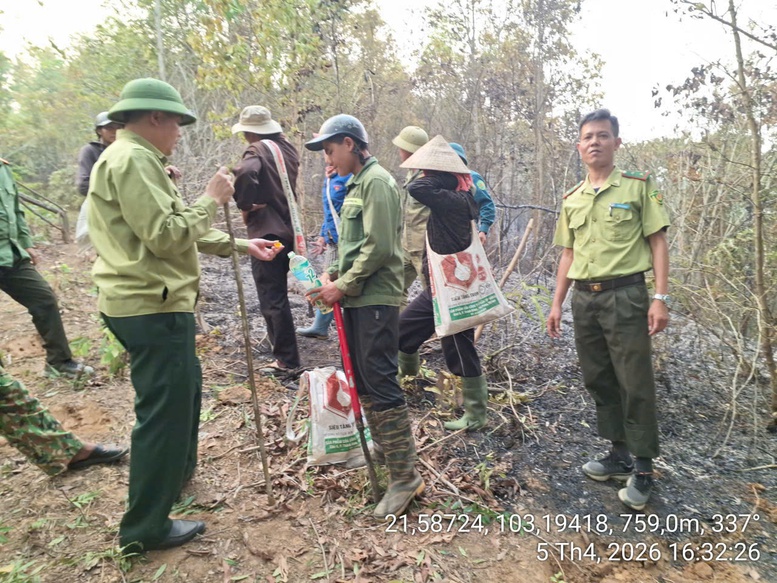
Mr. Do Duc Manh, Forest Ranger of Na Tau commune (the man without a hat) - Photo: VGP
Therefore, instead of relying solely on specialized forces, local authorities have chosen to involve the people in forest conservation.
Village meetings are held regularly. Legal documents are translated into ethnic languages and broadcast over loudspeakers. Forest rangers go down to each village to remind people about the risk of forest fires and guide them on how to use fire safely when farming...
For example, in Na Tau 1 village, the benefits of community participation in forest conservation have become evident. The village currently manages hundreds of hectares of forest, and each year, thanks to good protection of this area, the community receives approximately 300 million VND from the forest environmental service policy. Instead of dividing the money equally among households, the villagers unanimously agreed to use this money to invest in transportation infrastructure. The villagers also voluntarily contributed labor and donated land to build a 4.5 km road into their agricultural land.
The road winds along the hillside, through areas of forest that were previously almost completely isolated during the rainy season. In the past, agricultural products had to be carried on foot or transported by motorbike on slippery dirt roads. Many areas of land were left fallow due to the lack of transportation routes. Now, small trucks can reach the area. People are confidently expanding their cultivated land, and transportation costs have decreased. As a result, corn, cassava, and upland rice fetch higher prices.
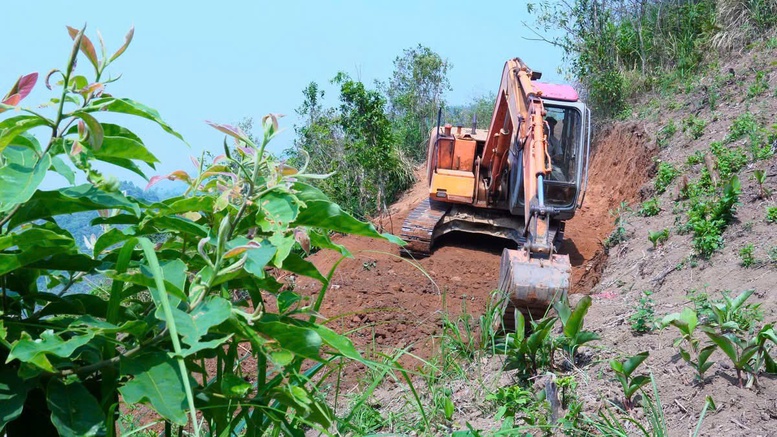
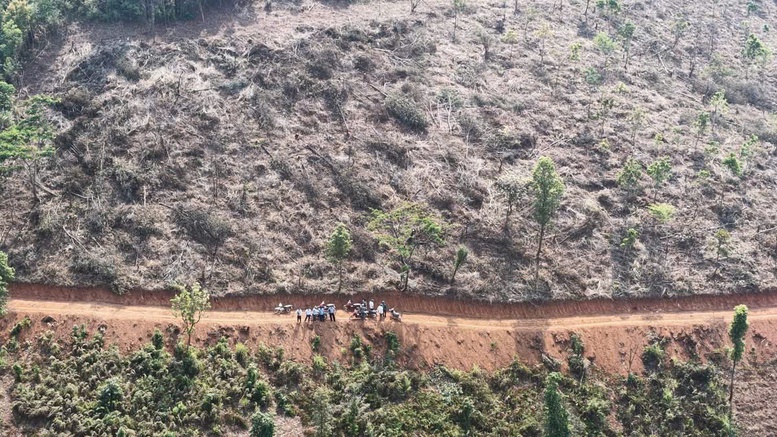
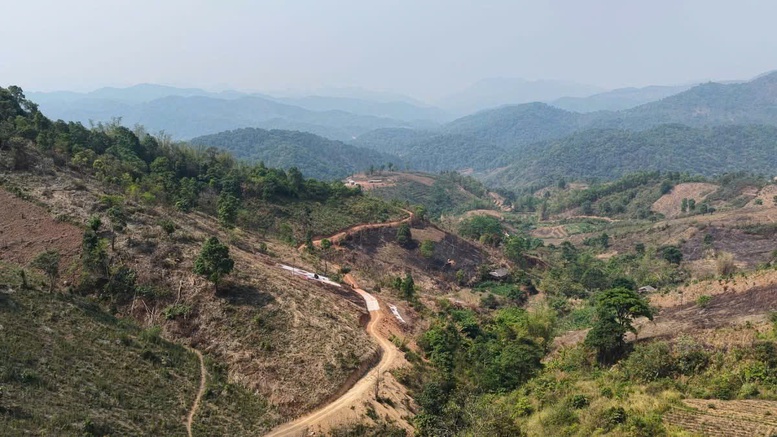
The completion of the 4.5 km road into the agricultural land area of Na Tau 1 village creates favorable conditions for people in agricultural production, transportation of agricultural products, and economic development - Photo: Na Tau
As long as the forest remains, the village remains.
Meanwhile, in another commune of Dien Bien province, Na Bung, the green of over 9,500 hectares of forest is also being preserved through the involvement of the entire community.
After the merger, Na Bung commune has a natural area of over 16,000 hectares, a large geographical area, and many villages far from the center. Forests occupy approximately 58% of the natural area. This is an important protective zone, preserving land and water for the entire region.
From the beginning of the year, the police, military, and forest rangers have established a coordination mechanism for forest protection. Meetings with local people have been held right in the villages. Residents sign commitments to protect the forest and are guided on proper farming practices.
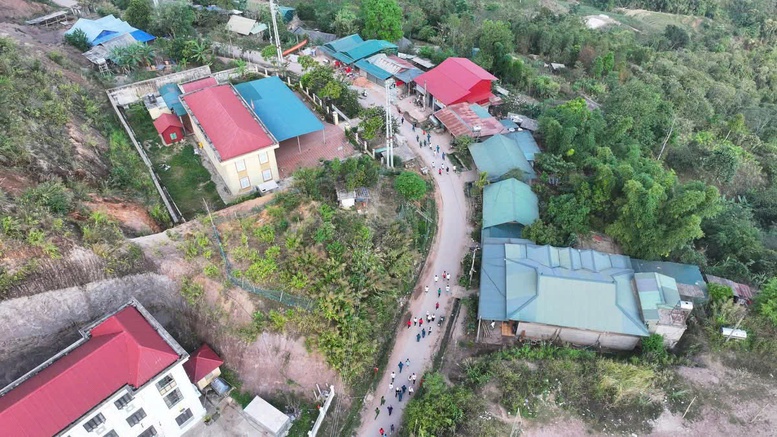
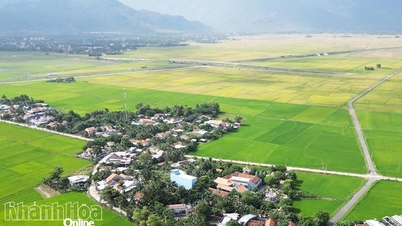
A view of Na Bung commune (Dien Bien province) - Photo: Na Bung
Vu A Tung, a forest ranger in Na Bung commune, shared: "We regularly coordinate with local authorities and functional forces to disseminate information to each village, guiding people not to burn fields when the forest fire warning level is at level 4 or 5."
In key forest areas, militia forces and local people take turns patrolling. Thao A Cung, from Noc Coc 1 village, said: "During periods like after Tet (Lunar New Year), people burn fields extensively, so the risk of forest fires is very high. We regularly inspect the area, remind people, and are ready to participate in firefighting if any incidents occur."
After the merger, the forest ranger force remained understaffed while the area under their management expanded. Therefore, allocating land and forests with clearly defined boundaries was considered a crucial solution. Once allocated forests, people began to view them as assets that needed protection.
In Huoi Dao village, the community manages over 1,000 hectares of forest allocated by the State since 2013. During the dry season, the villagers regularly organize patrols and monitor the forest. When a fire breaks out, the people immediately join the authorities in extinguishing it. "Having forests means having water for production and land for farming. Losing the forest immediately makes life difficult," confided Mr. Giang A Chu, head of Huoi Dao village.
Not far from there, the Vang Dan village of the Dao ethnic group is located at the headwaters of the Na Hy stream. The village has 61 households and is entrusted with managing over 500 hectares of natural forest. For many years, the people here have maintained the practice of clearing undergrowth and creating firebreaks before the dry season.
Village head Ly A Su shared: "The most important thing is that people understand the value of the forest. People are much more aware now; everyone understands that protecting the forest means protecting their own lives."
And amidst the forests of Dien Bien today, one can find familiar scenes: forest rangers, militia patrolling, and local people voluntarily clearing firebreaks before the dry season. They protect the forest through very specific actions; to prevent landslides from burying villages during the rainy season; to ensure water sources don't dry up; to provide additional livelihoods from forest environmental services and more stable farming seasons; and above all, to ensure that this greenness remains for future generations.
Son Hao
Source: https://baochinhphu.vn/dam-chay-rung-and-loi-nhac-ve-la-chan-cong-dong-102260602104310294.htm



























































































Comment (0)