


In practice, sports are not only a way to improve health but are also becoming an important resource for renewing tourism products, extending length of stay, increasing spending, and spreading the image of the destination. With a strategic vision, Quang Ninh province is striving to closely integrate sports with tourism to create unique products of international caliber.
Explosive potential and momentum stemming from impressive figures.
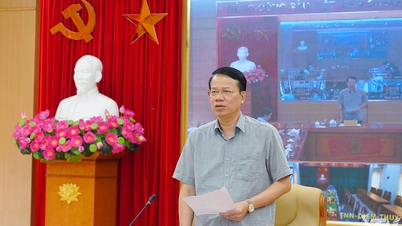
On December 17th, the Department of Culture, Sports and Tourism of Quang Ninh province organized a workshop titled "Developing Tourism in conjunction with Sports in Quang Ninh Province in 2025" to find solutions to overcome bottlenecks and unlock potential.
Mr. Nguyen Viet Dung, Director of the Department of Culture, Sports and Tourism of Quang Ninh province, affirmed that the trend of sports tourism is increasing strongly worldwide and has great potential in the locality.
By 2025, Quang Ninh will become the destination for more than 10 major sporting events with the participation of nearly 100,000 athletes and tourists. Prestigious tournaments such as the VNExpress Marathon Amazing Ha Long, Halong Bay Heritage Marathon, Aqua Warriors Halong Bay 2025, and the first National Young Vietnamese Entrepreneurs Pickleball Tournament in 2025 will create a strong attraction for local tourism.
The mass sports movement has developed significantly, with 42% of the population regularly participating in sports and over 2,200 active sports clubs. Notably, the province's high-performance sports have achieved many outstanding results, including First and Second Class Labor Medals awarded to athletes who achieved excellent results at world and Asian competitions.
The economic benefits of sports tourism are not just theoretical but have been proven in practice in various localities. Mr. Pham Xuan Thanh, Vice Chairman of the People's Committee of Yen Tu Ward, shared that organizing running races and mountain sports activities in Yen Tu brings double benefits. During the event days, accommodation establishments, restaurants, and services here recorded a 20-40% increase in revenue compared to normal days. At times, athletes and tourists even filled 100% of the accommodation capacity in the ward, creating demand that spread to neighboring areas. Furthermore, trekking and forest experiences create jobs, boost the consumption of OCOP products, and become an effective channel for promoting the image of the sacred Yen Tu mountain region to international friends.
However, despite its immense potential, sports tourism in Quang Ninh still faces limitations that need to be frankly acknowledged. Mr. Nguyen Viet Dung pointed out that the connection between tourism and sports is currently fragmented and not seamless. While attention has been paid to infrastructure, it is not yet synchronized, and there is a shortage of specialized human resources such as coaches, adventure sports instructors, and sports doctors, with limited expertise. Furthermore, the sports economy has not developed proportionally, social mobilization lacks mechanisms to encourage investment, and strong branded sports tourism products remain a "gap."
Decoding the "bottlenecks" and shaping a breakthrough solution system.
From an expert's perspective, Associate Professor, Dr. Pham Hong Long, Chairman of the Scientific and Training Council of the Faculty of Tourism Studies (University of Social Sciences and Humanities, Vietnam National University, Hanoi), pointed out key "bottlenecks" such as: legal loopholes, disruptions in the value chain, human resource bottlenecks, and conflicts between heritage preservation and economic exploitation. For adventure sports tourism to truly become a "gold mine," Quang Ninh needs to change its management mindset, shifting from "prohibition-based management" to "standard-based risk management" and focusing on creating high-value, intellectual property products.
From the perspective of a travel business, Ms. Le Thi Bich Hang, Director of Vietravel's Quang Ninh branch, proposed very specific solutions to make this type of tourism operate more professionally. Ms. Hang emphasized that planning specialized sports tourism areas is a crucial step. Vietravel proposed that the province develop distinct zones: a comprehensive marine sports tourism zone, a trekking - mountain climbing - nature exploration zone, and a zone for organizing amateur sports competitions. The province needs to attract professional investors into golf course and adventure sports park projects and promote socialization to diversify resources and improve service quality. Ms. Hang suggested focusing on training tour guides with expertise in rescue, first aid, and risk management to ensure absolute safety for customers, thereby enhancing the reputation of Quang Ninh tourism.
Mr. Pham Xuan Thanh, Vice Chairman of the Yen Tu Ward People's Committee, proposed additional solutions regarding infrastructure and community development in the Yen Tu area. He suggested that the province should study and issue a plan for the development of sports and adventure tourism in mountainous areas, identifying Yen Tu as the center for expanding "ecological trekking" routes through bamboo forests, streams, and waterfalls, and connecting inter-regional tours. He hoped to elevate running events in Yen Tu to an annual provincial-level activity and register them in the national competition system.
According to him, the difficulty level of each route should be categorized so that tourists can easily choose according to their ability. Investing in a bilingual signage system, eco-friendly rest stops with first aid stations, and applying digital technology such as GPS are key requirements to ensure safety. He emphasized the importance of training local youth to become professional tour guides, creating sustainable livelihoods and turning them into "heritage ambassadors".
The promotional efforts need to be upgraded. Ms. Le Thi Bich Hang proposed linking sporting events with tourism stimulus programs and building a series of annual regional tournaments to create strong brand recognition.
Alongside economic development, sustainability cannot be overlooked. Delegates unanimously agreed that the development of mountain sports must adhere to the principle of "leaving nothing behind but footprints," strictly managing waste disposal and maintaining models such as plogging to protect the sensitive ecosystem of special-use forests.
Developing sports tourism is not only a solution to overcome seasonality but also a way to affirm Quang Ninh's international standing. With the commitment of local authorities and the support of the business community, such as Vietravel, Quang Ninh is gradually overcoming difficulties and realizing its goal of double-digit economic growth. Only by harmoniously resolving the issues of economic benefits, tourist safety, and resource conservation can sports tourism truly become a driving force to propel the "smoke-free industry" of this mining region to new heights.
Source: https://baotintuc.vn/du-lich/danh-thuc-mo-vangtu-su-ket-hop-giua-the-thao-va-du-lich-20251217135029974.htm






















![[Photo] Reception to welcome General Secretary and President To Lam and his wife on their State visit to the Philippines](https://vphoto.vietnam.vn/thumb/1200x675/vietnam/resource/IMAGE/2026/06/01/1780295488620_vna-potal-chieu-dai-chao-mung-tong-bi-thu-chu-tich-nuoc-to-lam-va-phu-nhan-tham-cap-nha-nuoc-toi-philippines-8798060-7855-jpg.webp)










































Comment (0)