

One of the most controversial street foods in Asia is balut (fertilized duck egg). It's popular in the Philippines, Cambodia, and Vietnam, and sometimes appears in Thailand as well.
The incubation period before cooking varies depending on local preferences, but it usually lasts 2-3 weeks. If not cooked properly, the dish can cause nausea. In the Philippines, balut, also known as fertilized duck eggs, is typically incubated for a shorter period than in Vietnam.
According to many sources, balut (fertilized duck egg) was introduced to the Philippines by the Chinese in 1565. Since then, this dish has gradually become a traditional part of Philippine culture. Wherever Filipinos migrate to work, this dish quickly establishes its own market.
 Balut (fertilized duck egg) is sold on the streets in the Philippines (Photo: Zimi).
In the Philippines, balut (fertilized duck eggs) are typically incubated for 14-18 days before being boiled. Around the 14th-16th day, the embryo emerges above the egg white and yolk, known as the "mamatong." According to many balut makers, the ideal time is around 17 days old.
Meanwhile, in Vietnam, fertilized duck eggs are typically incubated for 19-21 days until the embryo has developed sufficiently to take on the shape of a duckling, with harder bones but still soft enough to eat.
Balut (fertilized duck egg) is a particularly popular dish among Filipinos. Some even consider it a "miracle cure" for enhancing male potency and vitality. It's typically served with garlic, vinegar, salt, pepper, and a sprinkle of mint leaves.
In recent years, balut has also appeared in upscale restaurants in the Philippines as an appetizer, prepared by frying it with an omelet or used as a filling for baked goods.
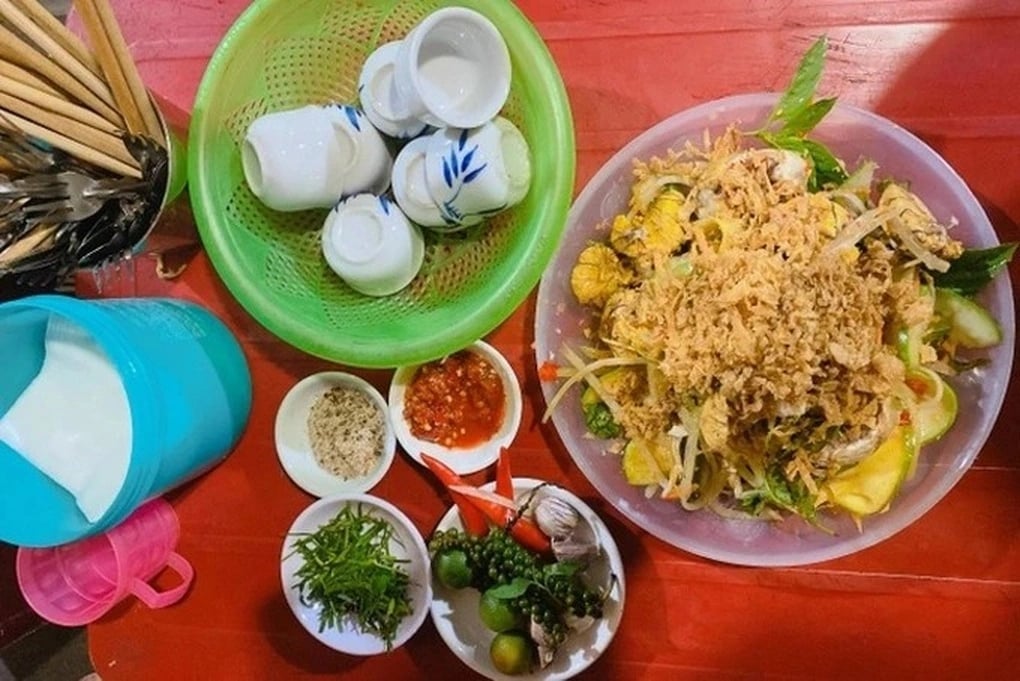 In Vietnam, fertilized duck eggs are prepared in many ways (Photo: Dai Duong).
Despite its global fame as a signature dish of the Philippines, balut is now consumed less frequently in the country than before. This is partly due to the increasing popularity of Western cuisine , and also because balut is sometimes associated with images of a difficult past.
In some places, balut is eaten almost raw, meaning it is only lightly boiled or cooked very briefly. This poses a food safety risk as it can increase the likelihood of contamination by harmful microorganisms.
Meanwhile, from the perspective of Vietnamese folk medicine, fertilized duck eggs are considered a nutritious food that helps restore health for pregnant women or those who have recently given birth. The most common way for Vietnamese people to eat them is to consume them immediately after boiling while they are still hot. However, each region has slightly different ways of eating them.
In northern Vietnam, vendors only crack hot eggs into bowls when customers order. Diners eat them with salt, pepper, chili, finely shredded ginger, and Vietnamese coriander.
Meanwhile, in some areas in the South, freshly boiled fertilized duck eggs are placed upright in small bowls, and diners skillfully use a spoon to separate the shell from the top down.
Source: https://baoangiang.com.vn/mon-trung-vit-lon-o-philippines-co-gi-khac-biet-so-voi-viet-nam-a487446.html

























![[Photo] Reception to welcome General Secretary and President To Lam and his wife on their State visit to the Philippines](https://vphoto.vietnam.vn/thumb/1200x675/vietnam/resource/IMAGE/2026/06/01/1780295488620_vna-potal-chieu-dai-chao-mung-tong-bi-thu-chu-tich-nuoc-to-lam-va-phu-nhan-tham-cap-nha-nuoc-toi-philippines-8798060-7855-jpg.webp)






























































Comment (0)