Due to a subjective habit, many people often swipe past or ignore unfamiliar messages and notifications.
However, these signs could very well be vulnerabilities that allow criminals to secretly steal personal data, banking information, and turn the phone into a tool for remote control.
These types of messages indicate that a phone is being monitored.
Any messages containing OTP verification codes or login notifications from social media platforms or banking apps that you didn't request are a red flag.
This indicates someone is trying to hack your account, and if they've gained control of your messages, losing money is only a matter of time.
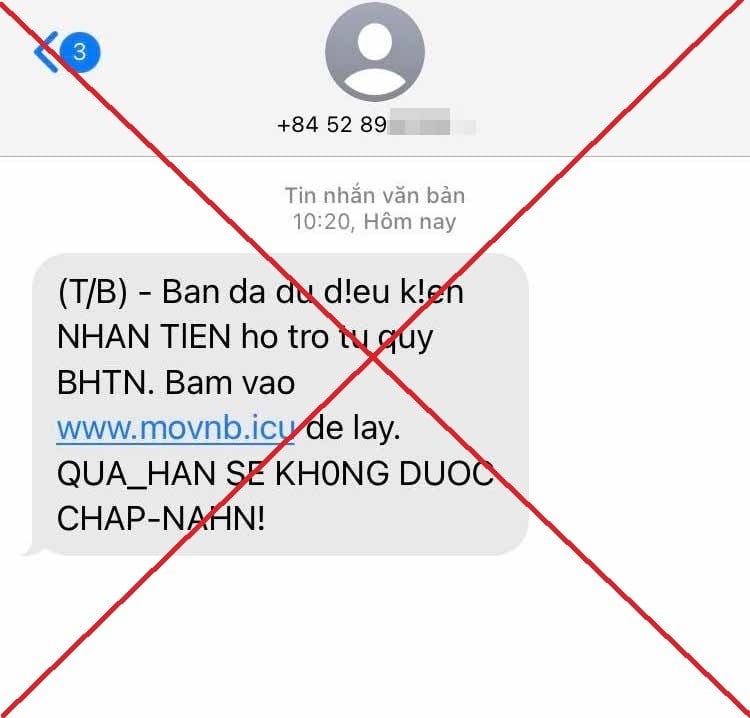
Scammers now also use tactics such as sending messages impersonating police agencies, courts, banks, or familiar delivery services.
These messages often have a threatening or urgent tone, asking you to click on an attached link to get things done. As soon as you click, malware will be downloaded and activated to run in the background.
Additionally, another extremely dangerous but often overlooked type of message consists of text messages containing only meaningless strings of characters, complex codes, or even just a blank space.
These aren't mistaken messages. According to security experts, they are actually remote control commands secretly sent by hackers to spyware pre-installed on your device to activate the camera, microphone, or extract data.

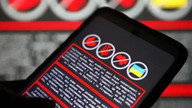

Signs that your phone has been hacked
The appearance of unusual messages is accompanied by noticeable physical and software changes on the phone. One of the most easily noticeable signs is a rapid and drastic drain of the battery.
Spyware constantly runs in the background to collect location data, record audio, take photos, and send data to servers, causing the device to work at full capacity and overheat even if you just keep it in your pocket.

In addition, you will also notice that your mobile data usage is being consumed suddenly and unusually.
Your personal data, including images and messages, is constantly being packaged and transmitted externally, consuming a significant amount of network bandwidth.
More seriously, if you notice your phone screen automatically lighting up, restarting itself at night, or the microphone and camera icons in the corner of the screen occasionally flashing when you're not using any apps, there's a high chance you're being spied on.
Emergency procedures to follow when detecting unusual symptoms.
If you suspect your phone is no longer secure, the first and most important first aid step is to immediately disconnect it from the internet.
Turning off Wi-Fi, mobile data, or switching your device to airplane mode will immediately block the transmission, preventing the spyware from continuing to send your data externally.
After isolating the device, calmly review the entire list of installed applications.



You need to immediately review and revoke sensitive access permissions such as contacts, messages, camera, and microphone from apps with strange names or those you don't remember installing.
If you notice signs of a severe malware infection or are unable to control the situation yourself, the most effective measure is to restore the device to its original state .
Quickly back up only truly important data such as photos and personal documents to secure cloud platforms; absolutely do not back up all applications.
Next, perform a factory reset to completely remove any malware lurking deep within the system.
Source: https://baovanhoa.vn/nhip-song-so/dau-hieu-dien-thoai-dang-bi-theo-doi-ma-ai-cung-can-biet-239614.html




![[Photo] Prime Minister Le Minh Hung presides over the thematic session on promoting science and technology development and innovation.](https://vphoto.vietnam.vn/thumb/1200x675/vietnam/resource/IMAGE/2026/06/23/1782207872934_ndo_br_dsc-1724-jpg.webp)