MANY CASES WITHOUT UNDERLYING CONDITIONS
Sudden cardiac arrest is a condition characterized by the abrupt cessation of heart and circulation, causing the patient to lose consciousness immediately and potentially die if not given prompt medical attention.
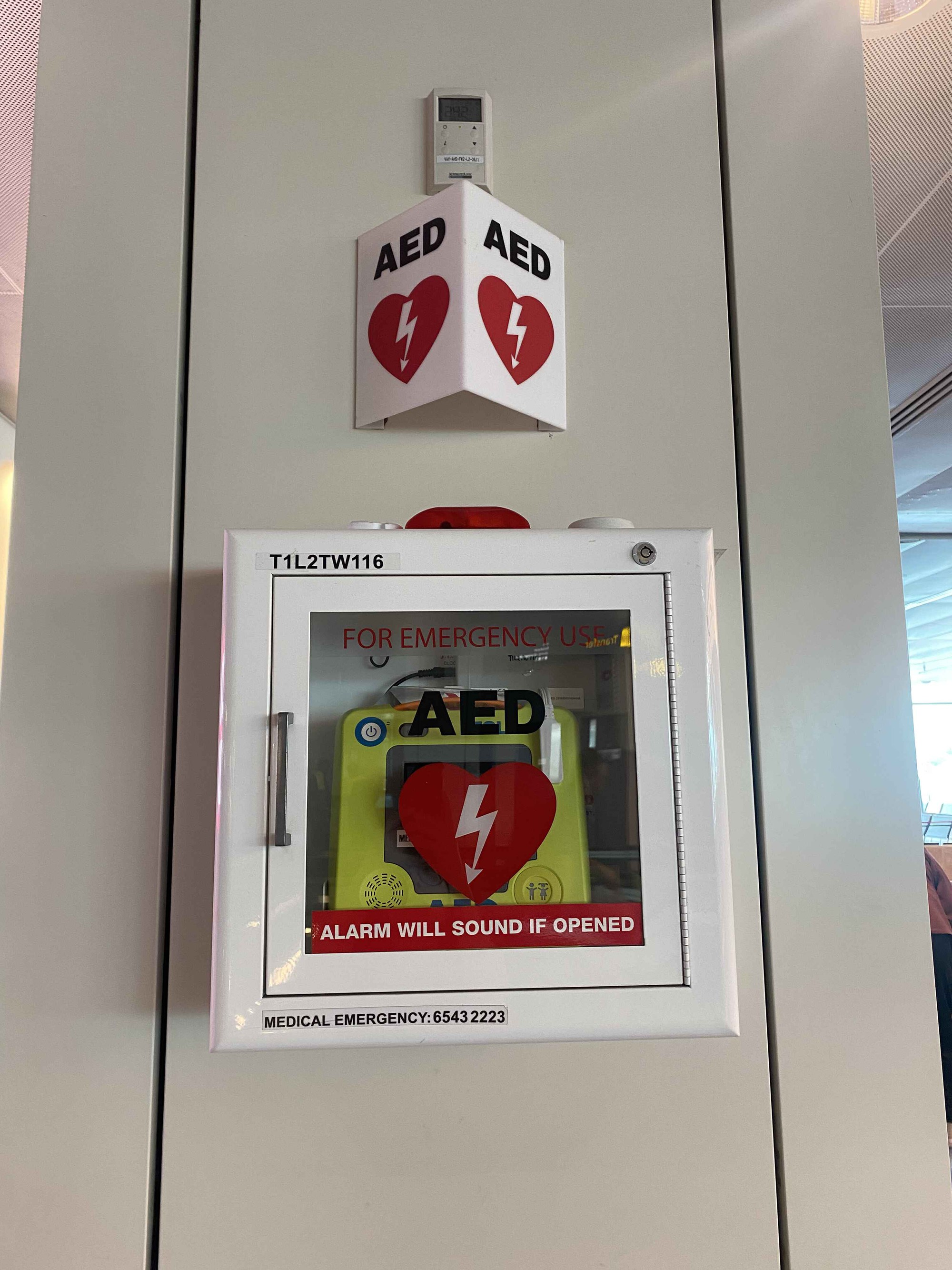
An automated external defibrillator (AED) is installed at Changi Airport (Singapore), photo taken in February 2026.
Photo: PHUONG AN
Sudden death doesn't only happen to older people. In fact, many cases of sudden death in young people have no obvious underlying health conditions, leading those involved to be somewhat complacent.
According to emergency medicine experts at Bach Mai Hospital ( Hanoi ), many people experience symptoms before sudden death occurs but mistakenly think they are just fatigue, stress, or lack of sleep. Approximately 60% of young people who die suddenly don't get to the hospital in time. Therefore, early warning signs of stroke should not be ignored.
COMMON SYMPTOMS
Based on clinical cases recorded at Bach Mai Hospital, doctors at the A9 Emergency Center stated that sudden death in young people is not primarily due to coronary atherosclerosis as in older adults, but is often related to: cardiomyopathy and congenital structural heart disease; myocarditis (often following viral infection); coronary artery abnormalities; inherited cardiac arrhythmia syndromes…
Common warning signs include: palpitations, abnormally fast heartbeat; chest pain, tightness in the chest; fainting, dizziness, or collapse; seizures (easily mistaken for epilepsy or stroke). Young men with these symptoms should seek early cardiovascular examination, especially if symptoms appear at rest or while sleeping, a time when cardiac arrest occurs in a high percentage of cases.
PROACTIVE PREVENTION
Preventing sudden death requires proactive efforts from individuals and the community. Young people should not ignore abnormal cardiovascular symptoms; they should have a cardiovascular examination if they have a history of fainting, chest pain, or unexplained palpitations; they should consider cardiovascular and genetic screening if there is a family history of premature death; and they should avoid the abuse of stimulants and medications of unknown origin.
For the community, it is necessary to popularize CPR (cardiac arrest resuscitation) skills; increase the placement of automated external defibrillators (AEDs) in public places, schools, and gyms; and raise awareness so that the community knows that fainting and seizures in young people are not always "benign". An automated external defibrillator (AED), if used early, can determine the patient's chances of survival.
WHAT TO DO WHEN YOU SEE SOMEONE HAVING A CARDIAC ARREST
Approximately 60% of sudden infant deaths occur before reaching a hospital. The main causes are primarily due to a lack of witnesses or timely CPR (cardiopulmonary resuscitation); a shortage of AEDs in public places; or confusion between fainting and seizures with common neurological conditions.
Meanwhile, if chest compressions and defibrillation are administered early, the survival rate increases significantly, and over 90% of survivors can recover good neurological function.
Early chest compressions + early defibrillation = significantly increased chances of survival.
Source: https://thanhnien.vn/dau-hieu-som-canh-bao-nguy-co-dot-tu-khong-nen-bo-qua-185260310190952447.htm





![[Photo] General Secretary and President To Lam presides over a meeting with the Central Organizing Committee.](https://vphoto.vietnam.vn/thumb/1200x675/vietnam/resource/IMAGE/2026/06/03/1780482764658_a1-bnd-4741-3342-jpg.webp)

![[Photo] Secretary of the National Assembly Party Committee, Chairman of the National Assembly presides over the meeting of the Standing Committee and Executive Committee of the National Assembly Party Committee.](https://vphoto.vietnam.vn/thumb/1200x675/vietnam/resource/IMAGE/2026/06/03/1780480353201_ndo_br_bnd-2585-jpg.webp)





















![[Photo] General Secretary and President To Lam attends the 14th Congress of the Vietnam Trade Union](https://vphoto.vietnam.vn/thumb/1200x675/vietnam/resource/IMAGE/2026/06/04/1780543339765_anh-man-hinh-2026-06-04-luc-10-22-07.png)
























![[Video] Sunset at Lap An Lagoon – Where the sun sets over the fishing nets](https://vphoto.vietnam.vn/thumb/1200x675/vietnam/resource/IMAGE/2026/05/31/1780192137701_beach-landscape-sea-water-nature-grass-745871-pxhere-com.jpeg)



































Comment (0)