

Incorporate climate change data when designing buildings.
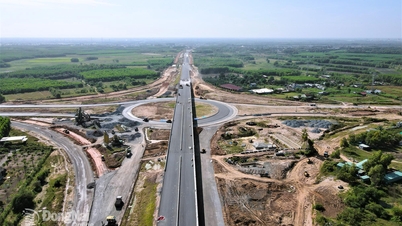
For over a year now, with the commencement of the North-South expressway projects, specifically the Can Tho - Ca Mau, Chau Doc - Soc Trang - Can Tho, and Cao Lanh - An Huu sections, the Mekong Delta region has become the largest transportation construction site in the country.
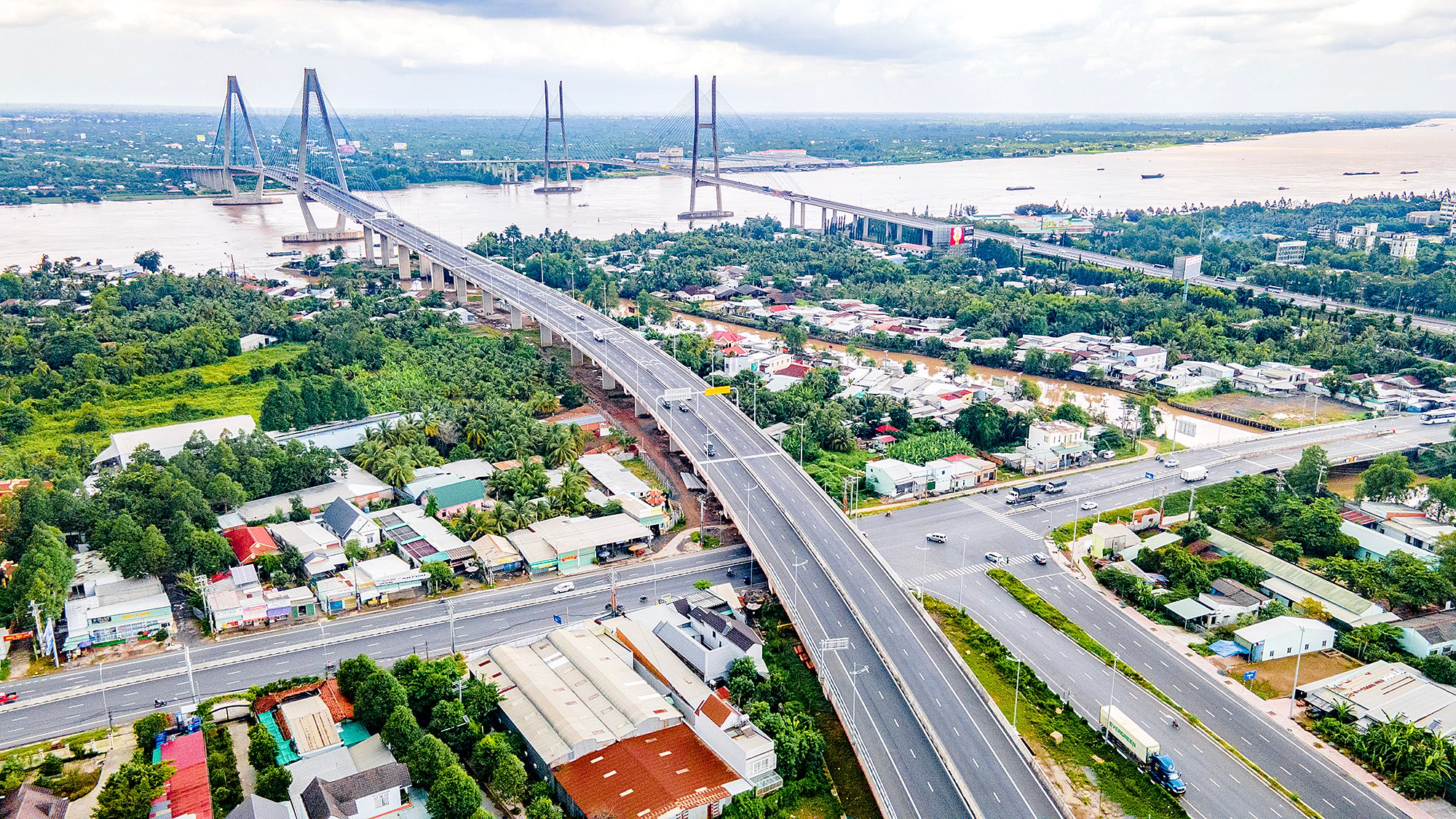
The Mekong Delta's transportation infrastructure is receiving significant investment (In the photo: My Thuan Bridge). Photo: Ta Hai.
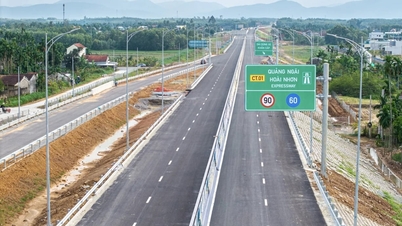
According to Mr. Nguyen The Minh, Deputy Director of the Investment and Construction Management Department ( Ministry of Transport ), the Mekong Delta's transportation infrastructure has never received such strong investment as it does now. From being considered a "low-lying area" for expressways, the entire region now has 120km of expressways in operation: Ho Chi Minh City - Trung Luong Expressway (39km), Trung Luong - My Thuan Expressway (51km), My Thuan - Can Tho Expressway (23km), and My Thuan 2 Bridge (7km).
The target is to have approximately 548km of expressways in operation throughout the Mekong Delta region by 2025, and 763km by 2030.
The Ministry of Transport is also submitting to competent authorities for consideration and approval a project to upgrade and renovate three national highways (53, 62, and 91B) in the Mekong Delta, financed by a World Bank loan. This is one of 16 projects in the list of sustainable development projects for the Mekong Delta region.
In the field of inland waterways and seaports, six main waterway routes connecting the Mekong Delta with Ho Chi Minh City and the Southeast region, and the Cho Gao canal for vessels up to 1,000 tons have been upgraded.
A series of ports, including Cai Cui, Hoang Dieu, Long An International Port (Long An), Duyen Hai ( Tra Vinh ), Vinalines Hau Giang (Hau Giang), and Cai Con (Soc Trang), have been invested in.
Regarding aviation infrastructure, four airports in the region have been invested in and upgraded: Can Tho, Phu Quoc, Ca Mau, and Rach Gia.
"To ensure the sustainability and efficiency of the project, the design process, factors such as flood frequency, climate change scenarios, and sea level rise are carefully calculated to design an appropriate elevation," Mr. Minh shared.
Mr. Nguyen Van Thanh, Director of Road Management Area IV (Vietnam Road Administration), said that over the past three years, climate change and rising sea levels have caused severe flooding on many roads, especially National Highway 1 sections through Vinh Long, Bac Lieu, and Ca Mau provinces, as well as National Highways 63, 54, and 57...
According to investigations and observations, the main cause of flooding on the highway is roadbed subsidence.
Of particular concern is the rising sea level. The highest tide level is more than 0.3m higher than the 2001 figures. Over the past five years, the unit has addressed 41 flood-prone areas with an expenditure of approximately 500 billion VND. Flooding issues have been largely resolved on major transportation routes.
Building viaducts requires significant funding.
According to Dr. To Van Truong, former Director of the Southern Irrigation Planning Institute, monitoring data shows that water levels at river mouth stations on the East Sea side have increased by approximately 15cm at Vam Kenh, 35-40cm at Tran De, and 45-50cm at Ganh Hao since 2000.
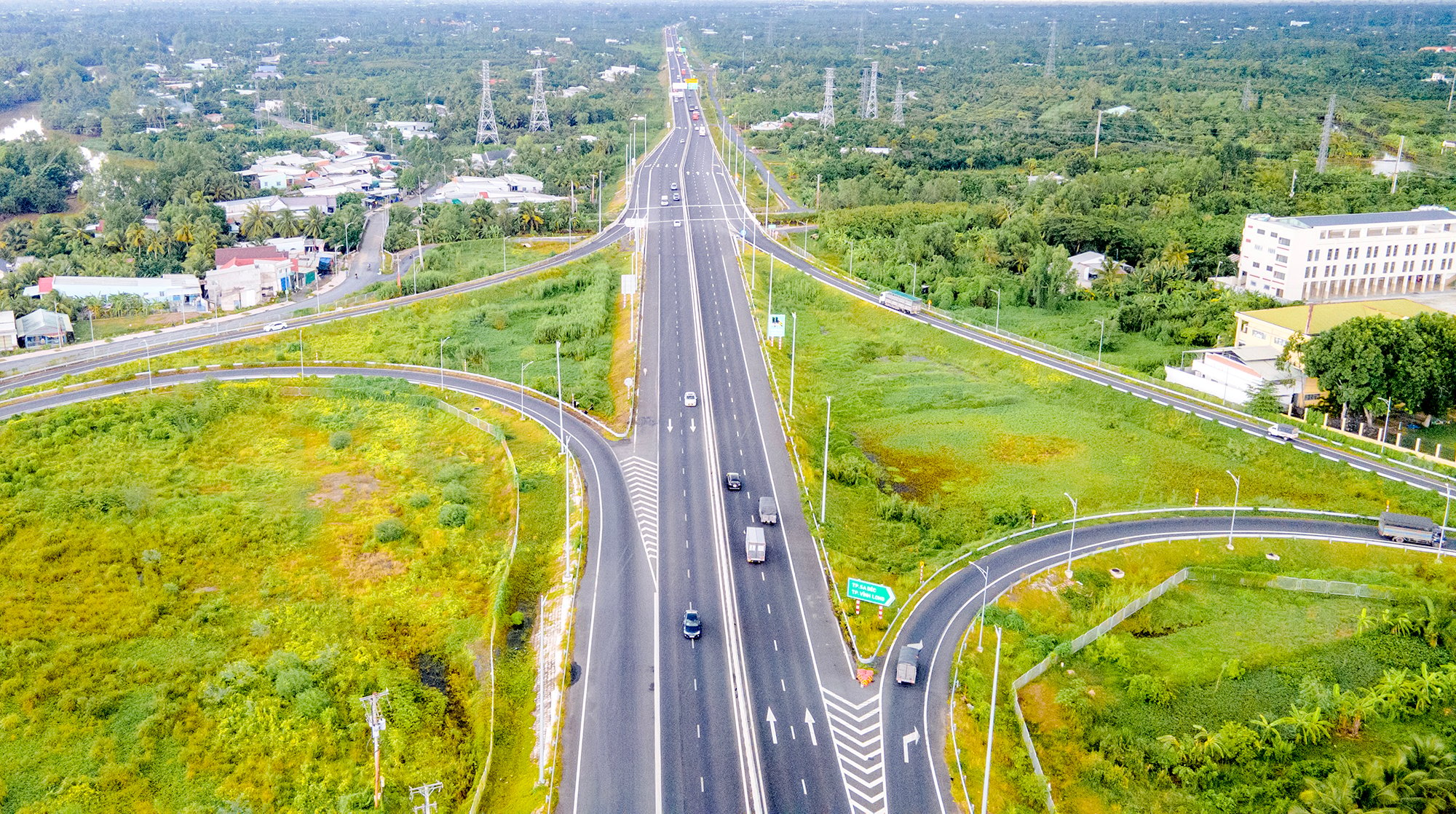
My Thuan - Can Tho Expressway.
On the western coast, water levels also rose by 15-25cm. In the inland areas, water levels at many stations along the Tien River, Hau River, and the central part of the Ca Mau peninsula increased by 20-25cm.
According to Mr. Truong, as water levels rise, the design elevation of the transportation system must be increased, and the cross-section, stability standards, safety, clearance, and other technical requirements also need to be higher.
The Mekong Delta region currently has 428km of expressways under construction, with the goal of completing them by 2025, including the following projects: Long Thanh - Ben Luc (3km), Can Tho - Ca Mau (111km), Chon Thanh - Duc Hoa (19km), Cao Lanh - Lo Te (29km), Lo Te - Rach Soi (51km), Chau Doc - Can Tho - Soc Trang (188km), and Cao Lanh - An Huu (27km).
215km are currently under preparation for investment, including: Duc Hoa - My An (74km), My An - Cao Lanh (26km), Ha Tien - Rach Gia (100km), and Can Tho Bridge 2 (15km).
"Elevated viaducts are a solution worth studying. The viaduct solution will certainly be more expensive, but in return, the structure will have a longer lifespan and there will be no worries about flooding due to rising sea levels," Mr. Truong said.
Concurring with this view, a representative from the Department of Investment and Construction Management stated that projects in the Mekong Delta region have unique characteristics such as very weak geological conditions, a fragmented terrain due to a system of canals and ditches, requiring treatment of weak soil foundations with a long settlement waiting period (usually 12-16 months), making construction very difficult.
To shorten construction time, the design and engineering solutions were carefully considered and researched, such as using cement-soil piles for bridges, minimizing the use of sand for backfilling, shortening settlement waiting time, and increasing stability during operation.
"The difficulty lies in the fact that these solutions require significant funding (currently, cement-soil piles are 1.4 times more expensive, and elevated bridges are 2.6 times more expensive), leading to higher investment costs for projects in the Mekong Delta compared to other regions and conventional solutions," Mr. Minh said.
Prioritize projects with integrated solutions.
Based on the above analysis, according to Mr. Nguyen The Minh, one of the core solutions to increase resilience and ensure sustainability in the development of transportation infrastructure in the Mekong Delta against climate change is to use the State budget as a driving force to guide social resources; prioritize investment in key projects, and integrate the implementation of solutions to respond to and adapt to climate change and sea level rise.
Dr. To Van Truong suggested that authorities should identify and prioritize the most important projects with a significant impact on the socio-economic development of the Mekong Delta in order to focus investment resources on them.
"The mechanism allowing localities to transfer funds between projects within the approved budget framework needs to be reviewed to promptly respond to necessary changes," Mr. Truong said.
From the perspective of a specialized agency, Dr. Khuat Viet Hung, Director of the Institute of Transport Strategy and Development, noted: In addition to engineering solutions such as researching design options for river crossing structures, expanding the application of alternative materials, selecting appropriate routes and structures for transport infrastructure, non-engineering solutions also need to be emphasized.
Specifically, it is necessary to strengthen cooperation, mobilize resources, and seek technical support from domestic and international organizations and individuals for activities aimed at enhancing the climate change adaptation capacity of regional transport infrastructure.
Update and integrate elements and solutions for adapting to climate change and sea level rise into all general development plans, programs, and projects related to the development of transportation infrastructure in the region; build a shared database on climate change...
The capital requirement is over 390,000 billion VND.
According to the approved plan, the Mekong Delta region has 3 north-south expressways with a total length of 597km (North-South East; North-South West; Ho Chi Minh City - Tien Giang - Ben Tre - Tra Vinh - Soc Trang).
Three north-south expressways with a total length of approximately 591km (Chau Doc - Can Tho - Soc Trang; Ha Tien - Rach Gia - Bac Lieu; Hong Nguy - Tra Vinh).
Regarding railways, a railway line connecting Ho Chi Minh City with Can Tho will be established.
The inland waterway sector will gradually be upgraded to the technical standards according to the planning of major inland waterway transport routes; and investment in inland waterway ports and passenger terminals will continue to be encouraged.
Regarding seaports, existing seaports will continue to be expanded, and a major port will be built in Tran De (Soc Trang).
In addition, investments will be made to upgrade airports in the region, increasing their capacity to approximately 18.5 million passengers per year.
The total investment capital needed for transportation infrastructure in the Mekong Delta region by 2030 is approximately 391,200 billion VND. Of this amount, about 96,900 billion VND has already been allocated for the 2021-2025 period.
Source: https://www.baogiaothong.vn/dau-tu-ha-tang-thich-ung-bien-doi-khi-hau-o-dbscl-192241014225521982.htm

![[Photo] Prime Minister Pham Minh Chinh presides over the conference announcing the establishment of the International Finance Centre in Vietnam.](/_next/image?url=https%3A%2F%2Fvphoto.vietnam.vn%2Fthumb%2F1200x675%2Fvietnam%2Fresource%2FIMAGE%2F2025%2F12%2F21%2F1766309817714_ndo_br_dsc-3400-jpg.webp&w=3840&q=75)
![[Photo] Prime Minister Pham Minh Chinh presides over a meeting on private sector economic development.](/_next/image?url=https%3A%2F%2Fvphoto.vietnam.vn%2Fthumb%2F1200x675%2Fvietnam%2Fresource%2FIMAGE%2F2025%2F12%2F20%2F1766237501876_thiet-ke-chua-co-ten-40-png.webp&w=3840&q=75)















































































Comment (0)