

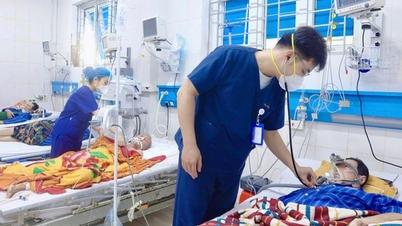
According to Dr. Nguyen Tien Dung, Deputy Director of the Stroke Center at Bach Mai Hospital, on March 21st, the Stroke Center received 6 young patients. 5 out of 6 patients who arrived early recovered well, while the 1 patient who arrived after 24 hours had limited chances of recovery.
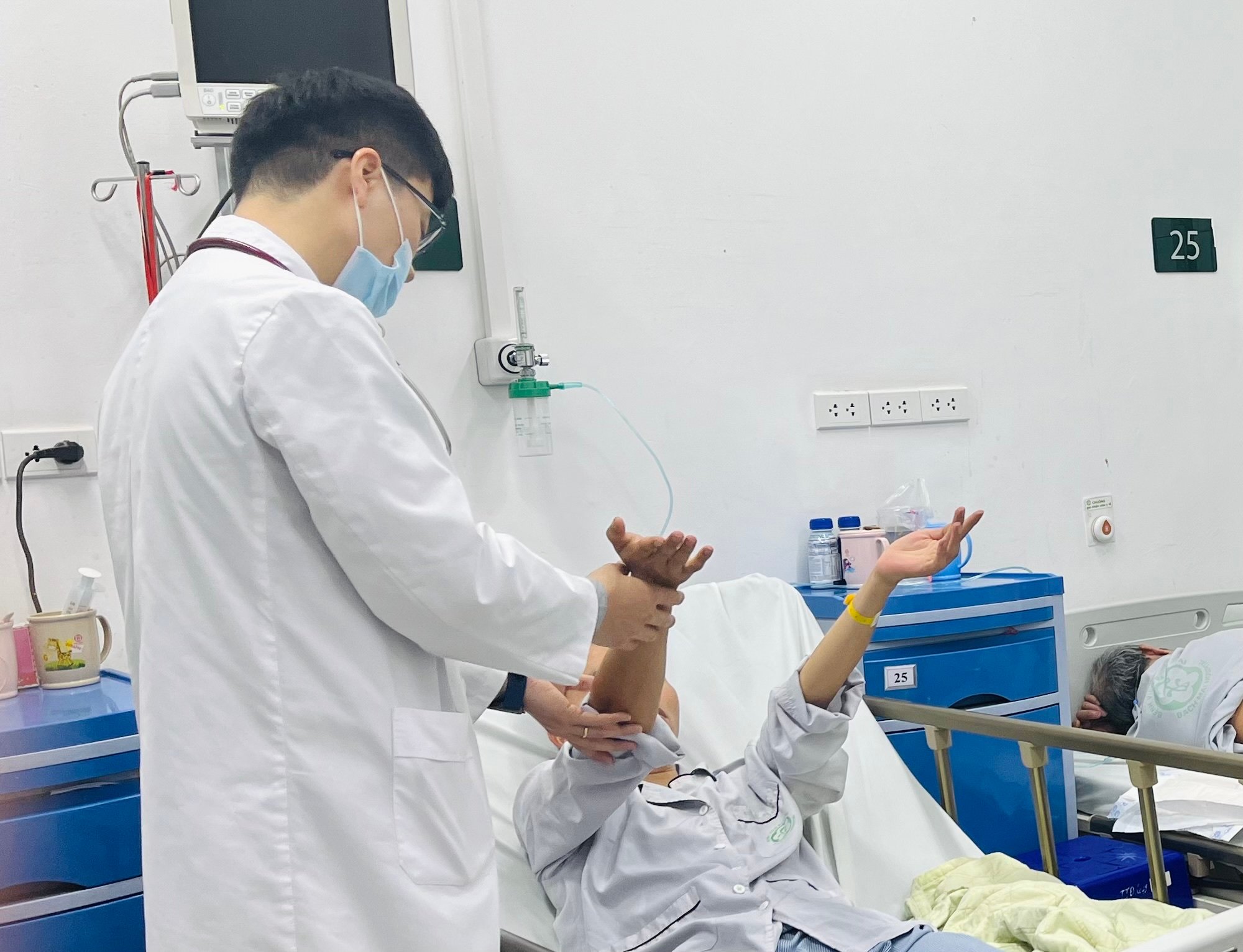
At the Stroke Center, a 32-year-old male patient recovered after thrombectomy.
Of the six patients, the 32-year-old male patient from Cau Giay District ( Hanoi ) is recovering well. Before being admitted to the emergency room, this patient experienced headaches, dizziness, and fatigue.
According to Doctor Dung, the male patient was admitted to the hospital in a severe stroke condition with symptoms of impaired consciousness and left-sided hemiplegia. Angiography results showed that the patient had a blockage in a major cerebral blood vessel.
"The patient suffered a stroke due to a blockage in a large blood vessel, which supplies blood to one half of the brain's hemisphere. If this vessel cannot be unblocked, the chances of survival are slim," Dr. Dung explained.
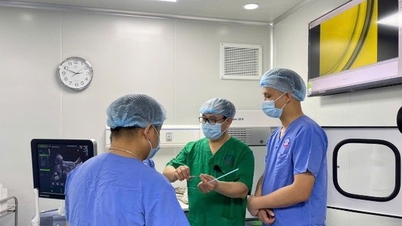
According to Dr. Dung, the entire process, from arrival at the hospital to the mechanical thrombectomy and revascularization of the cerebral blood vessels, took only 60 minutes. After the thrombectomy, the patient recovered very well.
Prior to the stroke, this patient had cardiovascular disease and was taking anticoagulant medication, but had stopped taking it on their own because they felt their condition had stabilized. Dr. Dung noted that after a stroke, patients need to adhere to their doctor's prescribed treatment to prevent the risk of recurrent stroke.
Mr. Dung's center also received a stroke case involving a 42-year-old female patient. While at home, she woke up early to go to the market when she suddenly experienced weakness in her limbs, facial asymmetry, and difficulty speaking. She was diagnosed with a stroke, caused by high blood pressure. Another case involved a young male patient in Hanoi who suffered a stroke while playing badminton.
Dr. Dung noted: "The center sees a relatively high number of strokes in people under 45. But recently, on March 21st, we were surprised to find that 5 out of 6 stroke cases were patients under 45. The community believes that strokes are less common in young people and they tend to be complacent. However, young people need to recognize the symptoms of stroke so they can go to the hospital as soon as possible."
Given the reality that there are still cases of stroke with late hospitalization and recurrent strokes, Dr. Dung shared that common symptoms in stroke victims include facial asymmetry (sudden drooping of one side of the mouth); difficulty speaking, slurred speech, and sudden weakness or paralysis of the limbs.
When these symptoms appear, the patient should be taken to the nearest medical facility. To take advantage of the critical "golden hour," doctors will perform reperfusion therapy as soon as possible, followed by laboratory assessments and treatment.
After stroke treatment, patients need to take medication as prescribed by their doctor to avoid the risk of recurrence; they should absolutely not stop taking their medication on their own.
Source link
















































































Comment (0)