

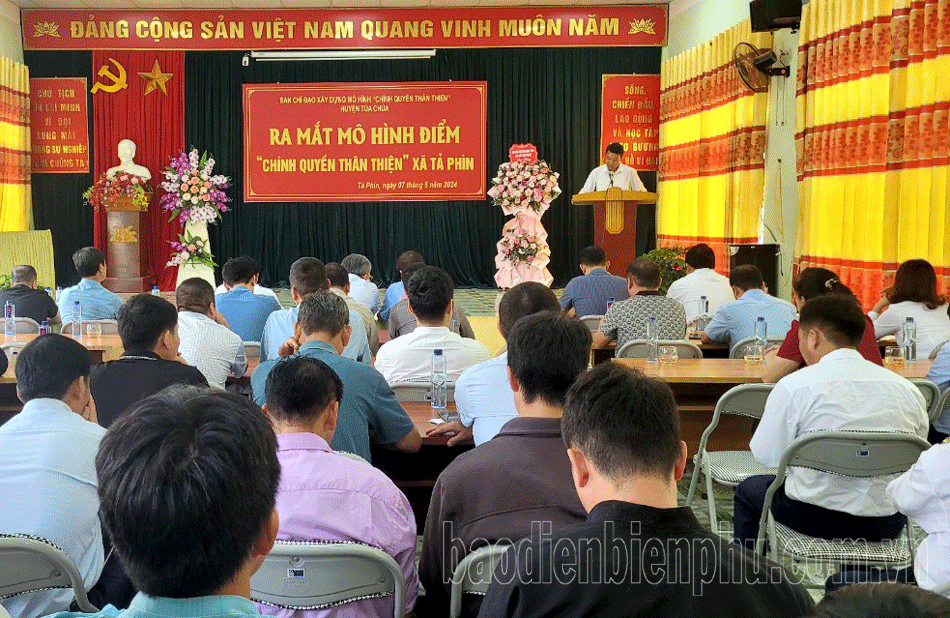
Upon arriving at the headquarters of the Party Committee, People's Council, and People's Committee of Ta Phin commune (Tua Chua district), we were very impressed by the image of the officials and staff, especially in the reception and results delivery department, who were always cheerful and dedicated in explaining to the people the issues they had questions about or did not understand.
To build a friendly and approachable image for its civil servants, Ta Phin commune selects, arranges, and organizes personnel in a scientific and efficient manner. At the same time, each civil servant strives to uphold exemplary conduct and build a work style based on the motto "respect the people, be close to the people, understand the people, learn from the people, and be responsible to the people." They effectively implement the "Office Smile" initiative, warmly welcoming and providing thorough explanations and guidance to citizens in resolving administrative procedures.
As a result, in the first six months of this year, surveys showed that 97% of people and organizations were satisfied with the handling of administrative procedures at the commune's reception and results delivery department.
Mr. Mua A Giang, from Ta Phin village, Ta Phin commune, said: “Every time I come to the commune office to work, I receive guidance and support from the staff in resolving my issues quickly and attentively. I am also very satisfied with the polite and friendly attitude of the leaders and staff of the reception and results delivery department when interacting and working with them.”
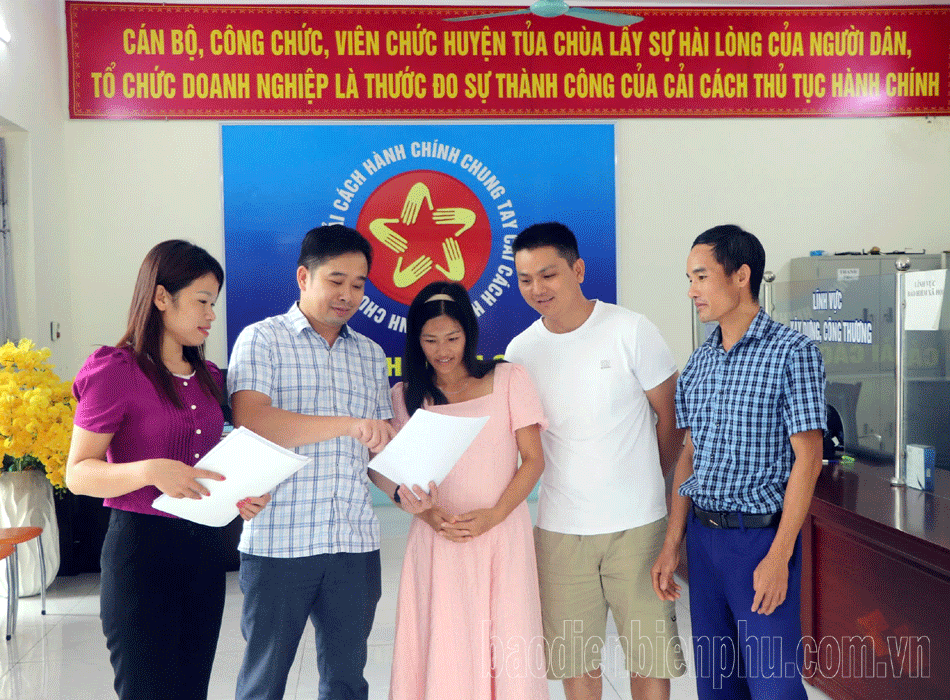
According to Mr. Tran Ngoc Duyen, Secretary of the Party Committee of Ta Phin commune, in order to build a friendly team of officials and civil servants who serve the people, the commune's leaders and officials always strive to improve their capacity, qualifications, and sense of responsibility to resolve people's affairs in accordance with regulations, quickly and conveniently. They strengthen close relationships with the people, listen to what the people say to understand their thoughts, feelings, and aspirations, and always put the legitimate interests of the people first. This has changed the perception of the commune's officials and civil servants towards openness, friendliness, increased responsibility, and contributed to consolidating the people's trust in the Party committee and government.
Along with enhancing the sense of responsibility of civil servants in serving the people, authorities at all levels are ready to apologize to citizens when administrative procedures are not processed on time or when the attitude and standards of civil servants are not up to par.
For example, the Thanh Luong Commune People's Committee ( Dien Bien District) received a marriage registration application from Ms. Dam Khanh Duong, residing in Hamlet 13, but due to slow internet speeds, the results could not be provided to the citizen on the same day. Furthermore, during the process of guiding and handling the application, the commune's civil registry official appeared somewhat impatient and spoke loudly, not adhering to proper standards. Immediately after learning of the incident, the Thanh Luong Commune People's Committee sent a letter of apology to Ms. Dam Khanh Duong, hoping for her understanding and committing to seriously learn from the experience and rectify shortcomings in the process of receiving and processing administrative procedures; ensuring that such a situation does not occur again in the future. At the same time, they emphasized the need to correct the civil registry official's conduct and uphold the ethical standards expected of a public servant in performing their duties.
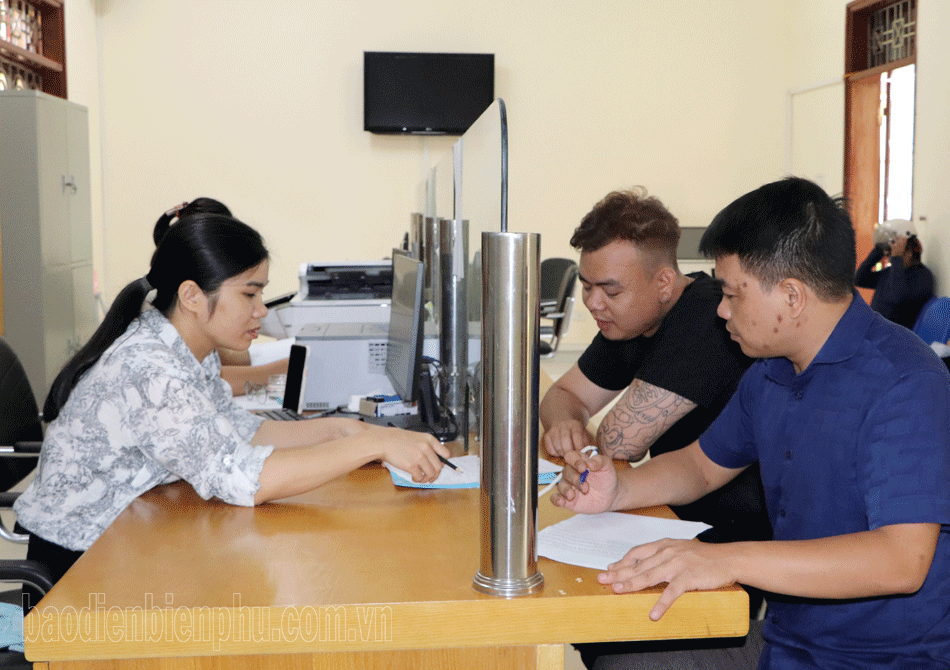
In recent years, Party committees and authorities at all levels in the province have resolutely directed the development and strict implementation of regulations and rules on public service ethics for officials, civil servants, and workers. At the same time, they have effectively implemented movements and regulations on workplace culture and codes of conduct, fostering a respectful attitude, a friendly and approachable working style, and thorough explanations and guidance for the people.
CBCC strictly adheres to the principles of communication with citizens according to the motto "4 requests, 4 always, and 5 don'ts" (please say hello - please apologize - please say thank you - please ask permission; always smile - always be gentle - always listen - always help; no authoritarianism or arrogance - no bureaucratic indifference or irresponsibility - no corruption or waste - no flattery, lobbying, or deception - no abuse of position or authority when performing official duties).
Along with that, attention is paid to improving the capacity, cultural level, and professional qualifications of the staff, especially at the commune level. To date, the province has 2,593 commune-level officials and civil servants, who are basically assigned according to their training specializations and are gradually becoming younger (under 40 years old accounts for 68%). 92.1% of commune-level officials have a standard general education; 99.61% have professional qualifications from elementary level upwards; and 98.6% have political theory qualifications. 96.7% of commune-level civil servants have a standard general education; and 83.4% have professional qualifications from college level upwards.
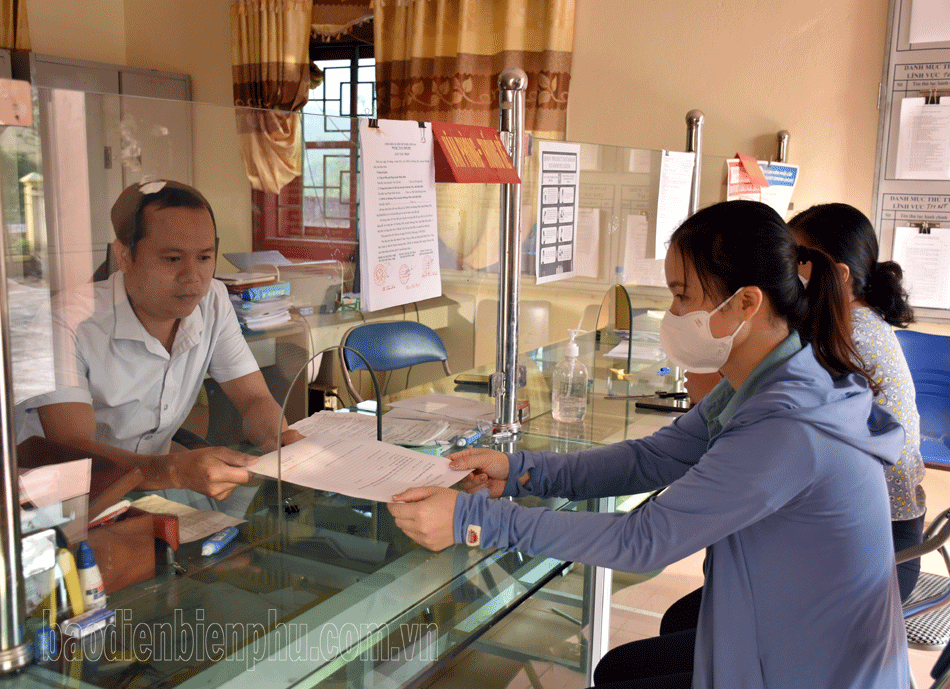
The commune-level officials and civil servants have demonstrated a strong sense of discipline and adherence to work regulations. Interactions between superiors and subordinates, between colleagues, and between officials and citizens have been appropriate. In 2023, 100% of commune-level officials and civil servants effectively implemented the regulations on workplace culture, codes of conduct, and regulations on receiving citizens.
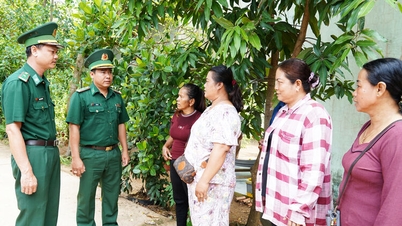
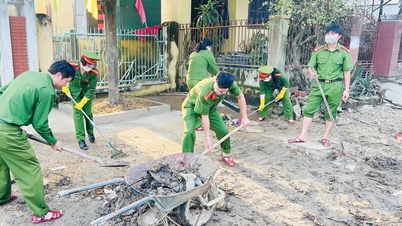
Mr. Loan Van Toan, Deputy Head of the Government Building and Youth Affairs Department (Department of Internal Affairs), said: To build an image of friendly, approachable, and responsible civil servants, all levels of government are currently implementing models of "Friendly Government" and "Friendly Police." Through implementation, many localities have seen very positive changes in the work of receiving and respecting the people. The majority of civil servants have played their role in serving the people; interacting with the people politely and approachably; and using gentle language in communication and behavior in the spirit of "Respecting the people, being close to the people, understanding the people, learning from the people, and being responsible to the people" according to the thoughts and moral example of Ho Chi Minh. This contributes to the shift from a government that manages to a government that serves the people, strengthening the people's trust in the Party and the State.
Source: https://baodienbienphu.com.vn/tin-tuc/chinh-tri/217482/de-can-bo-thuc-su-la-%E2%80%9Ccong-boc-cua-dan%E2%80%9D

![[Photo] Secretary of the National Assembly Party Committee, Chairman of the National Assembly presides over the meeting of the Standing Committee and Executive Committee of the National Assembly Party Committee.](https://vphoto.vietnam.vn/thumb/1200x675/vietnam/resource/IMAGE/2026/06/03/1780480353201_ndo_br_bnd-2585-jpg.webp)
![[Photo] General Secretary and President To Lam presides over a meeting with the Central Organizing Committee.](https://vphoto.vietnam.vn/thumb/1200x675/vietnam/resource/IMAGE/2026/06/03/1780482764658_a1-bnd-4741-3342-jpg.webp)
![[Photo] First session of the 14th Congress of the Vietnam Trade Union](https://vphoto.vietnam.vn/thumb/1200x675/vietnam/resource/IMAGE/2026/06/03/1780465947883_ndo_br_img-3852-jpg.webp)





































![[Video] Sunset at Lap An Lagoon – Where the sun sets over the fishing nets](https://vphoto.vietnam.vn/thumb/1200x675/vietnam/resource/IMAGE/2026/05/31/1780192137701_beach-landscape-sea-water-nature-grass-745871-pxhere-com.jpeg)


































Comment (0)