

Resolution No. 68/NQ-TW of the Politburo on the development of the private economy has set ambitious goals: by 2030, Vietnam will have 2 million enterprises, reaching a rate of 20 enterprises per 1,000 people. Simultaneously, the goal is to have at least 20 large enterprises participating in global value chains; an average growth rate of 10-12% per year; contributing 55-58% of GDP and 35-40% of total state budget revenue. Compared to the current nearly 1 million enterprises, increasing by another 1 million enterprises in the next 5 years is entirely feasible if the potential of over 5 million business households nationwide is effectively exploited.
Mr. Huynh Van Dung, Chairman of the Provincial Business Association, emphasized that Resolution No. 68 addressed important principles such as clearly distinguishing criminal, administrative, and civil responsibilities; and between legal entities and individuals in handling violations. In particular, the introduction of solutions such as a three-year tax exemption for newly established businesses, or the first-time participation of private enterprises in security and defense industries, are "golden" policies aimed at encouraging millions of individual households to boldly transform into businesses.
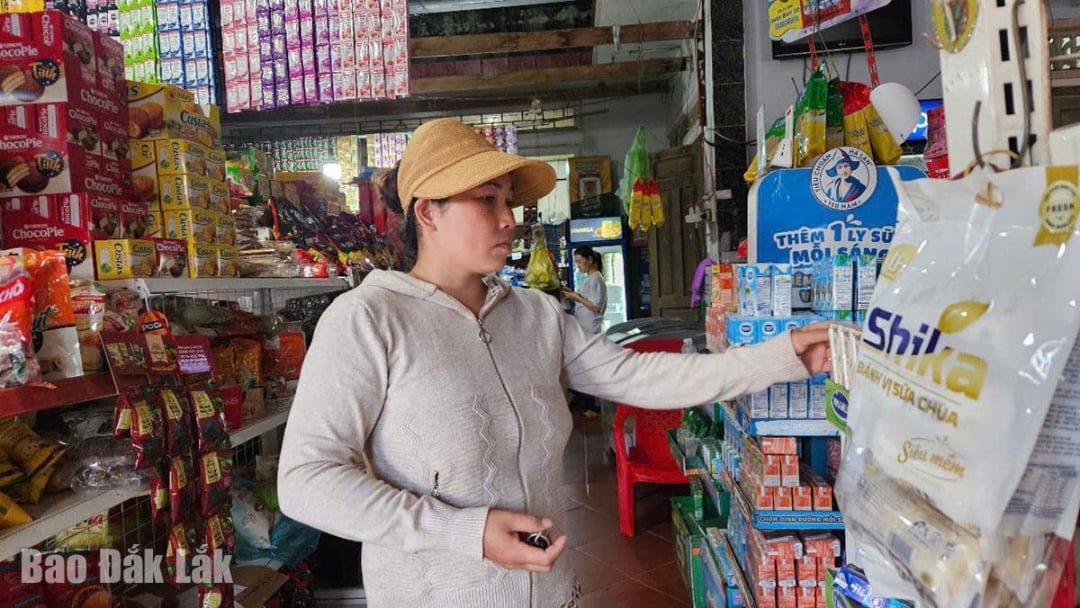 |
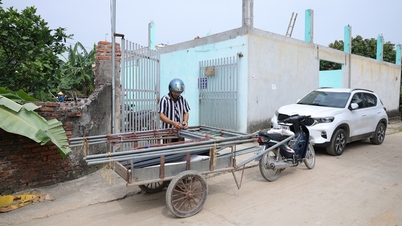
| A business is operating in Cu Kuin district. |
Another important step, highly praised by many experts, is the abolition of lump-sum tax and its replacement with revenue-based tax. This regulation creates equality in tax obligations among different business entities and types, leading to more transparent and efficient tax management. More importantly, it encourages household businesses to transform into enterprises (small or micro-enterprises) to benefit from incentives dành for enterprises, thereby operating more professionally and systematically, promoting a dynamic business and investment environment. From a legal perspective, upgrading to enterprise status also allows these entities to access more tax and credit incentives and receive better protection.
Despite the numerous benefits and opportunities, converting individual business households into enterprises still faces certain concerns. Many business households worry about having to pay more taxes than the previous flat-rate tax, or the burden of administrative procedures and compliance costs.
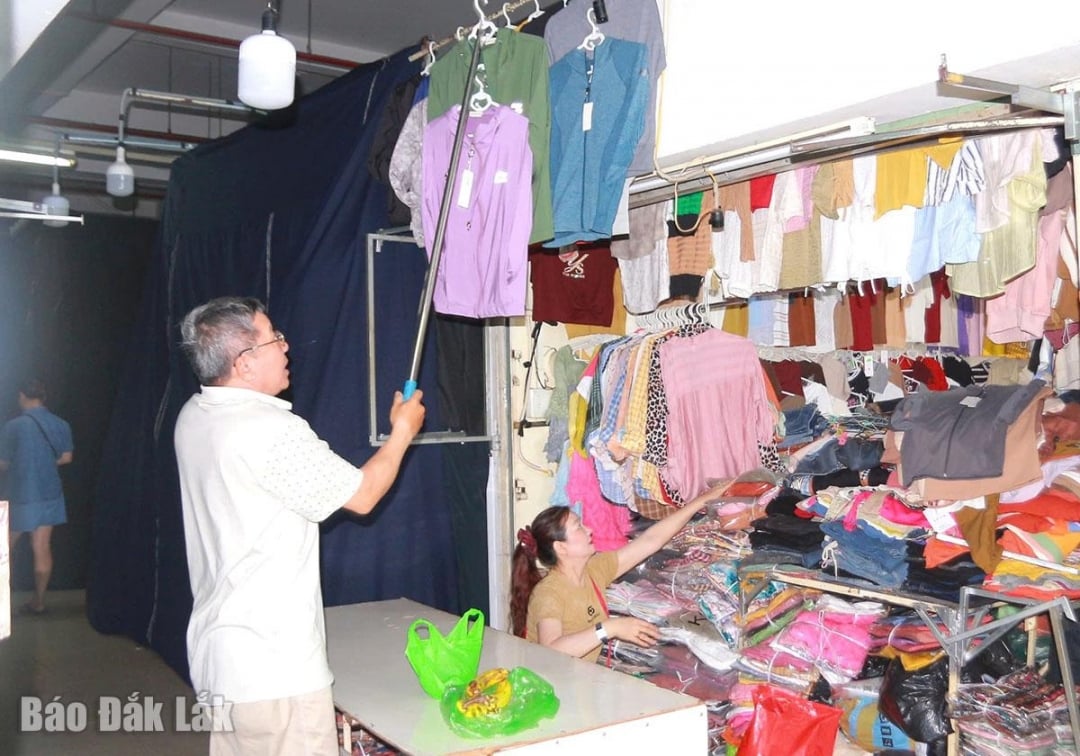 |
| A small business owner is trading at a market in Buon Ma Thuot city. |
To address this issue, economic experts suggest a comprehensive approach: persuasion, enforcement, and measures to mitigate negative consequences. Tax incentives in the initial years of establishment, capital support, digital transformation support, and management skills training are effective tools to persuade household businesses. The tax sector needs to continue promoting the application of information technology and strong digitalization in tax management, ensuring transparency in supporting the transformation process. This will help household businesses understand that "growing" into enterprises will not create difficulties or burdens them with compliance costs beyond their means.
Mr. Nguyen Van Than, Chairman of the Vietnam Association of Small and Medium Enterprises (VINASME), proposed that the Government should urgently develop and concretize mechanisms and policies suitable for each group of businesses according to size, ensuring appropriateness, feasibility, and effectiveness in practice.
In addition, specific tasks need to be assigned to VINASME, and its role clearly defined in coordinating with state agencies to promote the rapid and strong development of the small and medium-sized enterprise community, especially in mobilizing and supporting the transition from household businesses to enterprise models.
Furthermore, a specific policy package is needed to support the conversion of household businesses into enterprises, including: legal support and advice on conversion procedures; tax incentives, credit and access to resources to encourage conversion; and enhanced training and management capacity building for household businesses.
Regarding this issue, the Ministry of Finance has also requested its affiliated units to improve service quality and strictly adhere to professional ethical standards in the process of providing financial and tax consulting services. The Ministry of Finance is also researching, developing, and diversifying service packages, optimizing costs, reducing prices, and providing consulting support to businesses to improve management capacity, expand business, enhance human resource quality, and build a transparent and legally compliant financial system. In particular, the Ministry of Finance will support small and medium-sized enterprises (SMEs) and newly established business households in easily accessing professional services at reasonable fees, contributing to the dissemination of support policies and promoting entrepreneurship.
With specific support policies and a suitable roadmap, the transition from household businesses to enterprises is expected to be rapid and efficient, bringing practical benefits to both the business community and the national economy, contributing to the realization of the aspiration for sustainable economic development.
In the coming period, Dak Lak province will focus on reviewing policies and programs supporting businesses and business households to amend, issue, or propose to competent authorities to amend and issue them in the following direction: simplifying support documents, processes, and procedures as much as possible; increasing support limits and rates; ensuring sufficient resources for support; and encouraging associations, research institutes, colleges, and universities to participate in implementing business support programs. |
Source: https://baodaklak.vn/kinh-te/202506/de-ho-kinh-doanh-nang-cap-thanh-doanh-nghiep-8b814d0/




![[Photo] General Secretary and President To Lam presides over a meeting on preparations for the review of one year of operation of the three-tiered government system.](https://vphoto.vietnam.vn/thumb/1200x675/vietnam/resource/IMAGE/2026/06/02/1780391821195_a1-bnd-4595-9717-jpg.webp)



![Transforming from Resolution 57: [Part 2] Businesses Lead the Way](https://vphoto.vietnam.vn/thumb/402x226/vietnam/resource/IMAGE/2026/06/02/1780399668663_5332-dsc09931-2-235637_295-235639.jpeg)










![[INFOGRAPHICS] Development goals for rural crafts and industries in the period 2026-2030](https://vphoto.vietnam.vn/thumb/402x226/vietnam/resource/IMAGE/2026/06/02/1780393054323_1780392879.webp)



































































Comment (0)