

 |
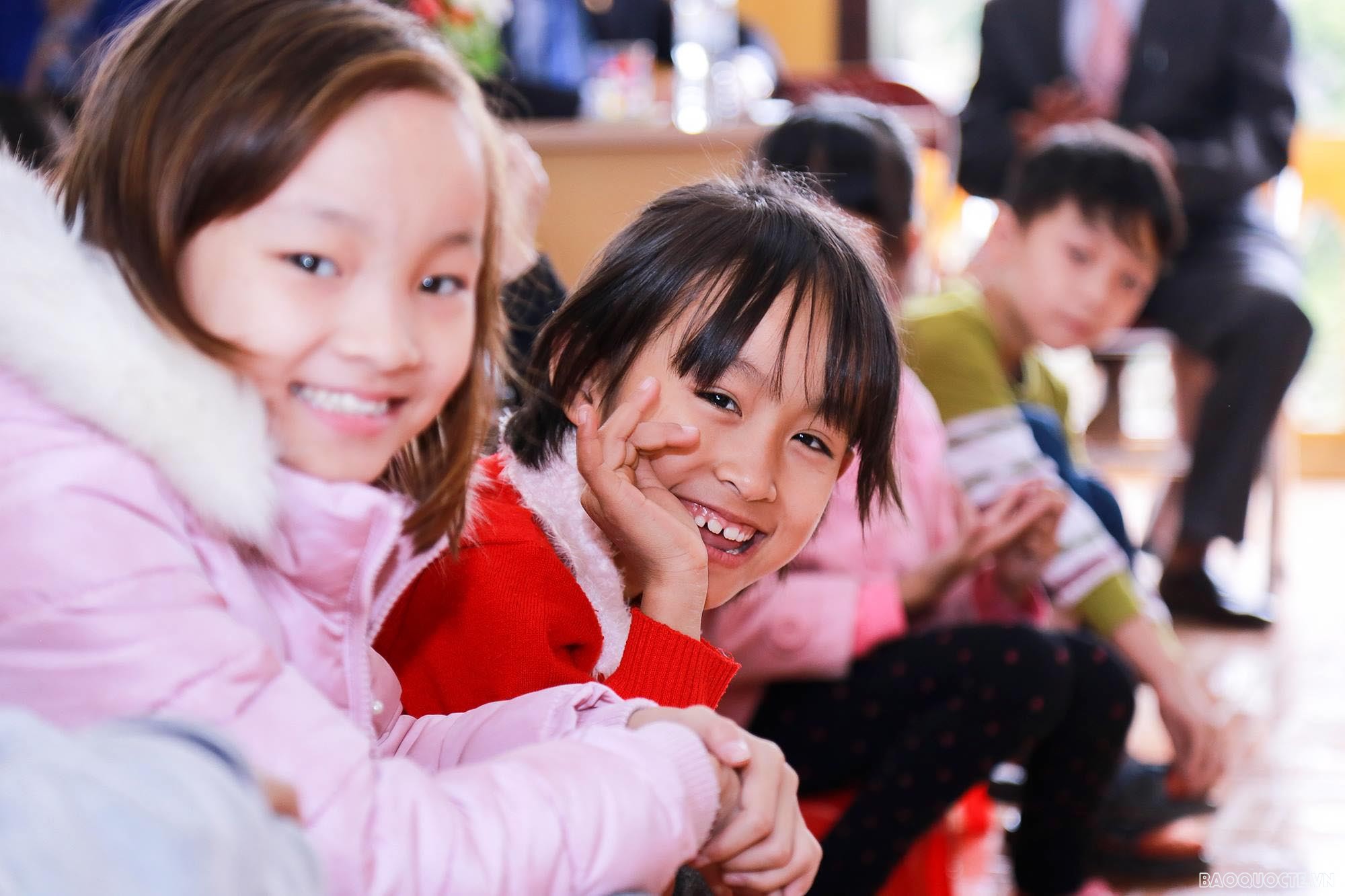
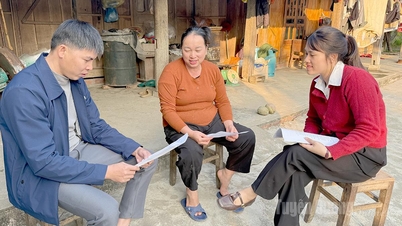
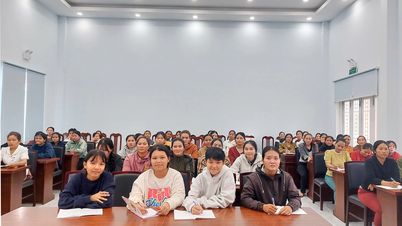
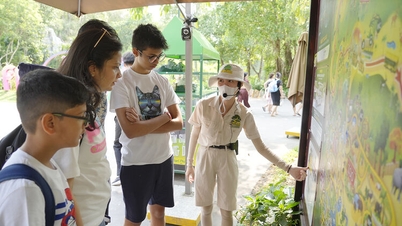
| The school attendance rate for students from ethnic minority and mountainous regions is steadily increasing. (Photo: Nguyen Hong) |
Ethnic minority and mountainous regions occupy three-quarters of the country's natural area, with vast areas, fragmented terrain, steep slopes, harsh climate, and difficult transportation.
Comprising 14.6% of the country's population, ethnic minorities are scattered and face numerous difficulties in their lives. These natural, economic , and social challenges have a significant impact on the development of education and training.
Special attention from the Party and the State.
Over the years, the education and training sector in ethnic minority and mountainous areas has received special attention from the Party and the State. Policies and guidelines for ethnic minority and mountainous areas have been institutionalized into legal documents and implemented seriously and promptly, meeting the requirements of education and training development and gaining the people's approval and support.
In addition to stable government policies, there are also programs, schemes, and projects for the development of education in disadvantaged areas. Organizations and individuals prioritize supporting education in ethnic minority and mountainous regions.
Thanks to this, the education sector in ethnic minority and mountainous areas has undergone significant changes. The education system from preschool to high school has been strengthened and developed. Even in remote and isolated areas where ethnic minorities live in scattered settlements and the terrain is difficult, there are preschools, primary schools, and secondary schools. All districts have at least two high schools, meeting the educational needs of ethnic minority children.
The school attendance rate has increased significantly, while the number of students repeating grades or dropping out has decreased. The size of the general education student population is gradually stabilizing. Localities in ethnic minority and mountainous areas have achieved the basic goals of universal education. The quality of mass and advanced education has improved year after year.
According to the Ministry of Education and Training, in the 2022-2023 school year, the total number of schools in ethnic minority and mountainous regions (including the provinces of the Northern Midlands and Mountains, Central Coast, Central Highlands and Southwestern regions) was 20,495 schools, with 329,280 classes and 10,145,199 children and students.
The graduation rate for lower and upper secondary schools has increased significantly each year. The specialized education system (ethnic boarding schools, ethnic semi-boarding schools, and pre-university schools) is becoming increasingly effective.
Statistics from the Ministry of Education and Training show that in the 2021-2022 school year, the percentage of ethnic minority primary school students completing the primary education program was only 0.27% lower than the national average. Meanwhile, the overall percentage of junior high school students in ethnic minority and mountainous areas graduating from junior high school was nearly equivalent to the national average (0.16% lower). Similarly, the overall percentage of high school students in ethnic minority and mountainous areas graduating from high school was nearly equivalent to the national average (0.24% lower).
The school system is expanding to meet the growing educational needs of the people. The network of schools, from preschool to primary, secondary, and high school, is expanding and developing widely across all residential areas. School buildings are being constructed in remote villages and hamlets, including those inhabited by ethnic minorities and mountainous regions.
Regarding continuing education, the scale and network of continuing education institutions in localities have basically remained stable over the years. Many centers have begun to diversify their continuing education programs, meeting the needs of people for continuous and lifelong learning.
Regarding the system of ethnic minority boarding schools, these schools consistently rank first in educational quality in ethnic minority and mountainous regions. The student population of these boarding schools basically meets the needs for creating a source of high-quality ethnic minority cadres and human resources for local areas. Students at these boarding schools benefit from scholarship policies, priority in accommodation and meals at the school, and the right to choose to return home to their families on specific days or weeks depending on their circumstances.
Currently, there are 318 boarding schools for ethnic minority students nationwide, located in 48 provinces and centrally-administered cities, with a total of 101,847 students; two schools are under the Ministry of Education and Training (Friendship School 80 and Friendship School T78) and one school is under the Committee for Ethnic Minorities (Viet Bac Highland High School), which is responsible for educating ethnic minority students in boarding schools, with a total of over 3,000 students.
In addition, the infrastructure and teaching equipment in ethnic minority and mountainous areas are increasingly being improved. The number of schools meeting national standards is increasing rapidly. In the 2022-2023 school year, the total number of classrooms in ethnic minority and mountainous areas was 309,436, with a structural improvement rate of 78.37%. The total number of classrooms was 69,709, achieving an average ratio of 0.94 classrooms per classroom.
The scholarship program has significantly contributed to training qualified ethnic minority cadres at the local level. Policies and regulations regarding education administrators, teachers, and students from ethnic minority groups have been fully and promptly implemented. This has encouraged teaching and learning, fostered equality in education, and contributed to socio-economic development and political stability in ethnic minority and mountainous regions.
The outstanding results mentioned above have contributed to the implementation of the Party and State's major policies on putting people at the center of development, ensuring that no one is left behind. This has helped children from ethnic minority and mountainous regions attend school, reduced the dropout rate, and attracted teachers to remote areas and areas with difficult socio-economic conditions; it has also changed the perceptions of education administrators, teachers, parents, and students.
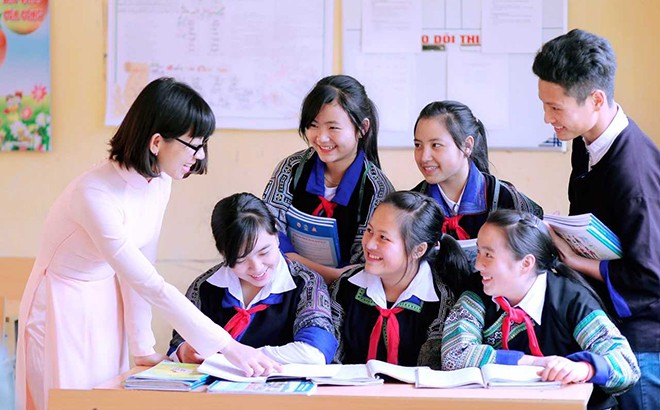 |
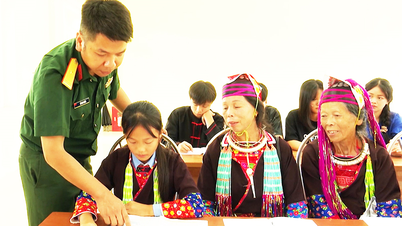
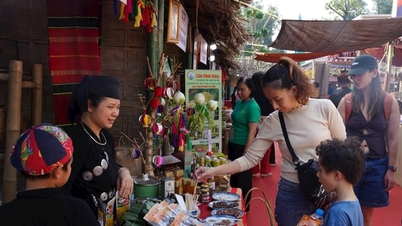
| Ethnic minority and mountainous regions still urgently need adjustments and additions to support policies for education and training development. (Source: chinhphu.vn) |
Continue to remove obstacles and improve the quality of training.
Although significant progress has been made in developing education in ethnic minority and mountainous areas, difficulties and shortcomings remain. While investment has been made in infrastructure and teaching equipment, educational institutions in these areas still do not meet practical requirements. There are still many borrowed or temporary classrooms, a lack of functional rooms, and insufficient basic teaching equipment, all of which negatively impact the quality of teaching and learning, particularly the implementation of the 2018 General Education Program.
The structure of the teaching staff remains unbalanced across subjects within the same educational level and between regions with different socio-economic conditions; the surplus and shortage of teachers are common in many localities, especially for teachers of new subjects (English, computer science, music, fine arts), but this situation is slow to be rectified; the teacher allocation quotas for most localities are lower than the actual needs.
Furthermore, some policies and financial mechanisms for education in ethnic minority and mountainous regions are unsuitable and have been slow to be revised and supplemented to suit practical realities. Local resources are limited, affecting the ability to secure funding for education. The resources attracted for investment in education are not commensurate with the potential; the level of resource mobilization varies between regions and localities.
In the context of ethnic minority and mountainous regions continuing to face economic, social, cultural, educational, and health challenges, many localities in these areas still urgently need adjustments and additions to support policies for educational development, while state resources are limited. Investment in educational development in ethnic minority and mountainous regions is projected to continue to face difficulties.
Therefore, in the coming period, localities need to focus on building and perfecting policies for education and training in ethnic minority and mountainous areas; continue to review and improve the arrangement of the network of educational institutions in ethnic minority and mountainous areas; improve the quality of ethnic education in ethnic minority and mountainous areas; increase investment in facilities and teaching equipment in ethnic minority and mountainous areas; develop the team of education management staff and teachers; strengthen the management of ethnic education; and fully implement the regime and policies for education management staff and teachers.
With proper attention and the determined involvement of the entire political system, we believe that the future of universal education for 100% of ethnic minority and mountainous regions will no longer be far-fetched, and every child in these regions, the future generation of the country, can go to school with joy and happiness, with a sparkling smile on their face.
Source




































































Comment (0)