

Born plan of copper cell
In Con Cuong commune, many effective production and business models bearing the mark of the Social Policy Bank are currently developing strongly. Preferential loan sources have helped many households overcome difficulties and rise out of poverty sustainably.
For example, the family of Mr. Lu Van Hung in Dong Tien village, Lang Khe commune, thanks to a 50 million VND loan for poor households, has now developed their livestock to 8 buffaloes and 4 cows and has successfully escaped poverty.
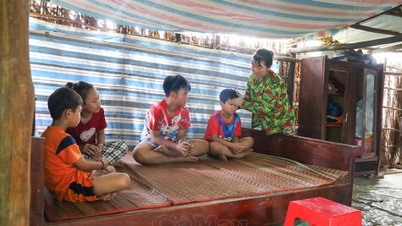
Another case is Mr. Quang Van Son, residing in Cai village, Cam Lam commune. In 2022, he received a loan of 100 million VND from the near-poor household fund. This capital helped his family escape poverty, own 8 buffaloes, and repair their house to make it more solid. Sharing about the changes, Mr. Son confided: "Before, my family's life was very difficult; we wanted to do something but lacked capital. Thanks to the loan from the Social Policy Bank, our family's life is much less difficult, we have an income and can support our children's education. In the future, I want to expand the area for planting fruit trees on the hill and raise more buffaloes and cows, striving to become wealthy."
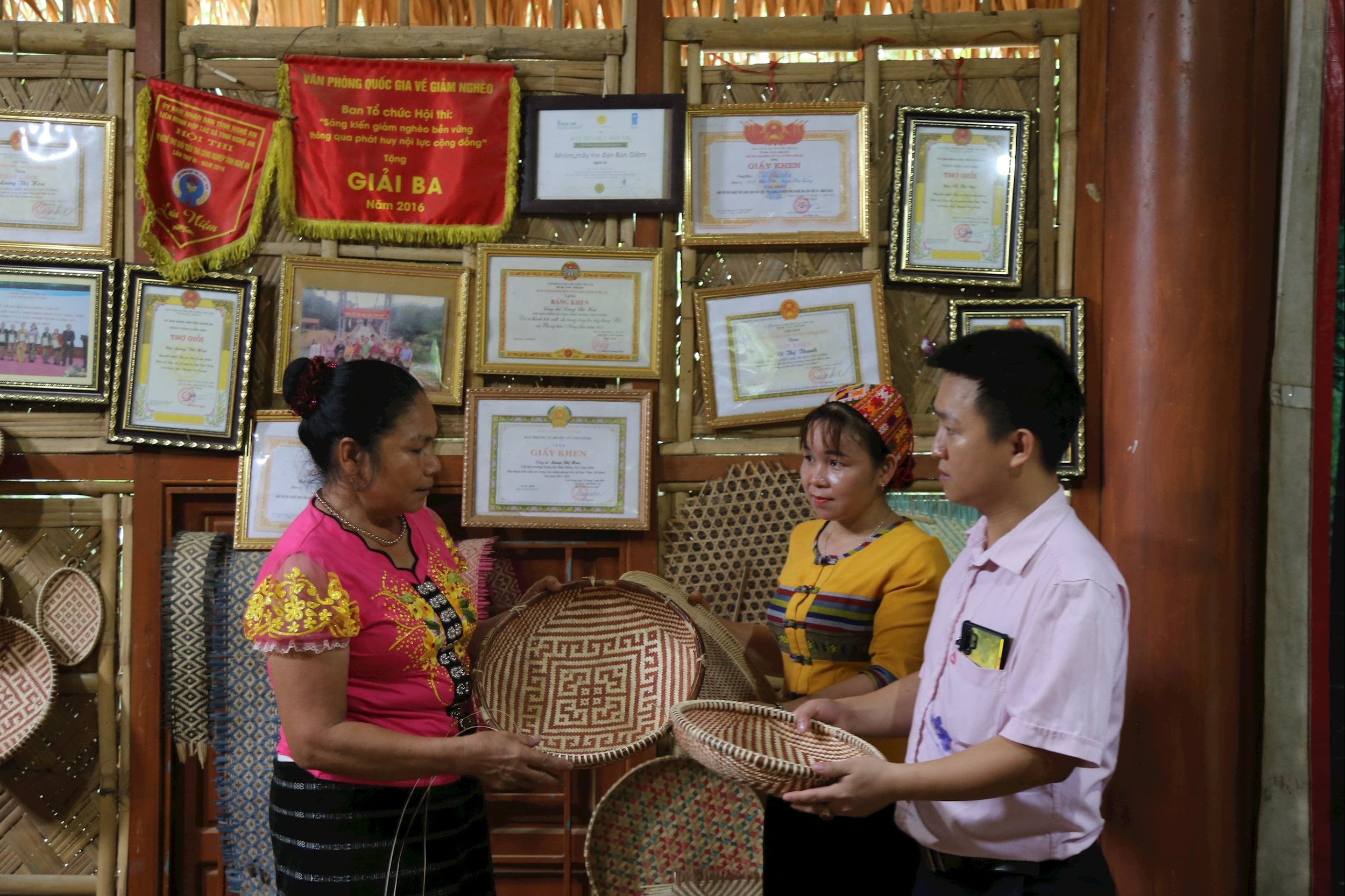
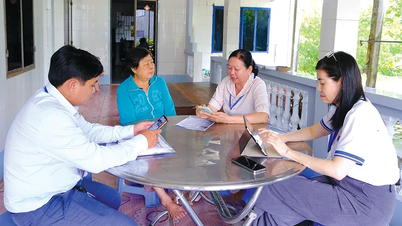
Officials from the Con Cuong branch of the Vietnam Social Policy Bank visit a loan model project in the area. Photo: TH
At the Quy Hop branch office, from 2020 to the present, policy credit funds have supported nearly 21,700 households, including approximately 13,300 poor, near-poor, and newly-escaped-poverty households, in accessing preferential capital for production and business investment. The effective implementation of policy credit funds not only helps people overcome immediate difficulties but also changes their economic mindset. Households are now more confident in borrowing capital, expanding production, and making long-term investments instead of focusing solely on short-term livelihoods.
The collaborative relationship between banks, the government, and social organizations makes it easier for people to access capital. The non-performing loan ratio in many localities is very low, reflecting good debt repayment habits and high capital utilization efficiency.
Ms. Lo Thi Phuong, from Chong Bung village (Muong Chong commune), used to be near-poor. Two years ago, she boldly borrowed 50 million VND to plant acacia trees and raise cattle. Today, her family owns nearly 4 hectares of acacia trees, 7 cows, and recently bought a new car. Her son, supported by his parents, received an education and became an instructor at a military school in Nha Trang.
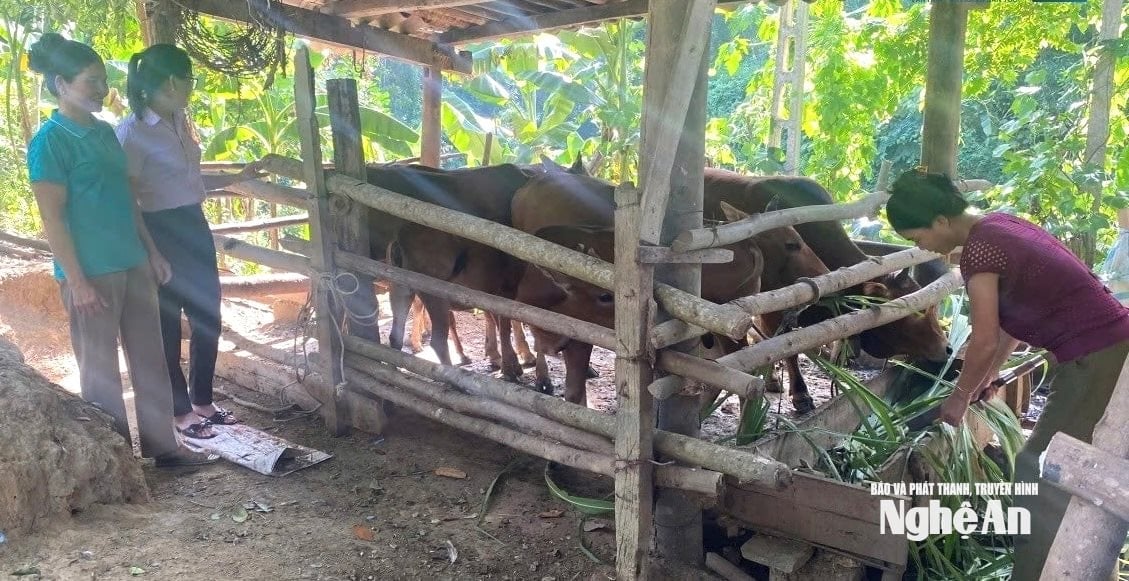
Ms. Lo Thi Phuong from Chong Bung village (Muong Chong commune) borrowed capital from the policy bank to raise livestock and escape poverty. Photo: TH
Policy credit in Quy Hop not only helps poor households overcome immediate difficulties but also creates a foundation for maintaining a stable standard of living, contributing to the construction of new rural areas and sustainable economic development. Stories like that of Ms. Lo Thi Phuong's family show that with the support of the State and policy banks, people can completely rise up on their own, gradually asserting themselves on the path to sustainable poverty reduction.
In recent years, credit outstanding in Quy Hop district has tended to shift towards programs supporting production and business in disadvantaged areas, clean water and sanitation programs, and job creation, with increasing capital needs.
Mr. Nguyen Thanh Hai, Director of the Quy Hop Branch of the Social Policy Bank, stated: "Adhering closely to the goals and directions of the sector, the socio-economic development tasks of the locality, and the resolutions of the Board of Directors of the Social Policy Bank, after the merger, we have advised and coordinated with the Party Committee and People's Committee of the communes in effectively implementing policy credit activities in the area. The total capital is estimated to reach over 863 billion VND by November 30, 2025, with a growth rate of 9.3% compared to the beginning of the year. The total outstanding loan balance reached over 862 billion VND, with a growth rate of 9.34% compared to the beginning of the year. We have implemented 19 policy credit programs with nearly 12,000 customers still having outstanding loans, with an average outstanding loan of over 72 million VND per customer."
Key lock guarantee social security commune festival region High
Implementing the Social Policy Bank Development Strategy to 2030, during the 2021-2025 period, policy credit provided by the Nghe An Branch of the Social Policy Bank has made significant contributions to addressing fundamental and essential life issues for the poor and policy beneficiaries. In particular, during the 2023-2025 period, with increased entrusted capital from the local budget, the branch continued to make positive contributions to the province's national target programs, notably in poverty reduction, job creation, social security, and development in ethnic minority and mountainous areas.
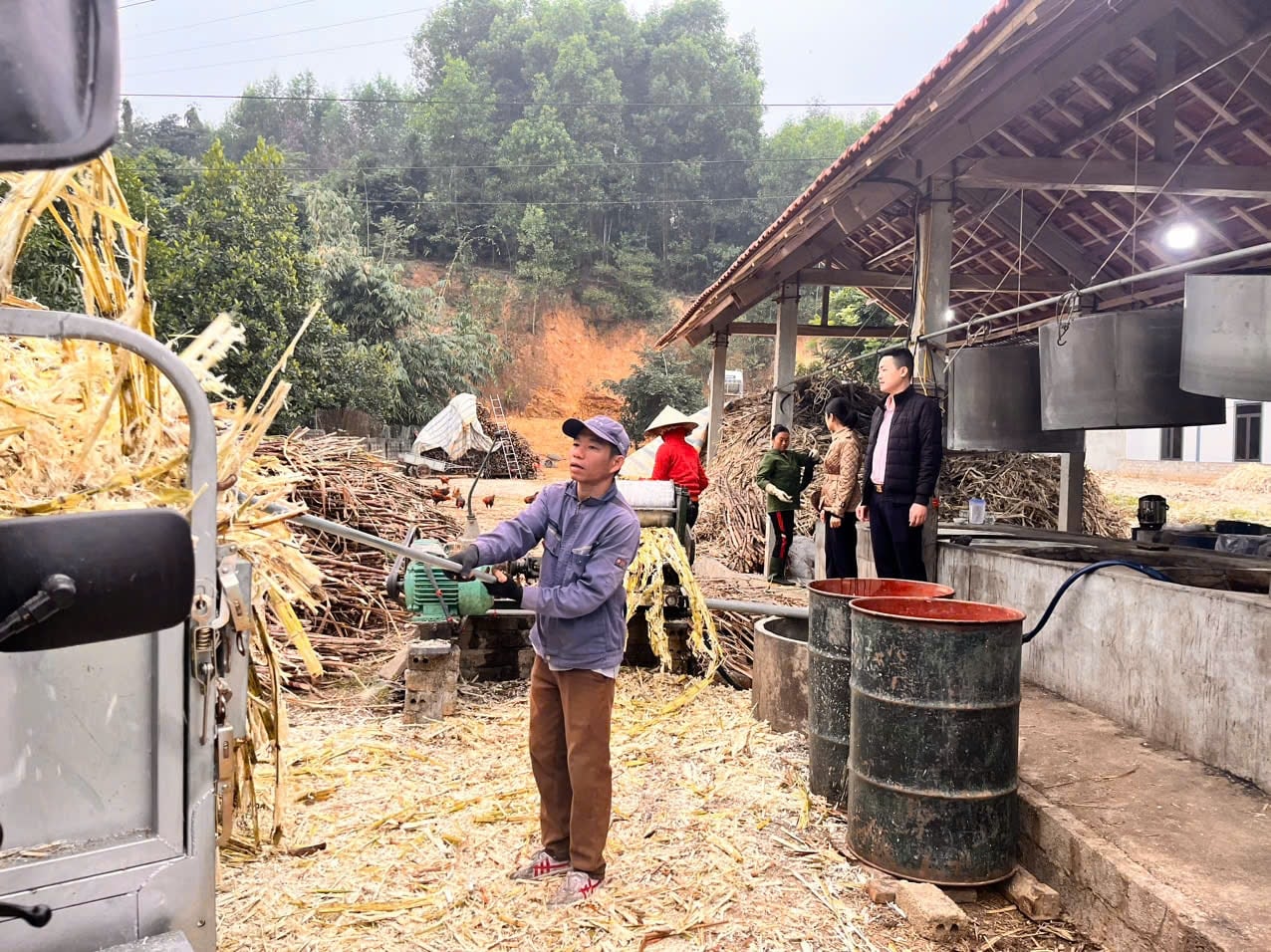
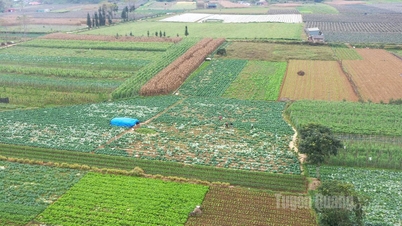
Residents of Tan Ky borrow capital from the Social Policy Bank to develop the sugarcane syrup making industry. Photo: TH
During the period 2021-2025, the Nghe An Social Policy Bank managed and implemented 22 preferential credit programs, with loan disbursements reaching VND 17,720 billion and debt collection reaching VND 12,341 billion. By the end of 2025, the total outstanding loan balance is expected to reach VND 14,965 billion with over 217,000 customers still having outstanding loans, and an average annual loan growth rate of 10%.
Mr. Hoang Xuan Thuy, Secretary of the Party Committee and Director of the Social Policy Bank of Nghe An, stated: Policy credit is one of the important solutions and a key to ensuring social security in mountainous areas. The branch's capital has contributed to sustainable poverty reduction and promoted the local economy. During the 2021-2025 period, more than 348,000 poor households and policy beneficiaries accessed capital to develop production and create sustainable livelihoods. Many poor, near-poor, and newly-escaped-poverty households received capital support to improve their income, reduce poverty, prevent re-poverty, and gradually achieve sustainable poverty reduction. It has attracted and created jobs for tens of thousands of workers, including those who borrowed capital to go abroad for work. Many youth and women's entrepreneurship models have achieved good results by borrowing capital for production and business.
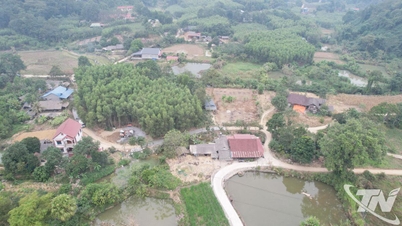
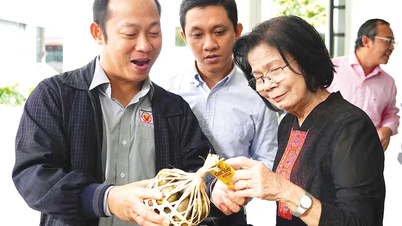
Some typical loan models include: large-scale livestock breeding for meat production and cultivation of specialty crops and animals in Ky Son, Tuong Duong, and Que Phong communes; large-scale production forest planting projects in Tan Ky and Thanh Chuong areas; high-economic-value fruit tree farming models in Quy Hop, Con Cuong, and Nghia Dan communes; and loan projects to invest in the development of traditional craft villages, contributing to the preservation of national and local cultural identity, and developing the economy in conjunction with ecotourism and community tourism in Quy Chau and Con Cuong communes.
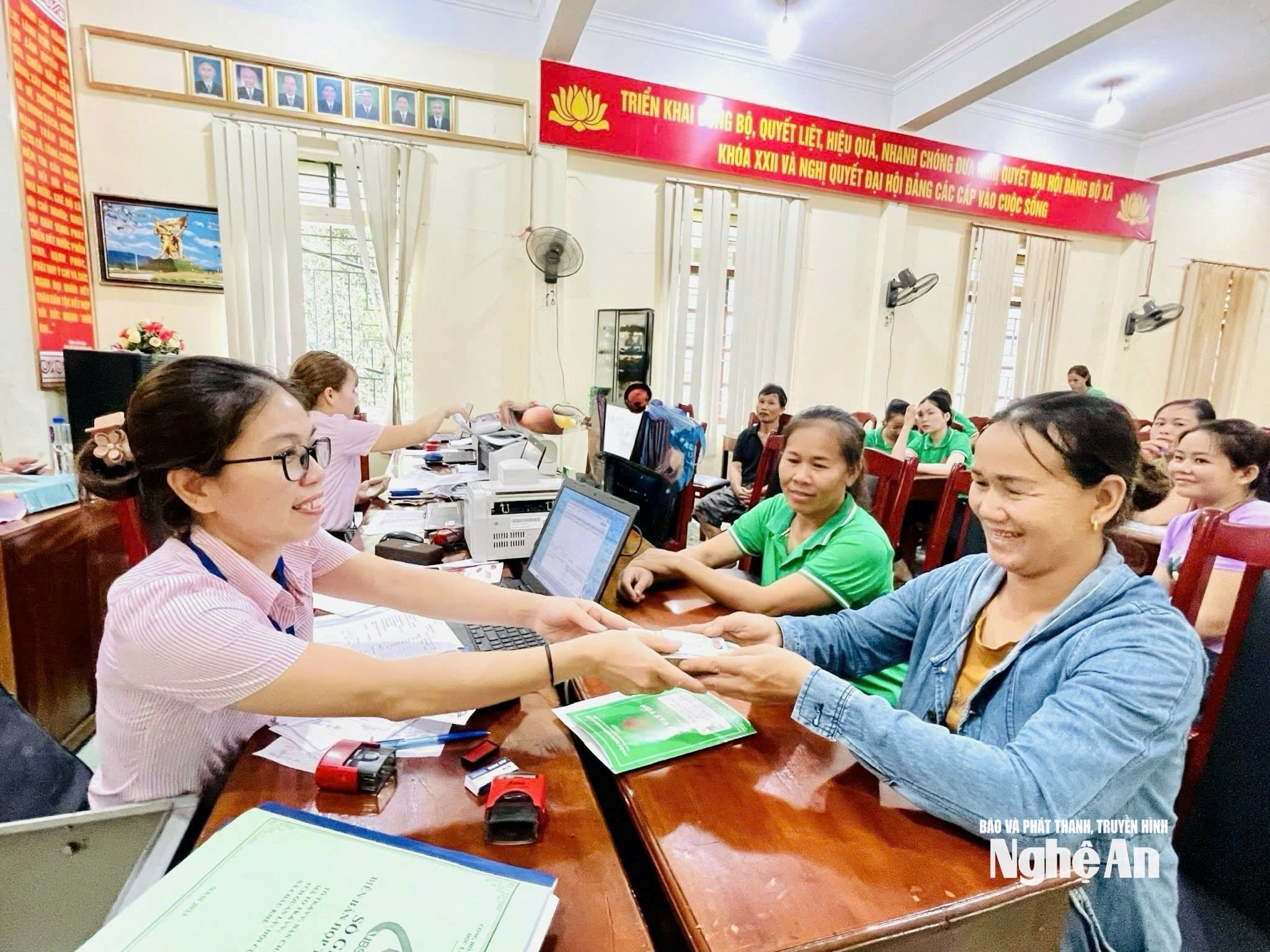
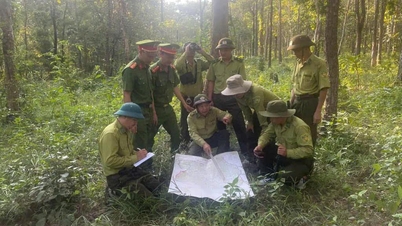
Disbursement of funds at the transaction point in Chau Khe commune, Con Cuong district. Photo: TH
Furthermore, the capital has contributed to ensuring social welfare in the province. Hundreds of thousands of households have received loans to build/renovate clean water and sanitation facilities that meet standards and hygiene requirements; customers have borrowed to build new houses or repair existing ones; thousands of disadvantaged students have received loans to study and access knowledge, science, and technology; and hundreds of people who have completed their prison sentences have received loans to reintegrate into the community, helping to create jobs and ensure livelihoods.
At the same time, develop ethnic minority and mountainous areas, narrow the development gap between regions; households in disadvantaged areas can borrow capital for production and business...
It can be affirmed that, under the Social Policy Bank Development Strategy to 2030, the period 2021-2025, Nghe An province has achieved many outstanding results in social policy credit. Preferential capital has spread to 100% of communes and wards, supporting thousands of poor households and policy beneficiaries in developing production, stabilizing their lives, and making a significant contribution to the goal of sustainable poverty reduction and building new rural areas, especially in ethnic minority areas.
Source: https://baonghean.vn/diem-tua-sinh-ke-cho-dong-bao-dan-toc-thieu-so-nghe-an-10315287.html
![[Live] 2025 Community Action Awards Gala](/_next/image?url=https%3A%2F%2Fvphoto.vietnam.vn%2Fthumb%2F1200x675%2Fvietnam%2Fresource%2FIMAGE%2F2025%2F12%2F16%2F1765899631650_ndo_tr_z7334013144784-9f9fe10a6d63584c85aff40f2957c250-jpg.webp&w=3840&q=75)
![[Image] Leaked images ahead of the 2025 Community Action Awards gala.](/_next/image?url=https%3A%2F%2Fvphoto.vietnam.vn%2Fthumb%2F1200x675%2Fvietnam%2Fresource%2FIMAGE%2F2025%2F12%2F16%2F1765882828720_ndo_br_thiet-ke-chua-co-ten-45-png.webp&w=3840&q=75)
![[Photo] Prime Minister Pham Minh Chinh receives the Governor of Tochigi Province (Japan)](/_next/image?url=https%3A%2F%2Fvphoto.vietnam.vn%2Fthumb%2F1200x675%2Fvietnam%2Fresource%2FIMAGE%2F2025%2F12%2F16%2F1765892133176_dsc-8082-6425-jpg.webp&w=3840&q=75)

![[Photo] Prime Minister Pham Minh Chinh receives Lao Minister of Education and Sports Thongsalith Mangnormek](/_next/image?url=https%3A%2F%2Fvphoto.vietnam.vn%2Fthumb%2F1200x675%2Fvietnam%2Fresource%2FIMAGE%2F2025%2F12%2F16%2F1765876834721_dsc-7519-jpg.webp&w=3840&q=75)












































































Comment (0)