

A construction worker in Ha Tinh , who had violated the alcohol limit after a day of working hard (under the sun carrying cement), was treated to a late-night drinking session by his employer and… forgot his way home, forcing local traffic police to call his wife to pick him up.
"Relieve fatigue" after work
Our people have a habit of, after a hard day's work, "relieving fatigue" with wine or beer that evening. Those who can control themselves will only drink a few glasses to "relieve fatigue" and then go home.
But there are also quite a few people who always drink too much, so they no longer "relieve their fatigue" and end up completely drunk, like this construction worker.
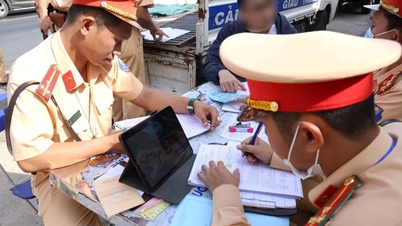
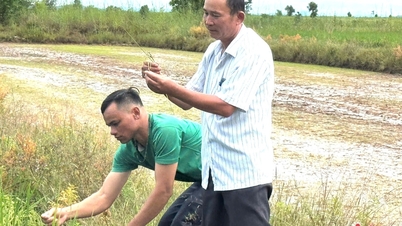
The construction worker "confessed" to traffic police when they stopped him for a document check that he, as a construction worker, had been given alcohol by his employer from nearly 7 PM until late at night. He had been given directions home by passersby, but after wandering around three times, he kept returning to his starting point until he encountered the traffic police for a breathalyzer test.
"Relieving fatigue," as this construction worker is doing, is not uncommon but almost universal in rural areas today. After each stage of construction, the homeowner will inevitably treat the workers to a drink.
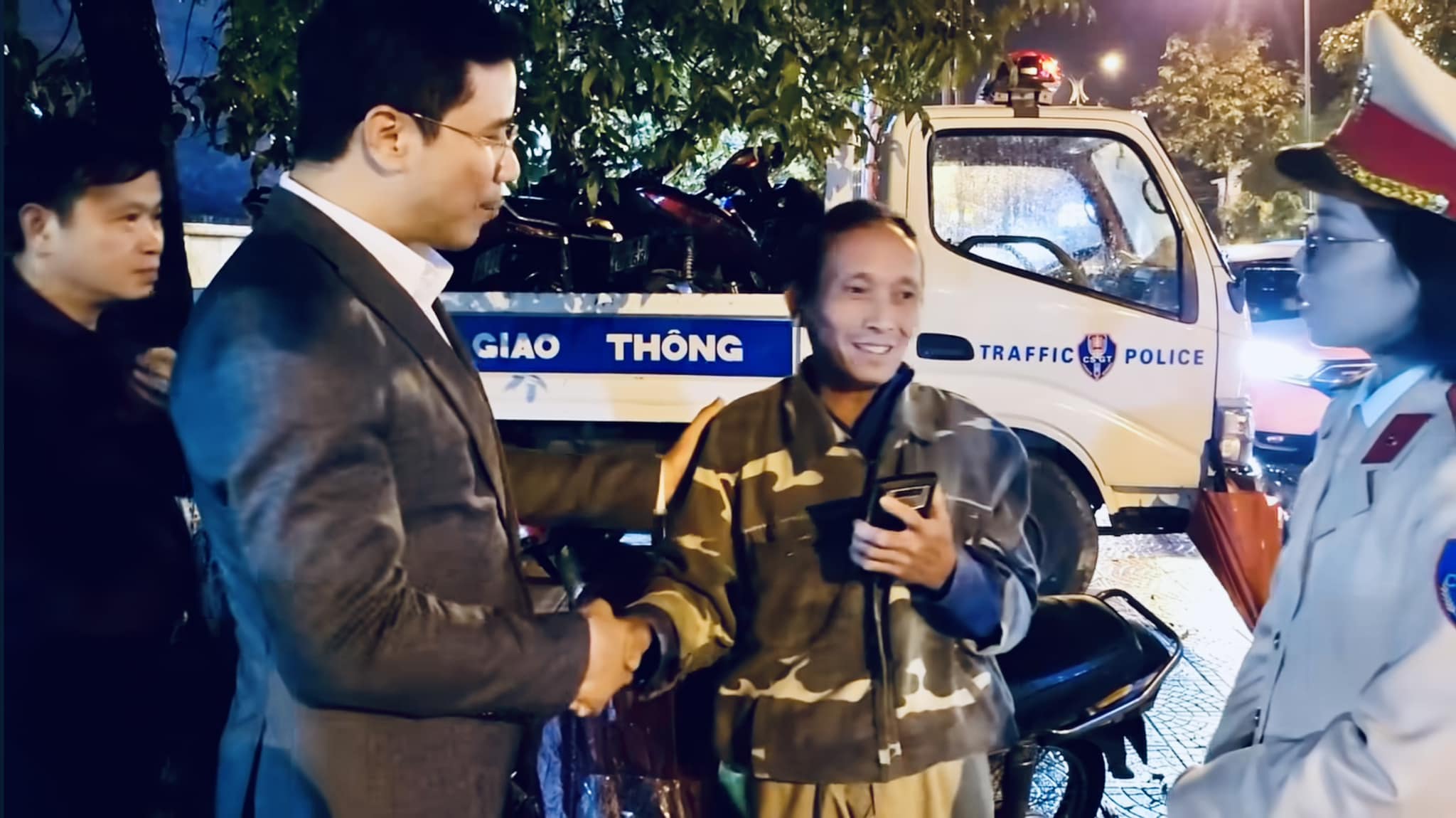
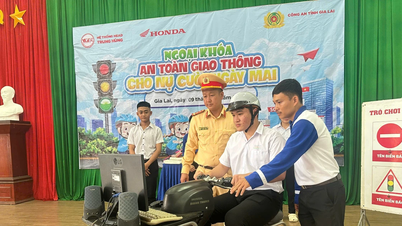
Colonel Nguyen Hong Phong, Director of the Ha Tinh Provincial Police, was present at the alcohol testing checkpoint to question the construction worker about his reasons for drinking.
Initially, it was simply a gesture of goodwill from the homeowner, but gradually it became a custom in most construction projects. The homeowner or contractor must treat the workers to a meal as an "unspoken commitment" in the construction industry.
That was in the past; drunk driving would only result in your wife nagging. But now, if you drink alcohol (not necessarily get drunk), you'll be fined millions, even tens of millions of dong, and your driver's license will be revoked if you're caught by traffic police during a breathalyzer test.
But now, alcohol testing is no longer an "occasional" occurrence. The case of the construction worker in Ha Tinh mentioned above was both unfortunate and... fortunate.
Rare
Getting drunk to the point of forgetting your way home is common, but it's rare for someone to be drunk and still not be fined for drunk driving by traffic police due to "special treatment."
The construction worker who violated the alcohol limit was very lucky because that day, the Director of the Ha Tinh Provincial Police himself was also participating in the alcohol level check with the traffic police patrol team on duty.
Let's assume that if the police chief hadn't been there that day, things would have been different. That means the construction worker would have been fined the maximum amount, "7-8 million dong, not less," as the provincial police chief said.
Getting drunk and getting caught on a breathalyzer test and fined the maximum amount is normal. But this is an "unusual" case, because the construction worker was given special treatment, as "he is honest and simple." He got drunk and forgot his way home, but when asked what he did for a living, he still "showed his tools" as a construction worker to prove his profession.
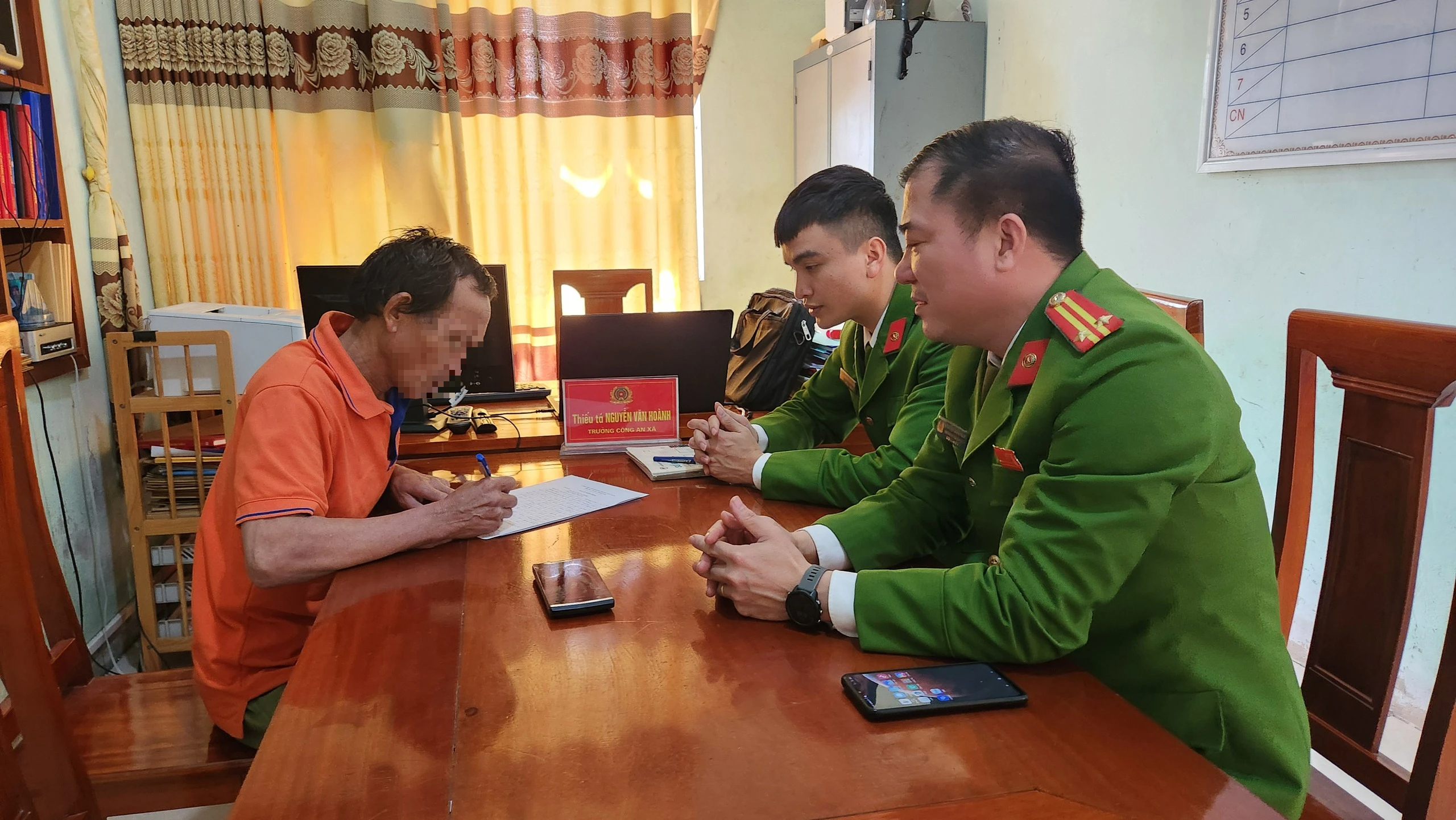
The construction worker signed a pledge not to repeat the offense of driving under the influence of alcohol.
He even remembered the "codename" he saved his wife's name in his phone, a name only he understood! Instead of saving her name, he saved it as "That's a ripped mess" - a pure Ha Tinh dialect!
But the construction worker was given special treatment and not subjected to a breathalyzer test and subsequent penalty, not necessarily because he was "honest and simple," but mainly because of the "flexible" approach of the officers on duty. That's why this is considered a rare case.
Ultimately, it's a way for people to strive towards goodness.
There are two opposing viewpoints following media reports, accompanied by video clips, about this case.
The first viewpoint argues that this was a flexible approach by the traffic police, specifically the Director of the Ha Tinh Provincial Police. Although not directly fined, the construction worker still had to go to the commune police station – where he resides – the following day to explain his actions and sign a commitment not to repeat the offense.
This construction worker has complied with the authorities' requirements. It's believed he will never repeat the offense because "good fortune doesn't come twice"—such luck won't repeat itself! This approach is certainly more effective than simply fining him. Fining him would first put his family in a more difficult situation, and the deterrent effect might not be as strong as letting him off the hook.
It's also important to understand that such "flexibility," as mentioned, is a rare occurrence and will only happen once.
People also know very well that they cannot use that case as a comparison or "claim innocence" if they get lost three times while drunk, like that construction worker did.
Perhaps the law enforcement officials in Ha Tinh also considered the second viewpoint, which is that "the law has no forbidden zones, no exceptions."
If this person is forgiven, the strictness of punishment in other cases will be unfair… However, the ultimate goal of punishment is to prevent the offender from violating the law again, not to "punish them to get what they deserve" as many people think.
The construction worker, though not punished, will remember his actions for the rest of his life. Ultimately, the law is meant to guide people towards goodness, not to punish.
Source link
![[Photo] National Assembly Chairman Tran Thanh Man working with the Standing Committee of the National Assembly's Delegation Affairs Committee.](https://vphoto.vietnam.vn/thumb/1200x675/vietnam/resource/IMAGE/2026/05/20/1779294340023_ndo_br_1-1691-jpg.webp)


![[Image] "Journey of Hope" promotes the organ and tissue donation movement in Vietnam.](https://vphoto.vietnam.vn/thumb/1200x675/vietnam/resource/IMAGE/2026/05/20/1779294400833_1-8910-jpg.webp)
![[Photo] General Secretary and President To Lam works with the Party Committee of the Ministry of Health on the work of Vietnamese traditional medicine.](https://vphoto.vietnam.vn/thumb/1200x675/vietnam/resource/IMAGE/2026/05/20/1779294323718_a1-bnd-2978-3319-jpg.webp)












































































Comment (0)