

On November 15th, the Ministry of Health organized a seminar to provide information to the press on the current situation of consumption, the harmful effects of sugary drinks on public health, and the role of excise tax in controlling consumption.
On November 15th, the Ministry of Health organized a seminar to provide information to the press on the current situation of consumption, the harmful effects of sugary drinks on public health, and the role of excise tax in controlling consumption.
In recent years, the consumption of sugary soft drinks in Vietnam has increased rapidly.
According to Euromonitor data from 2023, total consumption of sugary soft drinks increased from 1.59 billion liters in 2009 to 6.67 billion liters in 2023, a 420% increase. Per capita consumption also saw a significant rise, from 18 liters per person in 2009 to 66 liters per person in 2023 (a 350% increase).
 |
| Ms. Dinh Thi Thu Thuy, Deputy Director of the Legal Department (Ministry of Health). |
The Department of Preventive Medicine also stated that currently, Vietnamese people consume an average of about 46.5g of free sugar per person per day, nearly reaching the maximum limit of 50g per person per day recommended by the World Health Organization (WHO). This consumption level is almost double the level that is beneficial to health, which is less than 25g per person per day.
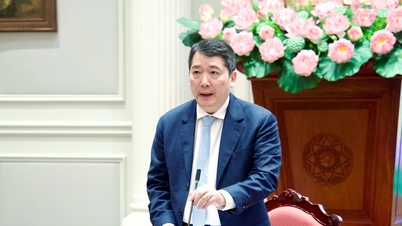
Ms. Dinh Thi Thu Thuy, Deputy Head of the Legal Department (Ministry of Health), shared that preventive medicine plays a crucial role in people's healthcare. Investing in preventive medicine not only helps solve health problems but also brings socio-economic benefits and develops human resources for the future.
According to Ms. Thuy, excessive consumption of sugary drinks has been identified as one of the main causes of overweight, obesity, and metabolic disorders in both adults and children.
This situation leads to increased rates of type 2 diabetes, hypertension, cardiovascular disease, stroke, and death, along with bone, dental, kidney, urinary, and gastrointestinal diseases.
Ms. Thuy stated that imposing excise tax on sugary drinks is one of the important intervention solutions recommended by the WHO to reduce consumption and limit the harmful effects of sugary drinks on public health.
Imposing taxes will lead to higher product prices, encouraging consumers to choose healthier beverages. This helps reduce the risk of obesity and non-communicable diseases related to diet, especially diabetes, which has been on the rise recently.
The Ministry of Health has closely coordinated with the Ministry of Finance in providing information on the current situation of consumption and harmful effects of sugary drinks. The Ministry of Finance has included sugary drinks in the taxable category in the draft Law on Special Consumption Tax (amended).
However, the imposition of excise tax on sugary drinks is being introduced for the first time in this draft law, and therefore still faces much opposition, mainly from the beverage industry.
The Ministry of Finance proposed a 10% tax to encourage businesses to produce and import low-sugar beverages, while also raising consumer awareness of the harmful effects of sugary drinks.
However, the Ministry of Health stated that it proposes a tax rate of 40% for sugary drinks, or 30% after gradually increasing to 40% according to a schedule.
Additionally, the tax rate could be divided according to sugar content to create different tax levels, similar to what other countries are doing.
At the seminar, Dr. Nguyen Tuan Lam, WHO representative in Vietnam, shared that diseases related to the frequent consumption of sugary drinks, such as tooth decay, type 2 diabetes, overweight, obesity, cardiovascular disease, kidney disease, non-alcoholic fatty liver disease, and gout, are rapidly increasing.
Dr. Tuan Lam believes that excise tax is an effective measure to reduce soft drink consumption and that now is the appropriate time to impose a tax on sugary drinks.
Dr. Tuan Lam suggested that Vietnam should implement an annual tax increase roadmap so that the tax on sugary drinks reaches 40% of the manufacturer's selling price by 2030, as recommended by the WHO. This would help protect the health of future generations.
At the same time, a favorable environment should be created to reduce the consumption of sugary drinks through measures such as labeling the front of the drink, banning advertising, etc.
The expert also emphasized the WHO's recommendation to reduce the consumption of free sugars throughout life. Specifically, the WHO recommends that for both adults and children, the intake of free sugars should not exceed 10% of the total daily energy intake, equivalent to 12 teaspoons of sugar.
Ideally, consumers should reduce their intake of free sugars to less than 5% (equivalent to 6 teaspoons of sugar) of their total energy intake, which will provide additional health benefits.
According to WHO recommendations, to reduce consumption of sugary drinks, retail prices need to increase by 20% or more, equivalent to an excise tax rate of 40% on the ex-factory price.
This solution will contribute to improving public health, increasing government revenue, helping to reduce healthcare costs for related diseases, and reducing long-term labor productivity losses.
A study conducted by the School of Public Health also estimated that a 40% tax rate would lead to reduced consumption and a 2% decrease in overweight rates, a 1.5% decrease in obesity rates, prevent over 81,462 cases of type 2 diabetes, and save $24.55 million (over 600 billion VND) in healthcare costs.
According to experts, taxation is a low-cost but highly effective solution for reducing consumption of unhealthy products. It is also an effective preventative measure recommended by the WHO and the World Bank for adoption by various countries.
Taxation should be based on a balanced consideration of the interests of the state, citizens, and businesses, but special priority should be given to protecting public health and sustainable development, and not sacrificing public health for profit.
Source: https://baodautu.vn/de-nghi-ap-thue-40-voi-nuoc-giai-khat-co-duong-d230138.html

![[Photo] General Secretary and President To Lam presides over a meeting on preparations for the review of one year of operation of the three-tiered government system.](https://vphoto.vietnam.vn/thumb/1200x675/vietnam/resource/IMAGE/2026/06/02/1780391821195_a1-bnd-4595-9717-jpg.webp)
















































































Comment (0)