

The program to install solar power on millions of rooftops has actually been discussed for several years. Specifically, Prime Minister's Directive No. 20 on strengthening electricity saving in the period 2023-2025 and beyond aims to have 50% of public buildings and 50% of residential houses using self-sufficient rooftop solar power (for on-site consumption, not selling electricity to the national grid) by 2030. This is also a target in the revised Power Development Plan VIII. If this target is achieved, we will have 26,000 MW, equivalent to the capacity of 13 Hoa Binh hydropower plants, supplementing the power supply. This is an extremely impressive figure, especially in the context of the current double-digit economic growth demand. However, even EVN (Vietnam Electricity) admits that achieving this goal is extremely difficult. The reason is that the incentive and support policies for installing rooftop solar power are not attractive enough.
The simple question any household asks when considering installing rooftop solar power is: what is the total investment cost? What if I add battery storage, and what if I don't? What is the depreciation period? Are the procedures simple, streamlined, and easy? Then they weigh it against their current electricity usage and choose the more advantageous option. Based on this calculation, if people are not yet enthusiastic about solar power, it means that the incentive and support policies are not attractive enough. To promote it, incentives and support must be increased, along with the simplest and most streamlined procedures possible.
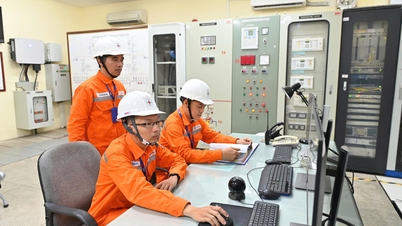
At the end of 2025, the Ministry of Industry and Trade proposed a subsidy of VND 500,000 - VND 1 million for households installing rooftop solar power systems for self-consumption, plus an additional VND 1 million if they had battery storage with a minimum capacity of 2 kWh. Regarding loans, the ministry proposed lending through the Social Policy Bank at an interest rate of 8.4% per year, with overdue payments calculated at 130% of the lending interest rate; the maximum loan term was 3 years, and the maximum loan amount was VND 40 million. Households installing rooftop solar power systems for self-consumption could borrow up to VND 20 million, equivalent to VND 4 million/kWp, applicable to systems up to 5 kWp. If additional battery storage was installed, the maximum loan amount would also be VND 20 million, equivalent to VND 2 million/kWh, for a capacity of up to 10 kWh... This level was criticized as too low and not attractive enough to encourage rooftop solar power generation. Meanwhile, the demand for electricity, especially "green" electricity, is increasing and becoming more urgent. We witnessed a prolonged heatwave from the end of April to mid-May, causing electricity consumption to continuously reach record highs. Clearly, the pressure on the electricity sector is growing, and the risk of power shortages remains ever-present...
Recently, the Ministry of Industry and Trade announced that it will submit to the Prime Minister a policy to support the installation of solar power systems with batteries. The goal is to have approximately 10% of government offices and 10% of households nationwide using rooftop solar power annually, or to reach 20% of the total installed capacity according to the development plan for the period.
The plan for 2026-2030 for localities is underway. Hopefully, this time, the Ministry will draft a policy that is strong and attractive enough to generate electricity from millions of rooftops. This would be a win-win situation, helping people and businesses reduce operating costs, contributing to easing the burden on the national power grid, and promoting the transition to green energy, a trend that the whole world is pursuing and Vietnam is also aggressively implementing.
According to Nguyen Khanh (TNO)
Source: https://baogialai.com.vn/de-nhung-mai-nha-phat-dien-post587585.html
![[Photo] General Secretary and President To Lam and his wife begin their official visit to Thailand.](https://vphoto.vietnam.vn/thumb/1200x675/vietnam/resource/IMAGE/2026/05/27/1779881249412_anh-man-hinh-2026-05-27-luc-18-10-51.png)


![[Photo] The courage of new recruits of Brigade 144 on the training ground.](https://vphoto.vietnam.vn/thumb/1200x675/vietnam/resource/IMAGE/2026/05/27/1779881651341_anh-man-hinh-2026-05-27-luc-18-32-52.png)

















































![[Photo] The courage of new recruits of Brigade 144 on the training ground.](https://vphoto.vietnam.vn/thumb/402x226/vietnam/resource/IMAGE/2026/05/27/1779881651341_anh-man-hinh-2026-05-27-luc-18-32-52.png)






















Comment (0)