

Each name is not just a symbol, but contains a historical thread, a long story about the aspirations of our ancestors.
Sometimes , stopping at a place I've never been to before, I feel a sense of familiarity upon hearing its name, a place that reflects the dedication and vision of its ancestors.
Place names—two seemingly administrative and dry words—are actually repositories of emotions related to the land and its people. Place names are the names of a village, a river, a mountain range, an administrative unit, or a public building. But beyond that, they are a part of memory, a vibrant intangible cultural heritage.
Each place name is a "soft monument" in language, deeply imprinted with the mark of the era in which it was born. Some places are named after geography: rivers, mountains, valleys, passes; others after historical events, associated with a figure or a victory. Some village names contain aspirations for a peaceful and prosperous life…
Therefore, it is no coincidence that a place name is often formed by beautiful words and endures through the years; it is the wisdom of the people, the aspirations of many generations of ancestors that have accumulated and formed it.
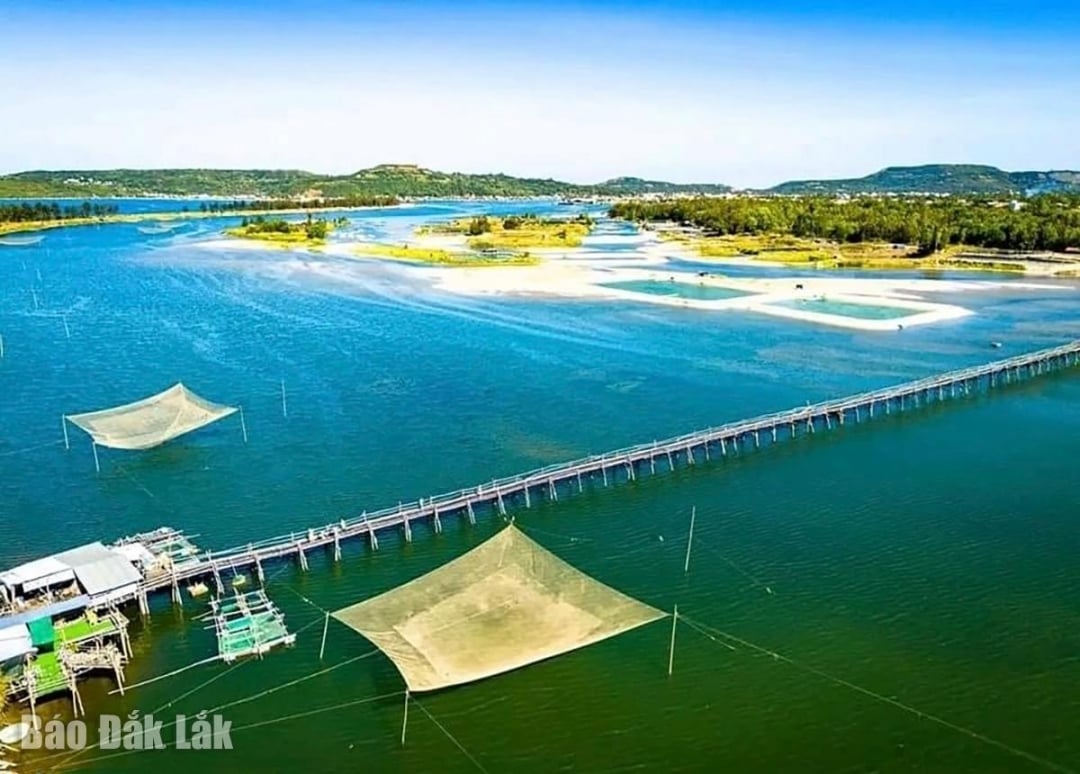 |
| The wooden bridge at Ong Cop Temple, marking the boundary between Tuy An Dong commune, Xuan Dai ward, and Song Cau River, is a place where every tourist wants to take a picture in this romantic setting. |
A closer look at the place names we hear every day, the ones we write about in articles, reveals the reasons behind their names and their deeper meanings. As journalist and cultural and historical researcher Phan Thanh Bình puts it, "each place name is a cultural heritage, a 'monument' in a unique language commemorating the time of its creation. The geographical, historical, cultural, political , and social characteristics of a region are all subtly reflected in its place name."
In place names, three elements—language, society, and geography—are closely intertwined like a three-legged stool. Thanks to the geographical element, place names are firmly rooted in the land, remaining fixed there. Even though the original owners have passed away, new generations have replaced them, and language and society have changed, the name remains, steadfastly enduring the earth and sky.
Our ancestors entrusted countless aspirations to these place names. Phu Yen, the beloved land known as the "Nẫu region," which has been on the national map since 1611, reflects the wishes of our forefathers: to build a prosperous and peaceful borderland, stable and strong. The place name Tuy Hoa also carries the meaning of flexibility and harmony.
According to researcher Phan Thanh Binh, the place name Tuy Hoa originated at the same time as Phu Yen, which was the southernmost border district of Dai Viet at that time. The aspiration of the ancients, conveyed through the name Tuy Hoa, was to strive to maintain peace and harmony with the indigenous peoples, working together to build a new land in this remote border region.
Turning back the pages of history reveals that the aspirations of our ancestors are still clearly reflected in the unique historical characteristics of Phu Yen, with 32 villages whose names begin with the word "Phu," 16 villages with the word "An," 14 villages with the word "Phuoc," 6 villages with the word "Thanh," and many villages associated with the words "Binh," "Dinh," "Hoi," "My," "Tan," "Toan," etc.
These names carry beliefs, hopes, and wishes for the future. These place names have been deeply ingrained in the consciousness of the community for generations, representing pride and a vital connection to each individual, embodying the soul of a land through its long history and profound origins.
Indeed, place names are not merely dry administrative designations, but carry the soul of the land, the spirit of the soil, and the feelings of its people. That is why, when the name of a region or homeland is changed, people feel a sense of nostalgia and regret for a part of their memories.
No one grows up without carrying the familiar sounds of their hometown, for they are present in their mother's lullabies, their father's teachings, and in the days of childhood spent immersed in fields and sand dunes… That is their homeland!
But thinking more broadly, looking further ahead, even if the names of provinces and communes change, our homeland remains unchanged. Once we love the land where we were born, that love will expand to encompass the entire country.
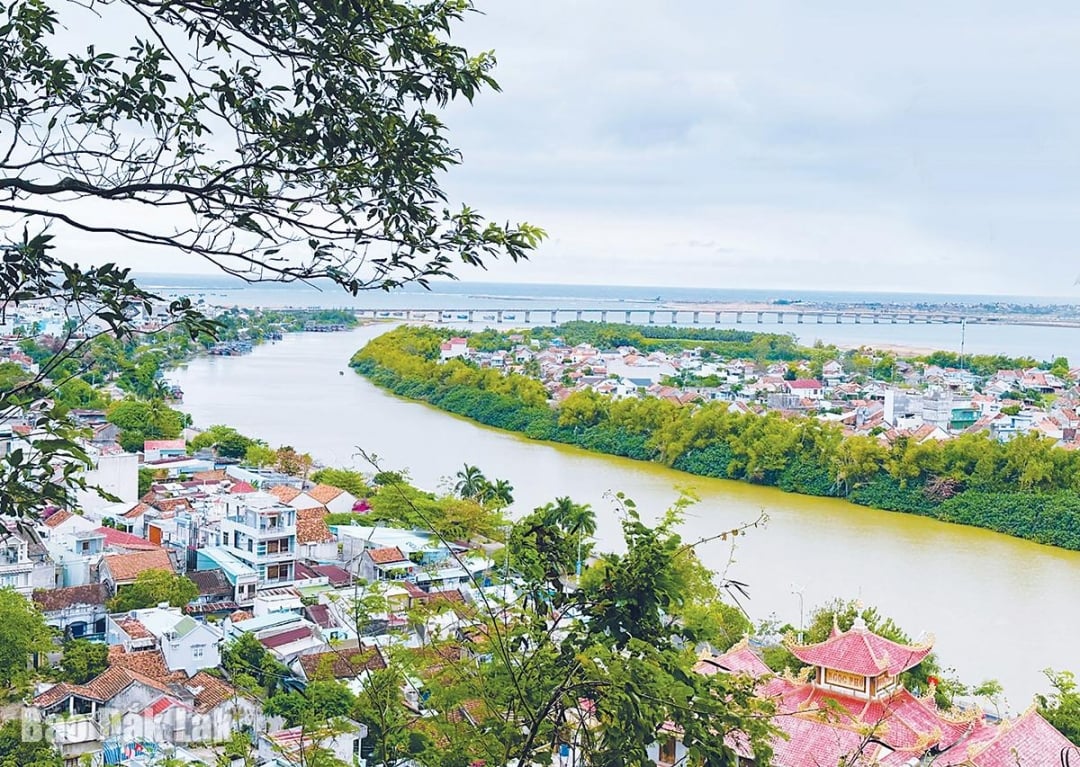 |
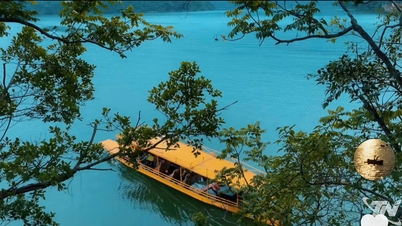
| The Chua River flows past Thap Nhan Tower, under Hung Vuong Bridge (Tuy Hoa ward) and empties into the Da Dien estuary. |
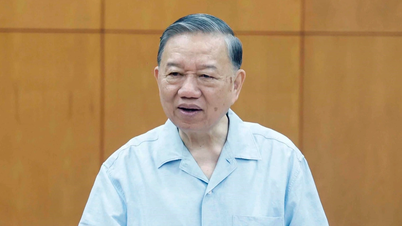
In the current context, facing the new development requirements of the country and the merging of provinces, General Secretary To Lam emphasized: We must change our thinking and vision, unify our understanding and ideology; overcome regional mentality and sentiments to move towards a broader mindset and vision - "the country is our homeland".
I suddenly remembered the Literature exam for the 2025 High School Graduation Exam, a very good exam, both profound and thought-provoking, full of topical relevance, with the argumentative section: "Every homeland is the sky of the Fatherland." It's a journey from the particular to the universal, from the small, familiar sky of one's homeland to the vast sky of the Fatherland, along with great ideals and aspirations. And it also helps us understand that no Fatherland exists without beginning from the names of small villages.
The poet Chế Lan Viên wrote: "When we are here, it is merely a place to live / When we leave, the land suddenly transforms into a soul ."
The poem sounds simple, but it contains a profound philosophy. It's about how precious the place we leave is when we're far away. A place is not just a place to live, but a part of our soul, a place that holds a part of our memories. And from that, we carry with us a yearning, like the soldiers of yesteryear, ready to go anywhere, to do anything for our country.
More than anyone else, and more than ever, today's young people, the pillars and future owners of the country, need to understand and internalize this.
If you ever feel a pang of sadness upon hearing that the name of your old village no longer exists, believe me, that's a very human feeling. For the development of the country, for the benefit of the nation and its people, names may change, but homeland and love for one's homeland remain unchanged. Because homeland is where we dedicate our whole soul; each place name, each village name, is a source of the sacred Fatherland!
Tran Quoi
Source: https://baodaklak.vn/van-hoa-du-lich-van-hoc-nghe-thuat/202506/di-qua-ten-dat-ten-lang-ccc2f86/
![[Image] "Journey of Hope" promotes the organ and tissue donation movement in Vietnam.](https://vphoto.vietnam.vn/thumb/1200x675/vietnam/resource/IMAGE/2026/05/20/1779294400833_1-8910-jpg.webp)
![[Photo] National Assembly Chairman Tran Thanh Man working with the Standing Committee of the National Assembly's Delegation Affairs Committee.](https://vphoto.vietnam.vn/thumb/1200x675/vietnam/resource/IMAGE/2026/05/20/1779294340023_ndo_br_1-1691-jpg.webp)
![[Photo] General Secretary and President To Lam works with the Party Committee of the Ministry of Health on the work of Vietnamese traditional medicine.](https://vphoto.vietnam.vn/thumb/1200x675/vietnam/resource/IMAGE/2026/05/20/1779294323718_a1-bnd-2978-3319-jpg.webp)































































Comment (0)