

As cultural heritage becomes more prevalent on stage than in the home, the story of preservation is no longer about safeguarding lyrics or registering cultural significance, but about ensuring that folk melodies continue to live on in the community, in the voices of the elderly and future generations.
Reasoning becomes a bridge connecting the Party's will and the people's hearts.
We arrived in Bhơ Hôồng (Sông Kôn commune) on the day the villagers were holding their meeting. The atmosphere of the meeting was not as dry as typical policy briefings.
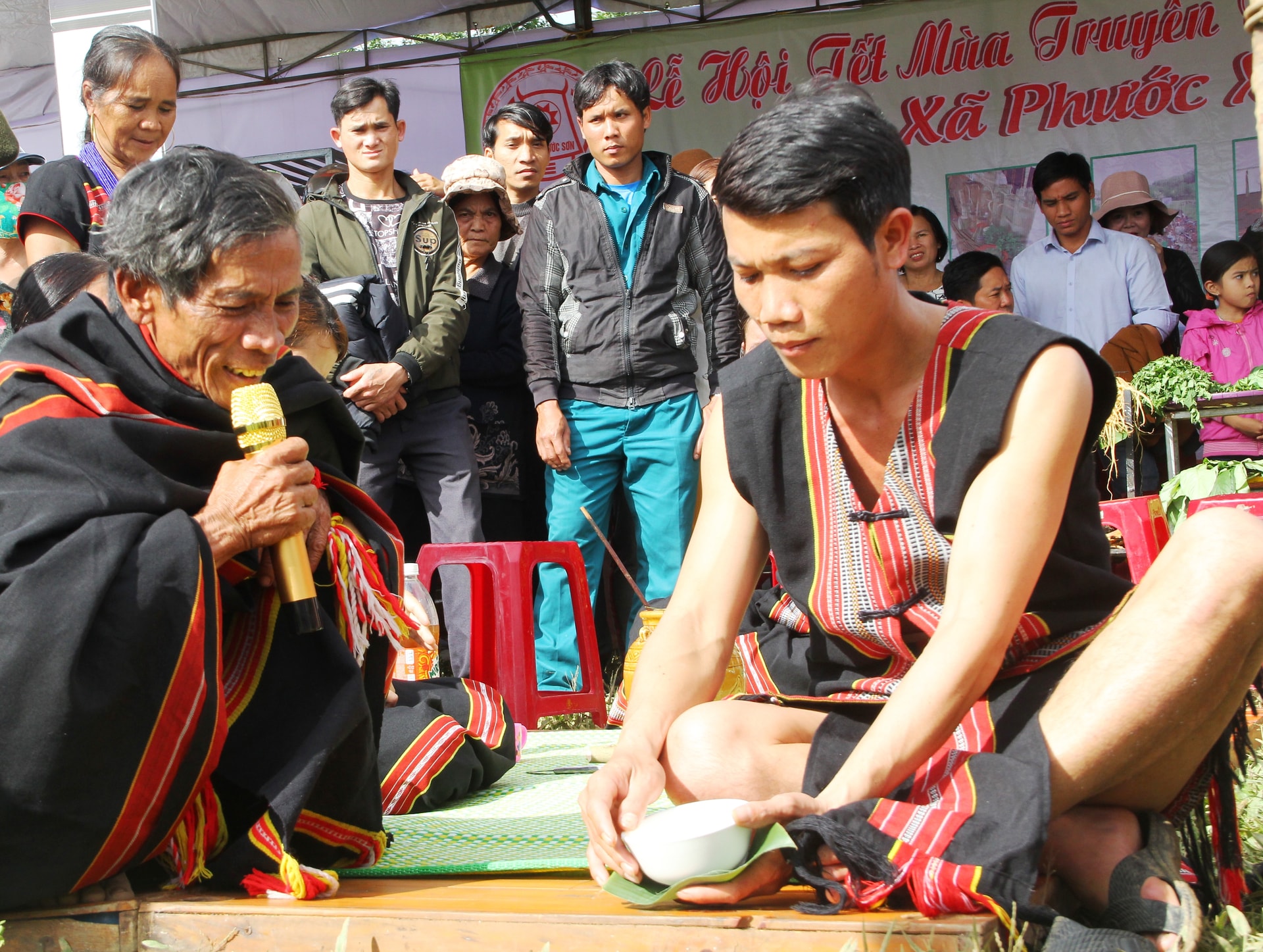
Elder Bling Bloó – whom the villagers consider the village's "living dictionary" – slowly rose from the crowd and began to sing a folk song. His voice, hoarse with age, resonated far across the mountain forest. He didn't sing about love or longing for the wilderness. That day's song spoke of preserving the forest, of the villagers' shared commitment to the new government policies.
The elderly listened attentively. The children huddled on the porch of the communal house were also silent. What seemed like dry, rigid matters about forest protection policies suddenly became gentle and relatable through the familiar folk melody.
"Our people don't like listening to texts being read aloud. But when it's set to folk melodies, it's pleasing to the ear and resonates with the heart. People listen, remember, and then follow. Preserving folk melodies is also preserving the way of thinking of our ancestors to teach our children and grandchildren what is right and good," old Bling Bloó said with a gentle smile, speaking slowly.
From the village elder's account, we realized something important: folk songs have never been just for entertainment. Since ancient times, they have been a means of communication, education, and community bonding. The Co Tu people sing folk songs to advise their children and grandchildren, to tell stories of life, to resolve conflicts, and to pass on life experiences to future generations.
Today, as many traditional cultural forms face the risk of extinction, incorporating policies, laws, or messages of modern life into folk songs has become a natural and effective way of preservation. Because only when heritage remains useful in contemporary life can it truly survive.
Leaving Bhơ Hôồng village, we stopped at a nearby primary school during an extracurricular activity. In the schoolyard, the Katu children were enthusiastically practicing their first folk songs. The gap between "traditional culture" and " the world of childhood" that many people still believe in has disappeared. Their singing was still somewhat hesitant, and the rhythm sometimes uneven, but the children's eyes lit up with delight.
A teacher shared: "If children aren't exposed to folk songs early on, they'll think folk songs are something old-fashioned, only for the elderly. We want them to understand that folk melodies are just as beautiful and emotionally rich as any other type of music ."
The school doesn't teach by forcing children to memorize. Children listen first, feel the music, and then practice singing. Starting with the simplest folk melodies, young children gradually become familiar with their ethnic sounds as a natural part of their childhood.
Some children initially viewed it as just a fun activity, but then unknowingly memorized the songs of their grandparents. What's valuable isn't how well they sing, but that they begin to realize their nation has a unique heritage to be proud of and to preserve. Perhaps a seed of culture is sown from such simple things.
Returning folk melodies to their original form.
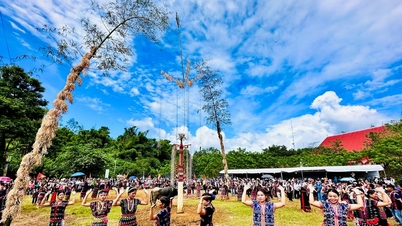
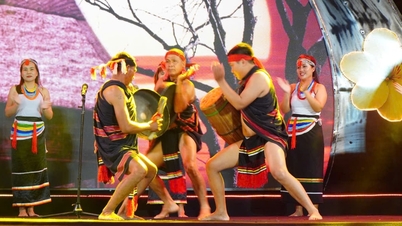
Over the years, many forms of folk culture have been brought to the stage with dazzling lights, modern sound, and elaborate scripts. However, this very process of "theatricalization" sometimes inadvertently causes the loss of the original soul of the heritage.
Folk songs originate from everyday life. They are not music meant to be performed for others. People sing folk songs in the fields, at weddings, village festivals, or on nights gathered around the campfire. It is the natural voice of the community, where there are no boundaries between singer and listener.
However, today, in many places, the folk song only appears in cultural performances or major festivals. It is performed meticulously on stage but is gradually disappearing from the very space where it originated.
"Lyrics cannot be learned with pen and paper. You have to listen with your ears, feel with your heart, and sing in the atmosphere of the village to understand its soul," a highlander artist told us with a voice full of reflection.
Perhaps that is why community-based teaching classes and simple cultural gatherings in communal houses or village courtyards have become the best "classrooms" for preserving the soul of folk songs.
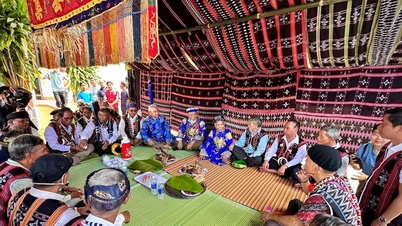
In a folk singing club meeting we attended, there was no stage, no makeup, no colorful lights. Just sun-tanned faces and voices singing one after another amidst the warm, intoxicating aroma of rice wine. They sang about the arduous harvest, the joys of weddings, and the longing for loved ones working far away. The voices, sometimes low, sometimes high, blended with the sound of the rain in the forest outside. There, folk songs were no longer a "heritage" in the sense of books, but truly a part of life.
And perhaps that is the ultimate goal of preservation: not to keep heritage dormant in museums or to let it exist as a mere performance, but to allow it to continue to be useful, to continue to be used and appreciated by the community in modern life.
Preserving folk songs is not simply about retaining the sounds or lyrics. More importantly, it's about preserving the cultural space that has nurtured them for generations.
A cultural exchange night in a village can sometimes be more valuable than a grand stage performance. Because the greatest value of folk singing lies not in the performance technique, but in the sense of community and the sharing of emotions.
The most worrying thing is not that the folk song will one day disappear from the stage. More worrying is when no one in the village sings by the fireplace anymore, when children no longer recognize the melodies of their ethnic group, and when the folk song is only remembered as a "cultural performance" in memory.
Therefore, preservation is not about framing heritage. Preservation is about ensuring that the song continues to resonate in everyday life, so that people still feel a sense of belonging in each folk verse.
A sudden downpour began as we left the village. The muddy red dirt road gradually disappeared behind a curtain of white water.
But behind them, the folk songs still echoed through the vast forest. Those songs were stronger than the rain, enduring like the flow of the mountains and forests, a testament that as long as the community loves and sings, the folk songs will live on through time.
Source: https://baodanang.vn/di-san-khong-la-anh-den-san-khau-3336895.html


![[Image] Close-up view of the interchange connecting the two expressways and Long Thanh Airport.](https://vphoto.vietnam.vn/thumb/1200x675/vietnam/resource/IMAGE/2026/05/25/1779703378210_ndo_br_z7863716673926-224453a31600126cce10622af6290afd-4549-jpg.webp)




















































































Comment (0)